Share

Florida Red-Bellied Cooter
🔤 Taxonomy
Pseudemys nelsoni is the Florida red-bellied cooter. It is often traded under broad cooter or red-bellied turtle names, so Latin-name identification matters.
English common names used in the hobby:
- Florida red-bellied cooter
- Florida redbelly turtle
German common names used in the hobby:
- Florida-Rotbauch-Schmuckschildkröte
📌 Description
The florida red-bellied cooter (Pseudemys nelsoni) is a large, strong basking turtle that quickly outgrows small aquariums. Adults reach about 25-37 cm, with females usually larger and may live 30 years or more with good long-term care.
This is not a short-term aquarium pet. Even small aquatic turtles produce heavy waste, need strong filtration, and require both deep usable water and a completely dry basking area.
Sex strongly affects adult planning. Males stay markedly smaller, with longer foreclaws and a longer, thicker tail, while females develop the broad body and powerful build of a large pond turtle. The red or orange plastron is striking, but color is not a care parameter: appetite, shell growth, swimming, and willingness to bask are more useful measures of condition.
🌍 Distribution
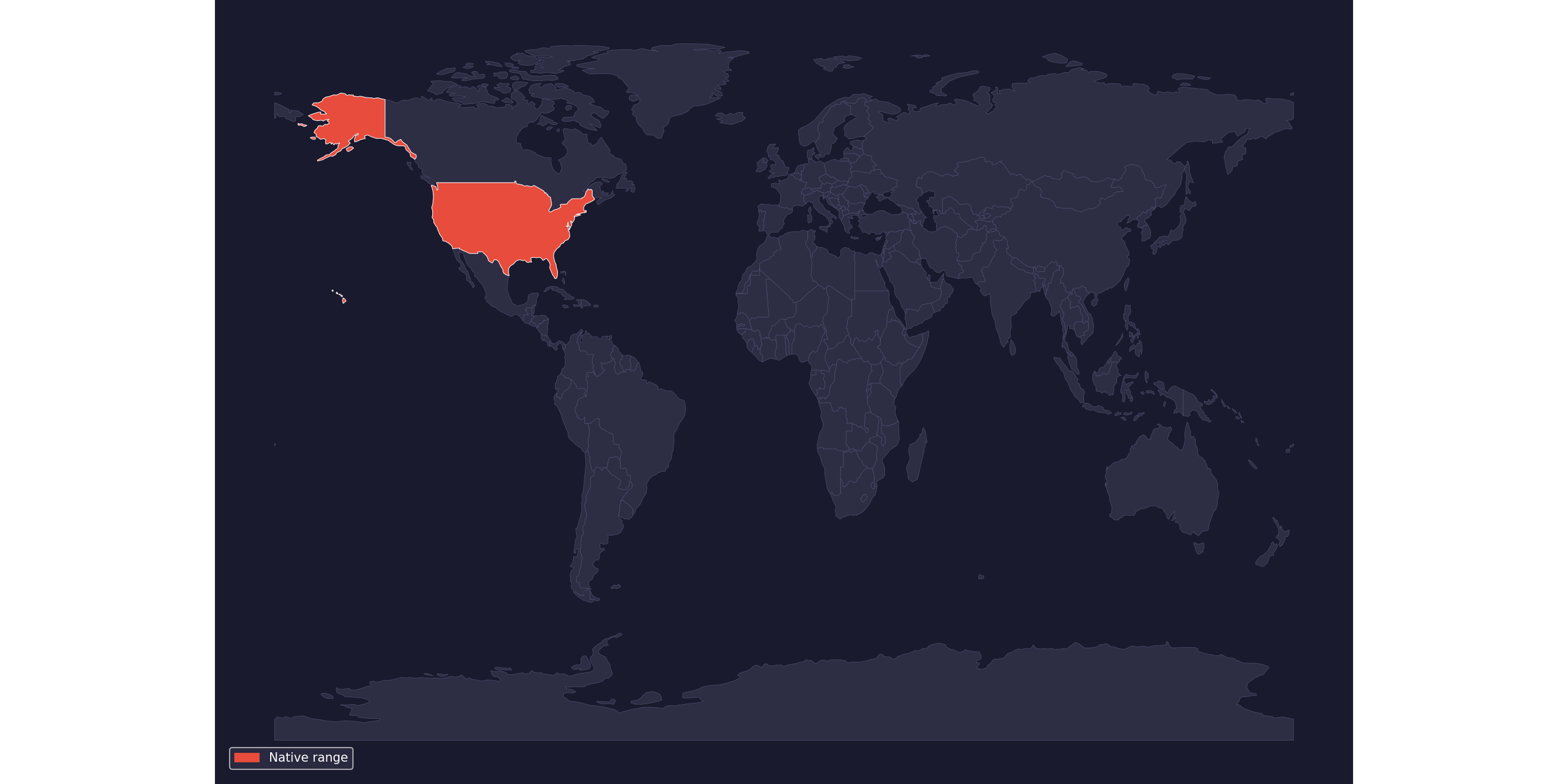
Pseudemys nelsoni is native to Florida and adjacent parts of the southeastern United States. It uses ponds, lakes, canals, marshes, springs, and slow vegetated water with abundant basking sites.
In care, those habitat needs become clean water, secure exits, usable swimming space, dry basking access, visual cover, and stable seasonal or tropical temperatures as appropriate.
🌡 Climate across the native range
Monthly climate normals from reviewed GBIF occurrence locations:
Florida — United States of America
| Month | Min °C | Mean °C | Max °C | RH % |
|---|---|---|---|---|
| January | 13.5 | 18.4 | 23.3 | 73 |
| February | 13.7 | 18.7 | 23.7 | 72 |
| March | 16 | 20.7 | 25.5 | 70 |
| April | 17.7 | 22.6 | 27.4 | 68 |
| May | 20.3 | 25 | 29.6 | 71 |
| June | 22.5 | 27 | 31.4 | 75 |
| July | 23.2 | 27.8 | 32.4 | 75 |
| August | 23.4 | 27.9 | 32.3 | 76 |
| September | 23.1 | 27.3 | 31.5 | 76 |
| October | 21.2 | 25.3 | 29.4 | 73 |
| November | 18.1 | 22.4 | 26.7 | 73 |
| December | 15.1 | 19.8 | 24.4 | 72 |
Weather data by WorldClim v2.1 · Monthly normals queried by Herpeton Academy from raster values; relative humidity is derived from vapor pressure and mean temperature.
Location references use GBIF.org occurrence data where available; original occurrence records retain their source dataset licenses.
⚖️ Legal status
No species-specific CITES listing or EU wildlife-trade Annex listing was found in the official sources checked. Local rules on release, invasive species, import, sale, and animal welfare can still apply.
The Bern Convention is not usually relevant unless a species is native to Europe or covered by local conservation rules; check current national guidance for the country where the animal is kept.
🤌 Husbandry
One adult should be kept in a very large aquarium, indoor pond, or outdoor pond; adult females often need 150 cm or more of tank length. Larger is always better, especially for females and strong swimmers. A bare small tank is not acceptable long term.
Deep open water suits a healthy adult, but include several routes out: submerged logs or shelves, a stable ramp, and a dry platform large enough for the turtle to turn around. The adult footprint in structured metadata is a starting point, not a maximum. A mature female may require a stock-tank or custom pond whose water volume, doorway access, and floor loading were planned before purchase.
The setup must include:
- deep enough water for normal swimming and turning
- an easy route to the surface
- a dry basking platform that supports the full body
- secure lids or high walls to prevent escape
- visual cover and resting points
Cohabitation is risky. Males may harass females, and turtles that appear peaceful can still bite, compete, or stress each other.
Quarantine new arrivals in a separate, easily disinfected system with dedicated siphons and nets. Record weight, food acceptance, basking, feces, buoyancy, and shell condition. Florida red-bellied cooters offered outside established captive lines may have an uncertain history; veterinary examination and fecal testing are appropriate before connecting water systems or moving the turtle near an existing collection.
🧪 Filtration and water
Aquatic turtles foul water quickly. Use oversized external filtration, regular partial water changes, and mechanical cleaning of trapped waste. Filter ratings for fish aquariums are usually too optimistic for turtles.
Ammonia and nitrite should remain at zero in an established system. Cloudy water, smell, skin irritation, and repeated eye problems often point to poor water quality rather than a need for medication.
Large cooters overwhelm undersized filters rapidly. Build around substantial mechanical media that can be serviced without destroying the biological colony, ample biomedia, and easy water-change access. Test ammonia and nitrite after filter maintenance or any feeding change. Guard heaters and intakes, and arrange the return flow so that the turtle gets circulation without being forced to swim constantly.
💡 Lighting
A dry basking area needs bright light and UVB. A quality T5 HO UVB tube or suitable mercury vapor system should cover the basking zone at the correct distance. Replace UVB lamps according to manufacturer output guidance.
Window glass blocks useful UVB, so sunlight through glass is not a substitute. Night lighting is unnecessary.
For UV planning, treat this species as Ferguson Zone 3. Aim for about UVI 3-4 at the animal’s back or shell height in the basking zone, with a gradient down to shaded areas near zero UVI. This usually points to a stronger 10-12% T5/Desert-style UVB tube, or a suitable mercury vapor system in a large open setup; measure with a Solarmeter 6.5 when possible, because reflector, mesh, distance, and lamp age change the real exposure. UV-Tool, Baines et al. (2016).
🌡 Heating and temperature
Typical targets are:
- water: 22-27°C
- basking surface: 32-35°C
- cooler night/room air: about 20-22°C
Use thermostats and thermometers rather than guessing. The basking area should warm the turtle locally without overheating the entire aquarium.
💧 Humidity and water
Humidity is usually managed by the water itself. The important point is to keep the basking platform genuinely dry and warm so the shell and skin can dry completely.
Clean drinking and swimming water are the same system for most aquatic turtles, so water quality is a husbandry requirement, not decoration.
🌿 Enclosure and decoration
Use smooth rocks, driftwood, cork, sturdy aquatic plants, and resting ledges. Avoid sharp stones, unstable piles, tiny gravel that can be swallowed, and decorations that trap the turtle underwater.
Substrate can be bare-bottom, large river stones, or sand depending on the species and filtration plan. Every decoration must be easy to clean and impossible to collapse.
🪱 Feeding
Feed a varied diet: juveniles take more animal food, while adults should receive a plant-heavy diet with aquatic plants, leafy greens, and quality turtle pellets. Juveniles usually need smaller, more frequent meals; adults should be fed more moderately to prevent obesity and water pollution.
The ontogenetic diet shift is important: growing juveniles may take more insects, snails, and other aquatic animal foods, but adults are primarily herbivorous and should not remain on a protein-heavy juvenile menu. Use safe aquatic plants and dark leafy greens, supplemented by a quality pellet formulated for herbivorous or omnivorous aquatic turtles. Dried shrimp, meat, and fish fillet are unbalanced staples. Offer calcium through appropriate whole foods or cuttlebone and monitor beak and shell growth.
Calcium should be available through whole prey, cuttlebone, or appropriate supplementation. Do not use mammal meat, dog food, cat food, bread, dairy, or fatty processed foods.
🧭 Routine, behavior, and handling
Most captive problems are prevented by routine rather than by occasional major cleaning. Check water clarity, temperature, basking access, appetite, and shell condition every week. Remove uneaten food quickly and do not let waste collect under hides, rocks, or filter intakes.
Handling should be minimal. Aquatic turtles are better observation animals than hand pets; repeated handling causes stress and increases the risk of bites, falls, and shell injuries. When handling is necessary, support the whole body securely and keep the turtle low over a safe surface.
A simple maintenance rhythm works well:
- test or monitor water quality regularly
- rinse mechanical filter media before flow drops
- replace part of the water before it smells or clouds
- inspect the basking platform for damp spots
- weigh juveniles or recovering animals when growth or health is uncertain
Never release unwanted turtles outdoors. Rehoming through responsible keepers or rescue networks is the only acceptable option.
🩺 Common problems
Common problems include shell rot from a wet basking area, eye and skin irritation from dirty water, obesity from overfeeding, soft shell or poor growth from inadequate UVB/calcium, burns from unsafe heat lamps, and injuries from cohabitation.
Florida animals should not be pushed into a deep artificial brumation as a routine indoor shortcut. Seasonal changes in day length and a modest winter adjustment can be provided without exposing an unprepared turtle to cold water. Females need year-round access to a private nesting area with deep, slightly moist, diggable substrate; frantic pacing, repeated climbing, digging attempts, loss of appetite, or straining may precede egg laying, but prolonged signs require a reptile veterinarian to rule out dystocia.
Persistent swelling, floating problems, refusal to eat, wheezing, open-mouth breathing, bleeding, or shell lesions require an experienced reptile veterinarian.
📌 Conclusion
Florida Red-Bellied Cooter can be a rewarding display turtle, but only when kept as a long-term aquatic reptile with space, filtration, UVB, heat, and clean water. Plan the adult setup before buying a juvenile.
📚 Sources and further reading
- ReptiFiles painted-turtle care sheet and aquatic-turtle library (comparative pond, filtration, basking, and lighting review)
- Baines et al. 2016, UVB provision for captive reptiles
- Turtles of the World checklist and GBIF species data for taxonomy and distribution context
- CITES Appendices and EU wildlife-trade guidance, checked 2026-05-04
💬 Feedback
For questions, corrections, or practical notes, leave us a message in the forum thread.