Share

Chinese Softshell Turtle
🔤 Taxonomy
Pelodiscus sinensis is the current scientific name for the Chinese softshell turtle. Trionyx sinensis is an older combination that still appears in older books, market lists, and some hobby labels.
Common names used in the hobby:
- Chinese softshell turtle
- Trionyx sinensis
📌 Description
An active Asian softshell turtle, often requested as Trionyx sinensis, that needs warm clean water, soft sand, secure containment, and experienced handling.
Adult size is usually about 20-33 cm, with large differences caused by sex, origin, age, and condition. This article treats the species as a long-term specialist animal rather than a short-term beginner pet.
🌍 Distribution
The accepted taxon is associated mainly with China and Taiwan, but older records under Trionyx sinensis can include related Pelodiscus species and introduced or farmed populations elsewhere in East and Southeast Asia.
In care, the useful habitat points are warm stable water, soft bottom material, room to bury, low-abrasion surfaces, and very strong water quality control. Do not treat broad outdoor weather records as direct aquarium targets.
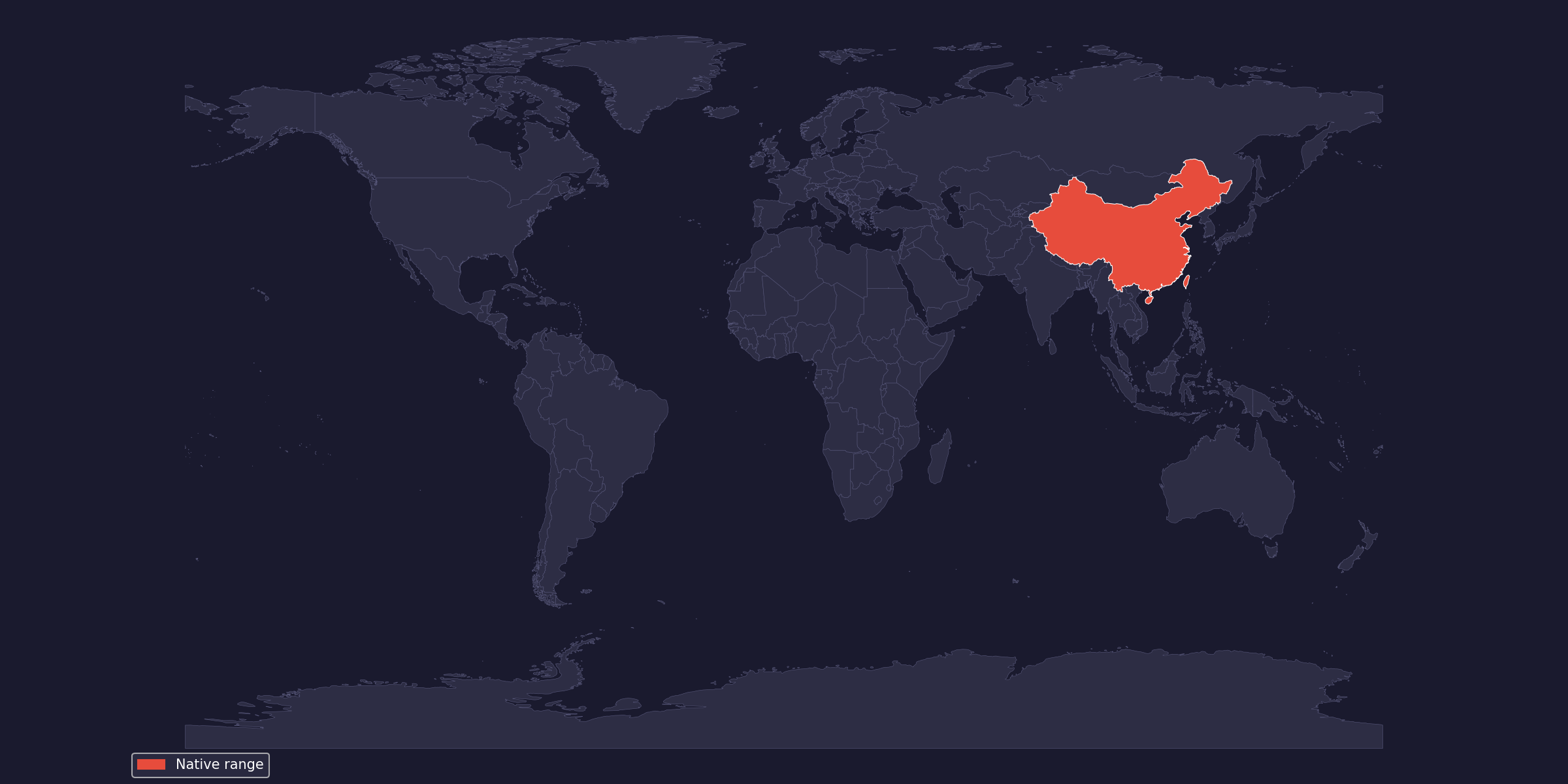
🌡 Climate across the native range
Monthly climate normals from reviewed GBIF occurrence locations:
Taipei — Chinese Taipei
| Month | Min °C | Mean °C | Max °C | RH % |
|---|---|---|---|---|
| January | 11.1 | 14 | 17 | 83 |
| February | 11.4 | 14.4 | 17.3 | 83 |
| March | 13.3 | 16.4 | 19.5 | 85 |
| April | 17 | 20.2 | 23.5 | 83 |
| May | 20.2 | 23.3 | 26.5 | 84 |
| June | 22.8 | 26 | 29.3 | 85 |
| July | 24.1 | 27.7 | 31.3 | 81 |
| August | 24 | 27.4 | 30.8 | 83 |
| September | 22.5 | 25.8 | 29.1 | 82 |
| October | 19.9 | 22.9 | 25.9 | 81 |
| November | 16.4 | 19.3 | 22.2 | 82 |
| December | 12.9 | 15.9 | 18.8 | 80 |
Beijing — China
| Month | Min °C | Mean °C | Max °C | RH % |
|---|---|---|---|---|
| January | -9.9 | -4.1 | 1.8 | 44 |
| February | -6.9 | -0.8 | 5.3 | 41 |
| March | -0.5 | 5.7 | 11.9 | 41 |
| April | 7.5 | 14.3 | 21 | 40 |
| May | 13.3 | 19.9 | 26.5 | 49 |
| June | 18.2 | 24.3 | 30.5 | 58 |
| July | 21.3 | 26.1 | 30.9 | 74 |
| August | 20.2 | 24.9 | 29.6 | 76 |
| September | 14.1 | 20 | 26 | 65 |
| October | 6.9 | 13.2 | 19.5 | 57 |
| November | -1.3 | 4.4 | 10.1 | 54 |
| December | -7.3 | -1.8 | 3.7 | 50 |
Kaohsiung — Chinese Taipei
| Month | Min °C | Mean °C | Max °C | RH % |
|---|---|---|---|---|
| January | 13.6 | 17.6 | 21.6 | 77 |
| February | 14.5 | 18.5 | 22.4 | 77 |
| March | 17.2 | 21.2 | 25.3 | 77 |
| April | 20.7 | 24.4 | 28.1 | 76 |
| May | 23.3 | 26.7 | 30.1 | 78 |
| June | 25 | 28 | 31 | 80 |
| July | 25.4 | 28.6 | 31.8 | 79 |
| August | 25.1 | 28.1 | 31.2 | 81 |
| September | 24.2 | 27.6 | 30.9 | 79 |
| October | 22.2 | 25.8 | 29.3 | 76 |
| November | 18.7 | 22.5 | 26.3 | 75 |
| December | 15.1 | 19.1 | 23.1 | 76 |
Weather data by WorldClim v2.1 · Monthly normals queried by Herpeton Academy from raster values; relative humidity is derived from vapor pressure and mean temperature.
Location references use GBIF.org occurrence data where available; original occurrence records retain their source dataset licenses.
⚖️ Legal status
As checked on 2026-05-10, Pelodiscus sinensis is not currently listed in the CITES Appendices and no current EU wildlife-trade annex listing was found. It is not a Bern Convention species.
Keep invoices or breeder details anyway, especially for imported animals, farmed animals, and animals sold under the older name Trionyx sinensis. Local ownership, veterinary, transport, import, dangerous-animal, and invasive-species rules can still apply even when CITES and EU wildlife-trade listings do not.
🤌 Husbandry
Aquatic turtles need more than a tank of water: provide swimming depth, strong filtration, a dry basking platform, secure exits, and enough space to turn normally.
Use warm, very clean water with a smooth sand area for burying, no sharp decor, gentle access to the surface, and a secure lid. Softshell turtles are fast, stress-prone, and capable of painful bites.
A practical minimum enclosure footprint is about 1.1 m², with a starting footprint around 150 x 75 cm for one appropriately sized animal. Larger adults, females, and outdoor housing need more space.
🧪 Filtration and water quality
Maintain zero ammonia and nitrite, oversized filtration, and regular partial water changes. Dirty water causes skin, shell, eye, and respiratory problems faster than most keepers expect.
💡 Lighting
Provide a clear day-night cycle of about 10-12 hours. UVB should be planned around Ferguson Zone 1 for this species, using a measured basking zone and shaded retreats rather than flooding the whole enclosure with UV.
Indoor animals need bright visible light and a reliable UVB source unless they receive regular safe outdoor sunlight. Glass does not provide useful UVB.
🌡 Heating and temperature
Typical structured targets are:
- ambient or water: 24-28°C
- basking surface: 30-32°C
- cool retreat: 22-24°C
- night: 20-24°C
Use thermostats and separate thermometers. Heat should create a usable gradient, not one uniform hot box.
💧 Humidity and water
Humidity target: 50-80%. Shed or skin support may need short-term access up to about 50-80%, depending on species and condition.
Aquatic setups need water deep enough for normal movement and a completely dry basking platform. Softshell and large snapping turtles also need surfaces that do not abrade skin or shell.
🥗 Feeding
Feed fish, earthworms, aquatic invertebrates, quality pellets, and occasional whole prey. Avoid fatty meat and dirty live feeders.
Juveniles usually feed more often than adults. For established adults, a meal every 2-4 days is a practical starting point, adjusted for age, season, body condition, water temperature, and reproductive state.
🥚 Breeding notes
This is an oviparous species. Typical clutch size is about 10-30 egg(s), with incubation around 28-30°C for about 50-70 days. Breeding should only be attempted with legal, unrelated, healthy animals and a plan for offspring placement.
🧭 Suitability and identification
The Chinese softshell turtle is active, fast, and less forgiving than hard-shelled beginner turtles. The soft skin and leathery shell are easily damaged by rough decor, poor water quality, or aggressive tankmates. It is best for keepers who already understand aquatic turtle filtration and who can work without routine handling.
The name Trionyx sinensis is common in older books and trade lists. Modern taxonomy generally places the species in Pelodiscus, and older records may include related species. When buying, ask for the current scientific name and origin, not only the trade name.
🏗 Aquarium layout
Use a spacious tank or indoor pond with warm clean water, open swimming room, and a deep area of smooth sand where the turtle can bury itself. Avoid gravel, sharp rocks, abrasive basking ramps, and rough plastic plants. The animal should be able to reach the surface easily without scraping its shell.
A tight lid is important. Softshell turtles can climb surprisingly well and can injure themselves during escape attempts. Keep heaters guarded and plumbing protected.
🧪 Water quality
Water quality is the central husbandry issue. The skin and shell are vulnerable to bacterial and fungal problems when water is dirty or the substrate traps waste. Use oversized filtration, frequent partial water changes, and regular siphoning of the sand surface.
Avoid sudden temperature changes during maintenance. Warm replacement water should be dechlorinated and close to tank temperature.
☀️ Basking, UVB, and drying
Some individuals bask more than others, but the option should exist. Provide a smooth, easy-to-enter basking area or shallow warm rest zone where the turtle can dry without abrasion. UVB is recommended, especially indoors, but it must be paired with security so the turtle actually uses the area.
Do not force dry docking unless a veterinarian instructs it. Softshell turtles dehydrate and stress quickly when managed incorrectly.
🐟 Feeding strategy
Offer earthworms, aquatic invertebrates, fish, high-quality pellets, and occasional whole prey. Avoid fatty meat and avoid relying on dirty live feeders. Softshell turtles can become aggressive feeders, so use tools and a routine that keeps hands away from the mouth.
Feed juveniles more often than adults, but watch body condition. A constantly overfed softshell becomes heavy, inactive, and harder to keep in clean water.
🧍 Handling and tankmates
Handling should be rare. The turtle is slippery, fast, and capable of painful bites. Use a container for transfers rather than holding it in the air for long periods. Do not house with fish you are not prepared to lose, and avoid turtle tankmates unless the enclosure is very large and conflict can be managed.
🧰 Equipment checklist
A complete aquatic turtle setup should be ready before the animal arrives. At minimum, plan for the adult enclosure, oversized filtration, heater or cooling strategy as appropriate, thermometers, UVB and basking lamps, secure lids, water conditioner, test kits for ammonia and nitrite, siphons, safe transport containers, and a way to separate the turtle during maintenance if needed.
The adult size matters more than the hatchling size. Many aquatic turtles are sold when they fit in a hand, but the real commitment is the adult tank, pond, filtration, electricity, water changes, and safe handling routine.
🧪 Quarantine and water testing
New turtles should be quarantined before joining any established system. Separate equipment prevents cross-contamination, and quarantine gives time to observe appetite, swimming, buoyancy, shell condition, skin, eyes, and feces. Wild-caught or recently imported animals need particular caution.
Test water during setup and after filter cleaning. Ammonia and nitrite should be zero in an established system. Nitrate, pH, hardness, and temperature stability also matter, but ammonia and nitrite are the immediate danger signals. Medication will not solve husbandry if the turtle is living in dirty water.
🚫 Common keeper mistakes
The most common mistakes are undersized tanks, weak filtration, no dry basking area, poor UVB placement, overfeeding, and mixing incompatible turtles. Another major mistake is assuming a turtle is healthy because it still eats. Many turtles keep feeding while shell, skin, or water-quality problems are already developing.
Avoid rough decor, unstable basking platforms, exposed heaters, and escape routes. Large or defensive species also require a handling plan. Improvised grabbing, hand-feeding, or moving adults without equipment can injure both keeper and turtle.
🧾 Long-term responsibility
Aquatic turtles are long-lived and difficult to rehome when large. Before purchase, plan for adult housing, holiday care, veterinary transport, legal restrictions, and what happens if the animal becomes too large or dangerous for the original setup. Release is never an acceptable backup plan. It can spread disease, harm native wildlife, and violate local law.
🩺 Common problems
Skin abrasions, fungal or bacterial infections, shell injuries, poor water quality, and bites during handling are the main risks.
Quarantine new animals, record weights, monitor shell and skin condition, and use an experienced reptile veterinarian for injuries, swelling, persistent refusal to eat, respiratory signs, or abnormal buoyancy.
✅ Conclusion
Chinese Softshell Turtle can be rewarding for keepers who can meet its real space, legal, and environmental requirements. It should not be bought impulsively, and it should never be released outdoors.
📚 Selected sources
- I-CITES taxon record for Pelodiscus sinensis
- European Commission wildlife trade overview
- GBIF species record for Pelodiscus sinensis
- The Reptile Database: Pelodiscus sinensis
💬 Feedback
For questions, corrections, or practical notes, leave us a message in the forum thread.