Share

False Map Turtle
🔤 Taxonomy
Graptemys pseudogeographica is the accepted scientific name for this species.
Common names used in the hobby:
- False map turtle
📌 Description
A North American basking map turtle that needs clean flowing-style water, strong filtration, UVB, and a large dry basking platform.
Adults are usually about 9-27 cm, with large differences caused by sex, origin, age, and condition. Females can become much larger than males, so adult housing should be planned for the larger possible animal.
🌍 Distribution
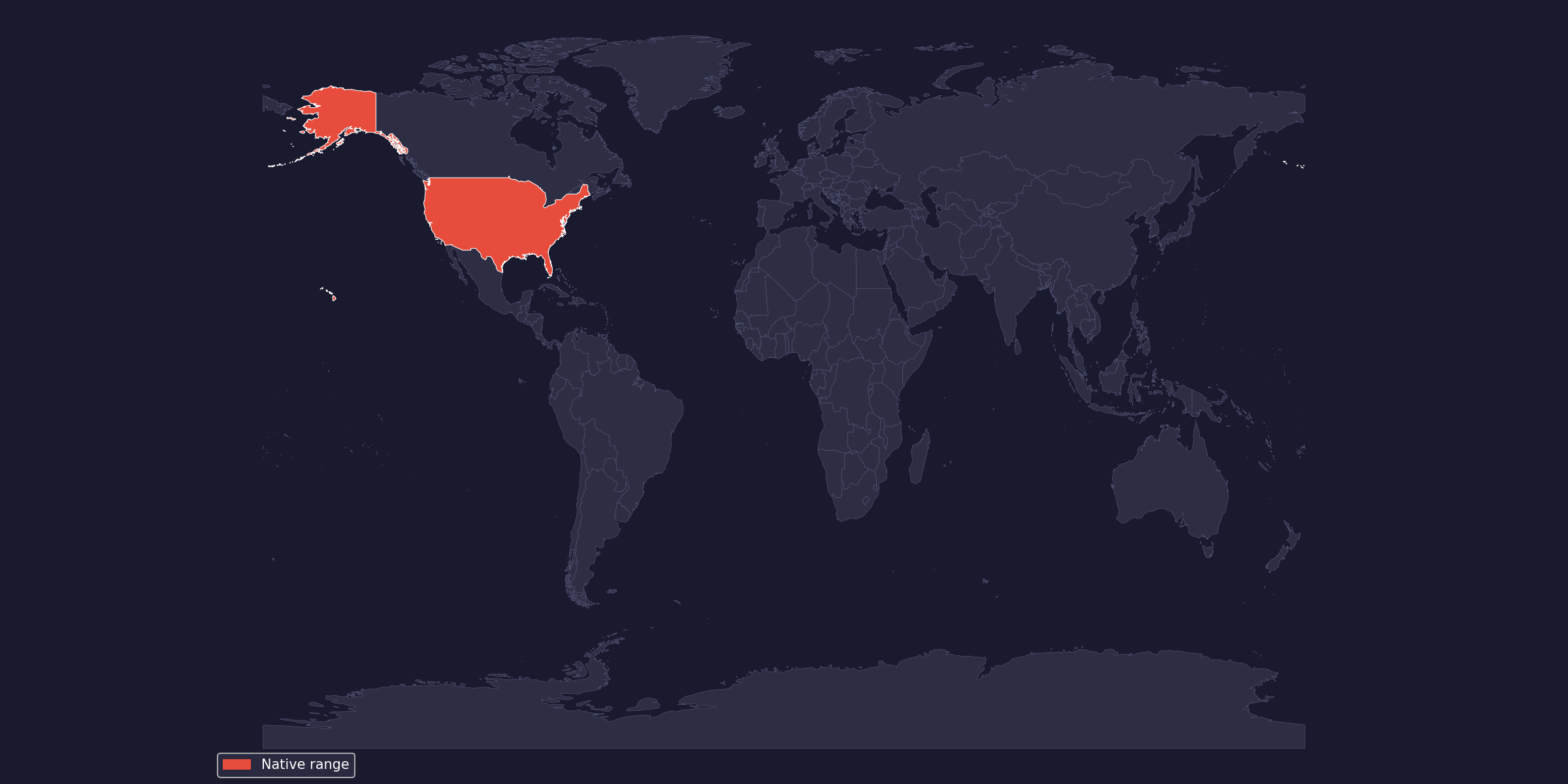
Large rivers, oxbows, sloughs, and backwaters of the central United States, often with basking logs over open water.
Captive care should reproduce the useful river functions: clean water, moderate movement, enough depth, stable resting points, and a dry basking area over the water. Visual retreat options reduce panic and constant diving.
🌡 Climate across the native range
Monthly climate normals from reviewed GBIF occurrence locations:
Mississippi — United States of America
| Month | Min °C | Mean °C | Max °C | RH % |
|---|---|---|---|---|
| January | 1.2 | 7.3 | 13.3 | 74 |
| February | 2.9 | 9.5 | 16 | 70 |
| March | 6.8 | 13.7 | 20.6 | 68 |
| April | 10.6 | 17.6 | 24.6 | 68 |
| May | 15.5 | 21.9 | 28.3 | 72 |
| June | 19.4 | 25.7 | 31.9 | 72 |
| July | 21.3 | 27.3 | 33.2 | 74 |
| August | 20.8 | 26.9 | 33 | 73 |
| September | 17.8 | 24.2 | 30.6 | 71 |
| October | 10.7 | 18.1 | 25.5 | 70 |
| November | 5.9 | 12.9 | 19.8 | 73 |
| December | 2.7 | 9 | 15.3 | 71 |
Weather data by WorldClim v2.1 · Monthly normals queried by Herpeton Academy from raster values; relative humidity is derived from vapor pressure and mean temperature.
Location references use GBIF.org occurrence data where available; original occurrence records retain their source dataset licenses.
⚖️ Legal status
Checked on 2026-06-08: Graptemys pseudogeographica is covered by the CITES Appendix III listing for Graptemys spp. requested by the United States, and it is treated as EU Annex C in EU wildlife trade law. The Bern Convention is not relevant.
Several broad-headed map turtles were moved to Appendix II, but this species is not one of those Appendix II species in the U.S. Fish & Wildlife Service turtle appendix chart. Keep proof of legal origin and check import, export, sale, transport, and local possession rules before any transfer.
🤌 Husbandry
This is an active basking turtle, not a small decorative aquarium animal. The enclosure has to provide clean open water, strong filtration, a dry warm platform, UVB exposure, and enough space for a large female if sex is uncertain.
Plan at least a 120 x 60 x 60 cm setup for one appropriately sized animal, about 0.72 m² of footprint. Larger females and outdoor systems need more water volume and stronger basking structures.
🧪 Filtration and water quality
Maintain zero ammonia and nitrite, oversized filtration, and regular partial water changes. Turtle waste loads are much heavier than fish loads, so aquarium filters should be sized with a large safety margin.
Cloudy or smelly water usually means the system is undersized, overfed, or not maintained often enough. Dirty water causes skin, shell, eye, and respiratory problems faster than most keepers expect.
💡 Lighting
Provide a clear day-night cycle of about 10-12 hours. UVB should be planned around Ferguson Zone 3, with a measured basking or exposure zone and shaded retreats rather than flooding the whole enclosure with UV.
Indoor animals need bright visible light and a reliable UVB source unless they receive regular safe outdoor sunlight. Glass does not provide useful UVB, and old lamps can still shine visibly while producing weak biological output.
🌡 Heating and temperature
Typical structured targets are:
- ambient or water: 22-26°C
- basking surface: 30-34°C
- cool retreat: 20-22°C
- night: 20-24°C
Use thermostats and separate thermometers. Heat should create a usable gradient, not one uniform hot box. Check surface temperatures, water temperature, and the animal’s actual choices before changing feeding or seasonal routines.
💧 Humidity and water
Humidity around the aquatic setup is usually 40-80%, but the practical priority is water quality and a completely dry basking area. The platform must not wobble, sink, or leave the shell wet.
Water depth should allow normal swimming, but the animal still needs stable resting points near the surface. Avoid narrow gaps where the turtle can wedge itself.
🌿 Enclosure and decoration
Use an aquatic enclosure with open swimming space, surface rests, a dry platform, and visual cover. Map turtles often panic-dive when startled, so stable decor and unobstructed water reduce injury risk.
Good setup elements include:
- oversized external filtration
- a basking platform that lets the shell dry completely
- a heat lamp and UVB aligned over the same basking area
- branches, cork, or platforms fixed so they cannot trap the turtle
- protected heater and intake equipment
- a secure lid or rim because turtles climb ramps and hoses
🥗 Feeding
Juveniles take more animal food; adults should receive a varied mixed diet with aquatic invertebrates, quality pellets, leafy greens, occasional safe fish, and calcium sources. The recorded interval is every 2-3 days, adjusted for age, season, and body condition.
Feed for stable body condition rather than constant begging. Remove leftovers, record weight, and adjust frequency for age, season, temperature, reproductive state, and activity. Use calcium and supplements according to diet quality and UVB access.
🥚 Breeding notes
This is an oviparous species. Typical clutch size is about 4-22 eggs, with incubation around 26-30°C for about 60-90 days. Breeding should only be attempted with legal, unrelated, healthy animals and a plan for offspring placement.
Mature females need a nesting area if eggs are possible, even when no male is present. Lack of a suitable laying site can become a health problem.
🧍 Handling and safety
This is a display animal. Handling should be limited to inspection, enclosure work, and veterinary needs. Map turtles are often skittish, and repeated handling can create chronic stress.
Wash hands after contact with water, substrate, food, filters, and equipment. Children should observe rather than handle turtles independently.
💤 Seasonality and monitoring
False map turtles come from a broad temperate river range. Seasonal change can matter, but indoor cooling should be controlled and based on health, origin, and a stable setup. Do not brumate casually in a small indoor aquarium.
Keep notes on weight, appetite, basking, water changes, shell condition, and behavior. Early changes in basking, hiding, buoyancy, appetite, or breathing are often the first sign that husbandry needs correction.
🧰 Equipment and quarantine
Have the adult enclosure, oversized external filtration, UVB, basking lamp, thermometers, ammonia and nitrite tests, siphons, secure lid, calcium source, and transport container ready before the turtle arrives.
New turtles should be quarantined separately. Separate equipment prevents cross-contamination and gives time to observe appetite, swimming or walking, buoyancy, shell condition, skin, eyes, and feces.
🚫 Common keeper mistakes
Common mistakes include small tanks, weak filtration, a wet or unstable basking platform, poor UVB placement, overfeeding, mixing incompatible turtles, and assuming the turtle is healthy just because it still eats.
Release is never an acceptable backup plan. It can spread disease, harm native wildlife, and violate local law.
🩺 Common problems
Poor water quality, soft-shell problems from weak UVB or calcium, shell rot, retained scutes, and stress from mixing turtles are common risks. Use an experienced reptile veterinarian for injuries, swelling, respiratory signs, persistent refusal to eat, or abnormal buoyancy.
Quarantine new animals, record weights, monitor shell and skin condition, and use an experienced reptile veterinarian for injuries, swelling, persistent refusal to eat, respiratory signs, or abnormal buoyancy.
📌 Conclusion
False Map Turtle care can work well for keepers who can maintain a clean aquatic system, UVB, a dry platform, and stable long-term hygiene. It should not be bought impulsively or released outdoors.
📚 Sources and further reading
- CITES Appendices, checked 2026-06-08
- U.S. Fish & Wildlife Service - U.S. turtle species included in CITES Appendices, checked 2026-06-08
- Commission Regulation (EU) 2023/966, checked 2026-06-08
- GBIF Backbone Taxonomy: Graptemys pseudogeographica
- U.S. Geological Survey range map data: Graptemys pseudogeographica
- U.S. Fish & Wildlife Service species profile: False Map Turtle
- ReptiFiles Painted Turtle Care Sheet for aquatic turtle husbandry comparison