Share

Chinese Box Turtle
🔤 Taxonomy
Cuora flavomarginata is the accepted scientific name for this species.
Common names used in the hobby:
- Chinese box turtle
- Yellow-margined box turtle
📌 Description
A semi-terrestrial Asian box turtle requiring humid forest-floor housing, shallow clean water, UVB, stable hygiene, and CITES paperwork.
Adults usually reach about 13-20 cm. The species looks compact, but it is not a small aquarium turtle: it needs humid land, shallow water access, retreats, and a stable routine. With good care it may live 30-50 years, so acquisition should be planned as a long-term commitment.
🌍 Distribution
China, Taiwan, and the Ryukyu region, in humid forest, forest edge, grassland, and cultivated-edge habitats close to slow water.
Captive care should focus on useful choices rather than decorative imitation: humid but not rotten soil, many hiding places, shallow water with an easy exit, a dry resting area, and a usable thermal gradient.
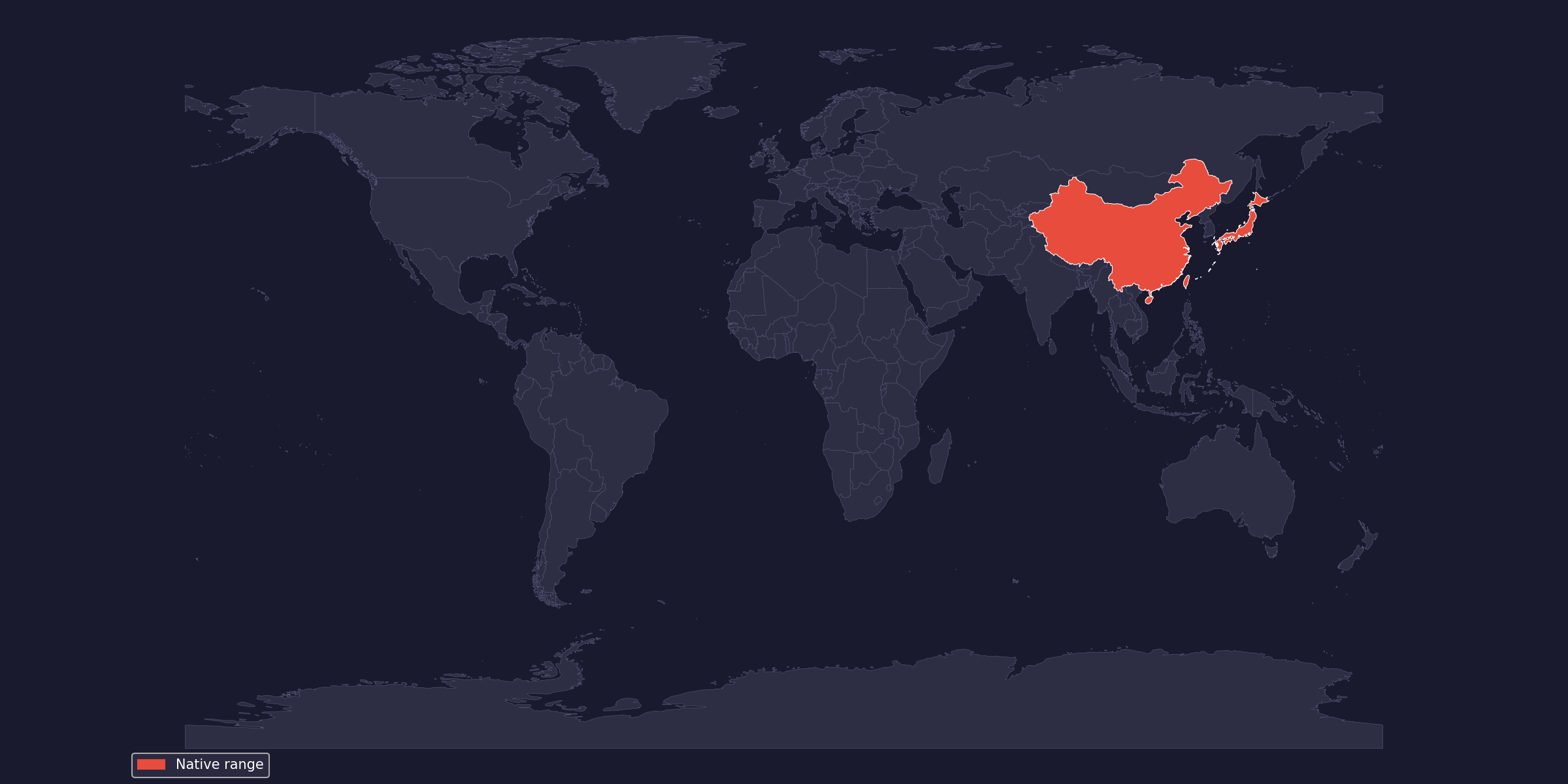
🌡 Climate across the native range
Monthly climate normals from reviewed GBIF occurrence locations:
Okinawa — Japan
| Month | Min °C | Mean °C | Max °C | RH % |
|---|---|---|---|---|
| January | 15.1 | 17.1 | 19.1 | 75 |
| February | 15.2 | 17.3 | 19.3 | 79 |
| March | 17.1 | 19.3 | 21.4 | 80 |
| April | 19.7 | 21.9 | 24.1 | 82 |
| May | 22 | 24.2 | 26.3 | 85 |
| June | 24.3 | 26.5 | 28.6 | 85 |
| July | 25.4 | 27.7 | 30 | 82 |
| August | 25 | 27.4 | 29.7 | 83 |
| September | 24.1 | 26.3 | 28.4 | 81 |
| October | 22.4 | 24.3 | 26.2 | 77 |
| November | 19.8 | 21.6 | 23.3 | 76 |
| December | 16.9 | 18.7 | 20.5 | 73 |
Taiwan — Chinese Taipei
| Month | Min °C | Mean °C | Max °C | RH % |
|---|---|---|---|---|
| January | 10.6 | 13.8 | 16.9 | 81 |
| February | 11.3 | 14.3 | 17.3 | 81 |
| March | 13.3 | 16.4 | 19.5 | 83 |
| April | 17 | 20.2 | 23.3 | 81 |
| May | 20 | 23 | 25.9 | 83 |
| June | 22.2 | 25.3 | 28.4 | 84 |
| July | 23.2 | 26.6 | 30 | 82 |
| August | 23.1 | 26.2 | 29.4 | 84 |
| September | 21.8 | 24.9 | 28 | 83 |
| October | 19.3 | 22.3 | 25.3 | 81 |
| November | 15.8 | 18.8 | 21.9 | 80 |
| December | 12.3 | 15.5 | 18.6 | 79 |
Weather data by WorldClim v2.1 · Monthly normals queried by Herpeton Academy from raster values; relative humidity is derived from vapor pressure and mean temperature.
Location references use GBIF.org occurrence data where available; original occurrence records retain their source dataset licenses.
⚖️ Legal status
Checked on 2026-06-08: Cuora flavomarginata is covered by the CITES Appendix II listing for Cuora spp. and is treated as EU Annex B in EU wildlife trade law. The listing includes a zero quota for wild specimens traded for commercial purposes, so legal captive-bred origin and paperwork are central to responsible ownership. The Bern Convention is not relevant.
Documents should match the scientific name, origin, and individual animal. Check import, export, sale, breeding, transport, and national registration rules before any transfer. Do not rely on a seller’s verbal claim alone.
🤌 Husbandry
This species is semi-terrestrial in daily use: build a humid forest-floor enclosure with a shallow water area, not a deep open aquarium. Water should let the turtle enter, soak, drink, and leave without rolling, slipping, or becoming trapped.
Plan at least a 120 x 60 x 45 cm enclosure for one adult, about 0.72 m² of floor area. Larger enclosures are easier to manage because they allow separate dry, damp, warm, cool, and water zones. Walls and lids must be secure because box turtles push weak edges and use decor as steps.
🧪 Water, substrate, and hygiene
The water area should be shallow, clean, and easy to service. This is not a strong open-water swimmer; deep water without ramps is a risk. Use a stable basin or low pool with a gentle exit and surfaces that do not abrade the plastron or toes.
Dirty water and rotting substrate quickly cause skin, eye, and shell problems. Remove food remains, change water often, and monitor substrate smell. In warm humid setups, hygiene failures build faster than they appear visually.
💡 Lighting
Provide a clear day-night cycle of about 10-12 hours. UVB should be planned around Ferguson Zone 1, with a measured basking or exposure zone and shaded retreats rather than flooding the whole enclosure with UV.
Indoor animals need bright visible light and a reliable UVB source unless they receive regular safe outdoor sunlight. Glass does not provide useful UVB, and old lamps can still shine visibly while producing weak biological output.
🌡 Heating and temperature
Typical structured targets are:
- ambient or water: 24-28°C
- basking surface: 30-32°C
- cool retreat: 22-24°C
- night: 20-24°C
Use thermostats and separate thermometers. Heat should create a usable gradient, not one uniform hot box. Check surface temperatures, water temperature, and the animal’s actual choices before changing feeding or seasonal routines.
💧 Humidity and water
Humidity target is about 70-90%, with humid retreats around 75-95% when needed. This does not mean a constantly wet enclosure. The best setup has a damp lower substrate layer, leaf litter, several microclimates, and good ventilation.
Water dishes, pools, platforms, and ramps should be easy to clean and should not abrade skin, toes, or shell. Juveniles may use water more often than adults, but even they need easy exits and quiet land cover.
🌿 Enclosure and decoration
Use soft, diggable substrate that holds moisture without turning sour. A practical mix can include soil, leaf litter, cypress mulch or coir, and moss in humid retreats. Avoid sharp gravel, bare glass floors, and permanently swampy substrate.
Good layout includes:
- humid hides and a drier resting area
- shallow water with a stable ramp
- leaf litter and cork for cover
- a warm basking zone with nearby shade
- a deeper nesting area for mature females
- secure edges, especially in outdoor pens
🥗 Feeding
Cuora flavomarginata is omnivorous. Offer earthworms, safe-source snails, insects, quality turtle pellets, leafy greens, aquatic plants, and small amounts of fruit as an extra rather than a staple. The recorded feeding interval is every 1-2 days, adjusted for age, season, temperature, and body condition.
Feed for stable body condition rather than maximum appetite. Remove leftovers, record weight, and adjust frequency for age, season, temperature, reproductive state, and activity. Use calcium and supplements according to diet quality and UVB access.
🥚 Breeding notes
This is an oviparous species. Typical clutch size is about 1-4 eggs, with incubation around 26-30°C for about 60-90 days. Females need a suitable nesting area with enough depth and moisture. Lack of a laying site can become a serious health risk.
🧍 Handling and safety
Routine handling is unnecessary. When moving the turtle, keep it low over a soft surface and avoid squeezing the shell. Children should observe rather than carry it; a fall can crack the shell even when bite risk is low.
Wash hands after contact with water, substrate, food, filters, and equipment. Keep enclosure tools separate during quarantine.
💤 Seasonality and monitoring
This species comes from regions with seasonal change, but cooling should be controlled and conservative. Do not brumate or overwinter a turtle without known origin, stable health, good body condition, and a setup designed for the chosen temperature range.
Keep notes on weight, appetite, temperature, humidity, water changes, feces, and behavior. Early changes in hiding, basking, appetite, eyes, or breathing usually appear before a serious problem is obvious.
🧰 Equipment and quarantine
Prepare UVB, thermostated heating, thermometers, a hygrometer, a stable water basin, spare substrate, cleaning tools, documents, transport box, and quarantine housing before purchase.
New turtles should be quarantined separately. Separate equipment prevents cross-contamination and gives time to observe appetite, movement, soaking, shell condition, skin, eyes, and feces.
🚫 Common keeper mistakes
Common mistakes include overly deep water, constantly wet substrate, weak UVB, no thermal gradient, feeding mostly fruit or pellets, buying without paperwork, and keeping multiple animals together without monitoring stress or competition.
Release is never an acceptable backup plan. It can spread disease, harm native wildlife, and violate local law.
🩺 Common problems
Watch for swollen eyes, shell softening or spots, skin wounds, bad substrate odor, prolonged hiding, refusal to eat, and respiratory signs. Quarantine, weight records, and early environment correction are more reliable than late treatment.
Quarantine new animals, record weights, monitor shell and skin condition, and use an experienced reptile veterinarian for injuries, swelling, persistent refusal to eat, respiratory signs, or abnormal buoyancy.
📌 Conclusion
Chinese Box Turtle care is realistic only for keepers who can maintain a humid, clean, well-organized enclosure for decades. Small size does not remove the need for paperwork, UVB, hygiene, and careful planning.
📚 Sources and further reading
- CITES Appendices, checked 2026-06-08
- Commission Regulation (EU) 2023/966, checked 2026-06-08
- GBIF Backbone Taxonomy: Cuora flavomarginata
- IUCN/TFTSG: Cuora flavomarginata account
- Animal Diversity Web: Cuora flavomarginata
- ReptiFiles Ornate Box Turtle Care Sheet for box turtle husbandry comparison