Share

Russian Tortoise
🔤 Taxonomy
Testudo horsfieldii is the currently accepted scientific name. In older literature and in parts of the pet trade, the species is still often listed as Agrionemys horsfieldii.
English common names used in the hobby:
- Russian tortoise
- Horsfield’s tortoise
- Central Asian tortoise
- Afghan tortoise
German common names used in the hobby:
- Vierzehenschildkrote
- Steppenschildkrote
📌 Description
The Russian tortoise (Testudo horsfieldii) is a small, active, and highly terrestrial tortoise from Central Asia. It is one of the most commonly kept tortoise species because adults stay more manageable in size than many Mediterranean or African tortoises, but it is still a long-lived animal that can live for decades with correct care.
The shell is usually fairly round to oval and somewhat flatter than that of many Mediterranean tortoises. Base color commonly ranges from sandy yellow-brown to olive with darker blotches. A practical identification point is the usual presence of four claws on the front feet rather than five.
This species is a serious digger. In nature it uses burrows to escape heat, cold, and dryness. Good husbandry must account for that behavior, because a Russian tortoise kept in a smooth, barren, undersized setup will often become stressed, restless, or physically unfit.
🌍 Distribution
Testudo horsfieldii occurs across parts of Central Asia, including Afghanistan, Iran, Pakistan, Kazakhstan, Kyrgyzstan, Tajikistan, Turkmenistan, Uzbekistan, adjacent parts of the Russian Federation, and western China. It inhabits dry steppe, semi-desert, scrub, and open arid landscapes with loose soil suitable for burrowing.
The natural environment is typically characterized by:
- Strong sun
- Large seasonal temperature swings
- Dry conditions with low to moderate humidity
- Loose mineral soils for digging
- Sparse but suitable seasonal vegetation
In the wild, this species may become less active during extreme summer heat and also passes through a winter dormancy period in much of its range. In captivity, care should reflect that natural rhythm rather than treating the species as a permanently warm, tropical tortoise.
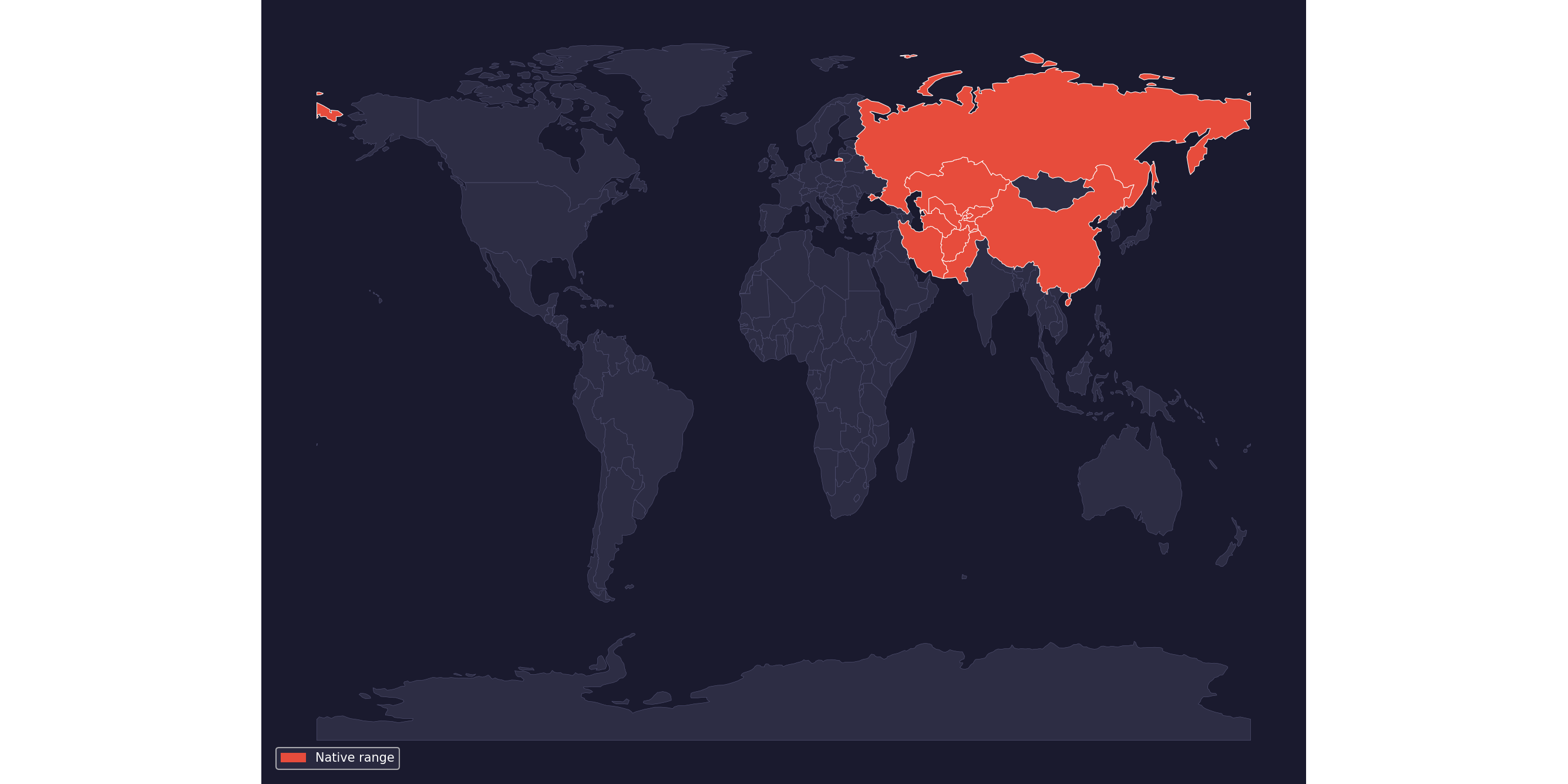
🌡 Climate across the native range
Monthly climate normals from reviewed GBIF occurrence locations:
Talgarskiy, Almaty — Kazakhstan
| Month | Min °C | Mean °C | Max °C | RH % |
|---|---|---|---|---|
| January | -12.8 | -7.8 | -2.5 | 71 |
| February | -10.3 | -4.9 | 0.9 | 71 |
| March | -3.3 | 3 | 9.5 | 64 |
| April | 3.8 | 11.3 | 17.6 | 56 |
| May | 9.7 | 17.6 | 23.9 | 47 |
| June | 15.4 | 23.4 | 29.5 | 39 |
| July | 17.7 | 25.6 | 31.6 | 37 |
| August | 15.8 | 23.9 | 30.4 | 36 |
| September | 9.8 | 17.5 | 24.3 | 41 |
| October | 3 | 9.5 | 16.1 | 56 |
| November | -3.8 | 1 | 6.6 | 68 |
| December | -9.4 | -5.1 | -0.2 | 69 |
Weather data by Open-Meteo.com · CC BY 4.0 · Monthly normals calculated by Herpeton Academy from daily archive values.
Location references use GBIF.org occurrence data where available; original occurrence records retain their source dataset licenses.
⚖️ Legal status
The Russian tortoise is a protected species and must not be taken from the wild. According to current official CITES sources, Testudo horsfieldii is listed in CITES Appendix II. Within the EU wildlife trade regulations, it is treated as an Annex B species.
The species is not relevant to the Bern Convention because it is not native to Europe. Depending on the country, local rules on import, sale, transfer, transport, breeding, and record-keeping may still apply. Proof of legal origin is important, especially because the species was heavily traded from wild collection in the past.
🤌 Husbandry
The best option for this tortoise is an outdoor enclosure during the warm part of the year. The species needs direct sun, space to move, a natural daily rhythm, and a varied environment. Keeping an adult only in a small indoor terrarium is rarely adequate.
The outdoor enclosure must be very secure. These tortoises can dig, push, climb, and work along boundaries persistently. The fence should prevent digging under or squeezing through gaps, and the enclosure should include both sunny and shaded zones.
For one adult, 2-3 m² outdoors is a practical minimum, and 4 m² or more is better. Groups require significantly more room, and males often need to be separated because repeated harassment of females or subordinate animals is common.
Indoor housing can be used for juveniles, quarantine, recovery, or cold periods, but it should be a wide open tortoise table rather than a tall, closed glass terrarium. Hatchlings and small juveniles can start around 90 x 60 cm; larger juveniles and subadults should have at least 120 x 60 cm to 150 x 75 cm. Adults should not be kept permanently indoors unless the pen provides at least 2-3 m² of real floor area.
💡 Lighting
UVB lighting is essential for indoor keeping. Russian tortoises need UVB to synthesize vitamin D3 and metabolize calcium properly. Without strong UVB, the risk of metabolic bone disease, shell deformities, and weak growth rises significantly.
The best indoor options are a quality mercury vapor lamp or a strong T5 HO UVB tube combined with a separate heat lamp. The lighting system should create a bright basking zone while still allowing the tortoise to move away into cooler or shaded areas.
Outdoors, natural sunlight is the best UVB source. Glass and most clear plastics block much of the useful UVB, so sun through a window is not an adequate substitute.
The photoperiod is usually around 10-12 hours of light, adjusted seasonally. Constant night lighting is unnecessary and disruptive.
For UV planning, treat this species as Ferguson Zone 3. Aim for about UVI 3-4 at the animal’s back or shell height in the basking zone, with a gradient down to shaded areas near zero UVI. This usually points to a stronger 10-12% T5/Desert-style UVB tube, or a suitable mercury vapor system in a large open setup; measure with a Solarmeter 6.5 when possible, because reflector, mesh, distance, and lamp age change the real exposure.
🌡 Heating and temperature
Like all reptiles, Russian tortoises regulate body temperature through the environment. The enclosure must provide a clear thermal gradient so the animal can warm itself and then retreat to a cooler zone.
Approximate indoor temperatures:
- Basking spot: around 32-35°C
- Warm zone: 26-30°C
- Cool zone: 20-24°C
- Night temperature: usually about 16-20°C
The heat source should create a local basking area rather than overheating the whole enclosure. Heat rocks are not appropriate because they can cause burns and do not create a natural gradient.
This species tolerates cooler periods better than many tropical reptiles, but chronic chilling combined with dampness is harmful. At the same time, constant overheating without access to shade is also dangerous.
💧 Humidity and water
Russian tortoises come from dry regions, but that does not mean they should be kept bone dry under all conditions. Stale wet conditions are harmful, yet excessively dry rearing, especially in juveniles, can contribute to poor shell growth and chronic dehydration.
A shallow dish of clean water should always be available so the tortoise can drink and enter safely. Juveniles usually benefit from regular short soaks in shallow lukewarm water. A slightly more humid hide can also be useful for young animals.
Adults generally do best in a mostly dry environment with fresh water, dry shelters, and good airflow. Muddy substrate, permanently wet corners, and damp stagnant air should be avoided.
🌿 Enclosure and decoration
The enclosure should allow walking, digging, basking, hiding, and browsing. A Russian tortoise needs a practical environment rather than a display box.
Suitable enclosure elements include:
- Dry soil suitable for digging
- Small mounds and uneven ground
- Stones and roots without sharp edges
- Dry grasses and edible weeds
- Sunny basking areas
- Shaded hides
- Secure dry shelters
Suitable substrate may be a mix of clean topsoil, sand, and clay-like mineral material that allows burrowing and does not remain constantly wet. Smooth flooring, scented wood products, cat litter, cedar, and pine are not appropriate.
Because the species digs strongly, enclosure design should prevent collapse and escape. Outdoor barriers often need buried edging or other anti-dig protection.
🥬 Feeding
Russian tortoises are mainly herbivorous. The core diet should be based on low-protein, high-fiber weeds, grasses, and leafy plants similar to the natural browse of arid-land tortoises.
Suitable foods include:
- Dandelion (Taraxacum officinale agg.)
- Plantain (Plantago spp.)
- Mallow (Malva spp.)
- Chicory (Cichorium intybus)
- Endive (Cichorium endivia)
- Sow thistle (Sonchus spp.)
- Mulberry leaves (Morus spp.)
- Hibiscus leaves and flowers (Hibiscus spp.)
- Grapevine leaves (Vitis vinifera), if unsprayed
- Safe grasses and mixed wild weeds
Acceptable additions include:
- Small amounts of arugula or escarole
- Grass hay, especially for indoor-kept animals
Avoid:
- Fruit except very rarely, if at all
- Dog or cat food
- Animal protein
- Bread, dairy products, and processed foods
- Large amounts of soft supermarket vegetables as the staple diet
Calcium remains important. A cuttlefish bone can be available in the enclosure, and indoor-kept animals may receive light calcium supplementation. Supplements do not replace proper UVB exposure.
Growth stage matters. Hatchlings and juveniles need the same high-quality, high-fiber diet as adults, but with closer hydration, calcium, UVB, and weight monitoring so growth stays steady rather than forced. Adults should be maintained lean and active on fibrous grazing foods; rich foods, excess protein, and frequent calorie-heavy extras cause shell deformity, obesity, kidney strain, and reproductive problems.
💤 Winter rest
Russian tortoises naturally experience a winter dormancy period in much of their range. In many healthy, established animals of known background, a controlled winter rest can be appropriate. However, it should never be treated as a casual routine for every newly purchased tortoise.
Winter rest should be considered only when the tortoise is healthy, properly hydrated, feeding well beforehand, and in suitable body condition. Sick, newly acquired, underweight, parasitized, or poorly established animals should not be placed into winter rest casually.
A practical approach is:
- Monitor body weight, appetite, droppings, and hydration for several weeks beforehand.
- Reduce feeding gradually as temperatures and day length are lowered.
- Continue access to water while the gut clears.
- Move the tortoise to the winter-rest phase only after it has stopped eating and emptied the digestive tract.
- Maintain winter-rest temperatures around 4-8°C with good ventilation and protection from freezing.
- Check periodically for excessive weight loss, dehydration, mold, or abnormal waking.
- Wake the tortoise gradually by restoring warmth and light, offering water first, and feeding only once activity returns.
Incorrect hibernation can kill a tortoise. If the animal’s health or preparation is uncertain, it is safer to overwinter actively under controlled conditions than to force a badly managed winter rest.
🥚 Breeding
Adult males are usually smaller, with a longer, thicker tail and a concave plastron; females are generally larger, with a short tail and flatter plastron. Sexual maturity is commonly reached around ten years, although size and body condition matter more than age alone.
Courtship often increases after winter rest, but unhealthy or poorly established animals must never be cooled merely to encourage reproduction. Males can chase, ram, and bite females, so provide ample space, visual barriers, and separation periods. A gravid female needs a warm nesting area with deep, firm, diggable soil. Repeated test digging, straining, or weakness without laying needs prompt veterinary assessment.
Typical clutches contain 1-5 eggs, and more than one clutch may be laid in a season. The existing working range is 30-32°C for about 60-90 days. Eggs should remain in their original orientation, and every hatchling needs documented origin, suitable rearing space, and a lawful placement plan.
🩺 Common problems
The most common problems in Russian tortoises are linked to poor lighting, chronic dampness, soft nutrient-poor diets, inadequate floor space, and incorrect seasonal management.
Warning signs include:
- Soft or uneven shell growth
- Swollen or irritated eyes
- Nasal discharge
- Wheezing or open-mouth breathing
- Persistent pacing or digging at barriers
- Lethargy
- Refusal to eat outside normal seasonal slowdown
- Weight loss
If these signs appear, first review UVB, temperatures, hydration, diet, and enclosure structure. Respiratory signs, serious weakness, obvious parasites, injury, or prolonged anorexia should be assessed by a reptile veterinarian.
📌 Conclusion
The Russian tortoise is an excellent species for keepers who can provide sun or strong UVB, dry burrow-friendly conditions, a high-fiber plant diet, and enough space for natural movement. It is more cold-tolerant than many pet reptiles, but it is not a small-box tortoise.
The best long-term results come from secure outdoor keeping in the warm season, careful indoor support when needed, and legally sourced captive-bred animals with proper documentation.
📚 Sources and further reading
- ReptiFiles Russian tortoise care sheet
- LafeberVet Russian tortoise information sheet
- CITES Appendices, checked 2026-05-04
- EU wildlife trade regulations and annex references, checked April 2026
- GBIF species backbone and occurrence data for taxonomy and distribution context
- IUCN Red List and specialist husbandry references where applicable
💬 Feedback
For questions, corrections, or practical notes, leave us a message in the forum thread.