Share

Red-Footed Tortoise
🔤 Taxonomy
Chelonoidis carbonarius is the currently accepted scientific name. In older literature and in parts of the hobby, the species is still often seen as Chelonoidis carbonaria.
English common names used in the hobby:
- Red-footed tortoise
- Red-foot tortoise
German common names used in the hobby:
- Rotfuss-Schildkrote
- Rotfussschildkrote
📌 Description
The red-footed tortoise (Chelonoidis carbonarius) is a medium-sized South American tortoise known for the red, orange, or yellow scales on the legs and head. It is a popular captive species because it stays more manageable than giant tortoises and usually adapts well to warm, humid captive setups when kept correctly.
Adults commonly reach around 25-35 cm, though some become larger. The shell is usually dark with lighter centers on the scutes, and coloration varies with locality and lineage. This species is often more outgoing and food-motivated than many Mediterranean tortoises.
This is not a dry-climate tortoise. Good husbandry depends on warmth, access to humidity, cover, and a varied diet rather than on keeping the animal in a hot, arid box.
🌍 Distribution
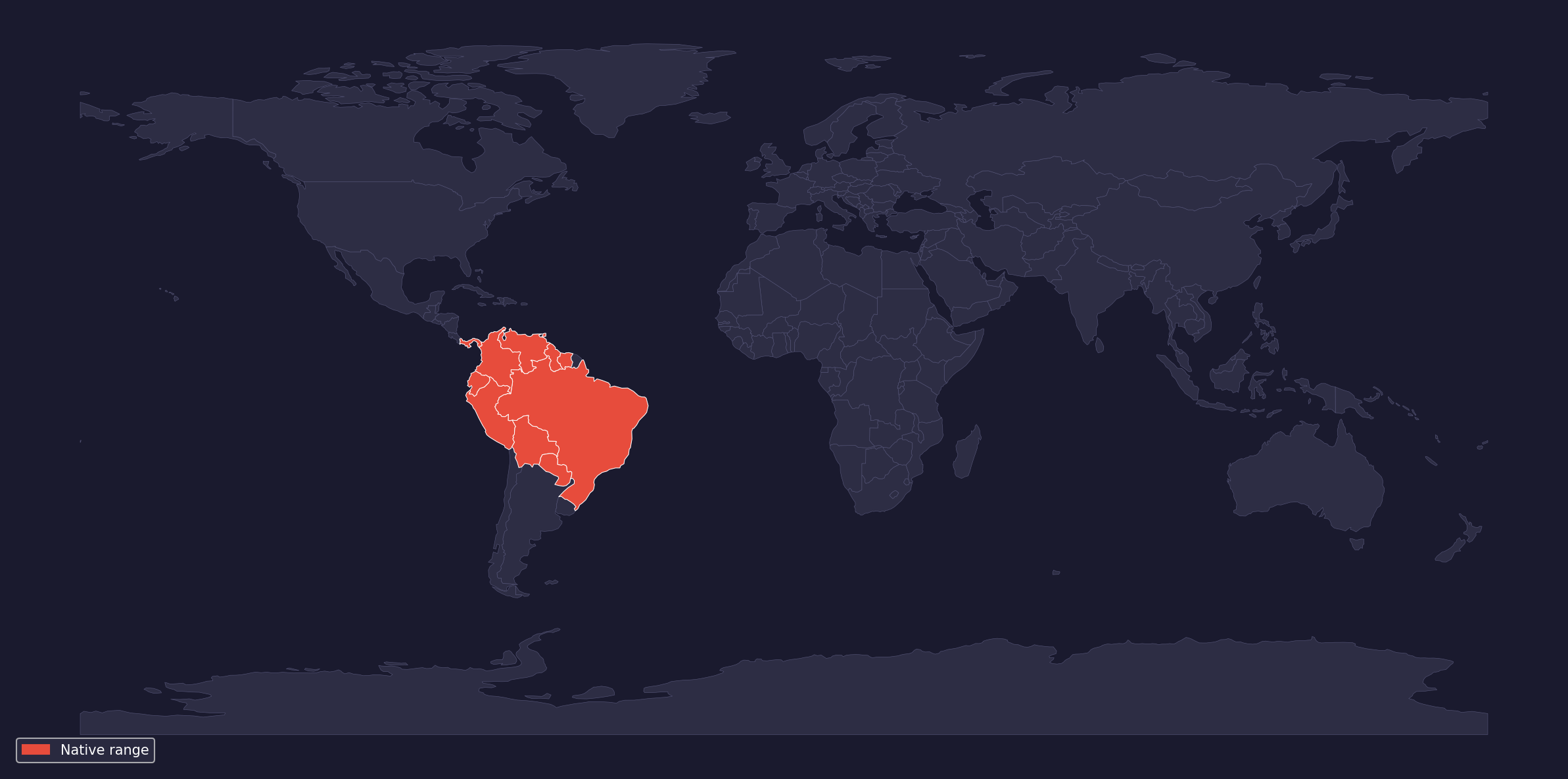
Red-footed tortoises occur across parts of Central and northern South America, including Panama, Colombia, Venezuela, Guyana, Suriname, Trinidad and Tobago, Brazil, Ecuador, Peru, Bolivia, and Paraguay. They inhabit forest edges, humid savanna, seasonal woodland, and other warm habitats with access to cover and moisture.
The natural environment is typically characterized by:
- Warm temperatures year round
- Moderate to high humidity
- Seasonal rainfall rather than true desert dryness
- Shade, leaf litter, and cover
- Access to a varied natural diet of plant material, fallen fruit, fungi, and other foods
In captivity, the species benefits from a setup that offers both warmth and humidity without becoming stale, dirty, or swampy.
⚖️ Legal status
The red-footed tortoise is a protected species and wild-caught animals should be avoided. According to current official CITES sources, Chelonoidis carbonarius is listed in CITES Appendix II. Within the EU wildlife trade regulations, it is generally treated as an Annex B species.
The species is not relevant to the Bern Convention because it is not native to Europe. Local rules on import, sale, transport, breeding, and proof of legal origin may still apply depending on the country. Captive-bred animals with clear origin records are strongly preferable.
🤌 Husbandry
The best setup for a red-footed tortoise is a secure enclosure that combines warm temperatures, decent humidity, cover, and room to move. Hatchlings and small juveniles can start in a humid, easy-to-monitor indoor enclosure around 90 x 60 cm, but they need upgrades as soon as walking space, feeding, or humidity gradients become limited.
Adult space requirements are much larger. For one adult, about 2.4 x 1.2 m indoors is a practical minimum for temporary or winter housing, while 3-6 m² or more is a better target for a permanent pen. In suitable climates, a secure outdoor enclosure of at least 4-6 m², with shade, humid retreats, and dry walking areas, is strongly preferable.
This species usually benefits from:
- Warm basking access
- A more humid hiding area
- Substrate suitable for walking and some digging
- Visual cover and planted structure
- Easy access to water
💡 Lighting
Strong lighting and UVB are important for indoor keeping. Red-footed tortoises need UVB to synthesize vitamin D3 and use calcium correctly.
Useful lighting principles:
- Provide a clear day-night cycle
- Use quality UVB suited to tortoises
- Make sure the animal can bask and also retreat into shade
- Replace UVB lamps according to manufacturer guidance
Outdoors, natural sunlight is the best UVB source whenever temperatures are safe.
For UV planning, treat this species as Ferguson Zone 2. Aim for about UVI 1-2 at the animal’s back or shell height in the basking zone, with a gradient down to shaded areas near zero UVI. This usually points to a moderate 5-7% T5/Forest-style UVB tube at a measured safe distance; measure with a Solarmeter 6.5 when possible, because reflector, mesh, distance, and lamp age change the real exposure.
🌡 Heating and temperature
Red-footed tortoises need stable warmth and do not require Mediterranean-style winter cooling.
Suitable approximate temperatures:
- Basking area: around 32-35°C
- Warm ambient zone: about 26-30°C
- Cooler retreat area: around 24-26°C
- Night temperature: usually best kept above about 22°C
Chronic chilling is harmful and often contributes to poor digestion, immune suppression, and respiratory problems.
💧 Humidity and water
Humidity matters much more for this species than for dry-climate tortoises. Constant soaking wetness is still undesirable, but a red-footed tortoise should not be kept in permanently dry air and dry substrate.
Practical goals include:
- Moderate to high humidity
- A humid hide or sheltered damp retreat
- Fresh clean water at all times
- Good hygiene and ventilation
A shallow water tray large enough for safe entry is helpful. Young animals especially benefit from stable humidity and regular hydration.
🌿 Enclosure and decoration
The enclosure should support walking, hiding, feeding, soaking, and use of both open and covered areas.
Useful elements include:
- Soil-rich substrate that holds some moisture
- Leaf litter, bark, and planted areas
- Shelters and shaded zones
- Stable basking space
- A water tray
This species generally appreciates a more complex and sheltered environment than open dry tortoise tables provide.
🥬 Feeding
Red-footed tortoises are omnivorous-leaning tortoises and need a more varied diet than strictly herbivorous Mediterranean species.
A practical captive diet can include:
- Leafy greens and weeds
- Broadleaf edible plants
- Small amounts of suitable vegetables
- Limited amounts of fruit
- Occasional appropriate higher-protein items used carefully, depending on the keeper’s approach and veterinary guidance
Important feeding principles:
- Variety matters
- Fruit should not dominate the diet
- Overly rich feeding can create shell and growth problems
- Calcium remains important
Because keepers use somewhat different feeding models with this species, it is wise to avoid extremes. A balanced, fiber-rich diet with controlled extras is safer than constant sugary fruit-heavy feeding.
Growth stage matters. Hatchlings and juveniles need the same high-quality, high-fiber diet as adults, but with closer hydration, calcium, UVB, and weight monitoring so growth stays steady rather than forced. Adults should be maintained lean and active on fibrous grazing foods; rich foods, excess protein, and frequent calorie-heavy extras cause shell deformity, obesity, kidney strain, and reproductive problems.
🩺 Common problems
The most common red-footed tortoise problems are linked to chronic chilling, poor humidity balance, weak UVB, dirty wet conditions, bad diet balance, and insufficient space.
Warning signs include:
- Soft or uneven shell growth
- Swollen eyes
- Nasal discharge
- Wheezing
- Lethargy
- Refusal to eat
- Shell rot or skin problems in dirty wet setups
If these appear, first review temperatures, UVB, humidity, hygiene, hydration, and diet. Respiratory signs, shell lesions, severe weakness, or prolonged anorexia should be assessed by a reptile veterinarian.
📌 Conclusion
The red-footed tortoise is an appealing and personable tropical tortoise when kept warm, humid enough, and well fed without excess. It is not a Mediterranean dry-setup species and does best when the enclosure reflects its tropical forest-edge background.
📚 Sources and further reading
- CITES Appendices and Species+ trade database, checked April 2026
- EU wildlife trade regulations and annex references, checked April 2026
- GBIF species backbone and occurrence data for taxonomy and distribution context
- IUCN Red List and specialist husbandry references where applicable