Share

Pancake Tortoise
🔤 Taxonomy
Malacochersus tornieri is the currently accepted scientific name. The genus is monotypic, so trade listings usually use the Latin name or the common name.
Common names used in the hobby:
- Pancake tortoise
📌 Description
A flattened East African rock-crevice tortoise that needs secure rocky structure, high basking heat, UVB, and strict legal documentation.
Adult size is usually 15-18 cm, with adult weight around 350-700 g and a potential lifespan of 25-40 years. Plan the adult enclosure before purchase, not after the juvenile outgrows a starter pen.
🌍 Distribution
It occurs in rocky kopjes and dry savanna landscapes of Kenya and Tanzania, where it wedges into narrow cracks instead of relying on a high defensive shell. Captive care must provide secure crevices, high basking heat, shaded cracks, dry airflow, and escape-proof boundaries.
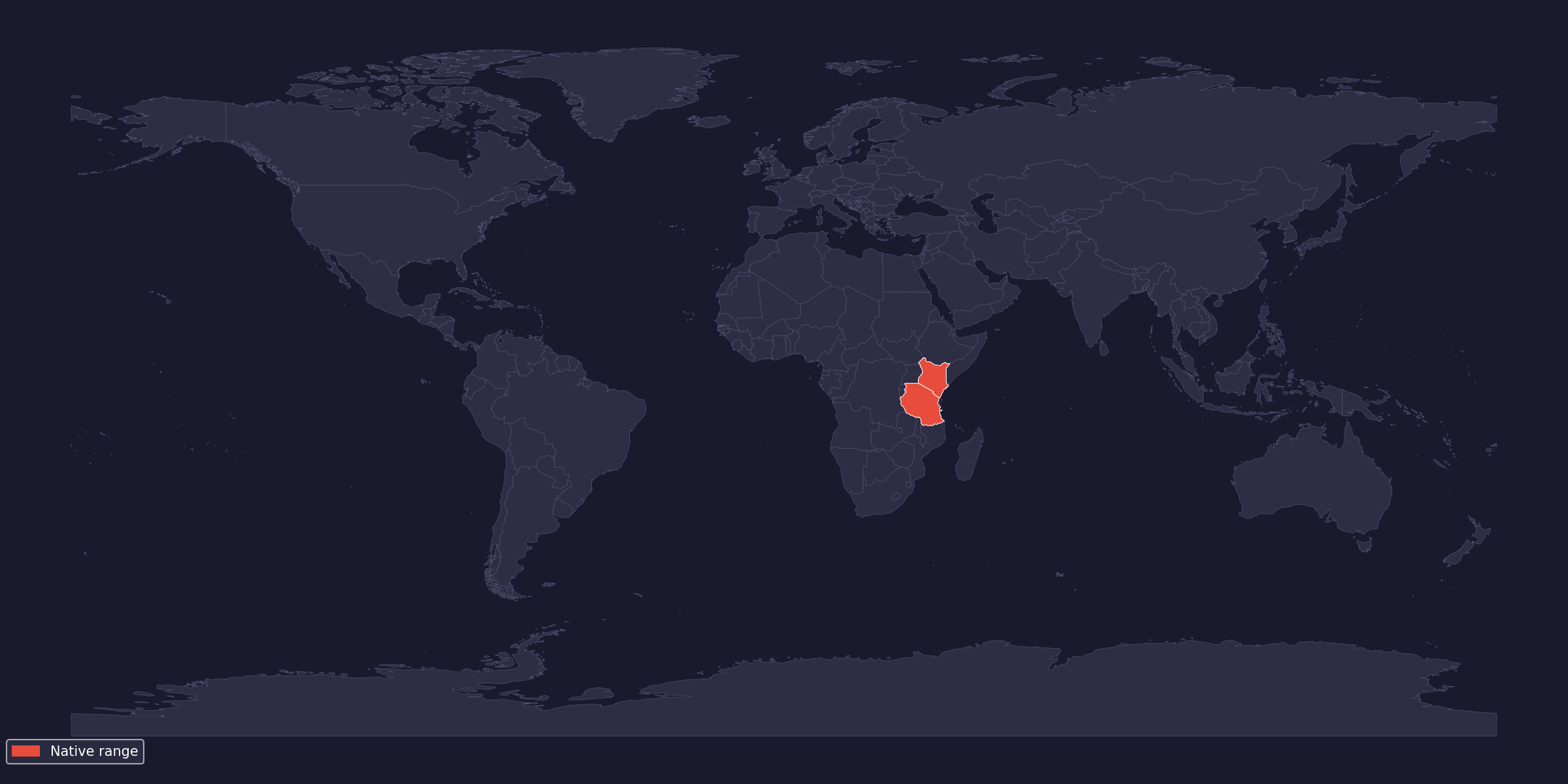
🌡 Climate across the native range
Monthly climate normals from reviewed GBIF occurrence locations:
Manyara — Tanzania, United Republic of
| Month | Min °C | Mean °C | Max °C | RH % |
|---|---|---|---|---|
| January | 16.7 | 23.2 | 29.7 | 68 |
| February | 16.7 | 23.4 | 30.1 | 66 |
| March | 17.7 | 23.6 | 29.5 | 69 |
| April | 18.7 | 23.4 | 28.2 | 72 |
| May | 16.9 | 21.3 | 25.7 | 75 |
| June | 15 | 20.2 | 25.3 | 69 |
| July | 13.7 | 19.1 | 24.4 | 68 |
| August | 14.3 | 20 | 25.6 | 65 |
| September | 15.4 | 21.7 | 28 | 60 |
| October | 15.9 | 22.6 | 29.2 | 59 |
| November | 17.1 | 23.2 | 29.3 | 65 |
| December | 17.2 | 23.2 | 29.1 | 68 |
Isiolo — Kenya
| Month | Min °C | Mean °C | Max °C | RH % |
|---|---|---|---|---|
| January | 19.4 | 25.5 | 31.5 | 60 |
| February | 19.8 | 26.3 | 32.8 | 57 |
| March | 20.9 | 26.8 | 32.7 | 61 |
| April | 21.2 | 26.4 | 31.6 | 68 |
| May | 20.6 | 25.8 | 30.9 | 66 |
| June | 19.4 | 24.7 | 30 | 62 |
| July | 18.9 | 24.1 | 29.3 | 61 |
| August | 18.7 | 24.3 | 29.9 | 60 |
| September | 19.4 | 25.3 | 31.2 | 56 |
| October | 20.5 | 26.2 | 31.8 | 58 |
| November | 20.5 | 25.5 | 30.4 | 68 |
| December | 19.6 | 24.9 | 30.3 | 68 |
Iringa — Tanzania, United Republic of
| Month | Min °C | Mean °C | Max °C | RH % |
|---|---|---|---|---|
| January | 19.6 | 23.3 | 27.1 | 78 |
| February | 19.4 | 23.3 | 27.1 | 80 |
| March | 19.2 | 23.1 | 26.9 | 81 |
| April | 18.7 | 22.3 | 26 | 82 |
| May | 17.4 | 21.1 | 24.9 | 78 |
| June | 15.8 | 19.8 | 23.9 | 72 |
| July | 15 | 19.1 | 23.3 | 69 |
| August | 15.8 | 19.9 | 24 | 68 |
| September | 17 | 21.2 | 25.5 | 65 |
| October | 18.4 | 22.7 | 27 | 63 |
| November | 19.7 | 23.9 | 28 | 65 |
| December | 20.1 | 23.8 | 27.6 | 71 |
Weather data by WorldClim v2.1 · Monthly normals queried by Herpeton Academy from raster values; relative humidity is derived from vapor pressure and mean temperature.
Location references use GBIF.org occurrence data where available; original occurrence records retain their source dataset licenses.
⚖️ Legal status
As of 2026-06-05, this article records the species as CITES Appendix I, EU Annex A, and Bern Convention not relevant. In the EU, Annex A animals can require certificates and marking even when they are captive bred. Do not rely on a seller’s verbal claim. Local ownership, registration, transport, breeding, sale, and import rules may still apply, so keep invoices, breeder details, transfer or import/export documents, and identification photos with the animal’s records.
🤌 Husbandry
Design the enclosure around crevice safety first. The animal needs horizontal room and strong basking heat, but rockwork must offer tight shaded retreats without any risk of collapse.
A practical adult starting footprint is about 1.1 m², with a starting footprint around 150 x 75 cm. Larger adults, females, groups, or outdoor housing need more space and duplicate basking, feeding, and retreat options where relevant.
💡 Lighting
Use a clear 10-12 hour day-night cycle, bright visible light, and measured UVB. Plan UVB around Ferguson Zone 3 at the basking area, with shaded retreats close enough for the tortoise to leave the light.
Indoor animals need a reliable UVB lamp or regular safe outdoor sunlight. Glass and most plastics block useful UVB, so measure the real UVI at shell height.
🌡 Heating and temperature
Typical structured targets are:
- ambient air: 24-30°C
- basking surface: 34-38°C
- cool retreat: 22-25°C
- night: 18-22°C
Use thermostats, separate thermometers, and surface-temperature checks. Heat should create a usable gradient, not one uniform hot box.
💧 Humidity and water
Structured humidity target: 30-50%. Short local access around 50-60% may support hydration, skin, or nesting needs, but the whole enclosure should not become stagnant.
Keep the enclosure dry and airy overall, with a small local humidity refuge and clean shallow water. Stagnant damp crevices are a common failure.
🌿 Enclosure and decoration
Use anchored rock modules, bonded slate stacks, or artificial crevice systems rather than loose piles. Every piece must resist shifting, sliding, and crushing when pushed. Use secure lids or inward lips, smooth upper barriers, blocked cable exits, and hides that can be opened without pulling the tortoise out by force.
🥬 Feeding
Feed a dryland herbivore diet based on weeds, grasses, leaves, and flowers. Small body size makes overfeeding rich greens a real risk. Offer high-fiber portions, regular calcium, and a shallow water dish that does not soak the substrate.
🥚 Breeding
This is an oviparous species. Typical clutch size is about 1-2 eggs, with incubation around 28-31°C for about 120-180 days.
Breeding is slow because females often produce one egg at a time. Seasonal changes in light, rainfall, and temperature can be useful, but extreme cooling or a wet enclosure is risky.
🩺 Common problems
The main risks are escape, crushed animals from unstable rocks, dehydration during hot periods, damp stagnant crevices, weak UVB, and illegal wild-caught origin.
Quarantine new animals, record weights, and use an experienced reptile veterinarian for nasal discharge, wheezing, swollen eyes, injuries, persistent refusal to eat, shell softness, diarrhea, or sustained weight loss.
📌 Conclusion
The pancake tortoise suits keepers who can build secure crevice systems, measure heat and UVB, and maintain strict legal documentation. Its small size does not make it simple.
📚 Sources and further reading
Key sources checked for this revision:
- CITES Appendices
- Checklist of CITES Species
- European Commission wildlife trade overview
- ReptiFiles Pancake Tortoise Care Sheet
- GBIF Backbone Taxonomy
- WorldClim v2.1