Share

Ybyrapora diversipes
🔤 Taxonomy
Ybyrapora diversipes is the accepted scientific name for the Brazilian arboreal tarantula long known in the hobby as Avicularia diversipes. The genus transfer matters because many older care sheets and sale labels still use the former pinktoe genus.
Older names and combinations associated with the species include:
- Avicularia diversipes
English common names used in the hobby:
- Amazon sapphire pinktoe
- Brazilian blue pinktoe
- Blue pinktoe tarantula
📌 Description
Ybyrapora diversipes is a medium arboreal New World tarantula from Brazil. Juveniles are especially colorful, while adults remain elegant, quick, and web-oriented. Most adults reach about 10-13 cm legspan.
This species is best kept as a display animal. It is less defensive than many Old World arboreal tarantulas, but it is fast, delicate, and capable of sudden jumps. The husbandry failure point is the same as with many pinktoe-type tarantulas: too much stagnant moisture and too little cross-ventilation.
☠️ Venom
The venom is not generally treated as medically significant, but bites can be painful and should be avoided. Like other New World tarantulas, the species may use urticating setae. Avoid face-level work over the enclosure and wash exposed skin after maintenance.
🌍 Distribution
Ybyrapora diversipes is endemic to Brazil, with records tied to Atlantic Forest and adjacent humid forest habitats. It should be kept as an arboreal species with elevated retreats, vertical webbing space, and air movement.
Good captive conditions are not a sealed wet box. The spider needs humidity support, but also dry resting surfaces, a clean water source, and enough ventilation for the webbed retreat to stay fresh.
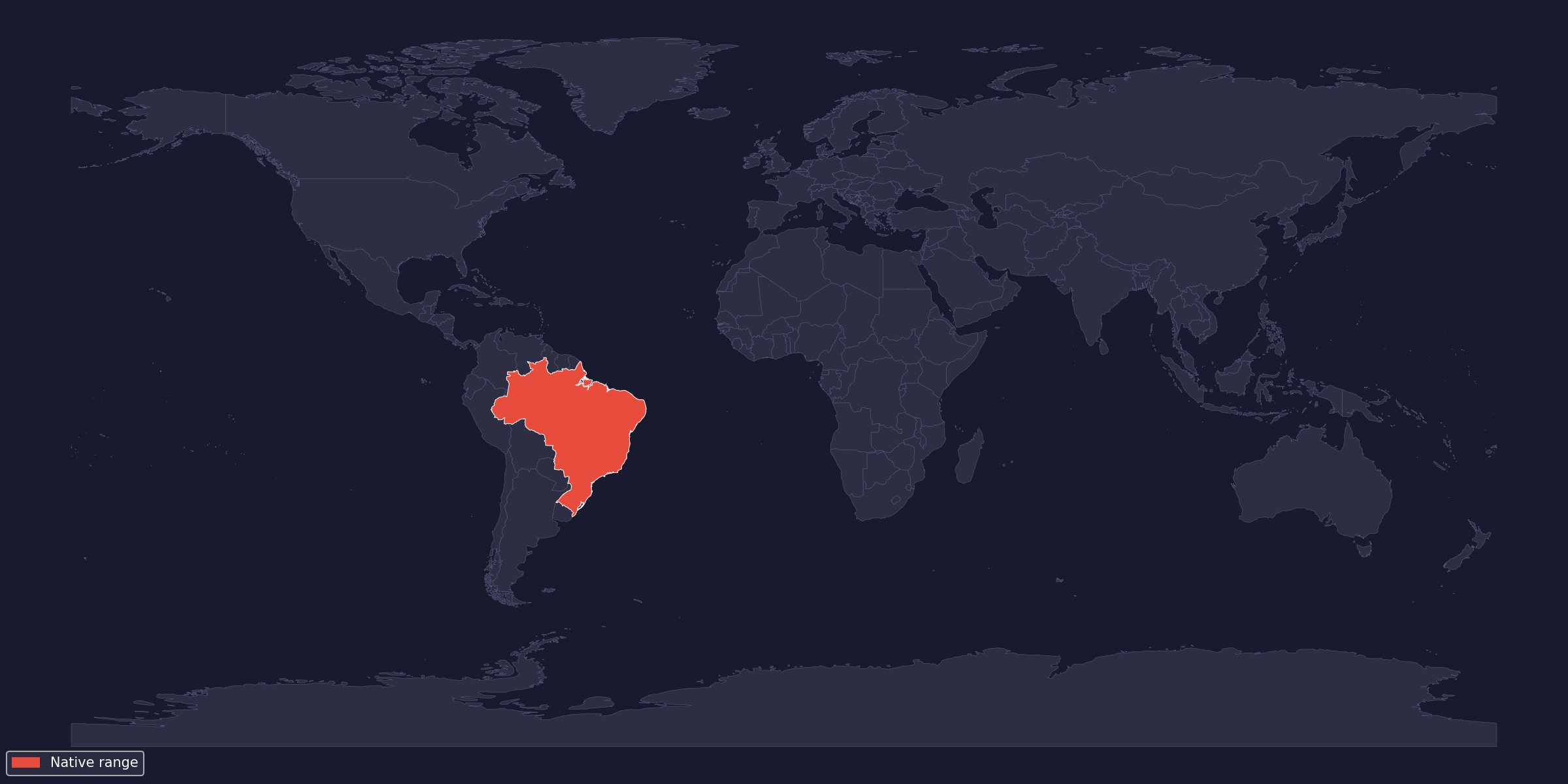
🌡 Climate across the native range
Monthly climate normals from a reviewed GBIF occurrence location:
Bahia — Brazil (Atlantic Forest GBIF occurrence)
| Month | Min °C | Mean °C | Max °C | RH % |
|---|---|---|---|---|
| January | 23 | 25.5 | 28.8 | 84 |
| February | 23 | 25.6 | 28.9 | 84 |
| March | 23 | 25.5 | 28.9 | 86 |
| April | 22.5 | 24.8 | 28 | 87 |
| May | 21.3 | 23.6 | 26.6 | 87 |
| June | 20.2 | 22.4 | 25.4 | 87 |
| July | 19.3 | 21.7 | 24.7 | 87 |
| August | 19.1 | 21.7 | 24.9 | 85 |
| September | 20.1 | 22.7 | 26 | 83 |
| October | 21.4 | 23.8 | 27.1 | 83 |
| November | 22.2 | 24.5 | 27.6 | 85 |
| December | 22.8 | 25.2 | 28.5 | 84 |
Weather data by Open-Meteo.com · CC BY 4.0 · Monthly normals calculated by Herpeton Academy from daily archive values.
Location references use GBIF.org occurrence data where available; original occurrence records retain their source dataset licenses.
⚖️ Legal status
As checked against current official CITES Appendices and EU wildlife-trade references on 2026-06-03, no current CITES listing or species-specific EU Annex listing was found for Ybyrapora diversipes. The species is not relevant to the Bern Convention because it is not native to Europe.
Brazilian national wildlife, collection, export, proof-of-origin, and threatened-species rules may still matter even when the species is not CITES-listed. Captive-bred animals with clear seller records are the responsible default. Keep invoices, breeder details, import or transfer paperwork, and the older Avicularia diversipes name if it appears on labels.
🤌 Husbandry
House Ybyrapora diversipes alone in a secure vertical enclosure. Young animals need smaller arboreal containers with ventilation on more than one side, so they can find prey and establish a webbed retreat.
For an adult, a 30 x 30 x 45 cm enclosure is a practical minimum when it has a tall cork tube, branches, foliage, and secure cross-ventilation. The water dish should be reachable without destroying the web tube.
Useful care priorities:
- Tall secure enclosure
- Cross-ventilation
- Cork tube or bark slab
- Foliage and web anchor points
- Fresh water
- Drying surfaces between moisture additions
💡 Lighting
No UVB or basking lamp is required. A normal room day-night rhythm is enough. Gentle display lighting is acceptable if it does not heat the top retreat or dry the enclosure too quickly.
🌡 Heating and temperature
Aim for 22-27°C by day, with nights around 20-23°C. Avoid hot stagnant air at the top of the enclosure.
If extra heat is needed, warm the room or one outside wall gently. Do not place a strong heat source above the web tube, because the spider may be trapped between heat and exposure.
💧 Humidity and water
Aim for about 65-80% with constant airflow. A water dish is more reliable than misting alone.
Lightly moisten part of the enclosure when needed, then let surfaces dry. Wet webbing, condensation, and sour substrate are warning signs that the setup is too closed or too wet.
🌿 Enclosure and decoration
Use cork bark, branches, and foliage to create a protected upper retreat. A modest substrate layer helps buffer humidity, but this is not a burrowing species.
Avoid mesh that catches claws, loose doors, large cable gaps, and heavy decor that can shift. Keep maintenance tools and a catch cup ready before opening the enclosure.
🪳 Feeding
Feed crickets, roaches, small locusts where legal, and other suitable insects. Offer prey near the webbed retreat. Adults usually do well with one suitable prey item every 7-14 days, adjusted for body condition.
Remove uneaten prey, especially before molts. Arboreal tarantulas can fast normally, but a thin abdomen with poor grip, dehydration, or repeated falls needs immediate husbandry review.
🩺 Common problems
Common problems include stagnant wet air, dehydration when no water dish is provided, escape during maintenance, falls from slick surfaces, and damage to the web retreat from over-cleaning.
A tarantula on its back is usually molting and should not be touched. If the spider falls, leaks hemolymph, loses grip repeatedly, or has a failed molt, minimize handling and consult an experienced exotic-animal veterinarian or arachnid keeper where possible.
📌 Conclusion
Ybyrapora diversipes is a rewarding arboreal display species for keepers who already understand ventilation-first tropical tarantula care. Prepare the vertical enclosure before buying, keep records, and avoid wild-origin animals without clear paperwork.
📚 Sources and further reading
- GBIF species backbone entry for Ybyrapora diversipes
- World Spider Catalog
- Fukushima & Bertani 2017 revision of Avicularia and related genera
- CITES Appendices — legal-status reference checked 2026-06-03
- EU wildlife trade overview — legal-status reference checked 2026-06-03
- Bern Convention appendices