Share

Nhandu chromatus
🔤 Taxonomy
Nhandu chromatus is the currently accepted scientific name in the World Spider Catalog. The name has been unstable in recent hobby discussion because the species was transferred to Vitalius in 2023 and then transferred back to Nhandu in 2026.
The rename history that keepers are most likely to encounter is:
- Nhandu chromatus Schmidt, 2004 (original description)
- Nhandu chromatus -> Vitalius chromatus (temporary genus transfer, Bertani 2023)
- Vitalius chromatus -> Nhandu chromatus (returned to Nhandu, Sherwood et al. 2026)
Older catalog entries also list earlier material as misidentified Vitalius cristatus before Schmidt described Nhandu chromatus. For care and buying records, treat labels such as “Vitalius chromatus” as recent synonyms for the same animal, but be cautious with vague trade names because Nhandu and related Brazilian theraphosids are often confused.
English common names used in the hobby:
- Brazilian red and white tarantula
- Brazilian red and white bird eater
German common names used in the hobby:
- Brasilianische Rotweisse Vogelspinne
- Rotweisse Riesenvogelspinne
📌 Description
Nhandu chromatus is a large, bold-looking New World terrestrial tarantula known for its black, white, and reddish coloration. It is one of the more visually dramatic heavy-bodied display species in the hobby.
Adult size is usually about 7-8 cm body length and about 16-18 cm legspan, with females typically heavier than mature males.
Despite the impressive appearance, it is not usually treated as a handling species. Individuals can be defensive, quick over short distances, and very capable of flicking urticating hairs when disturbed.
This species is often appreciated for its strong feeding response and striking contrast, but that same enthusiasm means maintenance should still be calm and deliberate.
☠️ Venom
This species is venomous. Venom exposure can cause pain, swelling or other systemic effects, and severity varies with species, locality, bite site and the amount delivered. A small wound or apparently dry bite is not proof of safety; every bite or sting requires urgent medical assessment.
If an incident occurs, move away, call emergency services or a poison centre, keep the patient still, remove rings and other constricting items, and follow dispatcher instructions. Do not use a tourniquet, cut or suck the wound, apply ice or electricity, give alcohol or medicines as a home treatment, or attempt to catch the animal. Antivenom choice and dosing are hospital decisions; verify the relevant product and local availability in advance. Sources: WHO snakebite guidance and appropriate species-specific toxinology or medical references listed below.
🌍 Distribution
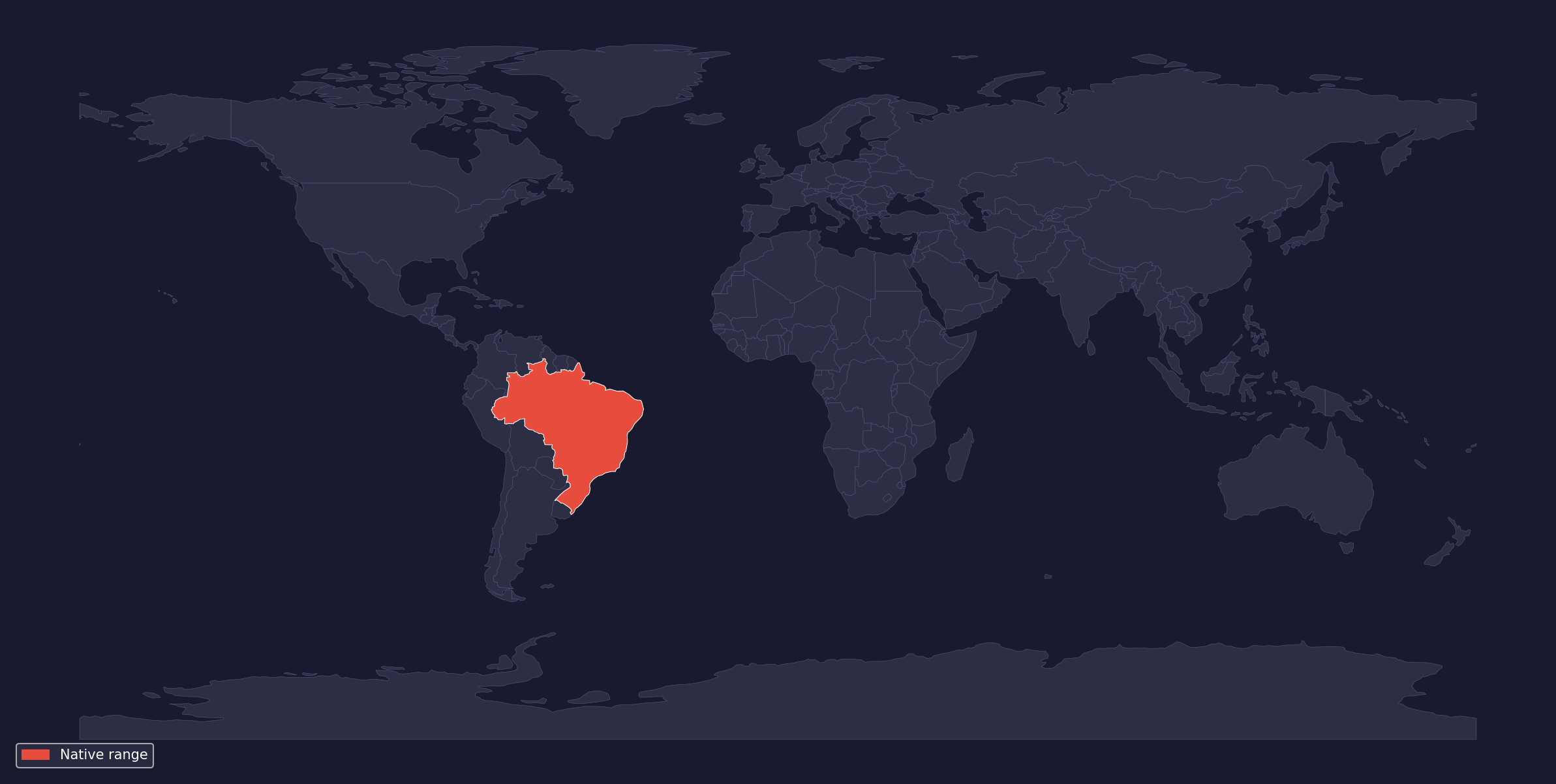
Nhandu chromatus is native to Brazil and nearby Paraguay. In the wild it is associated with cerrado, savanna-like scrub and seasonal open habitats with soil retreats.
For keepers, the useful habitat cues are:
- a low terrestrial enclosure with more floor space than height
- enough substrate for digging or reshaping a retreat
- dry to moderately dry surface conditions with a water dish available
- strong ventilation and stable warm room temperatures
- fall prevention, because heavy terrestrial tarantulas are easily injured
🌡 Climate across the native range
Monthly climate normals from reviewed GBIF occurrence locations:
Piaui — Brazil
| Month | Min °C | Mean °C | Max °C | RH % |
|---|---|---|---|---|
| January | 23 | 26.4 | 30.6 | 74 |
| February | 22.6 | 25.9 | 30 | 77 |
| March | 22.5 | 25.8 | 29.9 | 79 |
| April | 22.8 | 26.3 | 30.5 | 73 |
| May | 23.4 | 27.3 | 31.7 | 60 |
| June | 23.1 | 27.3 | 32 | 51 |
| July | 22.5 | 27.1 | 32.2 | 46 |
| August | 22.7 | 28 | 33.7 | 41 |
| September | 24.3 | 29.7 | 35.4 | 37 |
| October | 25.6 | 30.5 | 35.8 | 40 |
| November | 25.2 | 29.3 | 34 | 53 |
| December | 24.2 | 27.9 | 32.4 | 62 |
Weather data by Open-Meteo.com · CC BY 4.0 · Monthly normals calculated by Herpeton Academy from daily archive values.
Location references use GBIF.org occurrence data where available; original occurrence records retain their source dataset licenses.
⚖️ Legal status
No current CITES listing or specific EU wildlife trade annex listing was found for Nhandu chromatus in the official sources checked for this article. The species is not relevant to the Bern Convention because it is not native to Europe.
Local rules on import, sale, transport, breeding, and proof of legal origin may still apply. Captive-bred animals from reputable sources remain the safest choice.
🤌 Husbandry
Nhandu chromatus should be kept alone in a secure terrestrial enclosure.
Stage management is especially important in large terrestrial species. Slings need smaller containers with reachable prey and slightly more stable moisture around part of the substrate. Juveniles can be moved up gradually as they gain size. Heavy adults need low, stable enclosures with deep substrate and no tall fall zone, because abdominal injuries from falls are a serious risk.
Build the enclosure around:
- More floor space than height
- Firm substrate with some depth
- A secure hide
- A shallow water dish
- Good ventilation
An adult is often kept in an enclosure around 30 x 20 x 20 cm or larger. Excessive height should be avoided because a fall can seriously injure a heavy-bodied tarantula. Slings and juveniles are started in smaller containers — a 250 ml deli cup or small plastic rearing cup for small slings, progressing through intermediate sizes as they grow.
💡 Lighting
Tarantulas do not need specialist lighting; a regular room day-night rhythm is enough.
Strong lamps are unnecessary and can create avoidable overheating or excessive drying.
🌡 Heating and temperature
This species usually does well at warm room temperatures:
- Daytime: around 22-27°C
- Night: a small drop is acceptable
It is more important to avoid overheating than to chase high temperatures. Prolonged temperatures around or above 30°C increase stress risk.
💧 Humidity and water
Nhandu chromatus usually does best with a balanced approach: not bone dry for long periods, but not kept wet either.
Practical points:
- Keep much of the surface dry
- Allow some lower or partial moisture if needed
- Provide a clean water dish at all times
- Maintain airflow
The goal is moderate husbandry, not a constantly damp enclosure.
🌿 Enclosure and decoration
Suitable substrate can include coco fiber, topsoil, or tarantula-safe soil mixes that hold shape reasonably well. The setup should allow the spider to feel secure and to modify the entrance to a retreat if it wants.
Useful enclosure elements include:
- Cork bark or similar hide
- Stable deepish substrate
- Open feeding area
- A water bowl
- Minimal stable decoration
Tall decor and unsafe climbing opportunities should be avoided.
🪳 Feeding
Nhandu chromatus is insectivorous. Suitable staple prey includes:
- Crickets
- Roaches
- Locusts where available
- Mealworms or superworms only in moderation
Spiderlings usually eat every few days, juveniles once or twice a week, and adults roughly every 7-14 days depending on prey size and body condition.
This species often has a strong feeding response, so care should be taken during feeding and enclosure work.
Feeding changes with age. Slings can eat smaller prey or prekilled pieces more often, but uneaten prey should come out quickly, especially around premolt. Adults need less frequent meals, and an oversized abdomen is a reason to slow down, not feed more.
🩺 Common problems
The most common problems are linked to excess moisture, poor ventilation, overheating, fall injuries, bad molts, and stress from unnecessary disturbance.
Warning signs include:
- Wrinkled abdomen
- Weak posture
- Visible decline with refusal to eat
- Failed molt
- Persistent wall climbing in a poor setup
If there is severe dehydration, visible injury, leaking hemolymph, or a difficult molt, seek experienced exotic-veterinary help where possible.
📌 Conclusion
Nhandu chromatus is a striking terrestrial display tarantula that usually does best with simple, stable care rather than complicated equipment. A low enclosure, moderate warmth, fresh water, secure shelter, and sensible moisture balance are the keys to long-term success.
📚 Sources and further reading
- CITES Appendices and Species+ trade database, checked April 2026
- EU wildlife trade regulations and annex references, checked April 2026
- GBIF species backbone and occurrence data for taxonomy and distribution context
- IUCN Red List and specialist husbandry references where applicable
💬 Feedback
For questions, corrections, or practical notes, leave us a message in the forum thread.