Share

Lasiodora parahybana
🔤 Taxonomy
Lasiodora parahybana is the currently accepted scientific name. Modern revisions treat the name as valid for the large northeastern Brazilian species traditionally known in the hobby as the Brazilian salmon pink birdeater.
Taxonomic and locality notes useful to keepers:
- The type locality is associated with Campina Grande, Paraiba, Brazil.
- Lasiodora acanthognatha Mello-Leitao, 1921 is treated as a junior synonym in modern revisionary work.
- Some old or casual trade labels may confuse L. parahybana with other large Lasiodora species, so breeding records should include source and locality information where known.
English common names used in the hobby:
- Brazilian salmon pink birdeater
- Salmon pink birdeater
- LP
📌 Description
Lasiodora parahybana is a very large terrestrial New World tarantula from Brazil, famous for its fast growth, heavy body, and pinkish or salmon-colored hairs over a dark base color. It is one of the largest tarantulas commonly kept in captivity and is often chosen by keepers who want an impressive display animal with strong feeding behavior.
Adult size is usually about 9-11 cm body length and about 20-25 cm legspan, with females typically heavier than mature males.
It is not a handling species. Large specimens can be very food-responsive and may kick urticating hairs readily when stressed. The main risk in normal care is not exotic venom; it is a large heavy spider falling, bolting during maintenance, or injuring itself against hard decor.
Fast growth is part of the appeal, but it also means the keeper needs adult housing plans early. A small sling can become a large, strong juvenile quickly compared with many slower-growing genera.
☠️ Venom
This species is venomous. Venom exposure can cause pain, swelling or other systemic effects, and severity varies with species, locality, bite site and the amount delivered. A small wound or apparently dry bite is not proof of safety; every bite or sting requires urgent medical assessment.
If an incident occurs, move away, call emergency services or a poison centre, keep the patient still, remove rings and other constricting items, and follow dispatcher instructions. Do not use a tourniquet, cut or suck the wound, apply ice or electricity, give alcohol or medicines as a home treatment, or attempt to catch the animal. Antivenom choice and dosing are hospital decisions; verify the relevant product and local availability in advance. Sources: WHO snakebite guidance and appropriate species-specific toxinology or medical references listed below.
🌍 Distribution
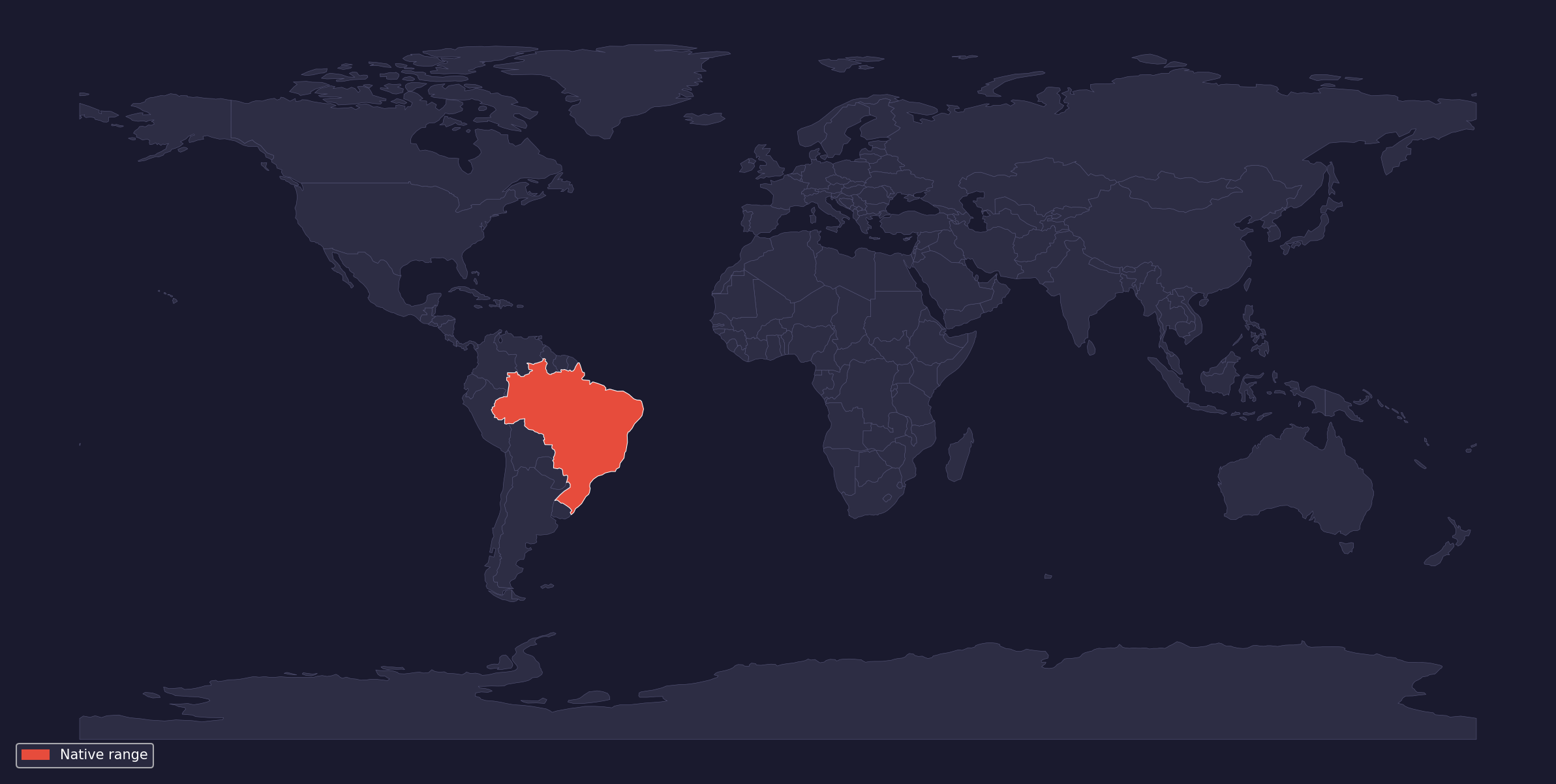
Lasiodora parahybana is native to northeastern Brazil. Revisionary material places it from Piaui through Ceara, Rio Grande do Norte, Paraiba, Pernambuco, and Alagoas, with records around Atlantic Forest areas and forested enclaves within the Caatinga biome. Animals have been found in burrows, ravines, root spaces, and under logs or rocks.
For enclosure design, the important takeaways are:
- a low terrestrial enclosure with deep, shape-holding substrate
- a secure hide and room to retreat below the surface
- moderate humidity with good ventilation, not stale wet substrate
- fresh water always available
- fall prevention and calm maintenance
That range supports a balanced setup: more moisture than a dry baboon tarantula, but not stagnant wet substrate. Large adults need both humidity management and strong ventilation.
🌡 Climate across the native range
Monthly climate normals from reviewed GBIF occurrence locations:
Ceará — Brazil
| Month | Min °C | Mean °C | Max °C | RH % |
|---|---|---|---|---|
| January | 24.2 | 28.2 | 33.9 | 66 |
| February | 24 | 27.8 | 33.1 | 71 |
| March | 23.8 | 27.2 | 32.2 | 75 |
| April | 23.7 | 27 | 31.7 | 77 |
| May | 23.7 | 27.4 | 32.1 | 71 |
| June | 23.2 | 27.2 | 32.1 | 64 |
| July | 22.8 | 27.4 | 32.6 | 57 |
| August | 22.8 | 28.1 | 34.1 | 52 |
| September | 23.2 | 28.6 | 35.4 | 51 |
| October | 23.7 | 28.9 | 36 | 54 |
| November | 24 | 29 | 35.9 | 57 |
| December | 24.4 | 28.9 | 35.4 | 60 |
Paraíba — Brazil
| Month | Min °C | Mean °C | Max °C | RH % |
|---|---|---|---|---|
| January | 23.3 | 26 | 29.7 | 77 |
| February | 23.4 | 26.1 | 29.7 | 78 |
| March | 23.4 | 26 | 29.6 | 80 |
| April | 23.2 | 25.6 | 29 | 82 |
| May | 22.8 | 25.1 | 28.4 | 83 |
| June | 22 | 24.2 | 27.2 | 83 |
| July | 21.3 | 23.5 | 26.5 | 82 |
| August | 21.1 | 23.6 | 27 | 78 |
| September | 21.6 | 24.3 | 27.9 | 76 |
| October | 22.4 | 25.1 | 29 | 74 |
| November | 22.9 | 25.7 | 29.5 | 74 |
| December | 23.2 | 26 | 29.8 | 75 |
Rio Grande do Norte — Brazil
| Month | Min °C | Mean °C | Max °C | RH % |
|---|---|---|---|---|
| January | 24.8 | 26.6 | 29 | 77 |
| February | 24.8 | 26.7 | 29.1 | 79 |
| March | 24.8 | 26.6 | 28.9 | 81 |
| April | 24.6 | 26.3 | 28.5 | 83 |
| May | 24.2 | 25.9 | 28.1 | 82 |
| June | 23.4 | 25 | 27.1 | 83 |
| July | 22.8 | 24.4 | 26.5 | 82 |
| August | 22.7 | 24.5 | 26.9 | 78 |
| September | 23.3 | 25.1 | 27.7 | 76 |
| October | 24 | 25.9 | 28.5 | 74 |
| November | 24.5 | 26.3 | 28.9 | 74 |
| December | 24.8 | 26.6 | 29.1 | 75 |
Weather data by Open-Meteo.com · CC BY 4.0 · Monthly normals calculated by Herpeton Academy from daily archive values.
Location references use GBIF.org occurrence data where available; original occurrence records retain their source dataset licenses.
⚖️ Legal status
Lasiodora parahybana is not currently listed in the CITES Appendices. No specific current listing for this species was found in Annexes A-D of the EU wildlife trade regulations during the May 2026 check.
The species is not relevant to the Bern Convention because it is not native to Europe. Local ownership, sale, transport, breeding, and import rules may still apply, so keeping proof-of-origin documents is advisable.
Brazilian wildlife export and local-origin rules can be strict even when a species is not CITES-listed. In the pet trade, captive-bred stock with clear seller records is the responsible default.
🤌 Husbandry
Lasiodora parahybana should be housed alone. Adults need a roomy low enclosure, often around 45 x 30 x 30 cm minimum, with 60 x 45 cm floor space preferred for large females when space allows. Floor area, substrate depth, and safe maintenance access matter more than height. Slings and juveniles are started in much smaller containers, moving through intermediate enclosures as the animal grows. This species grows fast and may need size upgrades every few molts.
Stage management is especially important in large terrestrial species. Slings need smaller containers with reachable prey and slightly more stable moisture around part of the substrate. Juveniles can be moved up gradually as they gain size. Heavy adults need low, stable enclosures with deep substrate and no tall fall zone, because abdominal injuries from falls are a serious risk.
Keep the setup simple and dependable:
- Deep substrate
- A secure hide
- Good ventilation
- A large water dish
- No dangerous climbing structures
Use a water dish that cannot tip easily, because large individuals can bulldoze light decor. Keep the fall zone low by using deep substrate and avoiding hard stones or tall branches.
💡 Lighting
Ambient room lighting is sufficient, with no need for UVB or basking lamps.
🌡 Heating and temperature
Most keepers should target warm, stable room temperatures:
- Daytime: around 24-28°C
- Night: slight drop acceptable
Very high heat should be avoided because large heavy-bodied tarantulas can dehydrate quickly. Stable room warmth is safer than a hot spot that dries one side of the enclosure.
💧 Humidity and water
Lasiodora parahybana does best with moderate humidity and constant access to fresh water. The enclosure should not stay swampy, but it should not remain bone dry for long periods either.
One part of the substrate can remain slightly more moist than the rest.
For adults, a damp lower layer or one moist side is usually more stable than surface misting. Good ventilation is essential, because warm stagnant moisture encourages mold, mites, and bacterial problems.
🌿 Enclosure and decoration
Use a substrate that holds shape and allows shallow digging, such as coco fiber, unfertilized soil, or mixed terrestrial substrates. Adults usually benefit from 10 cm or more of substrate depth.
Keep the setup simple and sturdy. A heavy-bodied tarantula should not be given unsafe height or unstable decor.
The hide should be large enough for the spider to enter fully and turn around, but not so oversized that it feels exposed. Cork bark partly buried in compact substrate works well.
🪳 Feeding
Lasiodora parahybana is insectivorous and usually has a strong feeding response. Suitable prey includes:
- Crickets
- Roaches
- Locusts where available
- Mealworms or superworms in moderation
Fast-growing juveniles can eat often, but adults usually do better on a measured 7-10 day rhythm adjusted to body condition.
Feeding changes with age. Slings can eat smaller prey or prekilled pieces more often, but uneaten prey should come out quickly, especially around premolt. Adults need less frequent meals, and an oversized abdomen is a reason to slow down, not feed more.
Avoid routine vertebrate feeding. Invertebrate prey is sufficient for normal care and is cleaner, safer, and easier to portion.
🩺 Common problems
Common problems include dehydration, stagnant wet conditions, poor ventilation, dangerous enclosure height, and problems during molts.
Warning signs include a shriveled abdomen, lethargy, refusal to feed with clear decline, fall injury, leaking hemolymph, and difficult molts.
A very hungry feeding response is not proof that conditions are correct. Track molts, feeding dates, water availability, and abdomen size so overfeeding and dehydration are both easier to spot.
📌 Conclusion
Lasiodora parahybana is a classic giant display tarantula that rewards simple, steady care. A large low enclosure, deep substrate, moderate humidity, fresh water, and safe footing are the key points.
📚 Sources and further reading
- CITES Appendices and Species+ trade database, checked May 2026
- EU wildlife trade regulations and annex references, checked May 2026
- GBIF species backbone entry and revisionary material for Lasiodora parahybana
- IUCN Red List and specialist husbandry references where applicable
💬 Feedback
For questions, corrections, or practical notes, leave us a message in the forum thread.