Share

Heterothele villosella
🔤 Taxonomy
Heterothele villosella is the name used for the dwarf Tanzanian baboon tarantula covered here. GBIF lists the species under this name, and current World Spider Catalog entries include the species from Tanzania after a period in which the name was treated as a nomen dubium.
English common names used in the hobby:
- Tanzanian chestnut dwarf baboon
- Tanzanian chestnut baboon
- Dwarf baboon tarantula
Trade labels may also appear as Heterothele sp. “villosella”. Keep the Latin name and source information with breeding records, because small African theraphosids can be hard to identify from hobby photos alone.
📌 Description
Heterothele villosella is a small African Old World tarantula from Tanzania. It is popular with keepers who want a compact, webbing, fossorial display species that does not require a large enclosure.
Adult size is usually around 4-6 cm legspan. Females are much longer-lived than mature males, but this is still a small species with a shorter life arc than many large terrestrial tarantulas.
Its small size can make it look less intimidating than larger baboon spiders, but it is still a display animal. It is quick, secretive, and able to bite if pinned. The correct care mindset is calm maintenance and escape prevention, not handling.
Some hobbyists discuss this species as “communal.” That does not make group housing the default. Solitary housing is the safer recommendation for routine keepers, especially when animal origin, age, sex, and feeding history are not tightly controlled.
☠️ Venom
This species is venomous. Venom exposure can cause pain, swelling or other systemic effects, and severity varies with species, locality, bite site and the amount delivered. A small wound or apparently dry bite is not proof of safety; every bite or sting requires urgent medical assessment.
If an incident occurs, move away, call emergency services or a poison centre, keep the patient still, remove rings and other constricting items, and follow dispatcher instructions. Do not use a tourniquet, cut or suck the wound, apply ice or electricity, give alcohol or medicines as a home treatment, or attempt to catch the animal. Antivenom choice and dosing are hospital decisions; verify the relevant product and local availability in advance. Sources: WHO snakebite guidance and appropriate species-specific toxinology or medical references listed below.
🌍 Distribution
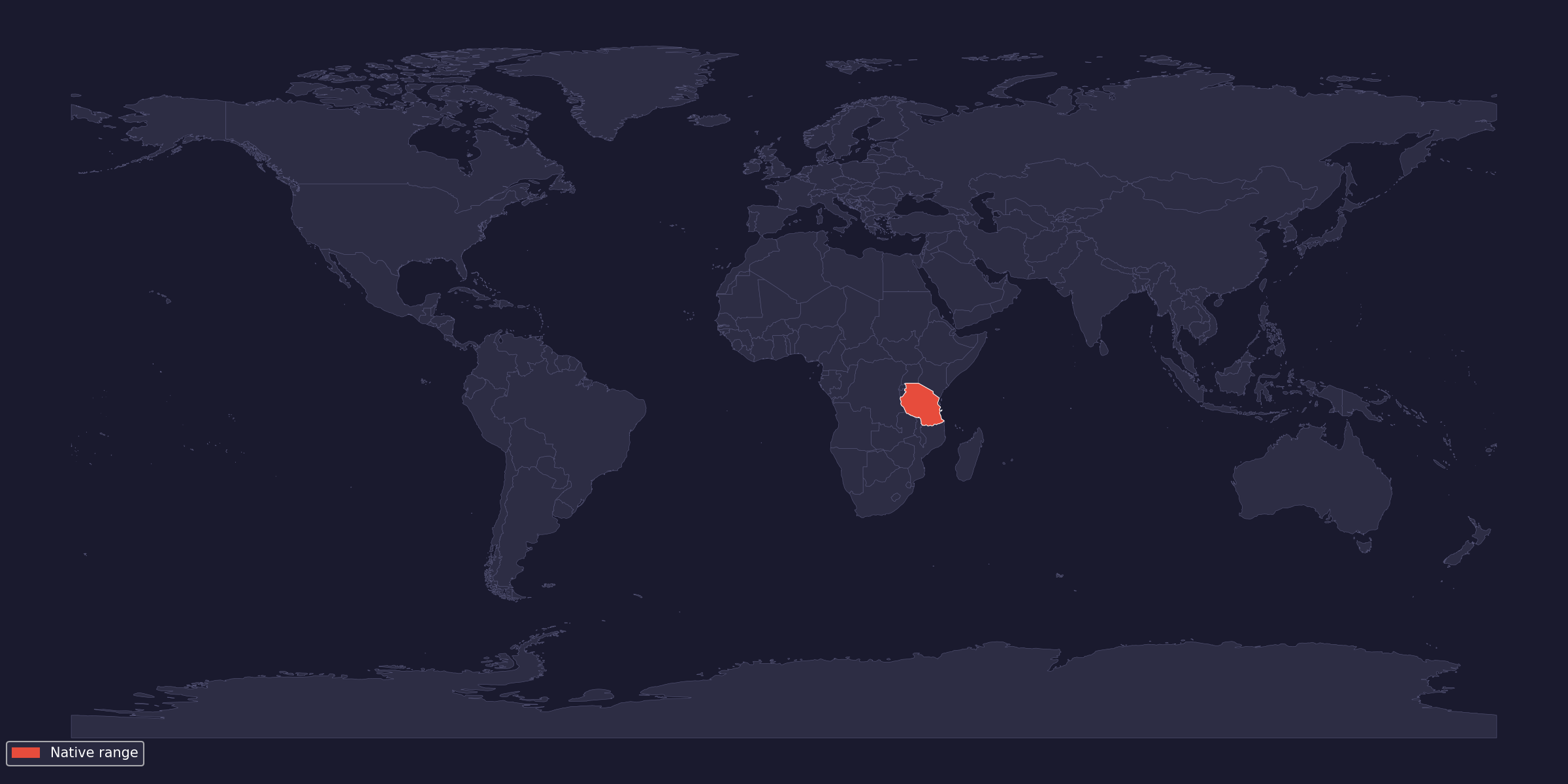
World Spider Catalog distribution references place Heterothele villosella in Tanzania. It is associated in the hobby with East African habitats where small tarantulas can use shallow burrows, litter, soil crevices, and dense webbing for cover.
Captive care should provide:
- a compact enclosure
- substrate deep enough for a shallow burrow
- leaf litter, bark, or small anchors for webbing
- a small water source or carefully maintained moist corner
- moderate humidity without wet, stagnant air
- secure ventilation holes that the spider cannot squeeze through
🌡 Climate across the native range
Monthly climate normals from reviewed GBIF occurrence locations:
East Usambara Mountains — Tanzania
| Month | Min °C | Mean °C | Max °C | RH % |
|---|---|---|---|---|
| January | 19.6 | 24.2 | 28.9 | 77 |
| February | 19.6 | 24.7 | 29.7 | 74 |
| March | 19.6 | 24.5 | 29.4 | 78 |
| April | 19.3 | 23.3 | 27.4 | 84 |
| May | 18.3 | 22 | 25.8 | 84 |
| June | 16.6 | 20.8 | 25.1 | 81 |
| July | 15.6 | 20 | 24.4 | 80 |
| August | 15.3 | 20 | 24.7 | 80 |
| September | 15.6 | 20.6 | 25.6 | 79 |
| October | 16.8 | 21.7 | 26.6 | 79 |
| November | 18.4 | 23.1 | 27.8 | 79 |
| December | 19.3 | 23.8 | 28.4 | 79 |
Weather data by WorldClim v2.1 · Monthly normals queried by Herpeton Academy from raster values; relative humidity is derived from vapor pressure and mean temperature.
Location references use GBIF.org occurrence data where available; original occurrence records retain their source dataset licenses.
⚖️ Legal status
No current CITES listing was found for Heterothele villosella in the official CITES sources checked on 2026-06-02. No specific listing for the species was found in Annexes A-D of the EU wildlife trade regulations.
The species is not relevant to the Bern Convention because it is not native to Europe. Local rules on import, sale, transport, exhibition, breeding, and proof of legal origin may still apply.
Keep purchase records and avoid implying that a trade label proves wild locality. This matters for small species where old hobby names and taxonomic revisions can be difficult to track.
🤌 Husbandry
Keep Heterothele villosella singly in a secure compact enclosure unless you have a specific, experienced breeding or group-housing plan.
Spiderlings can be raised in small vials or deli cups with lightly dampened substrate, a starter hide, and tiny ventilation holes. Adults do not need a huge display tank; a 20 x 20 x 20 cm enclosure or similar can be enough if it is structured well.
The enclosure should include:
- 6-10 cm of substrate
- small bark, cork, or leaf-litter cover
- anchor points for webbing
- a small water dish for larger juveniles and adults
- a moist corner rather than a soaked floor
- secure air holes and escape-proof lid edges
Expect webbing. A well-settled animal may turn the lower enclosure into a webbed tunnel system. Do not destroy that structure just to make the enclosure look cleaner.
💡 Lighting
Normal room lighting is enough. UVB and basking lamps are unnecessary.
Because this is a small, secretive tarantula, strong display lighting often gives no benefit and can dry the enclosure too quickly. Use indirect light if the enclosure is displayed.
🌡 Heating and temperature
Aim for moderate warm room temperatures:
- Daytime: about 22-26°C
- Night: about 19-22°C
Avoid overheating small enclosures. A tiny volume changes temperature quickly, especially under a lamp or on a heat mat. If the room needs supplemental heat, warm the room rather than placing a small spiderling container directly on a heat source.
💧 Humidity and water
This species does best with access to moisture but not a soaked enclosure. Spiderlings can be kept with part of the substrate slightly damp. Older juveniles and adults usually do well with a water dish and one periodically moistened corner.
Practical moisture rules:
- do not let spiderlings desiccate
- do not flood the burrow
- let part of the enclosure remain drier
- keep ventilation open enough to prevent mold
- remove boluses and uneaten prey before they rot inside webbing
Humidity numbers are less useful than substrate condition. The spider needs a moisture option and clean air.
🌿 Enclosure and decoration
Build the enclosure around a small webbed burrow. A mix of soil and coco fiber that holds a little structure is useful. Leaf litter, small cork pieces, and dry moss can add cover and web anchors.
Keep fall distance low. Although this species may climb webbing and enclosure walls, it is not an arboreal tarantula. The usable space should be close to the substrate.
Because the spider is small, ventilation and lid gaps matter. A gap that would be harmless for a large terrestrial tarantula can be an escape route here.
🪳 Feeding
Heterothele villosella is insectivorous. Suitable prey includes:
- pinhead or small crickets
- small roaches
- fruit flies for tiny spiderlings
- cut or pre-killed prey for very small slings when needed
Spiderlings can be fed small prey every few days. Adults usually do well with small appropriately sized prey every 5-10 days.
Do not leave large live prey wandering in a small webbed enclosure. Remove uneaten feeders, especially during premolt.
🩺 Common problems
Common problems include tiny spiderlings drying out, mold in overwatered webbing, escape through ventilation, overfeeding in small enclosures, and failed molts when the spider has no moisture option.
Warning signs include a shrinking abdomen, weak movement, repeated attempts to climb out, mites or mold around old prey remains, and loss of a stable webbed retreat.
If a small specimen disappears, do not dig immediately. It may be hidden in a webbed burrow or premolt. Check water, prey remains, and enclosure security first.
📌 Conclusion
Heterothele villosella is a compact, interesting tarantula for keepers who like small fossorial webbers and can manage tiny fast animals safely. It is not a handling species, and communal claims should not replace conservative solitary care for most keepers.
📚 Sources and further reading
- World Spider Catalog: Heterothele villosella
- GBIF species backbone: Heterothele villosella
- Gallon & Sherwood, 2026, taxonomic notes on Heterothele
- Northwest Zoological Supply: Baboon Spiders / African Terrestrials Care
- CITES Appendices, checked 2026-06-02
- EU wildlife trade regulations overview, checked 2026-06-02