Share

Davus pentaloris
🔤 Taxonomy
Davus pentaloris is the currently accepted scientific name. GBIF lists the species under the original 1888 description by Simon and records older combinations and synonymy that still appear in hobby searches.
Older names and combinations associated with the species include:
- Cyclosternum pentalore (Simon, 1888)
- Davus mozinno Estrada-Alvarez, 2014
English common names used in the hobby:
- Guatemalan tiger rump tarantula
- Tiger rump tarantula
Trade animals sold as “tiger rump” are not always locality-clean. When breeding or buying groups, keep labels such as Mexico, Guatemala, or El Salvador separate unless the breeder can document the line.
📌 Description
Davus pentaloris is a small to medium terrestrial New World tarantula from Central America, known for its orange abdominal pattern, dark legs, and active feeding behavior. It is popular with keepers who want a smaller species that still shows digging, light webbing, and visible hunting behavior.
Adult size is usually about 4-5 cm body length and about 10-12 cm legspan, with females typically heavier than mature males.
Like other New World tarantulas, it can kick urticating hairs when stressed. It is not a dangerous animal in normal private care, but it is still best treated as a display tarantula: quick maintenance, no routine handling, and no open work area where a small fast spider can disappear.
Its smaller adult size is an advantage for apartment keepers, but it also means hydration and prey size have to be managed carefully. Slings can dry out faster than large terrestrial species, and oversized prey can stress a molting juvenile.
☠️ Venom
This species is venomous. Venom exposure can cause pain, swelling or other systemic effects, and severity varies with species, locality, bite site and the amount delivered. A small wound or apparently dry bite is not proof of safety; every bite or sting requires urgent medical assessment.
If an incident occurs, move away, call emergency services or a poison centre, keep the patient still, remove rings and other constricting items, and follow dispatcher instructions. Do not use a tourniquet, cut or suck the wound, apply ice or electricity, give alcohol or medicines as a home treatment, or attempt to catch the animal. Antivenom choice and dosing are hospital decisions; verify the relevant product and local availability in advance. Sources: WHO snakebite guidance and appropriate species-specific toxinology or medical references listed below.
🌍 Distribution
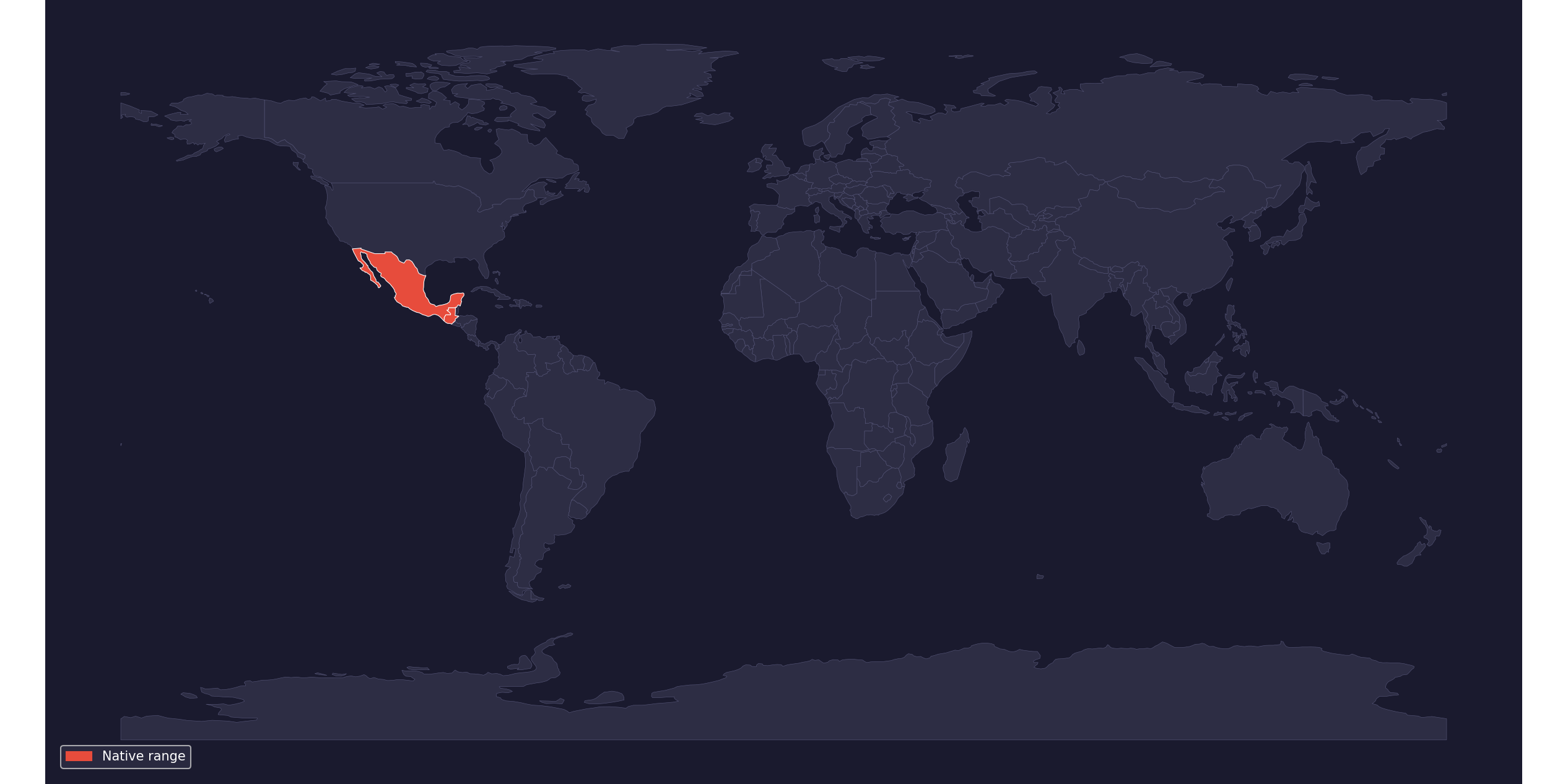
Davus pentaloris is native to Central America, with records and trade usage centered on Mexico, Guatemala, El Salvador, and nearby Pacific-slope regions. In the wild it is associated with seasonal dry forest, scrub, leaf litter, soil pockets, and shallow terrestrial retreats rather than permanently wet rainforest.
A practical captive setup should provide:
- a low terrestrial enclosure with more floor space than height
- enough substrate for digging or reshaping a retreat
- dry to moderately dry surface conditions with a water dish available
- strong ventilation and stable warm room temperatures
- fall prevention, because heavy terrestrial tarantulas are easily injured
🌡 Climate across the native range
Monthly climate normals from reviewed GBIF occurrence locations:
Oaxaca — Mexico
| Month | Min °C | Mean °C | Max °C | RH % |
|---|---|---|---|---|
| January | 21.4 | 24.4 | 28.9 | 64 |
| February | 21.8 | 25.3 | 30 | 65 |
| March | 22.9 | 26.5 | 31.2 | 65 |
| April | 24.4 | 27.9 | 32.4 | 67 |
| May | 25.4 | 28.6 | 32.7 | 71 |
| June | 25.2 | 27.7 | 31.2 | 78 |
| July | 25.6 | 28.3 | 32.3 | 72 |
| August | 25.5 | 28.2 | 32.2 | 73 |
| September | 24.9 | 27.3 | 30.9 | 78 |
| October | 24.5 | 26.9 | 30.5 | 72 |
| November | 23.4 | 26 | 30 | 65 |
| December | 22.1 | 25 | 29.3 | 64 |
Chiapas — Mexico
| Month | Min °C | Mean °C | Max °C | RH % |
|---|---|---|---|---|
| January | 21.4 | 25.9 | 31.5 | 62 |
| February | 21.7 | 26.5 | 32.1 | 62 |
| March | 22.6 | 27.3 | 32.8 | 63 |
| April | 23.8 | 28.2 | 33.1 | 68 |
| May | 24.3 | 27.7 | 31.9 | 77 |
| June | 23.8 | 26.5 | 29.9 | 86 |
| July | 23.8 | 26.8 | 30.6 | 85 |
| August | 23.7 | 26.6 | 30.4 | 86 |
| September | 23.4 | 26 | 29.5 | 88 |
| October | 23.2 | 26 | 29.8 | 83 |
| November | 22.6 | 26.1 | 30.7 | 72 |
| December | 21.9 | 26.1 | 31.3 | 65 |
La Libertad — El Salvador
| Month | Min °C | Mean °C | Max °C | RH % |
|---|---|---|---|---|
| January | 21.5 | 25.6 | 31.2 | 64 |
| February | 21.8 | 26.2 | 32 | 63 |
| March | 22.5 | 26.7 | 32.2 | 66 |
| April | 23.3 | 26.9 | 31.6 | 74 |
| May | 23.3 | 26.1 | 29.9 | 85 |
| June | 23.1 | 25.6 | 29.3 | 88 |
| July | 23 | 26 | 30.1 | 84 |
| August | 23 | 25.8 | 29.7 | 87 |
| September | 22.6 | 25.1 | 28.7 | 90 |
| October | 22.3 | 24.9 | 28.7 | 88 |
| November | 22 | 25.1 | 29.6 | 77 |
| December | 21.7 | 25.4 | 30.5 | 69 |
Weather data by Open-Meteo.com · CC BY 4.0 · Monthly normals calculated by Herpeton Academy from daily archive values.
Location references use GBIF.org occurrence data where available; original occurrence records retain their source dataset licenses.
⚖️ Legal status
Davus pentaloris is not currently listed in the CITES Appendices. No specific current listing for this species is typically applied in Annexes A-D of the EU wildlife trade regulations.
The species is not relevant to the Bern Convention because it is not native to Europe. Local rules on import, sale, transport, exhibition, and breeding may still apply, so proof of legal origin is advisable.
Because similar small theraphosids and locality forms are easily confused in trade, records should include the seller, advertised locality, molt dates, and any breeding-line information. Do not mix uncertain lines in breeding projects.
🤌 Husbandry
Davus pentaloris should be housed alone. A practical enclosure can be more compact than for giant tarantulas, but it should still provide substrate depth, a secure retreat, ventilation, and a reachable water source.
Small juveniles do best in modest, secure rearing tubs at first; upgrade gradually instead of putting a tiny spider straight into an adult display enclosure. A sling should be able to find prey and a moist refuge without crossing a large exposed space.
Prioritize these basics:
- Adequate substrate depth
- A hide or starter burrow
- Good ventilation
- A shallow water dish
- A calm, low-disturbance setup
For adults, a low enclosure around 20-30 cm long is usually enough if the layout is usable. Add depth before height: this species benefits more from a firm retreat and a moisture gradient than from decorative vertical space.
💡 Lighting
Ambient room lighting is sufficient, with no need for UVB or basking lamps.
🌡 Heating and temperature
Most keepers should target warm, stable room temperatures:
- Daytime: around 23-27°C
- Night: slight drop acceptable
Stable warmth is more useful than intense heating.
💧 Humidity and water
Davus pentaloris usually does best with moderate humidity rather than very dry conditions. Keep part of the substrate slightly more moist, especially for slings and premolt juveniles, while letting the surface dry between waterings.
Fresh water should always be available.
Avoid two extremes: a sealed damp cup with stale air, and a bone-dry enclosure with no lower moisture. Good ventilation plus a small moisture reserve is safer than frequent heavy spraying.
🌿 Enclosure and decoration
Use a substrate that allows digging and holds shape, such as coco fiber, unfertilized soil, or mixed terrestrial substrates. A small hide, leaf litter, cork bark, and light web anchor points work well.
The enclosure does not need height, but it does need security and stability.
Leaf litter and cork fragments help this species create a small retreat entrance. Do not keep dismantling the webbed or dug area for tidiness; the retreat is part of the animal’s security.
🪳 Feeding
Davus pentaloris is insectivorous. Suitable prey includes:
- Small crickets
- Roach nymphs
- Small locusts where available
- Mealworms only in moderation
Use smaller frequent meals for slings and a steadier 7-10 day pace for adults, changing the schedule when body condition calls for it.
Remove uneaten prey quickly in small sling containers. A hidden premolt spider can be injured by crickets or roaches left overnight.
🩺 Common problems
Common problems include dehydration, stale air, substrate that is kept either too dry or too wet, and stress from too much disturbance.
Warning signs include a shriveled abdomen, poor feeding response in a declining animal, and unsuccessful molts.
If a specimen stays sealed in a retreat but the abdomen remains rounded, it may simply be settling or approaching molt. If it becomes thin, weak, or unable to right itself, check water, lower substrate moisture, temperature, and prey disturbance immediately.
📌 Conclusion
Davus pentaloris is an attractive smaller terrestrial tarantula with good display value and interesting behavior. A secure enclosure, moderate humidity, suitable substrate, fresh water, and steady warm conditions are the basics of good care.
📚 Sources and further reading
- CITES Appendices and Species+ trade database, checked May 2026
- EU wildlife trade regulations and annex references, checked May 2026
- GBIF species backbone entry for Davus pentaloris
- IUCN Red List and specialist husbandry references where applicable
💬 Feedback
For questions, corrections, or practical notes, leave us a message in the forum thread.