Share

Chromatopelma cyaneopubescens
🔤 Taxonomy
Chromatopelma cyaneopubescens is the currently accepted scientific name. In the hobby, the species is usually sold under the same scientific name rather than under a recently changed older combination.
English common names used in the hobby:
- Green bottle blue tarantula
- GBB tarantula
German common names used in the hobby:
- Gruene Blaue Schmuckvogelspinne
- Green-Bottle-Blue-Vogelspinne
📌 Description
Chromatopelma cyaneopubescens is a vividly colored New World tarantula known for its metallic blue legs, green carapace, and orange abdomen. It is one of the most visually striking species in the hobby and is also famous for heavy web production.
Adult size is usually about 5-6 cm body length and about 12-15 cm legspan, with females typically heavier than mature males.
It is best described as a dry-climate, heavy-webbing display tarantula with semi-arboreal habits. Juveniles and adults often create dense sheets and tunnels of silk that connect floor space, hides, and elevated anchor points.
This species is usually alert and fast. Although it is often recommended once a keeper understands basic tarantula care, it is not a handling species and should be managed calmly and with respect for its speed.
☠️ Venom
This species is venomous. Venom exposure can cause pain, swelling or other systemic effects, and severity varies with species, locality, bite site and the amount delivered. A small wound or apparently dry bite is not proof of safety; every bite or sting requires urgent medical assessment.
If an incident occurs, move away, call emergency services or a poison centre, keep the patient still, remove rings and other constricting items, and follow dispatcher instructions. Do not use a tourniquet, cut or suck the wound, apply ice or electricity, give alcohol or medicines as a home treatment, or attempt to catch the animal. Antivenom choice and dosing are hospital decisions; verify the relevant product and local availability in advance. Sources: WHO snakebite guidance and appropriate species-specific toxinology or medical references listed below.
🌍 Distribution
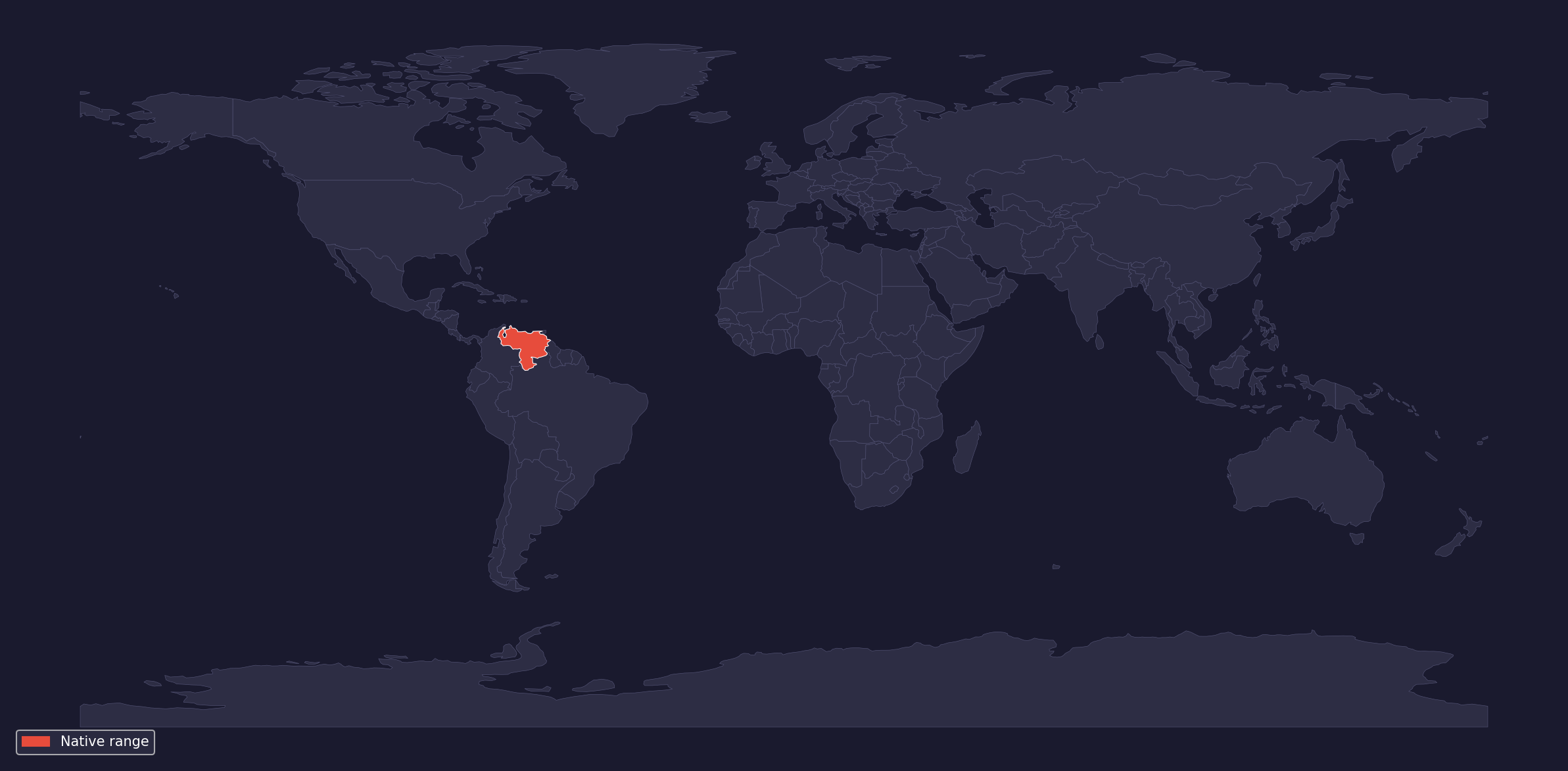
Chromatopelma cyaneopubescens is native to the Paraguana Peninsula of Venezuela. In the wild it is associated with very dry thorn scrub, cactus-rich vegetation, webbed retreats and strong airflow.
For enclosure design, the important takeaways are:
- a low terrestrial enclosure with more floor space than height
- enough substrate for digging or reshaping a retreat
- dry to moderately dry surface conditions with a water dish available
- strong ventilation and stable warm room temperatures
- fall prevention, because heavy terrestrial tarantulas are easily injured
🌡 Climate across the native range
Monthly climate normals from reviewed GBIF occurrence locations:
Lara — Venezuela (Bolivarian Republic of)
| Month | Min °C | Mean °C | Max °C | RH % |
|---|---|---|---|---|
| January | 18.7 | 22.5 | 28.7 | 74 |
| February | 18.7 | 22.8 | 29.4 | 72 |
| March | 19.1 | 23.3 | 30.2 | 71 |
| April | 20 | 23.8 | 29.9 | 75 |
| May | 20.5 | 24.2 | 29.9 | 76 |
| June | 20.5 | 24.3 | 29.9 | 74 |
| July | 20.3 | 24.2 | 30.1 | 73 |
| August | 20.6 | 24.9 | 31.2 | 71 |
| September | 20.7 | 25 | 31.5 | 72 |
| October | 20.5 | 24.2 | 30.3 | 76 |
| November | 20.1 | 23.3 | 28.8 | 80 |
| December | 19.4 | 22.7 | 28.3 | 77 |
Falcón — Venezuela (Bolivarian Republic of)
| Month | Min °C | Mean °C | Max °C | RH % |
|---|---|---|---|---|
| January | 23.4 | 26.2 | 30.7 | 75 |
| February | 23.4 | 26.3 | 31.2 | 73 |
| March | 23.8 | 26.9 | 32.1 | 72 |
| April | 24.7 | 27.7 | 32.8 | 73 |
| May | 25.3 | 28.3 | 33.5 | 74 |
| June | 25.3 | 28.6 | 34 | 72 |
| July | 25.1 | 28.5 | 34 | 71 |
| August | 25.6 | 29.1 | 35 | 71 |
| September | 25.5 | 28.9 | 34.5 | 74 |
| October | 25.1 | 28 | 32.8 | 79 |
| November | 24.6 | 27.1 | 31.2 | 80 |
| December | 23.9 | 26.5 | 30.7 | 78 |
Weather data by Open-Meteo.com · CC BY 4.0 · Monthly normals calculated by Herpeton Academy from daily archive values.
Location references use GBIF.org occurrence data where available; original occurrence records retain their source dataset licenses.
⚖️ Legal status
No current CITES listing or specific EU wildlife trade annex listing was found for Chromatopelma cyaneopubescens in the official sources checked for this article. The species is not relevant to the Bern Convention because it is not native to Europe.
Local rules on import, sale, transport, breeding, and proof of legal origin may still apply. Captive-bred animals from reputable sources remain the safest choice.
🤌 Husbandry
Chromatopelma cyaneopubescens should be housed alone in a secure enclosure.
Young spiders should be raised in secure, simple containers first, with larger housing introduced only when they can use the extra space safely.
Keep the setup simple and dependable:
- Very good ventilation
- Dry substrate
- Cork bark, branches, and web anchors
- A water dish
- Enough structure for both ground use and elevated silk construction
An adult is often kept in an enclosure around 30 x 20 x 20 cm or larger. The setup should not be dangerously tall, but it should provide more structure than many heavy-bodied terrestrial tarantulas need.
💡 Lighting
Keep lighting simple: ordinary room light and a consistent day-night cycle are enough.
Strong lamps are unnecessary and can overheat or dry the enclosure too aggressively.
🌡 Heating and temperature
Practical temperature targets are:
- Daytime: around 24-29°C
- Night: a small drop is acceptable
Prolonged cold can reduce feeding and activity. Prolonged overheating can quickly create dangerous dehydration and stress.
If extra heat is required, warming the room is safer than adding intense direct heat to a small enclosure.
💧 Humidity and water
Chromatopelma cyaneopubescens usually does best in mostly dry conditions with constant access to fresh water. The substrate should not be kept wet for long periods.
Practical points:
- Keep most of the enclosure dry
- Provide a clean water dish at all times
- Avoid heavy routine spraying
- Maintain strong airflow
For many keepers, moderate ambient humidity is enough if ventilation is good and water is always available.
🌿 Enclosure and decoration
This species uses both floor space and elevated structure, especially for webbing. A useful setup often includes dry substrate, a hide, and several anchor points such as cork bark, branches, or artificial plants.
Useful enclosure elements include:
- Cork bark hide
- Branches or twigs for silk attachment
- Dry substrate
- Open front area for feeding observation
- Secure lid and good ventilation
The enclosure often becomes heavily webbed over time. That webbing is normal and should not be removed excessively.
🪳 Feeding
Chromatopelma cyaneopubescens is insectivorous. Suitable staple prey includes:
- Crickets
- Roaches
- Locusts where available
- Mealworms or superworms only occasionally
Young spiders can be fed more often, while adults usually need a 7-14 day rhythm adjusted to abdomen size, recent molts, and prey size.
Prey should not be left in the enclosure when the spider is in premolt or actively molting.
🩺 Common problems
The most common problems are linked to excess moisture, poor ventilation, dehydration from neglected water access, bad molts, and injuries during rehousing.
Warning signs include:
- Persistent refusal to eat with visible decline
- Lethargy in a damp stale setup
- Repeated wall climbing in unsuitable conditions
- Wrinkled abdomen
- Failed molt or limbs stuck in old exoskeleton
A tarantula on its back is often molting and should not be disturbed. If there is severe dehydration, visible injury, leaking hemolymph, or a failed molt, seek experienced exotic-veterinary help where available.
📌 Conclusion
Chromatopelma cyaneopubescens is one of the classic brightly colored display tarantulas in the hobby. It thrives best with warmth, strong ventilation, mostly dry conditions, fresh water, and a structure-rich enclosure that allows heavy webbing.
📚 Sources and further reading
- CITES Appendices and Species+ trade database, checked April 2026
- EU wildlife trade regulations and annex references, checked April 2026
- GBIF species backbone and occurrence data for taxonomy and distribution context
- IUCN Red List and specialist husbandry references where applicable
💬 Feedback
For questions, corrections, or practical notes, leave us a message in the forum thread.