Share

Brachypelma klaasi
🔤 Taxonomy
Brachypelma klaasi is the currently accepted scientific name. Older combinations associated with the species include:
- Brachypelmides klaasi
English common names used in the hobby:
- Mexican pink tarantula
- Pink beauty tarantula
📌 Description
Brachypelma klaasi is a terrestrial New World tarantula from Mexico, recognized for its dark body and soft pinkish tones on the carapace and leg setae. It is a large, handsome display species for keepers who appreciate heavier terrestrial tarantulas.
Adult size is usually about 6-7 cm body length and about 14-16 cm legspan, with females typically heavier than mature males.
Temperament can vary, and some individuals are more defensive or food-responsive than the best-known beginner species. Like other Brachypelma, it can flick urticating hairs when stressed and should not be handled routinely.
☠️ Venom
This species is venomous. Venom exposure can cause pain, swelling or other systemic effects, and severity varies with species, locality, bite site and the amount delivered. A small wound or apparently dry bite is not proof of safety; every bite or sting requires urgent medical assessment.
If an incident occurs, move away, call emergency services or a poison centre, keep the patient still, remove rings and other constricting items, and follow dispatcher instructions. Do not use a tourniquet, cut or suck the wound, apply ice or electricity, give alcohol or medicines as a home treatment, or attempt to catch the animal. Antivenom choice and dosing are hospital decisions; verify the relevant product and local availability in advance. Sources: WHO snakebite guidance and appropriate species-specific toxinology or medical references listed below.
🌍 Distribution
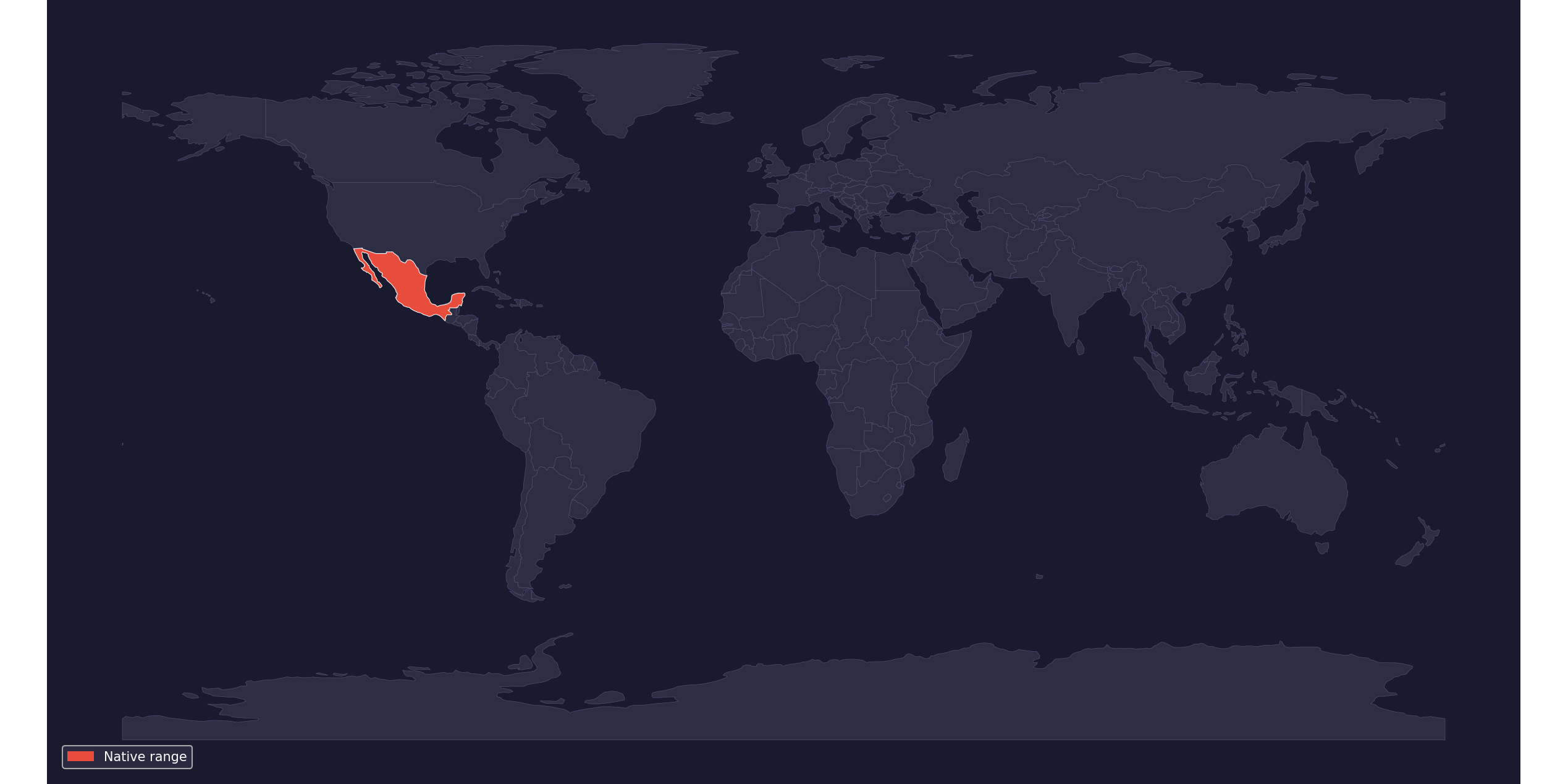
Brachypelma klaasi is native to western Mexico, especially Jalisco and nearby Pacific-slope habitats. In the wild it is associated with warm seasonal dry forest and scrub with burrows and root cover.
For enclosure design, the important takeaways are:
- a low terrestrial enclosure with more floor space than height
- enough substrate for digging or reshaping a retreat
- dry to moderately dry surface conditions with a water dish available
- strong ventilation and stable warm room temperatures
- fall prevention, because heavy terrestrial tarantulas are easily injured
🌡 Climate across the native range
Monthly climate normals from reviewed GBIF occurrence locations:
Jalisco — Mexico
| Month | Min °C | Mean °C | Max °C | RH % |
|---|---|---|---|---|
| January | 20.3 | 23.5 | 28.2 | 76 |
| February | 19.9 | 23.3 | 28.3 | 75 |
| March | 19.7 | 23.5 | 28.9 | 72 |
| April | 20.3 | 24.4 | 29.8 | 71 |
| May | 22.1 | 25.9 | 30.9 | 73 |
| June | 24.3 | 26.9 | 30.6 | 80 |
| July | 25.2 | 27.5 | 30.6 | 85 |
| August | 25.2 | 27.3 | 30.4 | 87 |
| September | 24.9 | 26.8 | 29.7 | 88 |
| October | 24.7 | 26.8 | 29.9 | 86 |
| November | 23.1 | 25.7 | 29.6 | 82 |
| December | 21.2 | 24.1 | 28.6 | 78 |
Weather data by Open-Meteo.com · CC BY 4.0 · Monthly normals calculated by Herpeton Academy from daily archive values.
Location references use GBIF.org occurrence data where available; original occurrence records retain their source dataset licenses.
⚖️ Legal status
Brachypelma klaasi is listed in CITES Appendix II. In the EU wildlife trade system, Brachypelma tarantulas are treated under Annex B rules.
The species is not relevant to the Bern Convention because it is not native to Europe. In Mexico, Brachypelma species are associated with national protection measures, so wild collection and export are sensitive legal issues. Captive-bred animals from reputable sources are strongly preferred.
🤌 Husbandry
Brachypelma klaasi should be housed alone. It is not a social tarantula.
Use smaller starter housing for slings so food and sheds can be monitored, then step up enclosure size as the animal gains size and confidence.
A practical adult enclosure is roughly 30 x 20 x 20 cm or larger, with more floor space than height. Good husbandry includes:
- Deep substrate
- A secure hide
- Good ventilation
- A shallow water dish
- No risky climbing decor
This species generally does best with stable conditions, modest humidity, and minimal disturbance.
Before opening the enclosure, locate the spider and prepare a clear catch cup with a rigid lid. Work close to the floor inside a larger empty container when rehousing, and keep other people and pets away. Guide the spider into the cup without gripping its legs or abdomen. If it retreats or starts kicking hairs, pause instead of pursuing it around the enclosure. Urticating hairs can remain in old substrate and shed skins, so use tools for removal, avoid raising dust, and keep your face away from the opening.
For a new arrival, record the seller’s identification, acquisition date, approximate size, and last known molt. Keep feeding and molt notes for that individual: the useful comparison is its own changing condition, not how quickly another tarantula grows. Maintain water and leave a newly occupied retreat intact; repeatedly lifting the hide to inspect a hidden spider prevents it from settling.
💡 Lighting
Use ambient room light for a predictable day-night cycle; bright basking lamps are unnecessary.
Bright direct lamps are unnecessary and may cause the spider to stay hidden more often.
🌡 Heating and temperature
Brachypelma klaasi does well at normal warm room temperatures:
- Daytime: around 22-27°C
- Night: slight drop acceptable
Overheating is more dangerous than mild short-term cooling. Temperatures near or above 30°C should be avoided.
💧 Humidity and water
This species does best in a dry-to-moderately humid enclosure with constant access to fresh water.
Keep most of the substrate dry on the surface while allowing one area to remain slightly more moist deeper down. Avoid stagnant damp air.
🌿 Enclosure and decoration
Use a substrate that holds shape and allows shallow digging, such as compacted coco fiber or safe unfertilized soil mixes. Adults usually benefit from around 8-12 cm of substrate depth.
Stable cork bark, a shallow water dish, and sparse stable decoration are usually enough. Avoid mesh lids where claws can catch, unstable stones, and excess enclosure height.
🪳 Feeding
Brachypelma klaasi is insectivorous. Suitable prey includes:
- Crickets
- Roaches
- Locusts where available
- Mealworms or superworms only in moderation
Feeding pace should slow with age: every few days for slings, weekly or twice weekly for juveniles, and about every 7-14 days for most adults.
Choose prey by the spider’s body size, not its full leg span. For very small juveniles, a small freshly killed feeder placed near the retreat can be easier to manage than an active insect. Remove uneaten prey and accessible food remains within 24 hours; never leave a cricket loose with a spider that may be preparing to molt. A calendar is only a starting point for feeding. If the abdomen is already very full, reduce the next meal or extend the interval rather than trying to accelerate growth.
Food refusal can accompany a darkening abdomen, reduced activity, or a sealed retreat before a molt. Stop offering live prey in that situation and keep drinking water available. After the molt, wait until the fangs have darkened and hardened before resuming feeding; a fixed number of days is not reliable for every size and temperature. Do not uncover a sealed burrow just to offer a meal.
🥚 Breeding
Brachypelma are often bred in captivity, but pairing should still be planned rather than casual. Both animals should be mature, well fed but not obese, and correctly identified; keepers should avoid mixing uncertain localities or similar-looking species.
A mature male should be introduced to the female’s enclosure only under close supervision, usually after he has made a sperm web. The pair must have escape space and the keeper must be ready to separate them, because cannibalism and injury are possible.
If pairing succeeds, the female may produce an egg sac weeks or months later. Disturbance during this period can cause sac abandonment or eating. Spiderlings require many small ventilated rearing cups, tiny prey, accurate labels, and steady moisture management.
Because Brachypelma species are CITES Appendix II and are normally treated as EU Annex B animals, keep records of the parents, dates, offspring numbers, and transfers. Breed only when there is a lawful, realistic plan for the spiderlings.
🩺 Common problems
Common problems include dehydration, poor ventilation, excess dampness, falls, and molting complications.
Warning signs include a shriveled abdomen, lethargy, repeated wall climbing in poor conditions, visible decline, and trouble during molts. A tarantula on its back is often simply molting and should not be disturbed.
Visible fluid loss after a fall, a damaged abdomen, or persistent inability to stand requires prompt advice from a veterinarian experienced with invertebrates. Do not force-feed or attempt improvised treatment with oils, powders, or household adhesives.
📌 Conclusion
Brachypelma klaasi is a large and attractive Mexican terrestrial tarantula that rewards calm, steady care. A low secure enclosure, deep substrate, fresh water, moderate warmth, and a simple setup suit the species well.
📚 Sources and further reading
- World Spider Catalog — Brachypelma klaasi: accepted name and distribution.
- GBIF — Brachypelma klaasi: species record.
- Tom’s Big Spiders — Brachypelma hamorii: comparative Brachypelma care, not species-specific measurements.
- University of Illinois College of Veterinary Medicine: general feeding, molt safety, and veterinary care.
- EU Regulation 2026/1383, Annex B, Brachypelma spp. (II), checked 2026-09-15; official BOE reproduction.
- CITES Appendices, checked 2026-05-04
💬 Feedback
For questions, corrections, or practical notes, leave us a message in the forum thread.