Share

Brachypelma albiceps
🔤 Taxonomy
Brachypelma albiceps is the currently accepted scientific name. Older combinations associated with the species include:
- Brachypelmides ruhnaui
- Aphonopelma albiceps
English common names used in the hobby:
- Mexican golden red rump tarantula
- Golden redrump tarantula
📌 Description
Brachypelma albiceps is a terrestrial New World tarantula from Mexico, known for its pale golden carapace and contrasting reddish abdomen. It is a sturdy display species that appeals to keepers who like classic Mexican tarantulas with calm, deliberate movement and a dry terrestrial setup.
Adult size is usually about 5-6 cm body length and about 12-15 cm legspan, with females typically heavier than mature males.
Like other Brachypelma, it can flick urticating hairs when stressed and should not be handled routinely. Adult females are long-lived and heavy-bodied, while mature males stay slimmer and have much shorter adult lives.
☠️ Venom
This species is venomous. Venom exposure can cause pain, swelling or other systemic effects, and severity varies with species, locality, bite site and the amount delivered. A small wound or apparently dry bite is not proof of safety; every bite or sting requires urgent medical assessment.
If an incident occurs, move away, call emergency services or a poison centre, keep the patient still, remove rings and other constricting items, and follow dispatcher instructions. Do not use a tourniquet, cut or suck the wound, apply ice or electricity, give alcohol or medicines as a home treatment, or attempt to catch the animal. Antivenom choice and dosing are hospital decisions; verify the relevant product and local availability in advance. Sources: WHO snakebite guidance and appropriate species-specific toxinology or medical references listed below.
🌍 Distribution
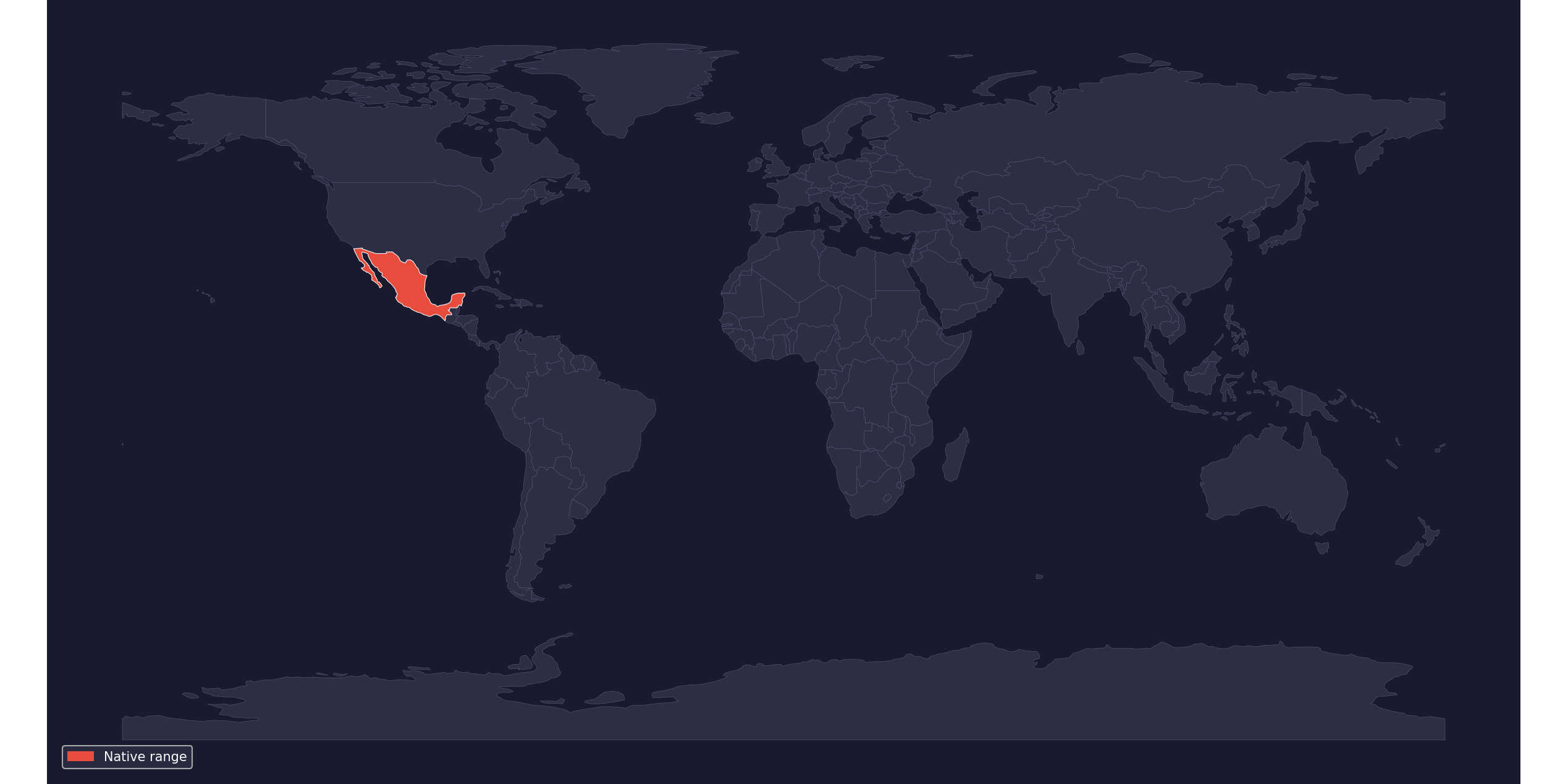
Brachypelma albiceps is native to central Mexico. In the wild it is associated with seasonally dry scrub and tropical dry-forest margins with burrows and root shelters.
For enclosure design, the important takeaways are:
- a low terrestrial enclosure with more floor space than height
- enough substrate for digging or reshaping a retreat
- dry to moderately dry surface conditions with a water dish available
- strong ventilation and stable warm room temperatures
- fall prevention, because heavy terrestrial tarantulas are easily injured
🌡 Climate across the native range
Monthly climate normals from reviewed GBIF occurrence locations:
Jalisco — Mexico
| Month | Min °C | Mean °C | Max °C | RH % |
|---|---|---|---|---|
| January | 14.2 | 19.8 | 27.3 | 63 |
| February | 14.4 | 20.5 | 28.5 | 60 |
| March | 14.9 | 21.5 | 29.9 | 54 |
| April | 16.2 | 23 | 31.5 | 50 |
| May | 18 | 23.8 | 31.6 | 58 |
| June | 18.9 | 22.4 | 28.2 | 82 |
| July | 18.3 | 21.7 | 27 | 87 |
| August | 18.3 | 21.5 | 26.8 | 89 |
| September | 18.1 | 21.1 | 26.1 | 90 |
| October | 17.7 | 21.3 | 26.6 | 86 |
| November | 16.3 | 20.9 | 27.2 | 77 |
| December | 14.9 | 20.1 | 27.2 | 68 |
Morelos — Mexico
| Month | Min °C | Mean °C | Max °C | RH % |
|---|---|---|---|---|
| January | 9.9 | 17 | 24.5 | 47 |
| February | 11 | 18.7 | 26.5 | 43 |
| March | 12.8 | 21 | 28.7 | 37 |
| April | 15.1 | 23 | 30.5 | 37 |
| May | 16.2 | 22.8 | 29.6 | 51 |
| June | 16.1 | 20.7 | 26.1 | 70 |
| July | 15.2 | 20.1 | 25.5 | 70 |
| August | 15.5 | 20.1 | 25.4 | 72 |
| September | 15.3 | 19.2 | 24.1 | 78 |
| October | 14.1 | 18.9 | 24.5 | 71 |
| November | 12 | 18 | 24.7 | 61 |
| December | 10.3 | 17.1 | 24.4 | 53 |
Oaxaca — Mexico
| Month | Min °C | Mean °C | Max °C | RH % |
|---|---|---|---|---|
| January | 18.9 | 23 | 28.4 | 73 |
| February | 18.8 | 23.5 | 29 | 72 |
| March | 19.5 | 24.2 | 29.6 | 72 |
| April | 20.5 | 25.2 | 30.2 | 73 |
| May | 21.6 | 25.3 | 29.3 | 80 |
| June | 21.5 | 24.3 | 27.4 | 88 |
| July | 21.2 | 24.3 | 27.8 | 88 |
| August | 21.2 | 24.1 | 27.5 | 89 |
| September | 21.1 | 23.6 | 26.8 | 91 |
| October | 20.7 | 23.5 | 26.9 | 89 |
| November | 20 | 23.3 | 27.5 | 83 |
| December | 19.3 | 23 | 28 | 78 |
Weather data by Open-Meteo.com · CC BY 4.0 · Monthly normals calculated by Herpeton Academy from daily archive values.
Location references use GBIF.org occurrence data where available; original occurrence records retain their source dataset licenses.
⚖️ Legal status
Brachypelma albiceps is listed in CITES Appendix II. In the EU wildlife trade system, Brachypelma tarantulas are treated under Annex B rules.
The species is not relevant to the Bern Convention because it is not native to Europe. In Mexico, Brachypelma species are associated with national protection measures, so wild collection and export are sensitive legal issues. Buying captive-bred animals from reputable sources and keeping proof-of-origin documents is strongly recommended.
🤌 Husbandry
Brachypelma albiceps should be housed alone. It is not a social tarantula and should never be kept communally.
Small juveniles do best in modest, secure rearing tubs at first; upgrade gradually instead of putting a tiny spider straight into an adult display enclosure.
A practical adult enclosure is roughly 30 x 20 x 20 cm or larger, with more floor space than height. Keep the setup simple and dependable:
- Deep substrate for digging or reshaping a retreat
- A secure cork bark hide
- Good cross-ventilation
- A shallow water dish
- No sharp decor or climbing hazards
This species usually does best with stable, simple care and minimal disturbance.
💡 Lighting
Ambient room lighting is sufficient, with no need for UVB or basking lamps.
If live plants are used, lighting should remain moderate and should not overheat or dry the enclosure.
🌡 Heating and temperature
Brachypelma albiceps does well at normal warm room temperatures:
- Daytime: around 22-27°C
- Night: slight drop acceptable
Overheating is more dangerous than mild short-term cooling. Temperatures near or above 30°C increase dehydration and stress risk.
💧 Humidity and water
This species does not need permanently wet conditions. A dry-to-moderately humid setup with fresh water available at all times is usually safest.
A useful approach is to keep most of the substrate dry on the surface while allowing one deeper area to stay slightly more moist. Good ventilation matters just as much as water access.
🌿 Enclosure and decoration
The substrate should hold shape and allow shallow digging. Compacted coco fiber, unfertilized topsoil, or tarantula-safe soil mixes work well. Adults benefit from around 8-12 cm of substrate or more.
Useful enclosure elements include a stable hide, a shallow water dish, deep substrate, and sparse stable decoration. Avoid tall climbing structures, unstable rocks, and mesh surfaces where claws can catch.
🪳 Feeding
Brachypelma albiceps is insectivorous. Suitable prey includes:
- Crickets
- Roaches
- Locusts where available
- Mealworms or superworms only in moderation
As a rough guide, feed slings every 3-5 days, juveniles once or twice weekly, and adults every 7-14 days when body condition supports it.
🥚 Breeding
Brachypelma are often bred in captivity, but pairing should still be planned rather than casual. Both animals should be mature, well fed but not obese, and correctly identified; keepers should avoid mixing uncertain localities or similar-looking species.
A mature male should be introduced to the female’s enclosure only under close supervision, usually after he has made a sperm web. The pair must have escape space and the keeper must be ready to separate them, because cannibalism and injury are possible.
If pairing succeeds, the female may produce an egg sac weeks or months later. Disturbance during this period can cause sac abandonment or eating. Spiderlings require many small ventilated rearing cups, tiny prey, accurate labels, and steady moisture management.
Because Brachypelma species are CITES Appendix II and are normally treated as EU Annex B animals, keep records of the parents, dates, offspring numbers, and transfers. Breed only when there is a lawful, realistic plan for the spiderlings.
🩺 Common problems
The most common problems involve dehydration, excessive dampness, poor ventilation, overly tall enclosures, and mistakes around molting.
Warning signs include a persistently shriveled abdomen, weak posture, repeated wall climbing in poor conditions, obvious decline, and trouble during molts. A tarantula on its back is often simply molting and should not be disturbed.
📌 Conclusion
Brachypelma albiceps is a handsome terrestrial tarantula for keepers who want a classic Mexican species with straightforward care. A low secure enclosure, deep substrate, fresh water, moderate warmth, and patience are the foundations of long-term success.
📚 Sources and further reading
- CITES Appendices, checked 2026-05-04
- EU wildlife trade regulations and annex references, checked April 2026
- GBIF species backbone and occurrence data for taxonomy and distribution context
- IUCN Red List and specialist husbandry references where applicable
💬 Feedback
For questions, corrections, or practical notes, leave us a message in the forum thread.