Share

Common European Adder
🔤 Taxonomy
Vipera berus is the accepted name for the common European adder. “Northern viper” and simply “adder” are also used in English. Older literature contains several regional names and subspecies combinations; locality documentation matters because the species spans an enormous range and some former populations are now treated separately.
The Balkan form often appears as Vipera berus bosniensis. Do not infer locality or venom characteristics from colour alone: melanistic animals and ordinary zigzag-patterned animals occur in several populations.
📌 Description
This is a small, cool-climate viper whose modest size conceals a medically significant bite. Most adults are 50-70 cm; large females may approach 90 cm. Well-kept animals can live 10-20 years. Activity is strongly seasonal and may occur by day, at dusk, or in warm weather after dark.
V. berus is not an entry-level venomous snake. It is appropriate only as a display animal in a legally authorised facility with protected-contact procedures, a locked shift system, veterinary support, and a hospital-coordinated bite plan. Wild collection is unacceptable and may be illegal throughout the native range.
📋 Quick reference
| Care point | Practical target |
|---|---|
| Adult size and lifespan | Usually 50-70 cm, occasionally about 90 cm; 10-20 years |
| Adult enclosure | At least 120 x 60 x 60 cm, with two lockable shift hides |
| Temperature | Ambient 20-24°C; basking surface 26-28°C; cool retreat 18-21°C |
| Night | 14-20°C according to season; avoid warm tropical nights |
| Humidity | 50-70%; locally 65-80% during shedding, with ventilation |
| Light | Seasonally adjusted 10-14 hours; low-level UVB may be offered |
| Feeding | Moderate frozen-thawed rodents; adults usually every 10-21 days |
| Safety | Display-only; protected contact, bite plan, escape plan, two-person rule |
| Quarantine | At least 90 days, separate tools and veterinary parasite screening |
☠️ Venom
This species is venomous. Venom exposure can cause pain, swelling or other systemic effects, and severity varies with species, locality, bite site and the amount delivered. A small wound or apparently dry bite is not proof of safety; every bite or sting requires urgent medical assessment.
If an incident occurs, move away, call emergency services or a poison centre, keep the patient still, remove rings and other constricting items, and follow dispatcher instructions. Do not use a tourniquet, cut or suck the wound, apply ice or electricity, give alcohol or medicines as a home treatment, or attempt to catch the animal. Antivenom choice and dosing are hospital decisions; verify the relevant product and local availability in advance. Sources: WHO snakebite guidance and appropriate species-specific toxinology or medical references listed below.
🌍 Distribution
The common adder has one of the broadest ranges of any terrestrial snake: from Great Britain and Scandinavia across much of northern and central Europe, the Balkans and Russia to the Pacific coast of Asia. Its southern distribution is fragmented in cool mountains and wetlands. Taxonomic revisions and isolated records make a country-level map necessarily broad.
Habitats include heath, bog margins, open woodland, rough grassland, dunes, clearings, and alpine slopes. What matters in a vivarium is access to sun-like radiant warmth alongside genuinely cool, humid refuges. The climate table below represents a Balkan locality, not the coldest part of this transcontinental range.
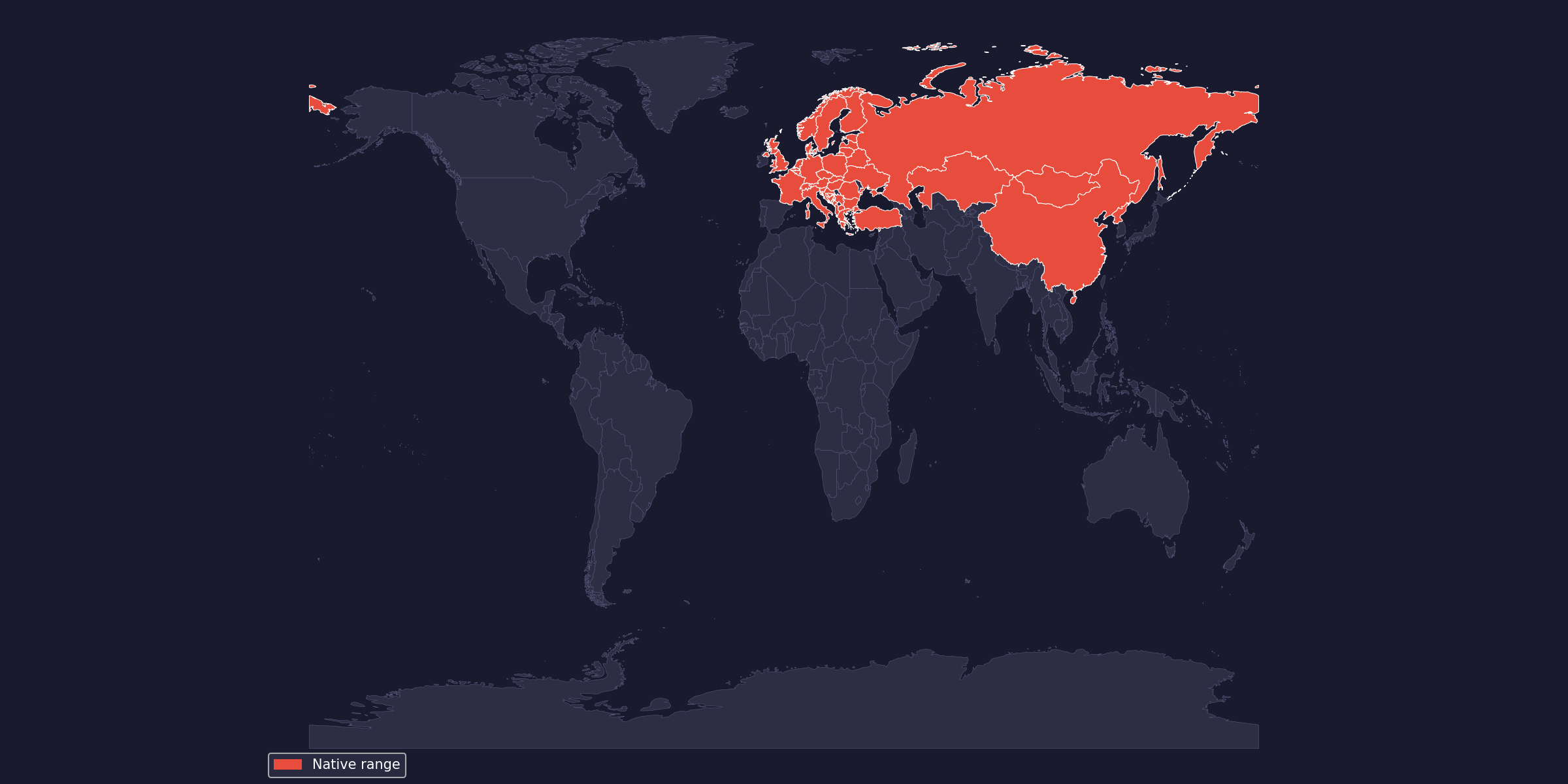
🌡 Climate across the native range
Monthly climate normals from a reviewed Balkan occurrence; the species’ vast Eurasian range includes much colder localities:
Sofia City Province — Bulgaria (reviewed occurrence)
| Month | Min °C | Mean °C | Max °C | RH % |
|---|---|---|---|---|
| January | -11.2 | -7.3 | -2.9 | 77 |
| February | -10.4 | -6.1 | -1.3 | 75 |
| March | -7 | -2.5 | 2.3 | 71 |
| April | -2.9 | 2.2 | 7.2 | 69 |
| May | 2.3 | 7.2 | 11.8 | 71 |
| June | 6.3 | 11.1 | 15.6 | 70 |
| July | 8.3 | 13.2 | 17.7 | 67 |
| August | 8.6 | 13.4 | 18.2 | 64 |
| September | 4.5 | 9.1 | 13.9 | 68 |
| October | 0.1 | 4.4 | 9.2 | 74 |
| November | -4.9 | -1 | 3.5 | 78 |
| December | -9.1 | -5.7 | -1.6 | 79 |
Weather data by Open-Meteo.com · CC BY 4.0 · Monthly normals calculated by Herpeton Academy from daily archive values.
Location references use GBIF.org occurrence data where available; original occurrence records retain their source dataset licenses.
⚖️ Legal status
The official CITES Appendices and EU wildlife-trade annexes checked on 16 August 2026 do not specifically list Vipera berus. It is, however, protected fauna under Appendix III of the Bern Convention. This treaty status concerns wild populations and does not grant a right to collect, possess, sell, or transport the species.
National protection and dangerous-animal laws vary and can prohibit collection, require proof of captive origin, licensing, inspection, or emergency arrangements. Obtain written guidance from the competent wildlife and public-safety authorities before acquisition. Keep the invoice, breeder identity, parentage or origin record, photographs, transfer documents, and this legal-check date.
🤌 Husbandry
House one adder per enclosure. A purpose-built venomous room should provide secondary containment, restricted access, locked vents and cable ports, and two shift hides positioned across the thermal gradient. Routine water changes and cleaning must be possible while the snake is locked behind a physical barrier.
Quarantine every arrival for at least 90 days in simple, auditable housing, preferably in separate airspace. Use dedicated hooks, barriers, bowls, cleaning tools, footwear, and waste handling. Record weight, meals, sheds, faeces, respiration, and activity. Animals of uncertain or wild origin require an exotics veterinarian’s examination and parasite testing.
This temperate species is harmed by permanently tropical care. Provide seasonal changes in light and night temperature, but do not force brumation merely because it occurs in nature. Cohabitation makes feeding, health assessment, and protected servicing less reliable and is unsuitable for display housing.
💡 Lighting
Use broad visible light on a seasonal schedule: approximately 14 hours in summer, reducing gradually toward 10 hours in the cool season. Provide full darkness at night and dense visual cover. Lamps must be outside primary containment or protected by guards.
Whole-prey snakes do not have a demonstrated dietary requirement for UVB, but low-level UVB over part of the enclosure can support natural basking opportunities. Keep it within Ferguson Zone 1 and ensure that every hide remains shaded. Never sacrifice a cool retreat to achieve UV exposure.
🌡 Heating and temperature
During the active season, maintain most air at 20-24°C, a basking surface at 26-28°C, and a cool hide at 18-21°C. Nights may fall to 14-20°C according to season. Control every heater with a thermostat, place probes at snake level, and verify surfaces with an infrared thermometer.
Overheating is the principal climate hazard. An adder that remains exposed or pressed against ventilation may be trying to escape excessive heat. Room cooling and alarmed temperature monitoring are more important than a powerful basking lamp.
Planned brumation is an advanced breeding procedure, not routine maintenance. Only established, well-hydrated, clinically healthy adults should be considered, after fasting long enough to clear the gut and veterinary review. A stable 4-8°C period is commonly used for appropriate localities, with gradual transitions and continuous temperature and condition monitoring. Do not brumate juveniles, thin, sick, recently imported, or pregnant animals.
💧 Humidity and water
Maintain roughly 50-70% relative humidity with a humid retreat available; during shedding, a local 65-80% zone is useful. V. berus is comparatively vulnerable to dehydration, especially during reproduction, but stagnant wet housing causes dermatitis and respiratory disease. Keep lower substrate slightly moisture-retentive while allowing the surface to dry.
Provide clean water at all times in a stable bowl that can be exchanged through protected access. Occasional light spraying may encourage drinking, but repeated saturation is not appropriate. Log drinking, urates, and body mass during warm or reproductive periods.
🌿 Enclosure and decoration
A single adult needs at least 120 x 60 x 60 cm. Give two snug shift-capable hides, cork or low rock-like basking surfaces fixed against collapse, grasses or artificial cover, and clear routes that allow the keeper to locate the whole snake before opening a service hatch.
Use 6-10 cm of low-dust soil, leaf mould, and fine bark mix that holds some moisture below without becoming swampy. Paper is safer during quarantine. Avoid cedar or pine shavings, sharp gravel, unstable stone piles, deep clutter that blocks visual checks, and adhesive décor.
Every opening needs a mechanical lock. Label primary containment with scientific name, individual identity, venom risk, animal count, emergency contacts, and the bite-plan location.
🐁 Feeding
Offer appropriately sized frozen-thawed mice or small rats. Adults usually take a modest meal every 10-21 days depending on size, sex, activity, reproductive state, and season. Juveniles eat smaller prey more often. Track body condition rather than responding to every feeding strike; temperate vipers gain excess weight easily when kept warm year-round.
Present prey with long tongs only from the planned protected position. Do not leave live rodents with the snake and do not reach in for refused food while primary containment is occupied. Routine calcium or vitamin dusting is unnecessary with balanced whole vertebrate prey.
Seasonal appetite loss can be normal, but first exclude excessive heat, pregnancy, parasites, respiratory disease, and other illness. A declining body mass or abnormal behaviour warrants veterinary review rather than repeated prey changes.
🛡 Operational safety and emergencies
No routine task should require free handling, pinning, neck restraint, or a hand inside occupied primary containment. Use shift boxes, appropriate hooks, transparent barriers, protected service ports, and two trained adults whenever primary containment must be opened. Sedation, restraint, sampling, and treatment belong to a veterinarian working with an agreed professional team.
Before the animal arrives, prepare written bite and escape plans with the receiving hospital or poison centre. Confirm the transport route, species-identification information, responder access, and how antivenom advice will be obtained; do not assume a local hospital stores a suitable product and never keep antivenom for private administration.
A bite is an immediate medical emergency even if symptoms are mild at first. Move away from the snake, call emergency services, remove rings and constricting items, keep the patient still, immobilize the limb, and follow poison-centre advice. Do not cut, suck, ice, shock, tightly tourniquet, or delay transport to catch the animal.
🥚 Breeding notes
The species is viviparous and usually produces 3-18 live young after a seasonally timed pregnancy; litter size and breeding frequency vary with female size, condition, and latitude. Females may not reproduce annually. There are no eggs for the keeper to incubate.
Breeding adds pairing, separation, neonatal containment, and lawful-transfer risks. Establish locality and parentage before pairing and never mix undocumented regional forms. Prepare individually secured neonate enclosures and records before introductions. Sexing and veterinary procedures should be performed only by a qualified venomous-reptile team.
🩺 Common problems
- Overheating and chronic stress: persistent exposure, escape behaviour, poor feeding, or neurological decline require an immediate check of air and surface temperatures.
- Dehydration: wrinkled skin, tacky saliva, poor sheds, or abnormal urates demand husbandry review and veterinary advice.
- Respiratory disease: open-mouth breathing, bubbles, repeated head elevation, or abnormal sounds require urgent veterinary assessment.
- Dermatitis and scale rot: commonly follow wet, dirty substrate and insufficient ventilation.
- Dysecdysis: retained skin or spectacles indicate problems with hydration, humidity, surfaces, or health; do not restrain a venomous snake for home removal.
- Parasites and stomatitis: mites, weight loss, abnormal faeces, oral swelling, or discharge are especially concerning in animals of uncertain origin.
- Obesity: prevent it with seasonal temperature management, measured feeding, and weight records.
📌 Conclusion
Vipera berus belongs only in a licensed, escape-resistant facility that can provide cool seasonal conditions and complete every routine task behind a barrier. If the keeper cannot verify lawful captive origin, prevent summer overheating, and coordinate a bite response before purchase, this species should remain in the wild or in professional institutions.
📚 Sources and further reading
- ReptiFiles — checked first on 16 August 2026; no species-specific care guide was found.
- The Reptile Database: Vipera berus
- GBIF species record: Vipera berus
- Zoo Zagreb: Vipera berus
- Ganyushina & Korosov — thermoregulation in the common viper
- Dupoué et al. — water deprivation and reproduction in Vipera berus
- Baines et al. — UV lighting guidance for captive reptiles
- WHO: snakebite envenoming treatment and first aid
- Northern Ireland government guidance on keeping venomous snakes and lizards
- CITES Appendices
- EU wildlife-trade annexes, Commission Regulation (EU) 2026/1383
- Bern Convention appendices