Share

Python bivittatus Care Guide
🔤 Taxonomy
Python bivittatus is treated here as the Burmese python. Older material may place it under Python molurus bivittatus or the broader Indian python complex.
English common names used in the hobby:
- Burmese python
📌 Description
The Burmese python (Python bivittatus) is a giant constrictor whose care must be planned around adult size, legal risk, and keeper safety from the beginning. It is not a casual pet; secure housing, trained backup, and strict feeding routines are basic requirements.
Handling should be calm and brief, especially for newly acquired or recently fed animals. Large constrictors require a realistic safety plan: do not handle powerful adults alone, and never let children manage them without direct adult control.
Burmese pythons often start as calm juveniles, which can hide the seriousness of their adult size. The risk is rarely aggression alone; it is strength, feeding response, enclosure access, and whether the keeper can manage the animal for decades.
🌍 Distribution
Mainland Southeast Asia; wetlands, grasslands, forest edges, farms, and areas near water.
For Burmese pythons, scale and safety matter as much as climate. Strong locks, guarded heat, usable floor area, water, controlled humidity, and a plan for moving a large animal must be in place before purchase.
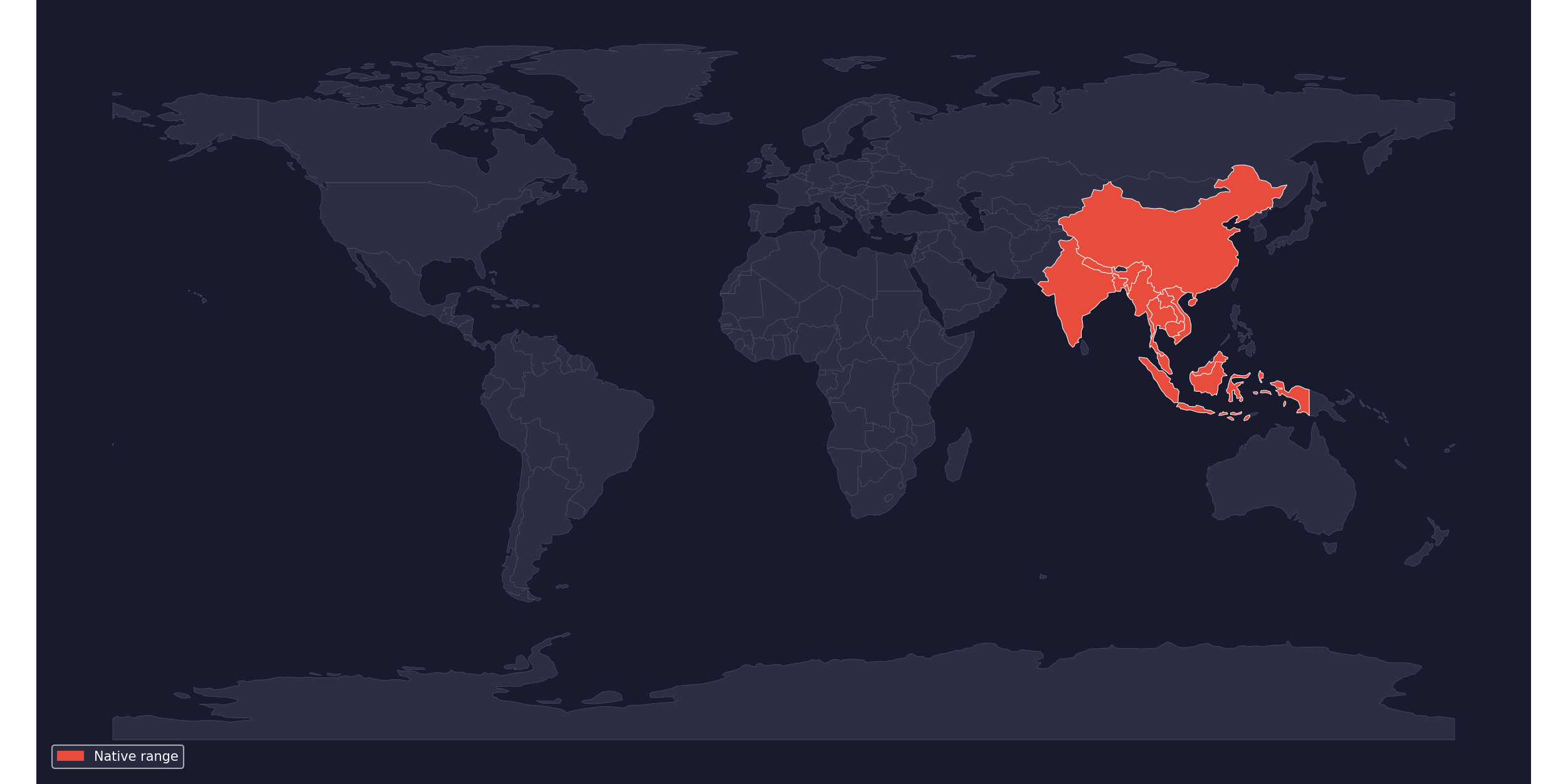
🌡 Climate across the native range
Monthly climate normals from reviewed GBIF occurrence locations:
Uttar Pradesh — India
| Month | Min °C | Mean °C | Max °C | RH % |
|---|---|---|---|---|
| January | 9.1 | 15.1 | 21.2 | 63 |
| February | 10.6 | 17.5 | 24.4 | 59 |
| March | 15.4 | 23 | 30.6 | 49 |
| April | 20.6 | 28.6 | 36.6 | 37 |
| May | 24.5 | 31.6 | 38.8 | 40 |
| June | 26 | 31.5 | 37 | 61 |
| July | 25.4 | 29.3 | 33.2 | 79 |
| August | 25.1 | 28.8 | 32.5 | 80 |
| September | 24.1 | 28.2 | 32.4 | 79 |
| October | 20.3 | 25.6 | 30.9 | 63 |
| November | 13.8 | 20.3 | 26.7 | 61 |
| December | 9.6 | 15.9 | 22.2 | 63 |
Yuen Long — Hong Kong
| Month | Min °C | Mean °C | Max °C | RH % |
|---|---|---|---|---|
| January | 11.2 | 14.6 | 18.1 | 72 |
| February | 12.2 | 15.2 | 18.3 | 77 |
| March | 15.2 | 18.1 | 21 | 82 |
| April | 19.1 | 21.9 | 24.6 | 84 |
| May | 22.6 | 25.3 | 28 | 83 |
| June | 24.6 | 27.2 | 29.8 | 83 |
| July | 25.2 | 28.1 | 30.9 | 82 |
| August | 24.9 | 27.8 | 30.7 | 83 |
| September | 23.8 | 26.8 | 29.7 | 79 |
| October | 21.1 | 24.2 | 27.3 | 72 |
| November | 16.6 | 20.1 | 23.6 | 67 |
| December | 12.5 | 16.2 | 19.9 | 66 |
Weather data by WorldClim v2.1 · Monthly normals queried by Herpeton Academy from raster values; relative humidity is derived from vapor pressure and mean temperature.
Location references use GBIF.org occurrence data where available; original occurrence records retain their source dataset licenses.
⚖️ Legal status
As checked against current official sources in April 2026, Python bivittatus is covered by CITES Appendix II through the Pythonidae higher-taxon listing. Under EU wildlife-trade rules, Appendix II snakes are normally treated as Annex B unless a stricter listing applies. The species is not relevant to the Bern Convention because it is not native to Europe. Local rules on ownership, import, sale, transport, breeding, dangerous-animal registration, and proof of legal origin may still apply; keep purchase and breeding records.
🧭 Life stage differences
Babies and juveniles should start in smaller, secure enclosures where feeding, shedding, and waste can be monitored closely. They still need a warm hide, cool hide, water, and cover, but oversized bare spaces often make them defensive or reluctant to feed.
Adults need more floor area, stronger fixtures, and a layout that lets the snake thermoregulate without constant exposure. For very large species, enclosure planning must happen before purchase: the adult cage, safe cleaning routine, and long-term prey supply are part of basic care, not optional upgrades.
🤌 Husbandry
Use an escape-proof enclosure with front access where possible, secure ventilation, and all heat sources controlled by thermostats. Minimum adult housing: at least 300 x 120 x 120 cm for adults; large females require custom housing. Bigger is recommended when it creates more usable movement, better thermal zones, and safer maintenance.
Provide at least two tight hides, visual barriers, and stable climbing or resting structure according to the species. Do not mix snakes. Quarantine new animals and track feeding, sheds, weight, and defecation.
For giant snakes, husbandry is also a human safety system. Doors must lock, heat equipment must be protected, the animal must be shiftable during cleaning, and a second competent adult should be available for handling large individuals. A snake that cannot be safely moved cannot be safely kept.
💡 Lighting
Use a simple day-night cycle for routine and inspection. UVB can be offered over a limited zone, but fixture protection, shade, and dark nights are more important for a large Burmese python.
🌡 Heating and temperature
Practical target range: basking 32-34 °C, warm side 28-31 °C, cool side 25-27 °C, night 23-25 °C. Measure warm surfaces with an infrared thermometer and ambient zones with digital probes. Every heat source must be controlled by a thermostat. Heat rocks and unguarded bulbs are unsafe; large pythons and boas can burn themselves or break weak fixtures.
💧 Humidity and water
Provide fresh water at all times. Target humidity: 55-75%, with large clean water and dry retreats. Use substrate choice, water-bowl placement, partial ventilation control, and a humid hide to manage shedding. Chronic wet bedding causes scale and respiratory problems; chronic dryness causes retained shed and dehydration.
🌿 Enclosure and decoration
The enclosure should include a warm hide, cool hide, water bowl, rough but safe shedding surfaces, and enough cover for the animal to move without feeling exposed. Arboreal species need secure branches and elevated perches; heavy terrestrial species need floor space and furnishings that cannot collapse.
Juvenile enclosures should be simple enough to inspect but not bare. Adult enclosures must be built for strength: locks, cable ports, sliding doors, and ventilation panels are common escape points.
For giant snakes, decor must be built like furniture, not ornament. Heavy hides, shelves, pools, and branches must tolerate the animal’s weight and must not trap the keeper’s hands during cleaning.
🪳 Feeding
Feed appropriately sized frozen-thawed prey whenever possible. Prey should generally match the snake’s widest body diameter, adjusted for species build and age. Babies usually feed every 5-7 days, juveniles every 7-10 days, and adults every 10-21 days depending on species, temperature, season, and body condition.
Avoid routine live feeding, oversized prey, and handling for at least 48 hours after meals. Refusal to feed is often caused by wrong temperatures, exposure, shedding, breeding season, stress, or prey presentation.
Large pythons should be target-trained or managed with a clear feeding routine so opening the enclosure does not always mean food. Use tools, separate cleaning cues, and conservative prey sizes. Overfeeding creates an enormous, unsafe, unhealthy adult.
🥚 Breeding
Breeding should use healthy, mature, well-established animals with known identity and origin. Many pythons and boas respond to seasonal changes in temperature, light, or humidity, but cooling must never be attempted with underweight, sick, or newly acquired animals.
This is an egg-laying python with potentially large clutches and powerful adults. Provide a suitable laying site for a gravid female, plan incubation and hatchling housing before pairing, and use adult-handling safety rules during all breeding work. Keep records for CITES/EU-listed species and avoid producing hybrids, unclear locality crosses, or more offspring than can be housed and placed responsibly.
🩺 Common problems
Common problems include retained shed, respiratory infection, mites, burns, mouth inflammation, obesity, dehydration, regurgitation, and injuries from escapes or unstable decor. Warning signs include wheezing, bubbles at the nostrils, open-mouth breathing, repeated soaking, patchy shed, refusal to feed with weight loss, swelling, twisting posture, or repeated regurgitation.
Consult a reptile- or exotic-animal veterinarian for severe weakness, injury, breathing signs, swelling, repeated regurgitation, or prolonged refusal to eat.
If a problem appears, first verify the basics with instruments: warm surface, cool end, night temperature, humidity, hide fit, and prey size. Guessing at treatment before correcting the environment often wastes the most important recovery window.
📌 Conclusion
Python bivittatus does best when the keeper plans for the adult animal, not only the attractive juvenile. Secure housing, measured heat, appropriate humidity, correct feeding, and honest legal records are the foundation of responsible snake keeping.
📚 Sources and further reading
- CITES Appendices, checked 2026-05-04
- GBIF species backbone entry for Python bivittatus
- EU wildlife-trade references, checked April 2026
💬 Feedback
For questions, corrections, or practical notes, leave us a message in the forum thread.