Share

Western Ratsnake
🔤 Taxonomy
Pantherophis obsoletus is currently used for the western ratsnake lineage west of the Mississippi River. Older books and trade listings used Elaphe obsoleta or “black ratsnake” for a much broader complex extending across eastern North America. Animals from east of the Mississippi may instead belong to P. alleghaniensis, P. quadrivittatus or a contact-zone lineage; a colour label alone cannot establish identity.
Useful older combinations include Elaphe obsoleta and Elaphe obsoleta lindheimeri. English names are western ratsnake and Texas ratsnake; the older “black ratsnake” remains ambiguous. The German name Erdnatter is also encountered.
📌 Description
Western ratsnakes are long, muscular climbers, generally 110-180 cm and occasionally larger. Colour varies from dark northern animals to brown, grey or yellowish southern forms. Captive lifespan is commonly 15-25 years.
They are intelligent, active snakes that use height, floor area and water. Many become manageable with calm routine, but juveniles and newly acquired adults may bluff, musk or bite. The adult enclosure is large, and the species should not be selected as a smaller substitute for a corn snake.
🌍 Distribution
Under the current narrower species concept, P. obsoletus occupies the central United States west of the Mississippi, from parts of Louisiana and Texas north through the Great Plains to southeastern Minnesota. It uses woodland, rocky slopes, prairie edges, farms and floodplain habitat, frequently climbing trees and buildings.
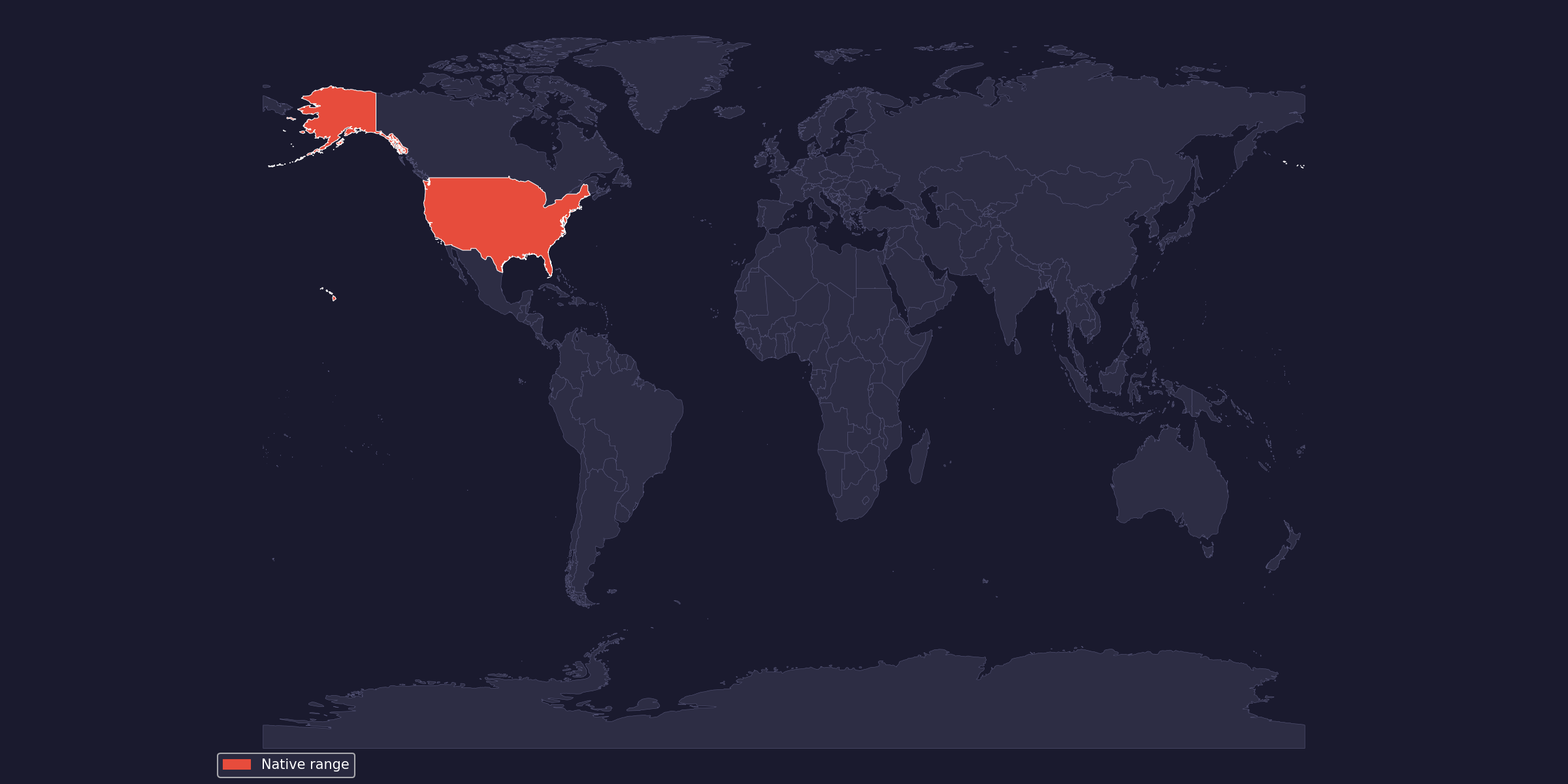
🌡 Climate across the native range
Monthly climate normals from reviewed GBIF occurrence locations:
Louisiana — United States of America
| Month | Min °C | Mean °C | Max °C | RH % |
|---|---|---|---|---|
| January | 4.7 | 8.3 | 13.6 | 73 |
| February | 6.3 | 10.3 | 15.9 | 72 |
| March | 10 | 14.3 | 20.1 | 71 |
| April | 13.9 | 18.4 | 24.2 | 71 |
| May | 18.6 | 23 | 28.6 | 71 |
| June | 22.4 | 26.7 | 32.1 | 71 |
| July | 24.2 | 28.4 | 33.8 | 70 |
| August | 24 | 28.4 | 33.9 | 67 |
| September | 20.9 | 25.3 | 30.8 | 67 |
| October | 15.3 | 19.6 | 25.3 | 68 |
| November | 9.8 | 13.6 | 18.8 | 72 |
| December | 6 | 9.4 | 14.4 | 75 |
Texas — United States of America
| Month | Min °C | Mean °C | Max °C | RH % |
|---|---|---|---|---|
| January | 6.6 | 10.8 | 16.8 | 69 |
| February | 8.4 | 12.8 | 19.1 | 70 |
| March | 11.8 | 16.4 | 22.7 | 70 |
| April | 15.5 | 20.3 | 26.5 | 68 |
| May | 19.8 | 24.2 | 29.7 | 72 |
| June | 23.2 | 27.6 | 32.9 | 69 |
| July | 24.5 | 29.3 | 34.8 | 64 |
| August | 25 | 29.8 | 35.3 | 61 |
| September | 22 | 26.5 | 31.8 | 66 |
| October | 17 | 21.6 | 27.3 | 66 |
| November | 11.6 | 15.8 | 21.3 | 69 |
| December | 7.7 | 11.7 | 17.3 | 70 |
Oklahoma — United States of America
| Month | Min °C | Mean °C | Max °C | RH % |
|---|---|---|---|---|
| January | 1.2 | 4.9 | 10.3 | 72 |
| February | 3.1 | 7.3 | 13.2 | 71 |
| March | 7.2 | 11.7 | 17.8 | 70 |
| April | 11.6 | 16.3 | 22.1 | 70 |
| May | 16.6 | 20.9 | 26.2 | 74 |
| June | 21 | 25.5 | 30.7 | 73 |
| July | 23.2 | 27.9 | 33.4 | 68 |
| August | 22.7 | 27.6 | 33.1 | 67 |
| September | 19 | 23.6 | 29.3 | 68 |
| October | 13.2 | 17.6 | 23.3 | 69 |
| November | 7.3 | 11.2 | 16.4 | 71 |
| December | 2.9 | 6.4 | 11.4 | 73 |
Weather data by Open-Meteo.com · CC BY 4.0 · Monthly normals calculated by Herpeton Academy from daily archive values.
Location references use GBIF.org occurrence data where available; original occurrence records retain their source dataset licenses.
⚖️ Legal status
No listing for P. obsoletus was found in the current CITES Appendices or EU wildlife-trade annexes, and the Bern Convention is not relevant to this North American species. National and state rules still regulate collection, possession, breeding, transport or sale of native ratsnakes in parts of their range.
Choose a captive-bred animal and retain the invoice, breeder details and claimed locality. Because old names cover several modern species, accurate identity and origin are more useful than a generic “black rat snake” label.
🤌 Husbandry
A 180 × 90 × 90 cm enclosure is a sound minimum for a typical adult; a specimen approaching 2 m needs still more usable length and height. Use front doors with a lock, robust vents and sealed cable ports. House one snake per enclosure.
Provide several weeks of quiet settling time before handling. Lift from below, support the moving body and keep sessions short. Quarantine new animals for 60-90 days with separate tools, weight and faecal records, and a veterinary/faecal check when origin is uncertain.
💡 Lighting
Use a bright 10-14 hour seasonal photoperiod. Low-strength UVB is recommended over the warm half, with a basking UVI around 2-3 and unrestricted shaded routes. A broad visible-light source encourages normal daytime exploration. Do not use night lighting.
🌡 Heating and temperature
Provide a 29-32 °C basking surface, warm air of 24-28 °C, a cool zone of 21-25 °C and a night drop to 18-22 °C. A wide-bodied adult needs a broad heated area, not a tiny hot point. Guard and thermostat all heaters.
Seasonal winter cooling is optional and mainly relevant to breeding. Healthy, locality-appropriate adults may be cycled at 8-15 °C by experienced keepers after digestion has cleared. Never cool sick, underweight, juvenile or newly acquired snakes.
💧 Humidity and water
Maintain about 50-70% humidity with ventilation and a humid hide, allowing the enclosure surface to dry between watering. A permanently wet setup encourages skin and respiratory disease. Supply a heavy clean bowl large enough for drinking and optional soaking.
🌿 Enclosure and decoration
Use 10-15 cm of additive-free soil/coir with a modest sand or bark component, topped with leaf litter. Paper is preferable during quarantine. Avoid cedar, scented bedding, dusty material and substrate kept waterlogged.
Install thick anchored branches, shelves and cork tubes that can safely carry a full adult. Add snug warm and cool hides plus elevated cover. Check furniture after every cleaning: these snakes are strong enough to shift an unstable branch or force a loose vent.
🐁 Feeding
Frozen-thawed rodents are a reliable staple. Hatchlings and juveniles usually eat every 5-7 days; adults every 7-14 days according to prey size and body condition. Keep a meal near or below 10% of body mass and no wider than about 1.5 times the snake’s widest point.
Occasional appropriately sourced chicks or quail can add variety, but routine whole prey needs no calcium or vitamin dust. Avoid live rodents, which can injure the snake, and avoid power-feeding: obesity is common in large ratsnakes housed without enough movement.
🩺 Common problems
- nose rubbing or repeated pushing: insecure, bare or undersized housing
- retained eye caps or patchy shed: dehydration or missing humid retreat
- wheezing, nasal bubbles or open-mouth breathing: respiratory infection
- regurgitation: oversized prey, handling after feeding, low temperature or disease
- burns: unguarded or unregulated heat source
- obesity and weak muscle tone: excess food and insufficient climbing opportunity
- mites or abnormal faeces: quarantine failure or parasitism
📌 Conclusion
The western ratsnake rewards a keeper who can dedicate a large, locked, three-dimensional enclosure and manage a seasonal gradient without forcing brumation. Buy by verified scientific identity and locality, not by the ambiguous old “black ratsnake” name.
📚 Sources and further reading
- ReptiFiles: Black Ratsnake Care Sheet
- The Reptile Database: Pantherophis obsoletus
- GBIF species record
- Animal Diversity Web: western ratsnake
- Baines et al. 2016: UV lighting for reptiles
- CITES Appendices, current EU wildlife-trade framework, and Bern Convention appendices