Share

Chinese Cobra
🔤 Taxonomy
Naja atra is the accepted Chinese cobra. Older literature commonly uses Naja naja atra, N. kaouthia atra or N. sputatrix atra. A 2022 neotype from Zhoushan stabilised the name while describing Naja fuxi from southwestern China.
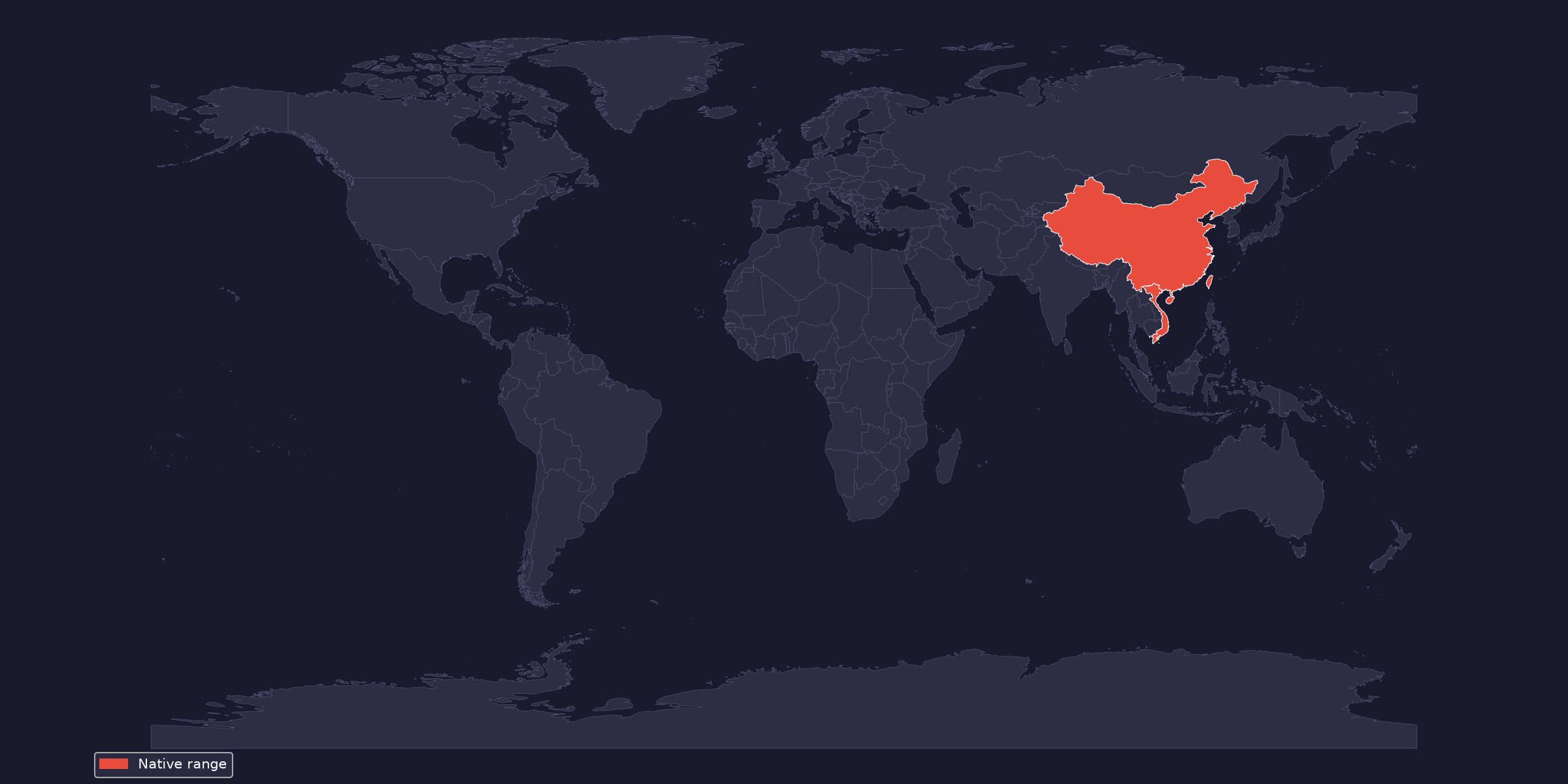
The current range lies mainly south of the Yangtze in eastern and southern China, including Hainan, Hong Kong and Macau, plus Taiwan and northern Vietnam. Yunnan reports remain questionable. Mainland and Taiwanese populations show lineage structure, so retain precise origin rather than treating the species as one anonymous stock. Separate it from N. kaouthia, N. fuxi and other similar Asian cobras.
📌 Description
Adults are usually 100-150 cm, with large individuals near 170 cm. Colour and hood markings vary, and neither a spectacle pattern nor darkness proves identity. The snake can lift a substantial part of the body, strike forward and occasionally project venom toward the face.
Envenomation commonly causes pain, progressive swelling, blistering and serious tissue necrosis; systemic neurotoxicity is variable. Ocular exposures are also documented. This is an expert-only institutional species requiring protected contact and a hospital plan that anticipates both airway compromise and reconstructive wound care.
📋 Quick reference
| Care point | Practical target |
|---|---|
| Adult size and lifespan | Usually 100-150 cm, up to about 170 cm; approximately 15-20 years |
| Adult enclosure | At least 180 x 90 x 90 cm with two lockable shift compartments |
| Temperature | Ambient 24-29°C; basking 31-33°C; cool hide 21-24°C |
| Night | 18-23°C, adjusted to provenance and season |
| Humidity | 55-75%; local 65-80% shedding retreat |
| Feeding | Frozen-thawed rodents every 7-14 days according to condition |
| Safety | Protected contact, eye protection, two-person rule, tissue-injury plan |
| Quarantine | At least 90 days with separate tools and veterinary screening |
☠️ Venom
This species is venomous. Venom exposure can cause pain, swelling or other systemic effects, and severity varies with species, locality, bite site and the amount delivered. A small wound or apparently dry bite is not proof of safety; every bite or sting requires urgent medical assessment.
If an incident occurs, move away, call emergency services or a poison centre, keep the patient still, remove rings and other constricting items, and follow dispatcher instructions. Do not use a tourniquet, cut or suck the wound, apply ice or electricity, give alcohol or medicines as a home treatment, or attempt to catch the animal. Antivenom choice and dosing are hospital decisions; verify the relevant product and local availability in advance. Sources: WHO snakebite guidance and appropriate species-specific toxinology or medical references listed below.
🌍 Distribution
The supported range covers China south of the Yangtze—Zhejiang, Fujian, southern Anhui, Jiangxi, Hunan, western Hubei, Guizhou, Guangdong, Guangxi, Hainan, Hong Kong and Macau—plus Taiwan and northern Vietnam. It uses forest edge, scrub, fields, wetlands and disturbed settlements from warm-temperate to subtropical climates. Published Yunnan records are unresolved and should not be mapped as confirmed.
The country map is deliberately coarse: it overstates occupation in China and Vietnam and cannot show the Yangtze limit, mountain gaps, islands or provenance-specific lineages. The reviewed Tainan GBIF occurrence provides a precise lowland Taiwan climate reference, not a prescription for every mainland population.
🌡 Climate across the native range
Monthly normals from a reviewed lowland occurrence in southwestern Taiwan:
Tainan — Taiwan (reviewed lowland occurrence)
| Month | Min °C | Mean °C | Max °C | RH % |
|---|---|---|---|---|
| January | 13.1 | 16.5 | 19.9 | 80 |
| February | 13.9 | 17.2 | 20.5 | 80 |
| March | 16.6 | 20.1 | 23.5 | 79 |
| April | 20.2 | 23.5 | 26.8 | 79 |
| May | 22.9 | 25.9 | 28.9 | 80 |
| June | 24.7 | 27.5 | 30.2 | 82 |
| July | 25.4 | 28.4 | 31.3 | 81 |
| August | 25.1 | 28 | 30.9 | 83 |
| September | 24.2 | 27.3 | 30.4 | 80 |
| October | 22 | 25.2 | 28.5 | 77 |
| November | 18.4 | 21.8 | 25.1 | 77 |
| December | 14.8 | 18.1 | 21.5 | 77 |
Weather data by WorldClim v2.1, 1970–2000 · Monthly normals queried by Herpeton Academy from raster values; relative humidity is derived from vapor pressure and mean temperature.
Location references use GBIF.org occurrence data where available; original occurrence records retain their source dataset licenses.
⚖️ Legal status
As checked on 17 August 2026, Naja atra is in CITES Appendix II and EU Annex B. International trade and EU commercial use require the relevant permits, notifications and evidence of lawful acquisition. The Bern Convention is not relevant to its East Asian range.
China, Taiwan, Vietnam and transit or destination states may impose additional native-wildlife, export, ownership, registration, transport, breeding, sale and dangerous-animal controls. Confirm each step in writing. Preserve CITES permits, invoices, breeder and parentage records, locality, photographs and the legal-check date; an old “Asian cobra” label may conceal a different taxon.
🤌 Husbandry
Use a controlled-access venomous room with secondary containment and a documented entry protocol. House one cobra in an enclosure divided into two positively lockable compartments. Shift, close, lock and visually verify the animal before any service door opens.
Quarantine new arrivals for at least 90 days with paper, removable furniture, separate tools and preferably separate airspace. Record weight, food, sheds, faeces, oral tissues, skin and respiration. Imports need veterinary assessment for dehydration, mites, internal parasites, stomatitis and respiratory infection.
Never free-handle or use apparent tractability as a control. Perform feeding, water exchange and waste removal through protected ports or after a confirmed shift. Temporary pairing is a managed breeding procedure, not social housing.
💡 Lighting
Provide 10-13 hours of visible light with a gradual seasonal change appropriate to origin. Maintain full darkness at night and deep shade in both shift hides. Lamps must be outside the primary enclosure or behind locked guards.
Low-output UVB can provide a Ferguson Zone 1 opportunity. Measure at the snake’s accessible level and preserve a completely shaded path. Do not increase ultraviolet exposure to imitate an open field without considering the animal’s ability to retreat.
🌡 Heating and temperature
Maintain ambient air at 24-29°C, a basking surface at 31-33°C, a cool hide at 21-24°C and nights around 18-23°C. Use the warmer part of the night range for tropical southern origins and conservative seasonal cooling only for healthy, established animals of documented temperate provenance.
Thermostat and guard every source, measure surfaces and air independently and alarm high temperatures. Seasonal cooling is not automatic brumation and is inappropriate for juveniles, thin or sick snakes and new arrivals.
💧 Humidity and water
Target 55-75% relative humidity with strong cross-ventilation, allowing one shift hide to reach 65-80% during shedding. Taiwan and coastal climates can be humid, but an entire enclosure that remains wet promotes skin and respiratory disease.
Provide a stable clean bowl exchanged through a protected port. Maintain a dryable surface and use drainage where seasonal humidity rises. Track drinking, urates, weight and shed quality rather than responding to every dry reading with whole-enclosure spraying.
🌿 Enclosure and decoration
An adult requires at least 180 x 90 x 90 cm, with more floor area for large females. Install two lockable shift boxes, anchored hides, low visual cover and an unobstructed inspection lane. Use independent two-step locks and seal all vents, tracks and service penetrations against slender juveniles.
Use 8-10 cm of compactable soil and leaf litter with a dry top; paper is preferable in quarantine. Avoid loose dusty chips, unstable rocks, aromatic wood and décor that creates unseen hand spaces or must be lifted during routine service.
🐁 Feeding
The natural diet includes rodents, frogs, birds and reptiles. Established adults can receive appropriately sized frozen-thawed rodents every 7-14 days, adjusted to mass, age and condition. Avoid large meals that distort the body and do not feed simply because the animal hoods or follows movement.
Offer food through a protected port with long tongs and shift before removing refusals. Live rodents create avoidable bite and retrieval hazards. Whole vertebrate prey needs no routine supplementation.
🛡 Operational safety and emergencies
Never free-handle, pin, neck or manually restrain this cobra during routine care. Use hard barriers, locked shifts, transparent shields and species-appropriate tubes under a written protocol. Because directed ocular exposure is possible, staff wear splash goggles plus a face shield, but PPE never substitutes for a closed barrier. Two trained adults attend every primary opening.
Before acquisition, the receiving hospital or poison centre must review the exact species and provenance. Region-specific antivenom and wound protocols are not interchangeable. The plan must cover airway monitoring, serial coagulation and tissue assessment, and access to surgical care; antivenom is administered only in hospital.
After a bite, move away, call emergency services, remove constricting items, keep still and support the limb neutrally. Do not use a tourniquet or tight pressure bandage when cytotoxic injury is expected; do not cut, suck, ice, shock or massage. For venom in an eye, irrigate continuously with clean water or saline for at least 15-20 minutes, remove contact lenses if easy and obtain urgent ophthalmic care. Never place antivenom or unprescribed chemicals in the eye.
Maintain a written escape plan covering room isolation, public exclusion, accountability, search zones and secure capture containers. Stop work whenever the cobra is not positively located.
🥚 Breeding notes
N. atra is oviparous. Institutional and published studies report variable clutches, commonly around 8-20 eggs. Thermal and moisture conditions influence embryo survival and hatchling traits. A cautious incubation range is 27-29°C for approximately 46-65 days, with a monitored medium that is humid but not wet.
Breed only lawful, documented stock. Preserve mainland or island provenance, confirm sex and condition, introduce through barrier-controlled compartments and prepare individual neonate shifts in advance. Breeding permits, offspring registration, CITES documentation and placement capacity must be settled before pairing.
🩺 Common problems
- Obesity: monitor weight and condition; adjust prey size and interval.
- Dysecdysis or dehydration: review water access, humid hide, airflow and temperatures.
- Respiratory infection: bubbles, wheeze, open-mouth breathing or head elevation require urgent veterinary assessment.
- Dermatitis: investigate permanently wet substrate, mites, abrasion and poor hygiene.
- Stomatitis and parasites: oral changes, weight loss and abnormal faeces are common import concerns.
- Burns and overheating: prevent with guarded thermostatic sources, alarms and a real cool hide.
- Regurgitation: review prey size, temperatures, disturbance and disease with a veterinarian.
Hands-on home treatment is unsafe. Secure the animal behind a shift door and use a preplanned veterinary anaesthesia and containment team.
📌 Conclusion
Naja atra requires more than a generic cobra setup: origin must be documented, seasonal choices must remain available, every task must use locked protected contact, and the medical plan must treat serious local necrosis as well as possible neurotoxicity. It is appropriate only for licensed specialist facilities.
📚 Sources and further reading
- ReptiFiles — checked first on 17 August 2026; no species-specific care guide was found.
- The Reptile Database: Naja atra
- GBIF species record: Naja atra
- Shi et al. — Naja fuxi description and N. atra neotype
- Zhu et al. — lineage diversification and niche evolution in Naja atra
- Mao et al. — clinical features of Naja atra envenoming
- Wang et al. — venom concentration and necrotic wounds
- WHO South-East Asia snakebite management guidelines
- Ji and Du — thermal and hydric effects on Chinese-cobra eggs
- Baines et al. — UV lighting guidance
- Northern Ireland government venomous-reptile guidance
- CITES Appendices
- EU wildlife-trade annexes, Commission Regulation (EU) 2026/1383
- Bern Convention appendices