Share

Rosy Boa
🔤 Taxonomy
Lichanura trivirgata is the rosy boa, a small North American boa with locality variation that should be tracked in breeding records.
Common names used in the hobby:
- Rosy boa
- Three-lined boa
The most useful husbandry facts come from its natural history: rocky shrubland, desert washes, chaparral edges, Baja California habitats, and sheltered stones or burrows in the southwestern United States and northwestern Mexico; it is secretive, often crepuscular or nocturnal, and relies on tight retreat sites more than open display behavior. Taxonomy should also be checked against sales labels because common names, former subspecies names, and locality names are often used loosely in the trade. When a seller cannot give a scientific name, origin history, and feeding record, assume the care plan needs extra verification before purchase.
📌 Description
A small, calm boa from arid habitats, best kept with secure dry housing and a gentle thermal gradient.
Adults typically reach 60-90 cm and may live 20-30 years with stable long-term care.
Rosy boa should be assessed by body shape, behavior, and long-term maintenance needs, not only by adult length. A healthy animal should have firm muscle, a smooth spine line without sharp ridges, clear eyes after shed, clean nostrils, a closed mouth, and normal tongue-flicking when disturbed. New animals should be weighed at arrival, after the first accepted meals, and then monthly until a stable pattern is clear. Sudden weight change, repeated soaking, noisy breathing, refusal after previously steady feeding, or restless glass pushing are not personality traits; they are reasons to review temperature, security, hydration, parasites, and stress.
🌍 Distribution
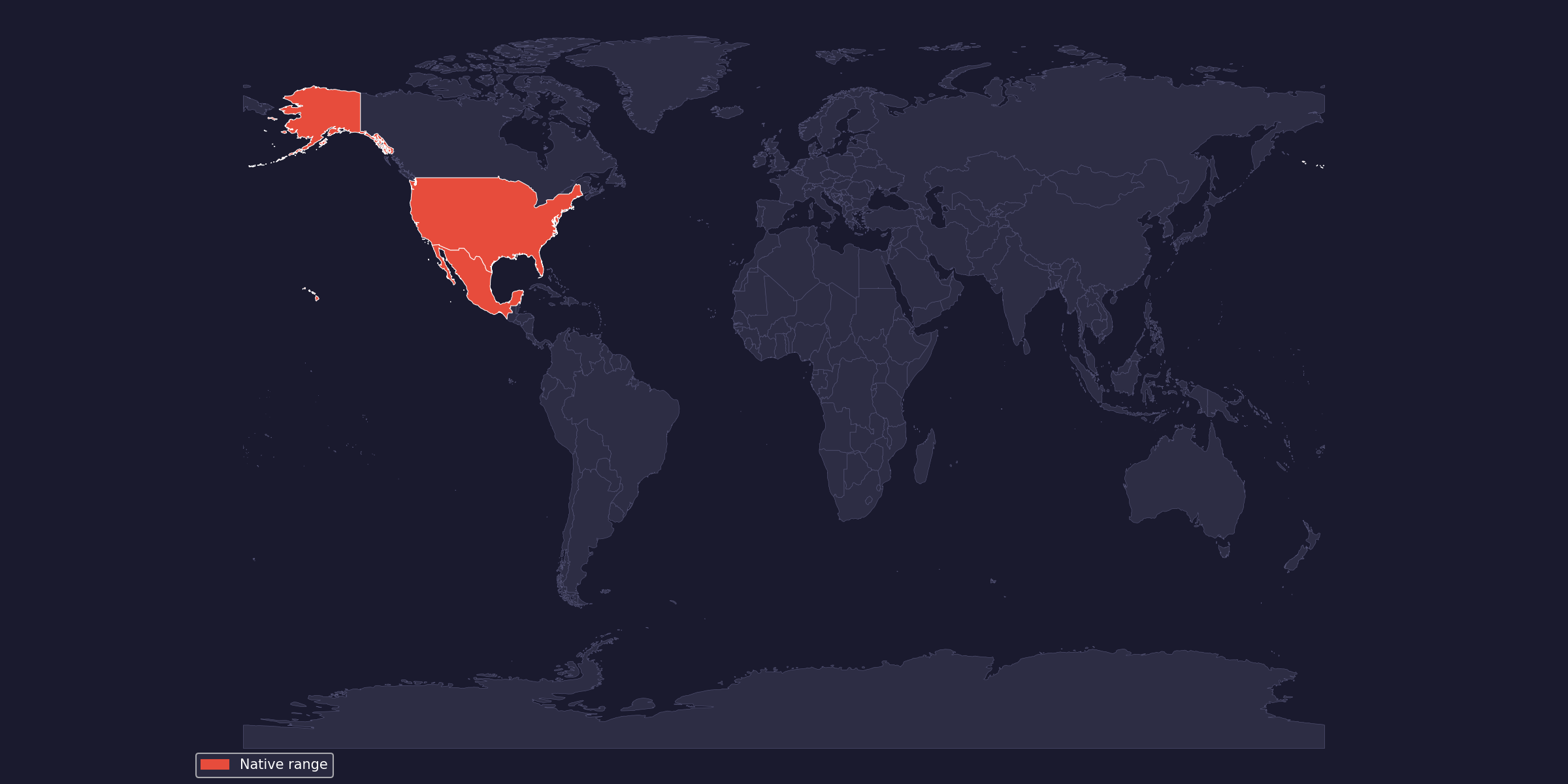
the southwestern United States and northwestern Mexico, mainly in rocky desert, scrub, canyon, and dry foothill habitats.
Captive care should stay dry, secure, and calm, with snug hides, measured heat, clean water, and a shed option instead of damp substrate or high tropical humidity.
Rocky shrubland, washes, chaparral edges, and burrows point to sheltered dryness rather than empty heat. The enclosure should offer a warm hide, a cool retreat, clean dry substrate, modest humidity, and enough texture for movement and shedding.
🌡 Climate across the native range
Monthly climate normals from reviewed GBIF occurrence locations:
Baja California — Mexico
| Month | Min °C | Mean °C | Max °C | RH % |
|---|---|---|---|---|
| January | 8.2 | 14.8 | 21.5 | 60 |
| February | 8.9 | 16 | 23 | 60 |
| March | 10.4 | 17.8 | 25.3 | 56 |
| April | 12.1 | 20.1 | 28 | 55 |
| May | 15.5 | 23.3 | 31.2 | 56 |
| June | 18.8 | 26.7 | 34.6 | 57 |
| July | 22.7 | 29.8 | 36.9 | 60 |
| August | 23.3 | 30.1 | 37 | 61 |
| September | 21.3 | 28.3 | 35.4 | 59 |
| October | 16.4 | 23.9 | 31.5 | 55 |
| November | 11.4 | 18.7 | 26.1 | 55 |
| December | 8.6 | 15.5 | 22.4 | 56 |
Arizona — United States
| Month | Min °C | Mean °C | Max °C | RH % |
|---|---|---|---|---|
| January | 4 | 11.4 | 18.7 | 50 |
| February | 5.6 | 13.3 | 21.1 | 46 |
| March | 7.6 | 15.6 | 23.6 | 41 |
| April | 10.1 | 19.1 | 28 | 33 |
| May | 14.3 | 23.3 | 32.3 | 32 |
| June | 19.2 | 28.5 | 37.8 | 28 |
| July | 23.2 | 31.2 | 39.1 | 38 |
| August | 22.6 | 30.3 | 38 | 43 |
| September | 19.8 | 27.8 | 35.8 | 41 |
| October | 13.8 | 22.1 | 30.4 | 38 |
| November | 7.5 | 15.6 | 23.8 | 40 |
| December | 4.3 | 11.6 | 19 | 46 |
Sonora — Mexico
| Month | Min °C | Mean °C | Max °C | RH % |
|---|---|---|---|---|
| January | 6 | 14.1 | 22.2 | 66 |
| February | 6.5 | 15.3 | 24.1 | 63 |
| March | 7.8 | 17 | 26.1 | 59 |
| April | 9.8 | 19.4 | 29.1 | 55 |
| May | 12.8 | 22.3 | 31.9 | 55 |
| June | 17.6 | 26.6 | 35.5 | 56 |
| July | 23.2 | 29.8 | 36.3 | 63 |
| August | 23.4 | 30.1 | 36.7 | 65 |
| September | 21.5 | 28.6 | 35.7 | 64 |
| October | 15.1 | 23.6 | 32.2 | 61 |
| November | 9.6 | 18.6 | 27.6 | 59 |
| December | 6.2 | 14.6 | 23 | 63 |
Weather data by WorldClim v2.1 · Monthly normals queried by Herpeton Academy from raster values; relative humidity is derived from vapor pressure and mean temperature.
Location references use GBIF.org occurrence data where available; original occurrence records retain their source dataset licenses.
⚖️ Legal status
Boidae are listed in CITES Appendix II and are usually treated as EU Annex B. Locality and legal-origin records are especially important for North American boa forms. Keep invoices, breeder details, import or transfer documents, photographs, and legal-check dates; trade listings do not replace local ownership, transport, tenancy, or public-display rules. The Bern Convention is not relevant here because the species is not native to Europe.
🤌 Husbandry
Plan the adult enclosure around at least 90 x 45 x 45 cm, with more floor area when it improves the thermal gradient and cover. This species needs dry security, a warm hide, a cooler retreat, and clean substrate more than display height.
Plan the setup by life stage. Hatchlings and nervous new arrivals can be kept in a simpler, tightly secured enclosure for monitoring, but they still need a real warm side, cool side, hides, water, and visual cover. Upgrade before movement becomes restricted; waiting until rubbing, pacing, food strikes at the glass, or chronic hiding appears means the environment is already causing stress.
💡 Lighting
Use bright visible light and UVB according to Ferguson Zone 1, with a 10-12 hour photoperiod and enough shade for the animal to move out of exposure.
🌡 Heating and temperature
- ambient air: 25-30°C
- basking surface: 32-34°C
- cool retreat: 22-25°C
- night: 18-22°C
Use thermostats and independent thermometers. A good setup lets the snake choose between warm and cool areas instead of trapping it at one average temperature.
💧 Humidity and water
Humidity target is 30-50%, with temporary shed support around 50-65%. Keep water clean, avoid persistently wet substrate unless the species is semi-aquatic, and correct retained shed by fixing environment rather than repeated forced soaking.
Humidity support should be local, temporary, and easy to remove. A small humid hide or slightly deeper substrate pocket can help during shed, while the rest of the enclosure should stay dry and ventilated. Retained shed usually means the microclimate or hydration routine needs correction, not that the whole vivarium should become damp.
🌿 Enclosure and decoration
Use a dry, diggable substrate around 7-10 cm deep, such as a soil-sand-clay style mix or another arid naturalistic substrate that does not stay wet. Add flat stones or cork, tight hides, visual barriers, and a water bowl that cannot flood the enclosure.
Avoid cedar, pine shavings, dusty substrate, heavy unsecured rocks, adhesive tape inside the enclosure, and decor holes that can trap the snake.
🥗 Feeding
Base feeding on appropriately sized rodents, usually every 10-14 days. Feed for steady body condition rather than maximum appetite, remove uneaten food, and adjust frequency for age, season, reproductive condition, and activity.
Feeding should follow natural ecology but stay practical and hygienic. In nature, it is secretive, often crepuscular or nocturnal, and relies on tight retreat sites more than open display behavior. In captivity the core plan is frozen-thawed mice offered sparingly; slow metabolism and calm behavior make overfeeding a common captive mistake. Keep a log of prey type, prey mass, date, shed stage, defecation, body weight, and refusal. That record prevents overreacting to one missed meal and exposes slow obesity before it becomes normal. Avoid live prey as routine care because bites and stress are preventable. If a reliable feeder suddenly refuses, review temperature, privacy, seasonal timing, recent handling, prey size, and illness signs before trying repeated meals.
🥚 Breeding notes
Reproduction is viviparous. Typical litters are usually 3-8 young. Breeding is moderate and should wait until legal status, unrelated stock, body condition, and offspring placement are all clear.
🧍 Handling and safety
Handling should reflect the species and the individual: non-venomous and usually manageable, but overheating, damp substrate, and poor escape prevention are more serious than temperament. Keep sessions short, support the body, work close to a surface, and stop before the snake escalates. During shed, quarantine, feeding recovery, or repeated hiding attempts, skip handling and use shift boxes or tools where appropriate.
🩺 Common problems
Quarantine new animals, record weight, and watch for appetite loss, abnormal posture, retained shed, mouth inflammation, mites, respiratory signs, swelling, diarrhea, and repeated escape attempts. Husbandry correction is often as important as medication.
Common mistakes to avoid include buying before the adult setup is planned, relying on one thermometer, using loose lids, feeding too often, handling during acclimation, and keeping the enclosure too open. Most snakes settle better when the keeper changes one variable at a time and gives the animal time to respond.
✅ Conclusion
Rosy Boa care is realistic only when adult enclosure size, legal status, feeding plan, and escape prevention are in place before acquisition.
📚 Sources and further reading
- ReptiFiles, Rosy Boa Care Sheet: https://reptifiles.com/rosy-boa-care-sheet/
- The Reptile Database, Lichanura trivirgata: https://reptile-database.reptarium.cz/Lichanura/trivirgata
- Los Angeles Zoo, Rosy Boa: https://lazoo.org/explore-your-zoo/our-animals/reptiles/rosy-boa/
- U.S. Fish & Wildlife Service, Rosy Boa: https://www.fws.gov/species/rosy-boa-lichanura-trivirgata
- GBIF Backbone Taxonomy, Lichanura trivirgata: https://www.gbif.org/species/2465153
- CITES Appendices: https://cites.org/eng/app/appendices.php
- European Commission wildlife trade overview: https://environment.ec.europa.eu/topics/nature-and-biodiversity/wildlife-trade_en
- Council of Europe, Bern Convention appendices: https://www.coe.int/en/web/bern-convention/appendices