Share

California Kingsnake Care Guide
🔤 Taxonomy
Lampropeltis californiae is the California kingsnake. Older sources and trade labels may place it within the broader Lampropeltis getula complex, so use the current scientific name in records.
Common names used in the hobby:
- California kingsnake
- Cal king
The important husbandry fact is that this is an active, solitary kingsnake with a strong feeding response and a high escape risk. It can be beginner-suitable only when the enclosure is secure and the keeper does not overfeed.
📌 Description
California kingsnakes are hardy North American snakes, but hardy does not mean careless. Their main failure points are loose lids, too much food, damp dirty substrate, repeated handling during acclimation, and housing with other snakes.
Adults usually reach 90-150 cm and can live 15-25 years. They are often manageable for a first reptile keeper who is comfortable feeding whole prey, checking locks, and reading body condition rather than appetite.
A healthy animal has firm muscle, clear eyes after shed, clean nostrils, a closed mouth, smooth movement, and a body that is neither ridged nor sausage-shaped.
📋 Quick reference
| Care point | Practical target |
|---|---|
| Adult size and lifespan | 90-150 cm; often 15-25 years |
| Adult enclosure | At least 120 x 60 x 60 cm, with tight locks and more space when possible |
| Heat | Basking surface 30-32°C; ambient 24-28°C; cool retreat 21-24°C |
| Night and brumation | 18-22°C at night; brumation only for healthy adult breeding plans |
| Humidity | 35-55%, with a humid hide or temporary 60-70% shed support |
| UVB | Optional but recommended low-output UVB, Ferguson Zone 1, with shade |
| Feeding | Frozen-thawed rodents every 7-14 days, adjusted to body condition |
| Social housing | Solitary only; kingsnakes may eat other snakes |
| Quarantine | 60-90 days for new arrivals, with mite and fecal checks when needed |
🌍 Distribution
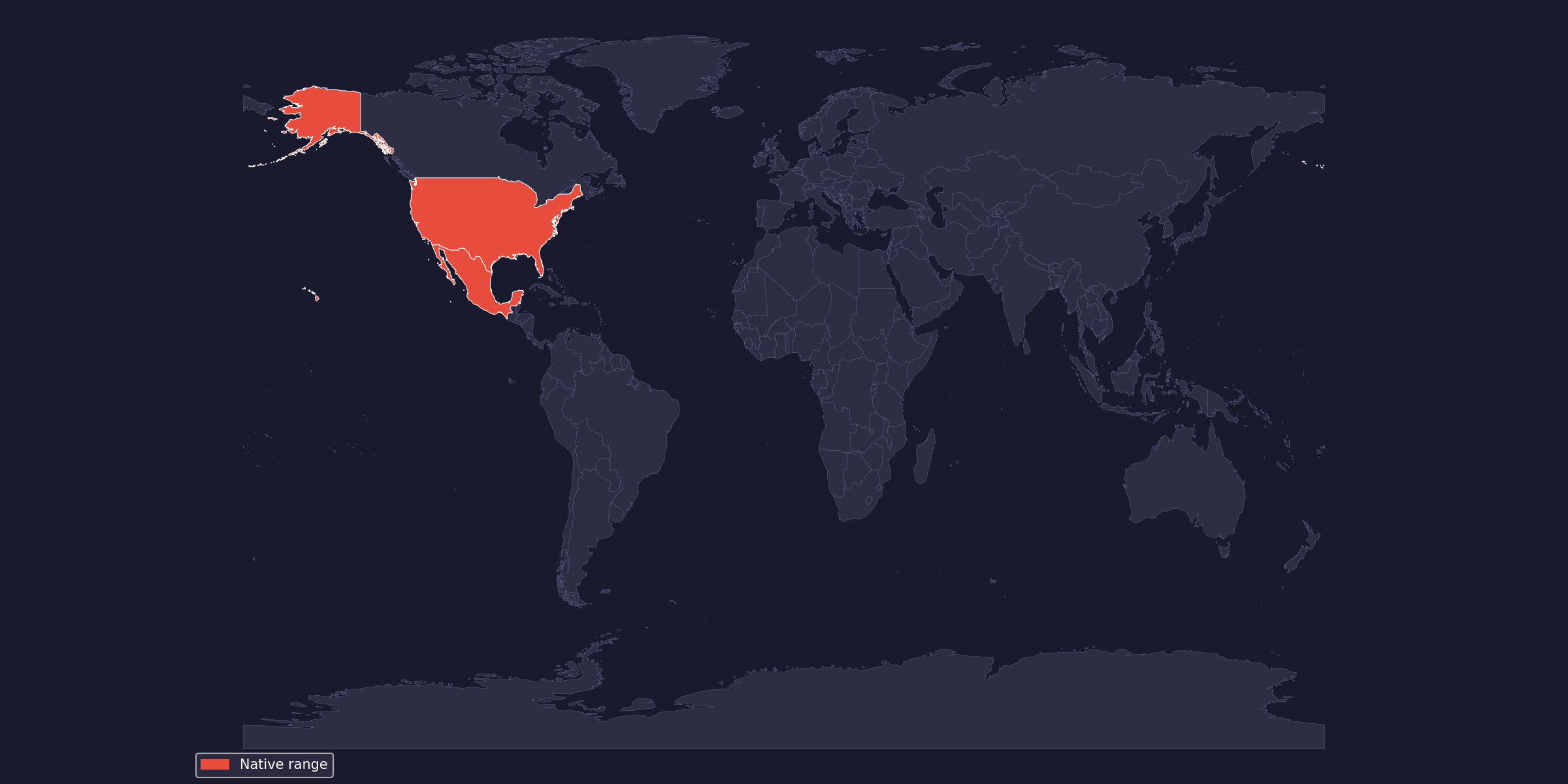
The species is native to western North America, especially California, Baja California, and neighboring parts of Oregon, Nevada, Utah, Arizona, Sonora, and surrounding dry-temperate regions. It uses chaparral, grassland, desert edges, open woodland, rocky cover, farms, riparian edges, and suburban margins.
Captive care should provide contrast: warm and cool retreats, dry ground with a local humidity option, clutter, clean water, and secure access points. A bare hot box does not reflect how the snake uses cover in the wild.
🌡 Climate across the native range
Monthly climate normals from reviewed GBIF occurrence locations:
California — United States
| Month | Min °C | Mean °C | Max °C | RH % |
|---|---|---|---|---|
| January | 3.2 | 8.1 | 13.1 | 78 |
| February | 4.2 | 9.7 | 15.3 | 75 |
| March | 4.8 | 10.7 | 16.6 | 71 |
| April | 5.6 | 12.6 | 19.7 | 65 |
| May | 7.8 | 15.5 | 23.1 | 60 |
| June | 10 | 18.4 | 26.7 | 55 |
| July | 11.2 | 20.3 | 29.4 | 54 |
| August | 11.3 | 20.3 | 29.3 | 54 |
| September | 10.6 | 19.3 | 28 | 55 |
| October | 8.3 | 16.3 | 24.3 | 59 |
| November | 5 | 11.2 | 17.4 | 72 |
| December | 2.9 | 8.1 | 13.4 | 76 |
Baja California Sur — Mexico
| Month | Min °C | Mean °C | Max °C | RH % |
|---|---|---|---|---|
| January | 11 | 17.8 | 24.5 | 74 |
| February | 10.9 | 18.1 | 25.3 | 70 |
| March | 11.7 | 19.2 | 26.6 | 66 |
| April | 13.3 | 20.9 | 28.4 | 62 |
| May | 15.7 | 22.8 | 30 | 62 |
| June | 19.1 | 25.4 | 31.7 | 63 |
| July | 22.3 | 27.6 | 32.8 | 66 |
| August | 22.9 | 27.8 | 32.8 | 70 |
| September | 22.2 | 27.2 | 32.3 | 74 |
| October | 19.1 | 25.1 | 31.1 | 74 |
| November | 15.2 | 21.7 | 28.3 | 74 |
| December | 12.4 | 18.9 | 25.5 | 75 |
Weather data by WorldClim v2.1 · Monthly normals queried by Herpeton Academy from raster values; relative humidity is derived from vapor pressure and mean temperature.
Location references use GBIF.org occurrence data where available; original occurrence records retain their source dataset licenses.
⚖️ Legal status
No current CITES listing or species-specific EU wildlife-trade annex listing is used here. Local rules can still matter because the species is native in parts of North America and invasive in some places outside its native range.
The Bern Convention is not relevant because this North American species is not native to Europe.
Keep proof of captive origin, breeder details, invoices, photos, and the legal-check date. Check collection, transport, sale, invasive-species, and native-wildlife rules before buying, moving, or breeding.
🤌 Husbandry
Plan at least 120 x 60 x 60 cm for an adult, with more space for large, active, or breeding females. The enclosure needs tight-fitting doors or lid clips, blocked cable holes, at least two snug hides, clutter, clean water, and a substrate that permits light burrowing.
Use 5-10 cm of aspen, lignocel, cypress mulch, soil-sand-clay style mix, or another safe dry-temperate substrate. Avoid dusty, moldy, strongly scented, or persistently wet bedding. Juveniles on loose substrate should be fed in a way that reduces particle ingestion, such as on a dish, tile, or clear area.
House singly. Kingsnakes are ophiophagous and may eat other snakes, including other kingsnakes. Pairing belongs only to planned breeding introductions under supervision.
💡 Lighting
Use a predictable 10-12 hour day length. Low-output UVB is recommended but not mandatory when the diet is whole vertebrate prey. Provide shade and hides so the snake can avoid exposure.
Because activity can shift with season and temperature, describe the species as cathemeral in care metadata: it may use daytime, dusk, night, or sheltered periods depending on conditions.
🌡 Heating and temperature
- basking surface: 30-32°C
- ambient air: 24-28°C
- cool retreat: 21-24°C
- night: 18-22°C
Use a thermostat on heat mats, radiant panels, ceramic emitters, or overhead lamps. Measure the surface where the snake rests, not only the air. Avoid heating the whole enclosure evenly; kingsnakes need choices.
Brumation is not required for pets. If used for breeding, it should be limited to healthy adults with good weight, empty digestive tract, parasite risk addressed, and a controlled plan around 8-14°C.
💧 Humidity and water
Aim for 35-55% humidity. During shed, provide a humid hide or temporary local increase around 60-70%. The rest of the enclosure should remain dry enough to prevent mold and scale irritation.
Keep water available at all times and clean the bowl often. Repeated soaking can mean overheating, mites, dehydration, poor shed support, or stress.
Dysecdysis is retained shed. Fix it by improving the humid hide, water access, and ventilation; do not make repeated forced soaking the routine.
🥗 Feeding
Feed appropriately sized frozen-thawed rodents, usually every 7-14 days. Hatchlings may eat more often, while adults often need longer intervals than their appetite suggests.
Prey should usually be about the snake’s widest body section, not dramatically larger. Use tongs, keep fingers away from feeding strikes, and wash hands after handling rodents or other snakes.
Routine calcium or vitamin supplementation is not needed for a healthy snake eating whole vertebrate prey. Overfeeding is far more common than deficiency in this species.
🥚 Breeding notes
The species is oviparous. Clutches are often 5-15 eggs. Breeding can be straightforward, but only after legal status, locality labels, adult condition, brumation plan, incubation setup, and homes for hatchlings are solved.
Do not cool juveniles, thin animals, new arrivals, or animals with unresolved health issues. Keep pairing supervised because feeding response and cannibalism risk do not disappear during breeding.
🧍 Handling and safety
California kingsnakes are non-venomous and often tolerate calm handling, but they are quick, food-motivated, and persistent escape artists. Keep handling short, low, and predictable.
Do not handle during shed, immediately after feeding, during quarantine, or when the snake is repeatedly trying to hide. Children should not handle without direct adult control, and the animal should never be allowed near the face.
🐍 Enclosure security and behavior
Escape prevention is core husbandry. Check lid clips, sliding-door gaps, cable ports, thermostat-probe holes, vent edges, and decor that can lift a lid. A lid that feels heavy is not a lock.
Pacing, nose rubbing, repeated soaking, refusal to use hides, or frantic climbing usually means heat, cover, humidity, security, or feeding routine needs review.
🐁 Feeding routine
Feed with tongs and remove uneaten prey. Do not switch the whole setup after one missed meal; check shed stage, temperatures, disturbance, season, prey size, and enclosure security first.
Keep records of meal date, prey size, weight, shed, defecation, and refusals. This makes seasonal fasting, obesity, and real illness easier to separate.
🩺 Common problems
Common problems include escape, obesity, retained shed, mites, mouth inflammation, respiratory signs from damp or dirty housing, regurgitation after overlarge meals or poor heat, and feeding bites.
Quarantine new arrivals for 60-90 days. Watch for mites, abnormal feces, repeated refusal, mouth redness, wheezing, and weight loss. Use separate tools until the animal is cleared.
🧾 Keeper checklist
Buy captive-bred animals with a feeding record and proof of origin. Ask what prey the snake eats, how often it feeds, whether it has refused seasonally, whether it has been treated for mites, and whether it was ever housed with another snake.
Review the enclosure every season. As the snake grows, small gaps become reachable, locks loosen, lamps age, and feeding intervals may need to stretch. A good setup produces clean sheds, steady weight, confident use of hides, and no repeated escape pressure.
✅ Conclusion
California kingsnakes are a strong first-snake option only when the keeper respects escape prevention, solitary housing, and feeding discipline. Most preventable problems come from loose lids, overfeeding, damp dirty substrate, and treating a hardy snake as maintenance-free.
📚 Selected sources
- https://reptile-database.reptarium.cz/Lampropeltis/californiae
- https://www.gbif.org/species/8170369
- https://www.californiaherps.com/snakes/pages/l.californiae.html
- https://cites.org/eng/app/appendices.php
- https://checklist.cites.org/
- https://jzar.org/jzar/article/view/150