Share

False Water Cobra Care Guide
🔤 Taxonomy
Hydrodynastes gigas is the false water cobra, a large South American dipsadine snake. Older legal and trade references may also use the synonym Cyclagras gigas, so both names are worth checking in documents.
Common names used in the hobby:
- False water cobra
- Brazilian smooth snake
- South American water cobra
This is not a true cobra. It is a powerful, active, rear-fanged snake with enlarged rear teeth and biologically active oral secretions. Treat that as a practical safety issue, not as a novelty label.
📌 Description
The false water cobra is an advanced species because of its adult size, speed, feeding response, water management, escape risk, and rear-fanged bite potential. It is not a casual handling snake and not a good first snake.
Adults often reach 180-250 cm and can live 15-20 years. A suitable keeper has space for a large enclosure, a cleaning plan for the water area, tools for protected service, and a local legal answer before purchase.
Healthy animals are alert, muscular, clear-eyed, and strong without being obese. Repeated nose rubbing, frantic pacing, retained shed, dirty water, swelling after bites, regurgitation, or sudden refusal after reliable feeding should be taken seriously.
📋 Quick reference
| Care point | Practical target |
|---|---|
| Adult size and lifespan | 180-250 cm; often 15-20 years |
| Adult enclosure | At least 240 x 90 x 90 cm, with dry land, water, and locked access |
| Heat | Basking area 31-33°C; ambient 25-29°C; cool retreat 23-25°C |
| Night | 21-24°C; seasonal cooling only for healthy adults and experienced breeding plans |
| Humidity and water | 55-75%; clean water area with filtration or frequent changes |
| UVB | Low-output UVB with shade; bright daytime rhythm |
| Feeding | Varied whole prey, mostly frozen-thawed; adults commonly every 10-14 days |
| Safety | Rear-fanged, strong feeding response; no child handling or casual free-hand routines |
| Quarantine | At least 90 days, with fecal testing strongly advised |
☠️ Venom
This species is venomous. Venom exposure can cause pain, swelling or other systemic effects, and severity varies with species, locality, bite site and the amount delivered. A small wound or apparently dry bite is not proof of safety; every bite or sting requires urgent medical assessment.
If an incident occurs, move away, call emergency services or a poison centre, keep the patient still, remove rings and other constricting items, and follow dispatcher instructions. Do not use a tourniquet, cut or suck the wound, apply ice or electricity, give alcohol or medicines as a home treatment, or attempt to catch the animal. Antivenom choice and dosing are hospital decisions; verify the relevant product and local availability in advance. Sources: WHO snakebite guidance and appropriate species-specific toxinology or medical references listed below.
🌍 Distribution
The species is associated with South American wetlands, marshes, flooded grassland, gallery forest, river edges, ponds, and humid open habitats from the Guianas and Brazil south toward Bolivia, Paraguay, and northern Argentina.
Semi-aquatic does not mean the whole enclosure should be wet. The snake needs clean water for soaking and swimming, dry basking areas, secure hides, solid footing, ventilation, and enough floor space to move without rubbing against doors.
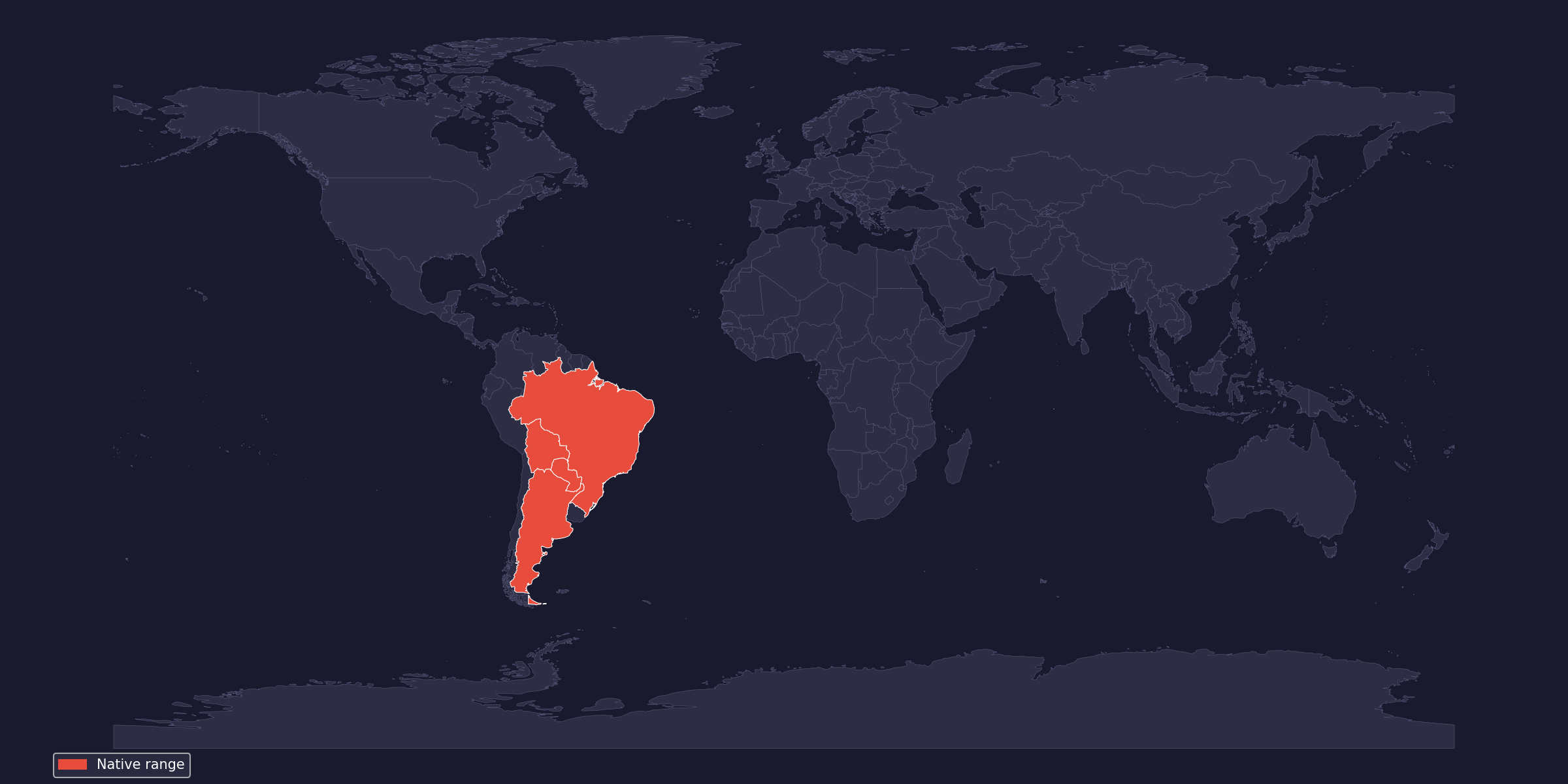
🌡 Climate across the native range
Monthly climate normals from reviewed GBIF occurrence locations:
Cayenne — French Guiana
| Month | Min °C | Mean °C | Max °C | RH % |
|---|---|---|---|---|
| January | 22.4 | 25.4 | 28.3 | 86 |
| February | 22.4 | 25.5 | 28.5 | 84 |
| March | 22.8 | 25.8 | 28.8 | 84 |
| April | 22.9 | 26 | 29.1 | 85 |
| May | 22.6 | 25.8 | 29.1 | 88 |
| June | 21.8 | 25.5 | 29.2 | 88 |
| July | 21.5 | 25.7 | 29.9 | 86 |
| August | 21.5 | 26.1 | 30.7 | 83 |
| September | 21.6 | 26.5 | 31.5 | 81 |
| October | 21.5 | 26.6 | 31.7 | 80 |
| November | 21.7 | 26.3 | 30.8 | 83 |
| December | 22.1 | 25.7 | 29.2 | 86 |
Presidente Hayes — Paraguay
| Month | Min °C | Mean °C | Max °C | RH % |
|---|---|---|---|---|
| January | 22.2 | 28.4 | 34.5 | 67 |
| February | 22 | 27.8 | 33.7 | 68 |
| March | 20 | 26.3 | 32.5 | 71 |
| April | 17.5 | 23.4 | 29.3 | 73 |
| May | 14.5 | 20.4 | 26.2 | 76 |
| June | 12.9 | 18.7 | 24.5 | 77 |
| July | 11.6 | 18.5 | 25.4 | 68 |
| August | 12.6 | 20 | 27.5 | 63 |
| September | 14.7 | 22.2 | 29.7 | 61 |
| October | 17.6 | 24.3 | 31 | 64 |
| November | 19.3 | 25.9 | 32.6 | 64 |
| December | 21.2 | 27.4 | 33.7 | 66 |
Santa Fe — Argentina
| Month | Min °C | Mean °C | Max °C | RH % |
|---|---|---|---|---|
| January | 19 | 25.7 | 32.5 | 66 |
| February | 18.2 | 24.9 | 31.5 | 69 |
| March | 16.4 | 22.6 | 28.8 | 75 |
| April | 12.5 | 18.6 | 24.7 | 79 |
| May | 9.9 | 15.7 | 21.5 | 80 |
| June | 7.9 | 13.1 | 18.4 | 78 |
| July | 6.6 | 12.5 | 18.4 | 77 |
| August | 7.7 | 14.1 | 20.5 | 72 |
| September | 9.5 | 16.2 | 22.9 | 68 |
| October | 12.7 | 19.2 | 25.6 | 70 |
| November | 15.3 | 22 | 28.8 | 66 |
| December | 17.6 | 24.5 | 31.3 | 66 |
Weather data by WorldClim v2.1 · Monthly normals queried by Herpeton Academy from raster values; relative humidity is derived from vapor pressure and mean temperature.
Location references use GBIF.org occurrence data where available; original occurrence records retain their source dataset licenses.
⚖️ Legal status
Treat the species as CITES Appendix II and EU Annex B, including checks under the synonym Cyclagras gigas. The more important practical point is that many jurisdictions also regulate rear-fanged, venomous, large, or dangerous animals separately from CITES.
The Bern Convention is not relevant because this South American species is not native to Europe.
Before acquisition, check national, local, tenancy, transport, public-display, and veterinary rules. Keep invoices, breeder or importer details, transfer papers, photographs, feeding records, and the legal-check date.
🤌 Husbandry
Plan at least 240 x 90 x 90 cm for an adult, and larger is better. The enclosure must combine usable land, a clean water section, dry basking choices, tight hides, visual barriers, heavy locks, and service access that keeps the keeper out of the strike path.
Water can be a removable tub, built-in basin, or filtered section. Whatever design is used, it must be easy to drain and clean. Dirty warm water quickly becomes a health problem.
Juveniles can be monitored in simpler secure housing, but they still need a gradient, water, cover, and escape-proof lids. New animals should be quarantined away from other reptiles with separate tongs, bowls, hooks, cleaning tools, and waste handling.
💡 Lighting
Provide bright visible light on a 10-12 hour schedule. Low-output UVB is recommended as a choice, not a forced exposure. Place it over part of the dry basking area and keep shaded retreats available.
Do not use colored night lights. The snake should have a clear day-night cycle, and night heat, if needed, should come from a lightless source on a thermostat.
🌡 Heating and temperature
- basking area: 31-33°C
- ambient air: 25-29°C
- cool retreat: 23-25°C
- night: 21-24°C
Use thermostats and independent thermometers. Measure both the dry basking area and the water temperature if the water is large or heated by the room. The animal must be able to leave water and dry completely.
Seasonal cooling is not a beginner tool. It should be limited to established healthy adults, with feeding, body condition, and veterinary risk understood before any breeding plan.
💧 Humidity and water
Aim for 55-75% humidity with temporary shed support around 75-85%. Ventilation matters because warm damp air and dirty water can cause skin and respiratory problems.
The water area should allow soaking and swimming but should not replace dry hides. Use filtration, frequent water changes, and easy access for cleaning. If fish are used as enrichment prey, avoid thiaminase-heavy feeder fish as routine food and control parasite and water-quality risk.
Retained shed is usually a hydration, water quality, or enclosure-security problem. Correct the setup before relying on repeated forced soaking.
🥗 Feeding
False water cobras are food-motivated. Feed a controlled varied diet based mostly on frozen-thawed rodents, with appropriate fish, chicks, quail, or other whole prey only when nutrition and hygiene are understood. Adults commonly feed every 10-14 days, but body condition matters more than the calendar.
Use tongs, a predictable feeding routine, and records. Log prey type, prey mass, date, shed stage, defecation, weight, and refusals. Strong appetite is not proof that the snake needs more food.
Avoid live prey as routine care. Avoid wild amphibians or fish because parasites, toxins, and legal collection rules make them unsafe.
🥚 Breeding notes
The species is oviparous. Clutches are often 14-24 eggs, and breeding is difficult because large adults, water hygiene, feeding response, safe introductions, incubation, and hatchling separation all matter.
Breeding should wait until the adults are legally documented, unrelated where possible, parasite-screened, stable on food, and in strong body condition. Plan secure hatchling housing and feeding records before pairing.
🧍 Handling and safety
This is a rear-fanged species with a strong feeding response. Most bites are local, but long chewing bites can cause significant swelling, bruising, pain, numbness, or other reactions. Treat any bite that involves prolonged contact, marked swelling, or systemic signs as a medical issue.
Do not allow children to handle this species. Use hooks, shift boxes, barriers, and a second trained adult for major moves. Free-hand handling should be rare, low, deliberate, and never during feeding response, shed, quarantine, or immediately after meals.
🐍 Enclosure security and behavior
Escape risk is high. Check sliding tracks, vents, cable ports, lid corners, drains, filter lines, and water-section access. A large escaped rear-fanged snake creates a safety and legal problem even if it is calm.
Hooding, flattening, hissing, pushing, frantic swimming, or nose rubbing usually means the animal is stressed, exposed, overheated, under-covered, hungry from routine cues, or trying to escape. Fix the cause rather than treating it as entertainment.
🐁 Feeding routine
Use a clear distinction between maintenance and feeding. Open the enclosure slowly for cleaning, use tools, and avoid letting every door opening predict food. Feed with long tongs and close the enclosure before the snake begins searching outside the feeding area.
After a missed meal, check temperature, water quality, cover, shed stage, and disturbance before offering repeatedly.
🩺 Common problems
Common issues include obesity, nose rub, escape injury, dirty-water skin problems, dysecdysis, mites, respiratory infection, mouth inflammation, regurgitation, and bite incidents caused by poor routines.
Quarantine new arrivals for at least 90 days. Fecal testing is strongly recommended, especially for imports or animals raised on fish or amphibians. Keep water bowls, tubs, hooks, tongs, and cleaning gear separate during quarantine.
🧾 Keeper checklist
Before buying, confirm legal status under both current and synonym names, adult enclosure space, water-cleaning method, feeding history, temperament, and access to a reptile veterinarian willing to see rear-fanged species.
Keep paperwork and records with the animal: legal documents, weights, meals, sheds, water changes, bite or strike incidents, photos, and medical notes. Review locks, drains, filters, thermostats, and service routines every season.
✅ Conclusion
False water cobras are impressive display snakes for advanced keepers with space, tools, legal clarity, and disciplined routines. The main failures are underbuilding the enclosure, letting water quality slip, feeding too heavily, treating rear-fanged bites casually, and relying on free-hand handling.
📚 Selected sources
- https://reptile-database.reptarium.cz/Hydrodynastes/gigas
- https://www.gbif.org/species/2454428
- https://cites.org/eng/app/appendices.php
- https://checklist.cites.org/
- https://jzar.org/jzar/article/view/150