Share

Elaphe climacophora Care Guide
🔤 Taxonomy
Elaphe climacophora is the currently used scientific name for the Japanese rat snake. In trade, white Iwakuni animals should be treated as a distinct protected locality form rather than ordinary locality stock.
English common names used in the hobby:
- Japanese rat snake
- Aodai-sho
Older names and trade labels to know:
- Japanese ratsnake
- Iwakuni white snake
📌 Description
The Japanese rat snake (Elaphe climacophora) is an active temperate colubrid that uses both floor space and low climbing structure. It rewards secure, well-ventilated housing with seasonal temperature cues and steady rodent-feeding routines.
🌍 Distribution
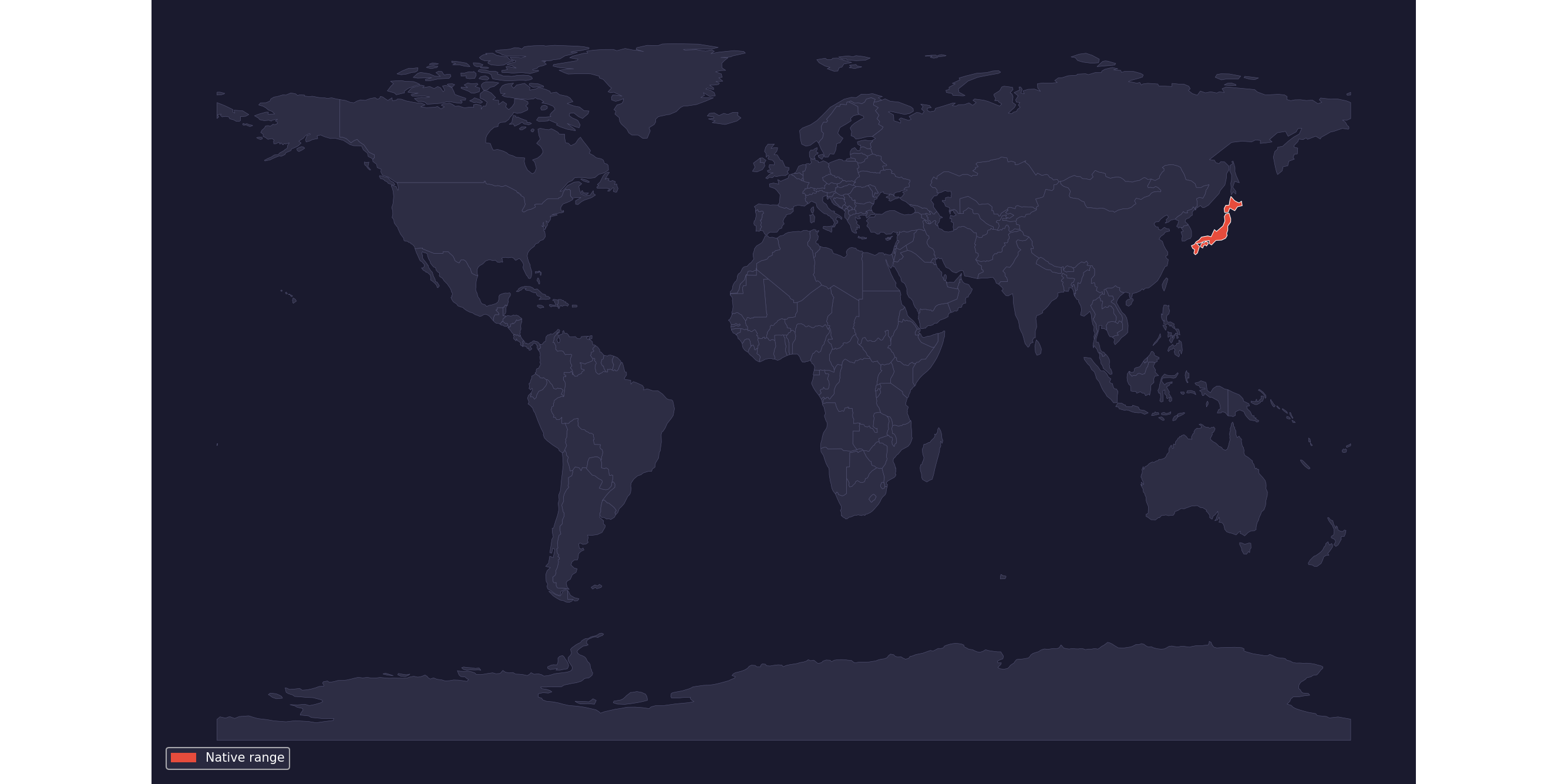
Japan, including main islands and nearby island populations; temperate forests, forest edge, farms, stone walls, river margins, and cool seasonal habitats.
The useful captive lesson is a secure climbing-and-hiding layout with a clear seasonal rhythm. This is not a permanently tropical snake: adults benefit from a cooler night drop and, for breeding projects, carefully managed winter cooling.
Range information should be used as a care clue, not copied into unstable enclosure weather. The useful question is how the animal finds shelter, warmth, water, and seasonal security.
🌡 Climate across the native range
Monthly climate normals from reviewed GBIF occurrence locations:
Tokyo — Japan
| Month | Min °C | Mean °C | Max °C | RH % |
|---|---|---|---|---|
| January | -0.7 | 4.3 | 9.3 | 54 |
| February | 0.1 | 4.9 | 9.8 | 53 |
| March | 3.2 | 7.9 | 12.7 | 58 |
| April | 8.7 | 13.6 | 18.4 | 63 |
| May | 13.2 | 17.9 | 22.6 | 67 |
| June | 17.4 | 21.1 | 24.8 | 76 |
| July | 21.1 | 24.7 | 28.4 | 78 |
| August | 22.4 | 26.3 | 30.2 | 76 |
| September | 19 | 22.6 | 26.1 | 76 |
| October | 13 | 17 | 21.1 | 71 |
| November | 7 | 11.6 | 16.3 | 65 |
| December | 1.6 | 6.7 | 11.8 | 58 |
Oita — Japan
| Month | Min °C | Mean °C | Max °C | RH % |
|---|---|---|---|---|
| January | -0.3 | 3.5 | 7.3 | 71 |
| February | 0.2 | 4.1 | 8 | 70 |
| March | 3.1 | 7.3 | 11.4 | 72 |
| April | 8.2 | 12.6 | 16.9 | 73 |
| May | 12.6 | 16.8 | 20.9 | 75 |
| June | 17.2 | 20.5 | 23.8 | 83 |
| July | 21.3 | 24.4 | 27.5 | 84 |
| August | 21.9 | 25.2 | 28.6 | 83 |
| September | 18.3 | 21.6 | 25 | 82 |
| October | 12.3 | 16.3 | 20.3 | 76 |
| November | 6.8 | 10.9 | 15.1 | 75 |
| December | 1.7 | 5.8 | 10 | 72 |
Shimane — Japan
| Month | Min °C | Mean °C | Max °C | RH % |
|---|---|---|---|---|
| January | 0.1 | 3.5 | 7 | 73 |
| February | 0 | 3.7 | 7.4 | 72 |
| March | 2.3 | 6.8 | 11.3 | 71 |
| April | 7.3 | 12.3 | 17.3 | 69 |
| May | 12.1 | 16.9 | 21.8 | 71 |
| June | 16.9 | 20.8 | 24.7 | 78 |
| July | 21.7 | 25.1 | 28.6 | 79 |
| August | 22.3 | 26.1 | 30 | 77 |
| September | 18 | 21.8 | 25.6 | 79 |
| October | 11.7 | 16.1 | 20.4 | 76 |
| November | 6.5 | 10.8 | 15.1 | 75 |
| December | 2.2 | 6.2 | 10.1 | 73 |
Weather data by WorldClim v2.1 · Monthly normals queried by Herpeton Academy from raster values; relative humidity is derived from vapor pressure and mean temperature.
Location references use GBIF.org occurrence data where available; original occurrence records retain their source dataset licenses.
⚖️ Legal status
As checked against current official sources in April 2026, Elaphe climacophora is not currently listed in the CITES Appendices, and no species-specific EU wildlife-trade Annex listing was found. It is not relevant to the Bern Convention unless a country applies separate native-wildlife rules. Local rules on ownership, import, sale, transport, breeding, invasive-species control, dangerous-animal licensing, and proof of lawful origin may still apply; keep purchase and breeding records.
🧭 Life stage differences
Hatchlings should start in smaller secure enclosures such as 30 x 20 x 20 cm for hatchlings, upgraded gradually. Smaller starter housing makes feeding, shedding, hydration, and waste easier to monitor. Adults need the full planned enclosure, stronger locks or lids, and more stable environmental zones. Do not buy a young animal unless the adult housing, food supply, and legal responsibilities are already realistic.
For this temperate species, the enclosure should not be run like a permanently tropical display. A warm daytime basking area, cooler retreat, and real night drop help appetite, digestion, and seasonal behaviour stay predictable.
Use vertical structure, but keep it practical: shelves, cork tubes, and branches should let the snake rest partly hidden rather than forcing it to choose between warmth and security. A nervous juvenile in a bare tall cage often feeds worse than one in a smaller, covered setup.
Adults can be calm, but they are still active rat snakes. Check door tracks, cable holes, and ventilation seams after every maintenance session because this species is strong enough to test weak points repeatedly.
🤌 Husbandry
House one animal per enclosure. A practical adult enclosure is 120 x 60 x 60 cm for one adult; taller and longer is better for active females. Larger is useful when it creates more usable movement, better gradients, and safer maintenance. Use secure ventilation, stable furnishings, and a written log for feeding, sheds, weight changes, and behaviour. Quarantine new animals and avoid mixing species or uncertain locality lines.
💡 Lighting
Use a regular day-night cycle with seasonal adjustment for this temperate rat snake. UVB is optional, but shade and cooler retreats are required if it is used. Do not use visible night lights. Avoid lamps that dry small enclosures or overheat retreats.
🌡 Heating and temperature
Practical target range: basking 28-30 °C, warm side 24-27 °C, cool side 20-23 °C, night 18-22 °C. Measure with digital probes and, for basking or warm surfaces, an infrared thermometer. All heat sources must be controlled by thermostats or suitable dimming controllers and guarded so the snake cannot burn itself.
💧 Humidity and water
Target humidity and water: 50-70% with good ventilation and a lightly moist shed hide. Fresh water should always be available in a stable dish appropriate to the animal’s size. Avoid stagnant wet air. Chronic dryness causes bad sheds or dehydration; chronic wet substrate causes skin, scale, mold, or respiratory problems depending on the animal.
🌿 Enclosure and decoration
Provide a warm retreat, cooler retreat, water, safe rough surfaces for shedding, and enough cover that the snake can move without feeling exposed. Juvenile setups should be simple enough to inspect but not bare. Adult enclosures must be built for strength, stable furniture, secure doors or lids, and safe cleaning access. All cable ports, sliding doors, lid corners, and ventilation gaps must be escape-proof. Heavy furnishings should be stable and unable to shift onto the snake.
🪳 Feeding
Feed frozen-thawed mice or small rats; chicks only as occasional variety for large adults. Size meals to the animal, not to appetite alone. Hatchlings eat smaller meals more often; adults usually eat less often and should be kept in lean, muscular condition. Offer appropriately sized prey, remove uneaten prey promptly, and avoid handling snakes for at least 48 hours after meals.
🥚 Breeding
This temperate species may reproduce after a real winter rest, but only healthy adults with stable weight should be cooled. Females lay eggs, so provide a humid lay box and plan incubation before pairing. Breeding should use healthy mature animals with known identity and lawful origin. Keep dates, pairings, offspring numbers, and transfer records, and do not produce more young than can be housed and placed responsibly.
🩺 Common problems
Common problems include dehydration, retained shed, burns or overheating, mites or parasites, injuries from escapes or unstable furnishings, refusal to feed with weight loss, and stress from exposure or poor security. Warning signs include wheezing, bubbles at the nostrils, open-mouth breathing, repeated regurgitation, retained shed, swelling, twisting posture, sudden lethargy, or repeated escape attempts. Consult a reptile- or exotic-animal veterinarian for severe weakness, injury, breathing signs, swelling, repeated regurgitation, retained shed, or prolonged refusal to feed.
📌 Conclusion
Elaphe climacophora does best when the keeper plans for the adult animal and not only the attractive juvenile. Secure housing, measured conditions, appropriate feeding, and honest records are the foundation of responsible care.
📚 Sources and further reading
- ReptiFiles species search and related snake husbandry references, checked April 2026
- GBIF species backbone entry for taxonomy and distribution context
- CITES Appendices, checked April 2026
- EU wildlife-trade references, checked April 2026
💬 Feedback
For questions, corrections, or practical notes, leave us a message in the forum thread.