Share

Prairie Rattlesnake
🔤 Taxonomy
Crotalus viridis (Rafinesque, 1818) is the accepted prairie rattlesnake. Modern treatments separate it from the western rattlesnake, C. oreganus, and the species once grouped with that complex. The Reptile Database currently lists no subspecies; “Hopi rattlesnake” and C. v. nuntius persist in older literature and collection labels but do not justify an undocumented taxonomic or care split.
Retain country, state or province, precise lawful locality, parentage and the identification authority. Animals from the northern Great Plains, southern high plains and the smaller south-western populations should not be treated as interchangeable for seasonal cycling or conservation records.
📌 Description
The prairie rattlesnake is a heavy-bodied, medically significant pit viper. Adults are commonly about 89-120 cm; some populations average smaller, while exceptional animals approach 150 cm. Its blotched pattern, dark tail rings and rattle are useful identification features, but neither colour nor rattle behaviour establishes provenance.
Activity shifts with weather and season: spring animals may bask by day, summer activity often moves toward dusk and night, and northern populations spend months underground. A rattle is a warning structure, not a guaranteed warning before a strike. This is a display-only animal for licensed specialist or institutional programmes, never a training animal for unsupervised private experimentation.
📋 Quick reference
| Care point | Practical target |
|---|---|
| Adult enclosure | At least 150 x 75 x 75 cm for one adult, with externally closable shift |
| Day temperatures | 22-27°C ambient; 29-32°C basking surface; 18-22°C cool retreat |
| Night temperatures | 14-20°C outside a controlled winter programme |
| Humidity | 35-55%; local 55-70% shed support with ventilation |
| Lighting | Seasonal 10-14 hours; measured Ferguson Zone 2 UVB recommended |
| Feeding | Modest frozen-thawed rodents; adults commonly every 14-28 days |
| Housing | Solitary, protected contact only |
| Safety | Double containment, trained backup, documented escape and hospital plans |
☠️ Venom
This species is venomous. Venom exposure can cause pain, swelling or other systemic effects, and severity varies with species, locality, bite site and the amount delivered. A small wound or apparently dry bite is not proof of safety; every bite or sting requires urgent medical assessment.
If an incident occurs, move away, call emergency services or a poison centre, keep the patient still, remove rings and other constricting items, and follow dispatcher instructions. Do not use a tourniquet, cut or suck the wound, apply ice or electricity, give alcohol or medicines as a home treatment, or attempt to catch the animal. Antivenom choice and dosing are hospital decisions; verify the relevant product and local availability in advance. Sources: WHO snakebite guidance and appropriate species-specific toxinology or medical references listed below.
🌍 Distribution
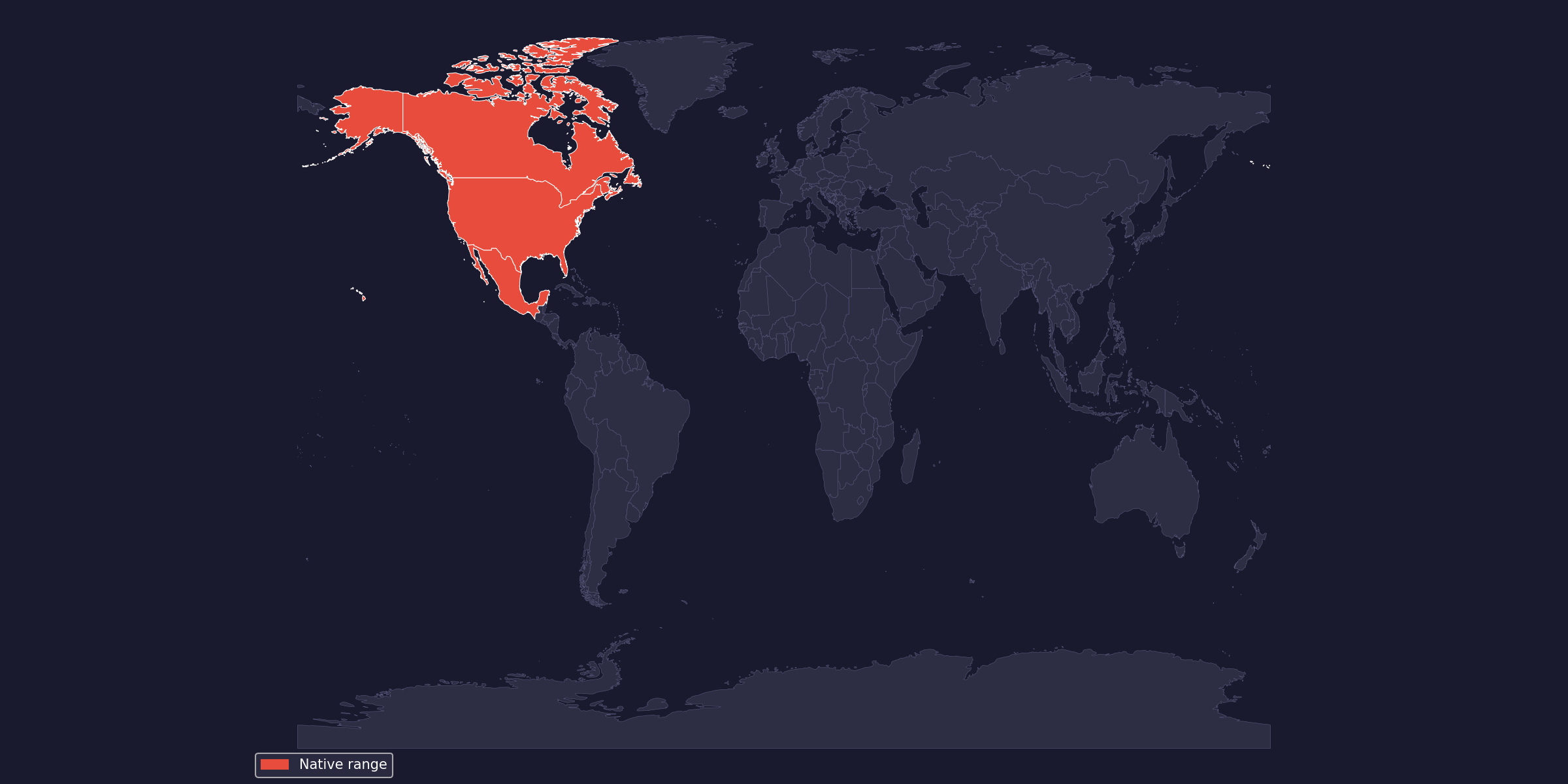
The current species ranges from southern Alberta and southwestern Saskatchewan through the central and western United States to northern Mexico. The U.S. range is centred on the Great Plains and Rocky Mountain basins, including Montana, the Dakotas, Wyoming, Colorado, Nebraska, Kansas, parts of Idaho, Utah, Iowa, Oklahoma, New Mexico and Texas; smaller edge records require taxonomic and locality care. In Mexico it reaches northern Chihuahua and north-western Coahuila.
Habitats include shortgrass and mixed-grass prairie, badlands, open scrub, rocky slopes, river valleys, cropland margins and open woodland. Burrows, rock fissures and traditional hibernacula provide buffered retreats. A country-level map cannot show the narrow Canadian river-valley range, disjunctions or the boundary with C. oreganus and other western rattlesnakes.
⚖️ Legal status
Checked on 21 August 2026: Crotalus viridis is not listed in CITES Appendices I-III. Commission Regulation (EU) 2026/1383 includes Crotalus spp. in EU Annex D, so EU import reporting and current wildlife-trade procedures must be checked even though the species is not in CITES. It is not native to Europe, so the Bern Convention is not relevant.
Canada lists the prairie rattlesnake as Special Concern in Schedule 1 of the Species at Risk Act, and provincial wildlife rules protect animals and den sites. U.S. and Mexican conservation, collection and venomous-animal rules vary by jurisdiction. Trade status never establishes a right to possess this medically significant snake: licensing, facility inspection, insurance, transport limits or a prohibition may apply.
Keep permits, invoices, import and transfer records, parentage and locality documentation, photographs and the date of each legal check. Confirm requirements in writing before acquisition, movement, breeding or transfer.
🤌 Husbandry
Begin with an access-controlled, escape-resistant room that provides secondary containment around the locked primary enclosure. Seal service penetrations, label the room and enclosure, control keys, and keep a verified inventory. The enclosure needs at least two positively lockable compartments or a full-body shift so routine water, cleaning and inspection can occur with the snake confirmed behind a closed barrier.
Only staff with documented supervised venomous-snake training should work the enclosure. Use protected contact; never free-handle, tail, pin, neck or manually restrain in routine care. A second trained adult with communications and the written emergency plan attends any primary opening. Veterinary examination requires a pre-arranged reptile veterinarian, anaesthesia and containment protocol.
Quarantine for at least 90 days in a simple locked enclosure, ideally in separate airspace, with dedicated tools. Record weight, meals, sheds, faeces, respiration and skin condition; imported, wild-origin or poorly documented snakes need targeted veterinary parasite and disease assessment. House singly despite natural seasonal den aggregations.
💡 Lighting
Provide a 10-14-hour seasonal photoperiod, bright visible light and full darkness at night. A measured low-to-moderate UVB opportunity around Ferguson Zone 2 is recommended over part of the warm area, with complete shade and a dark shift refuge always available.
All lamps, cables and probes must sit outside primary containment or behind locked guards. Do not sacrifice safe service access to install optional UVB, and do not use coloured night lamps.
🌡 Heating and temperature
Maintain 22-27°C daytime air, a 29-32°C basking surface broad enough for the coil, an 18-22°C cool retreat and 14-20°C nights. Use guarded overhead heat controlled by a thermostat, plus independent air and surface measurements. The cool compartment must remain usable when the basking area is on.
Northern stock is strongly seasonal, but brumation is a breeding-management procedure, not routine proof of “natural” care. Healthy, established adults of documented locality may be cooled gradually to about 5-10°C only after fasting, confirmation that the gut is empty, and veterinary and operational review. Do not cool juveniles, new arrivals, thin, dehydrated, gravid or ill snakes. Southern stock must not automatically receive a Canadian programme.
💧 Humidity and water
A ventilated base range of about 35-55% suits many prairie localities. Offer one enclosed retreat at 55-70% during pre-shed rather than wetting the whole enclosure. Measure conditions inside refuges as well as in open air.
Provide clean water in a stable bowl that can be exchanged from protected service access. Persistent soaking, condensation, wet belly scales or poor sheds warrant review of temperature, mites, hydration, ventilation and disease. Permanently damp substrate increases dermatitis and respiratory risk.
🌿 Enclosure and decoration
For one adult, provide at least 150 x 75 x 75 cm; large northern males benefit from more floor area. Doors, tracks, ventilation and cable gaps must also contain neonates. Use 8-12 cm of compactable mineral soil, secure flat rock and cork, at least one snug refuge in each thermal zone, low visual cover and an unobstructed sight line to every door and shift.
Anchor all heavy furnishings. Avoid unstable rock stacks, sharp wire, aromatic wood, deep décor that prevents a complete visual count, and any item that must be lifted while the snake occupies the compartment. Paper, simple lockable hides and removable furnishings are preferable during quarantine.
🐁 Feeding
Offer appropriately sized frozen-thawed mice or rats that create only a modest body contour. Juveniles may feed every 7-14 days; established adults commonly need a meal every 14-28 days, adjusted to weight, activity, season and reproductive condition. Whole vertebrate prey requires no routine calcium or vitamin powder.
Feed through a protected port or after the snake has shifted. Never move it to a loose feeding tub, and do not offer live rodents: prey injury and retrieval create avoidable exposure. Track weight and body outline because captive rattlesnakes readily become obese while continuing to feed eagerly.
🛡 Operational safety and emergencies
Maintain written opening, escape, bite, transport and fire procedures, and rehearse them without a live snake. The escape plan must name the person in command, isolate the room, exclude the public, account for every animal and person, and define safe search and recapture resources. Stop work whenever the snake cannot be positively located.
Before acquisition, coordinate with emergency services, poison control, a medical toxicologist and the receiving hospital. Give them the accepted species name, origin, facility access instructions and current antivenom planning information. Antivenom selection, storage and administration are medical decisions; privately holding a vial does not replace a hospital plan.
Every bite is an immediate medical emergency. Withdraw without creating a second bite, call emergency services, keep the patient still, remove rings and tight items, and follow the poison centre. Do not cut, suck, ice, shock, massage, apply chemicals or use a tourniquet. Do not delay transport to catch or kill the snake, and do not attempt home treatment when symptoms appear mild.
🐍 Breeding notes
The species is viviparous. Canadian studies report a mean litter near 11 and a range of about 4-18 live young; females mature slowly and may reproduce every two or three years. Seasonal timing, gestation and litter size vary with locality and maternal condition.
Breeding requires compatible documented lineages, independently lockable introduction and separation spaces, individual neonate housing and lawful placements prepared in advance. Every neonate is fully venomous. Do not cross vague “Hopi,” prairie and western-rattlesnake stock or erase locality records for a colour project.
🩺 Common problems
- Obesity: lengthen feeding intervals and follow serial weight and body contour rather than appetite.
- Dysecdysis: review water access, humid-retreat use, temperature, mites and systemic illness; never peel an unsecured animal.
- Respiratory disease: wheeze, bubbles, open-mouth breathing or persistent raised-head posture needs urgent veterinary assessment.
- Dermatitis or blister disease: correct wet, dirty substrate and poor airflow, then obtain diagnosis.
- Mites and internal parasites: isolate and test new or wild-origin animals; never improvise pesticide dosing.
- Burns and overheating: guard and thermostat every heater and preserve a measured cool refuge.
- Brumation loss: unexpected weight decline, dehydration or respiratory signs during cooling requires the programme veterinarian.
Do not attempt hands-on home treatment. Shift and lock the snake before an experienced reptile veterinarian assesses it.
📌 Conclusion
The prairie rattlesnake belongs only in an authorised programme with locality records, true double containment, contact-free servicing, trained backup and a hospital response agreed before arrival. Its moderate size does not reduce the venom, escape or decades-long operational commitment.
📚 Sources and further reading
- ReptiFiles — searched first on 21 August 2026; no species-specific guide was located.
- The Reptile Database: Crotalus viridis
- GBIF species record: Crotalus viridis
- COSEWIC assessment and status report on the Prairie Rattlesnake
- Canada Species at Risk Act, current Schedule 1
- U.S. National Park Service: prairie rattlesnakes in the Badlands
- U.S. Department of Defense PARC prairie-rattlesnake fact sheet
- CDC/NIOSH: venomous-snake bite prevention and first aid
- UK Standards of Modern Zoo Practice — venomous and poisonous species
- Baines et al. — UV lighting guidance
- CITES Appendices
- EU wildlife-trade annexes, Commission Regulation (EU) 2026/1383
- Bern Convention appendices