Share

Southern Pacific Rattlesnake
🔤 Taxonomy
Crotalus helleri is the accepted Southern Pacific rattlesnake, formerly treated as C. viridis helleri or C. oreganus helleri. Current species-level treatments separate it from C. oreganus, C. cerberus and other members of the old western-rattlesnake complex.
No subspecies are currently accepted here. The Coronado/Coronado Norte island name caliginis persists in older records but is generally treated within C. helleri. Preserve exact locality because colour, seasonality and venom composition vary geographically.
📌 Description
Adults range roughly 60-139 cm and can be powerful, heavy-bodied snakes. The species occupies southern and south-central California and northern Baja California across coastal sage scrub, chaparral, grassland, rocky canyons, woodland and montane habitats.
Its venom is medically significant and geographically variable; some populations have prominent neurotoxic components in addition to tissue and coagulation effects. Appearance cannot predict an individual venom profile. This is a display-only animal for licensed specialist or institutional programmes with a hospital-reviewed plan.
📋 Quick reference
| Care point | Practical target |
|---|---|
| Adult enclosure | At least 180 x 90 x 90 cm with a full-body lockable shift |
| Day temperatures | 23-28°C air; 30-33°C basking surface; 19-23°C cool refuge |
| Night | 15-21°C outside a managed winter cycle |
| Humidity | 40-60%; local 60-75% shed support |
| Lighting | Seasonal 10-14 hours; measured Ferguson Zone 2 UVB recommended |
| Feeding | Modest frozen-thawed rodents, generally every 14-28 days |
| Provenance | Essential for taxonomy, climate, venom briefing and breeding |
| Safety | Double containment, protected contact, two trained operators, hospital plan |
☠️ Venom
This species is venomous. Venom exposure can cause pain, swelling or other systemic effects, and severity varies with species, locality, bite site and the amount delivered. A small wound or apparently dry bite is not proof of safety; every bite or sting requires urgent medical assessment.
If an incident occurs, move away, call emergency services or a poison centre, keep the patient still, remove rings and other constricting items, and follow dispatcher instructions. Do not use a tourniquet, cut or suck the wound, apply ice or electricity, give alcohol or medicines as a home treatment, or attempt to catch the animal. Antivenom choice and dosing are hospital decisions; verify the relevant product and local availability in advance. Sources: WHO snakebite guidance and appropriate species-specific toxinology or medical references listed below.
🌍 Distribution
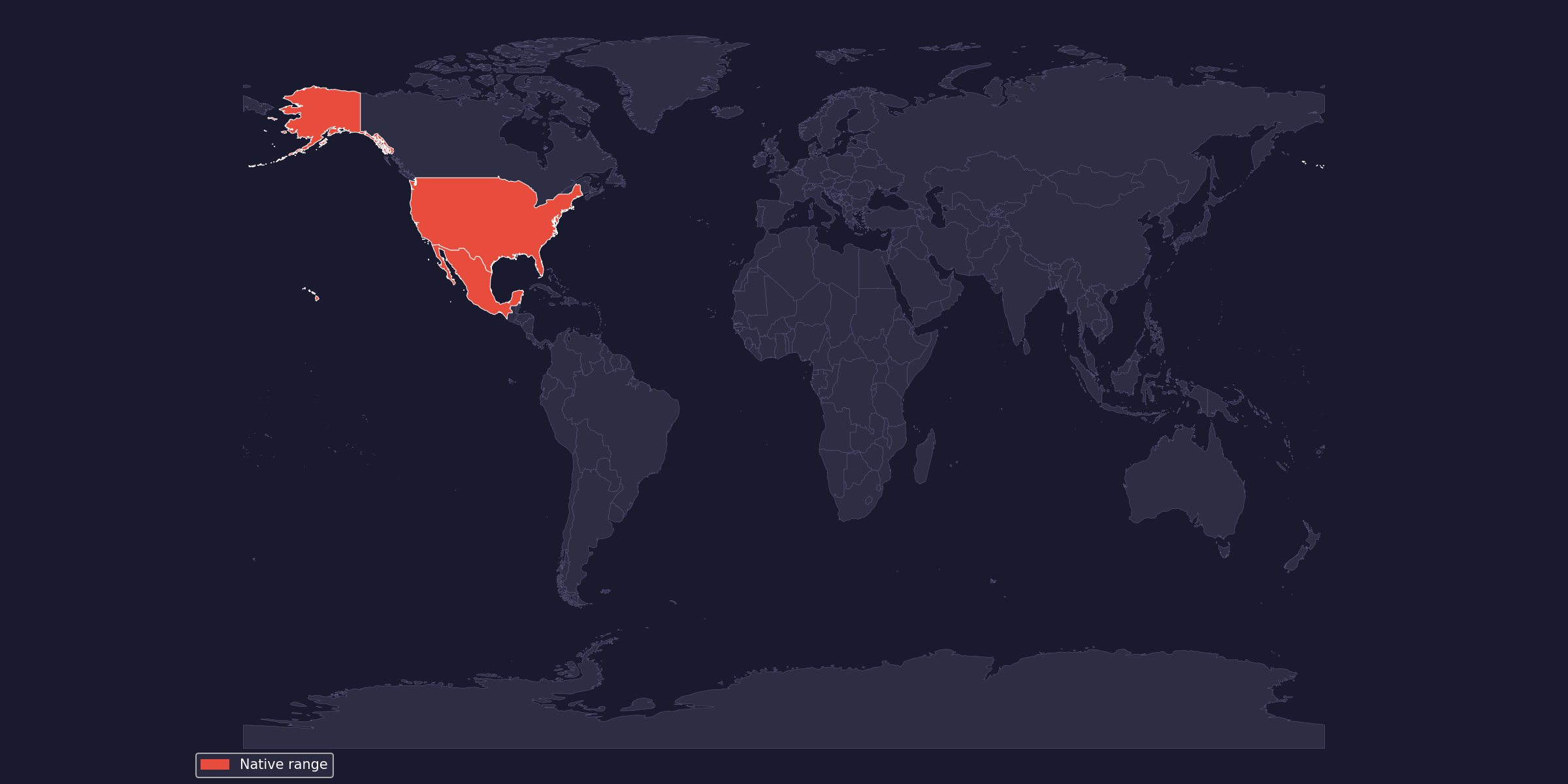
The Southern Pacific rattlesnake occurs from south-central coastal California through much of southern California and into northern Baja California, Mexico, including some nearby islands. Boundaries with C. oreganus, C. lutosus and other rattlesnakes require current locality-based identification rather than old subspecies maps.
Coastal, inland-valley and mountain populations do not experience one climate. A Los Angeles-basin record cannot define the winter cycle of a high-elevation animal, and a country-level map cannot show habitat breaks or the limited Mexican extent.
⚖️ Legal status
Checked on 21 August 2026: C. helleri is not listed by CITES. It falls within the genus-level Crotalus spp. entry in EU Annex D under Regulation (EU) 2026/1383. The Bern Convention is not relevant. EU Annex D monitors imports and does not authorize possession.
California regulates native-wildlife take and scientific collection; local venomous-animal ordinances and protected-area rules can be stricter. Mexican federal wildlife, lawful-origin and export requirements apply south of the border. Every destination may license, inspect, insure or prohibit medically significant venomous snakes. Obtain written answers before acquisition, transport, breeding or transfer, and retain permits, invoices, exact locality, parentage and legal-check dates.
🤌 Husbandry
House one snake in a locked primary enclosure within a controlled-access, escape-resistant room. Provide two compartments or a full-body shift that closes positively from outside. The keeper must see the entire animal behind the barrier before a service door opens; never work from an assumption that it remains in the last hide used.
Use protected contact only. Two trained adults attend every primary opening and use defined roles, communications and the written plan. Routine free-handling, tailing, pinning, necking or manual restraint is unacceptable. Veterinary procedures need pre-arranged professional anaesthesia, containment and transport.
Quarantine at least 90 days in separate airspace when possible, with simple lockable hides, paper or shallow disposable mineral substrate and dedicated tools. Record weight, meals, sheds, faeces, respiration and mouth condition. Wild-origin or uncertain stock needs targeted veterinary parasite and disease assessment. House singly even where natural denning aggregations occur.
💡 Lighting
Provide 10-14 hours of bright visible light, adjusted gradually with season, and complete darkness at night. A measured Ferguson Zone 2 UVB opportunity is recommended over part of the warm zone; retain full shade and a dark shift refuge.
All lamps, probes and wiring belong outside primary containment or behind locked guards. Broad illumination must not erase cover or turn every surface into a basking site.
🌡 Heating and temperature
Maintain 23-28°C daytime air, a 30-33°C basking surface and a 19-23°C cool refuge, with 15-21°C nights. Measure air and surface independently, thermostat and guard heat sources, and fit a separate high-temperature alarm.
The range includes mild coasts and winter-cold mountains. Brumation at roughly 8-14°C is a locality-led breeding procedure only for healthy, established adults after fasting, confirmed gut clearance and professional review. Do not apply it automatically to lowland Baja stock, and never cool juveniles, new arrivals, gravid, thin, dehydrated or ill animals.
💧 Humidity and water
Maintain good cross-ventilation and about 40-60% ambient humidity. Offer one ventilated refuge at 60-75% during pre-shed rather than spraying the whole enclosure. Local coastal moisture does not justify persistent wetness or condensation.
Provide fresh water in a stable bowl serviced through protected access. Repeated soaking, poor sheds, concentrated urates or abrupt drinking changes require a review of temperature, mites, hydration and disease.
🌿 Enclosure and decoration
A large adult needs at least 180 x 90 x 90 cm. Provide a snug hide in each thermal zone, a full-body shift, anchored rock or cork, low visual cover and clear sight lines to doors and service ports. Door tracks, vents and cable gaps must also contain neonates.
Use 8-12 cm of compactable mineral soil with sand and dry leaf litter where suitable. Avoid unstable stone stacks, sharp wire, aromatic wood, very dusty substrate and deep clutter that prevents a complete visual count. No heavy item should need moving while the snake occupies the compartment.
🐁 Feeding
Wild diets include mammals, lizards and birds, changing with age and habitat. Established captives can receive modest frozen-thawed mice or rats. Juveniles may feed every 7-14 days; adults generally every 14-28 days according to weight, activity and season.
Feed through a protected port or after a confirmed shift. Never use live prey or a loose feeding tub. Whole vertebrate prey requires no routine supplements. Serial weights and body-condition photographs are essential because a large rattlesnake can accumulate fat while appearing merely robust.
🛡 Operational safety and emergencies
Rehearse written opening, escape, bite, transport, fire and power-failure procedures without a live snake. If location is uncertain, stop. The escape plan must isolate the room, exclude the public, account for people and animals, assign search zones and name the incident lead.
Before acquisition, coordinate with emergency services, poison control, a medical toxicologist and the receiving hospital. Supply the accepted name and exact locality because Southern Pacific venom can vary regionally. Antivenom choice and administration are medical decisions; a privately stored vial is not a hospital plan.
After a bite, move safely away, call emergency services, remove tight items, keep the patient still with the limb neutrally supported and follow poison-centre instructions. Do not tourniquet, cut, suck, ice, massage or shock the site, and do not delay transport to catch the snake. There is no home treatment.
🥚 Breeding notes
C. helleri is viviparous. Approximately four to eighteen young is a practical planning range, with female size, locality and condition affecting litter size. Do not breed undocumented lines or use a universal cycle across coastal and mountain stock.
Pair through shift compartments only after documented health and legal review. Prepare individual neonate-proof units and lawful placements before introduction. Newborns are medically significant from birth and need full inventory, escape and hospital controls.
🩺 Common problems
- Overheating: especially likely when a cool coastal or montane lineage is treated as a desert snake.
- Obesity: prevent with measured prey, long adult intervals and serial weights.
- Dehydration or retained shed: review water, humid retreat, ventilation, temperatures and illness.
- Respiratory disease or stomatitis: discharge, bubbles, wheeze, open-mouth breathing or oral lesions require prompt veterinary care.
- Mites and internal parasites: important during quarantine of wild-origin or undocumented animals.
- Burns and crushing injuries: prevent with guarded heat and anchored furnishings.
Shift and secure the snake before a veterinarian intervenes; hands-on home treatment is unsafe.
📌 Conclusion
Southern Pacific rattlesnake care requires ample floor area, locality-led climate decisions and uncompromising protected contact. Its variable venom makes exact provenance and a hospital-reviewed response plan operational necessities.
📚 Sources and further reading
- ReptiFiles — checked first on 21 August 2026; no species-specific care guide was found.
- The Reptile Database: Crotalus helleri
- GBIF species record: Crotalus helleri
- Davis et al. 2016 — species boundaries in the western rattlesnake complex
- California Department of Fish and Wildlife: rattlesnakes
- California scientific collecting permits
- Baines et al. — UV lighting guidance for reptiles
- UK Standards of Modern Zoo Practice
- Northern Ireland government venomous-reptile guidance
- CDC/NIOSH venomous-snake first aid
- CITES CoP20 species-proposal outcomes
- CITES Appendices
- EU wildlife-trade annexes, Commission Regulation (EU) 2026/1383
- Bern Convention appendices