Share

Arizona Black Rattlesnake
🔤 Taxonomy
Crotalus cerberus is the accepted Arizona black rattlesnake. Older labels place it under C. viridis or C. oreganus, but multilocus work supports it as a separate species within the former western-rattlesnake complex. No subspecies are currently accepted.
The dark adult colour is not diagnostic on its own. Retain lawful locality, coordinates, parentage, photographs and the identification authority; never merge undocumented stock merely because both animals were sold as “Arizona blacks.”
📌 Description
This is a medium rattlesnake, commonly 60-90 cm and exceptionally about 112 cm, from central Arizona and adjoining far-western New Mexico. Adults may darken markedly, while young are often grey or patterned. It uses rocky slopes, talus, chaparral, pine-oak woodland and relatively cool drainages across a broad elevation range.
Season and weather change its activity: spring basking, summer dusk or night movement and cool-season retreat may all occur. Its venom is medically significant and a rattle is not a promise of warning. This guide is for licensed specialist or institutional programmes using protected contact, not ordinary private pet keeping.
📋 Quick reference
| Care point | Practical target |
|---|---|
| Adult enclosure | At least 150 x 75 x 75 cm, divided by a positively lockable shift |
| Day temperatures | 22-27°C air; 29-32°C basking surface; 18-22°C cool retreat |
| Night | 14-19°C outside controlled brumation |
| Humidity | 45-65%; one ventilated 65-75% shed refuge |
| Lighting | Seasonal 9-14 hours; measured Ferguson Zone 2 UVB recommended |
| Feeding | Modest frozen-thawed rodents, usually every 14-28 days for adults |
| Housing | Solitary despite seasonal communal denning in nature |
| Safety | Double containment, protected contact, trained backup, bite and escape plans |
☠️ Venom
This species is venomous. Venom exposure can cause pain, swelling or other systemic effects, and severity varies with species, locality, bite site and the amount delivered. A small wound or apparently dry bite is not proof of safety; every bite or sting requires urgent medical assessment.
If an incident occurs, move away, call emergency services or a poison centre, keep the patient still, remove rings and other constricting items, and follow dispatcher instructions. Do not use a tourniquet, cut or suck the wound, apply ice or electricity, give alcohol or medicines as a home treatment, or attempt to catch the animal. Antivenom choice and dosing are hospital decisions; verify the relevant product and local availability in advance. Sources: WHO snakebite guidance and appropriate species-specific toxinology or medical references listed below.
🌍 Distribution
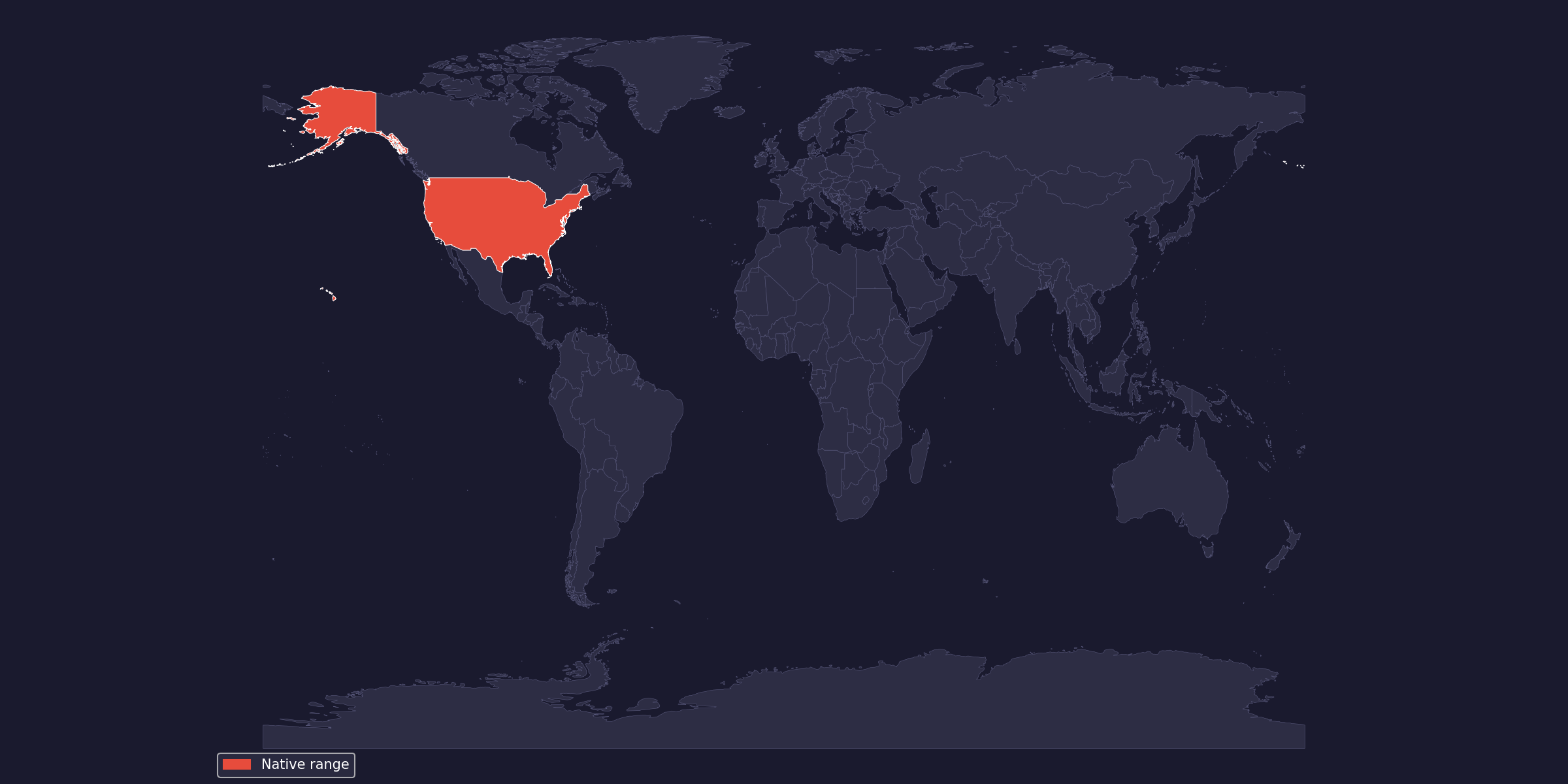
The core range lies in central Arizona, from the Colorado Plateau margins and Mogollon Rim through central mountain systems, with a small extension into far-western New Mexico. Occupancy is tied to rocky refuges and suitable den sites rather than every place inside a state outline.
The map therefore cannot substitute for a specimen record. Elevation and locality matter when choosing summer night temperatures and any winter cycle, and old C. oreganus cerberus records need interpretation under current taxonomy.
⚖️ Legal status
Checked on 21 August 2026: C. cerberus is not in the CITES Appendices. It is included by the genus-level Crotalus spp. entry in EU Annex D under Commission Regulation (EU) 2026/1383. The Bern Convention is not relevant to its North American range. Annex D is an import-monitoring category, not a possession permit.
Arizona and New Mexico native-wildlife rules regulate collection and possession, and protected-area collection is separately controlled. Venomous-animal licensing, facility inspection, transport, insurance or prohibition may also apply at country, state, county and city level. Confirm origin, transit and destination requirements in writing before acquisition or movement; retain permits, invoices, parentage, locality and legal-check records.
🤌 Husbandry
Use a locked primary enclosure inside a controlled-access, escape-resistant room. Fit two compartments or shift hides that close positively from outside, so the entire snake can be visually confirmed behind a barrier before service access opens. Keys, inventory and door status need written control.
Only trained staff work the room. Two competent adults attend every primary opening, with communications and the current emergency plan immediately available. Routine free-handling, tailing, pinning, necking and manual restraint are unacceptable; veterinary work needs a pre-arranged anaesthetic and containment protocol.
Quarantine for at least 90 days in separate airspace where possible, using paper or a shallow disposable mineral layer, simple lockable hides and dedicated tools. Record weight, feeding, shedding, faeces, respiration and oral condition; arrange parasite and disease testing according to origin. House singly. Wild communal dens and maternal attendance do not make cohabitation safe or easy to monitor.
💡 Lighting
Provide bright visible light for 9-14 hours, changed gradually with season, and complete darkness at night. A measured low-to-moderate UVB opportunity around Ferguson Zone 2 is recommended over part of the warm zone, with full shade in both thermal zones.
Place lamps and wiring outside primary containment or behind locked guards. UVB is supplementary to, not a substitute for, correct heat, nutrition and safe enclosure access.
🌡 Heating and temperature
Maintain daytime air at 22-27°C, a limited basking surface at 29-32°C and a cool retreat at 18-22°C; allow 14-19°C nights. Measure both surface and air temperatures. Every heater needs a thermostat, physical guard and independent high-temperature alarm.
Do not treat a dark montane snake as a hot-desert species. It must be able to leave radiant heat completely. Locality-documented, healthy established adults may be gradually brumated at about 7-12°C for a managed breeding programme only after fasting, gut clearance and veterinary review. Never cool a juvenile, new arrival, thin, dehydrated, gravid or ill animal.
💧 Humidity and water
Maintain ventilation with roughly 45-65% ambient humidity and give one shaded, ventilated refuge at 65-75% during pre-shed. This species often uses cooler, moister situations than desert congeners, but permanently wet substrate, condensation and stale air remain inappropriate.
Provide a stable bowl of fresh water that can be exchanged through protected access. Repeated soaking, poor sheds or concentrated urates require review of hydration, mites, heat and health rather than indiscriminate spraying.
🌿 Enclosure and decoration
One adult needs at least 150 x 75 x 75 cm. Provide a snug hide in each thermal zone, secure slate or rock-textured shelves, anchored cork, low cover and an unobstructed inspection lane. All door tracks, vents and cable openings must contain a neonate.
Use about 8-12 cm of compactable mineral soil, sand and clay with dry leaf litter in selected areas. Avoid unstable rock piles, sharp mesh, aromatic wood, deep furnishings that prevent a complete visual count and anything that must be lifted while the snake occupies the compartment.
🐁 Feeding
Wild prey includes small mammals, lizards and birds, with juveniles using proportionally more ectothermic prey. Established captives can eat appropriately sized frozen-thawed mice or small rats. Adults commonly need one modest meal every 14-28 days; juveniles may eat every 7-14 days. Adjust to body condition, season and activity.
Feed through a protected port or after a confirmed shift. Never use live rodents or transfer the snake to a loose feeding box. Whole vertebrate prey requires no routine supplements; keep serial weights because sedentary adults become obese readily.
🛡 Operational safety and emergencies
Rehearse enclosure-opening, escape, bite, transport, fire and power-failure procedures without a live snake. Stop work whenever the animal cannot be positively located. An escape response must isolate the room, exclude the public, account for people and animals, define search sectors and name the incident lead.
Before acquisition, coordinate with emergency services, poison control, a medical toxicologist and the receiving hospital. Give them the accepted species name and Arizona locality and review current North American crotalid antivenom access. Private possession or administration of antivenom is not a substitute for hospital care.
After a bite, move out of range, call emergency services, remove rings or tight clothing, keep the patient still with the limb neutrally supported and follow poison-centre instructions. Do not cut, suck, ice, massage, shock, tourniquet or delay transport to capture the snake. There is no home treatment.
🥚 Breeding notes
C. cerberus is viviparous. Four to eleven young is a conservative planning range, although exceptional larger litters have been reported. Females may use communal rookery areas and attend neonates briefly in nature, but captive breeding still requires individual neonate-proof units.
Pair only healthy, locality-compatible adults through shift compartments. Prepare lawful placements and separate secured housing before introduction. Neonates are venomous from birth and require the same inventory, escape and hospital standards as adults.
🩺 Common problems
- Chronic overheating: restlessness, persistent cool-hide use and dehydration follow desert-style temperatures without escape.
- Obesity: frequent large rodents conceal poor muscle tone and shorten useful reproductive life.
- Dehydration or retained shed: review water, humid refuge, ventilation, heat and underlying illness.
- Respiratory disease: bubbles, wheeze or open-mouth breathing need prompt veterinary assessment.
- Mites, internal parasites and stomatitis: especially important in wild-origin or poorly documented animals.
- Burns and crushing injuries: prevent with guarded heat and immovable, anchored furnishings.
Hands-on home treatment creates an additional bite emergency. Shift and secure the snake, then use an experienced reptile veterinarian.
📌 Conclusion
Arizona black rattlesnake care depends on cool montane choices, exact provenance and disciplined protected contact. Only a licensed programme with redundant containment, trained backup and a verified hospital pathway should acquire one.
📚 Sources and further reading
- ReptiFiles — checked first on 21 August 2026; no species-specific care guide was found.
- The Reptile Database: Crotalus cerberus
- GBIF species record: Crotalus cerberus
- Davis et al. 2016 — species boundaries in the western rattlesnake complex
- USGS — Arizona black rattlesnake research
- Arizona Game and Fish Department regulations
- Baines et al. — UV lighting guidance for reptiles
- UK Standards of Modern Zoo Practice
- Northern Ireland government venomous-reptile guidance
- CDC/NIOSH venomous-snake first aid
- CITES Appendices
- EU wildlife-trade annexes, Commission Regulation (EU) 2026/1383
- Bern Convention appendices