Share

Cape Coral Snake
🔤 Taxonomy
Aspidelaps lubricus is the accepted name for the Cape coral snake, also called the coral shield cobra. The nominate A. l. lubricus occurs mainly in South Africa; northern Namibian and southern Angolan animals are commonly assigned to A. l. cowlesi. A. l. infuscatus is now generally treated as a synonym of cowlesi.
Locality must accompany the animal because colour varies and the subspecies have different seasonal contexts. Do not confuse this species with Aspidelaps scutatus.
📌 Description
This small, stout elapid is usually 35-60 cm and rarely approaches 70 cm. Its enlarged rostral scale helps it move through loose soil, and it spends much of the day below cover before becoming active at night. A managed lifespan of 8-12 years is a reasonable expectation.
Small size does not mean low consequence. Published cases include respiratory paralysis requiring mechanical ventilation and a confirmed fatal envenomation by the Kunene form. No species-specific antivenom is available. The snake remains an expert-only, protected-contact animal.
📋 Quick reference
| Care point | Practical target |
|---|---|
| Adult enclosure | At least 100 x 50 x 50 cm with two lockable shift hides |
| Temperature | Ambient 22-27°C; warm surface 29-31°C; cool retreat 19-23°C |
| Night | 17-22°C in the active season |
| Humidity | 35-55%; local 60-75% humid retreat |
| Substrate | 12-15 cm compactable sandy soil with clear observation zones |
| Feeding | Small varied whole prey every 10-18 days |
| Safety | Protected contact, two trained staff, ventilation-ready bite plan |
☠️ Venom
This species is venomous. Venom exposure can cause pain, swelling or other systemic effects, and severity varies with species, locality, bite site and the amount delivered. A small wound or apparently dry bite is not proof of safety; every bite or sting requires urgent medical assessment.
If an incident occurs, move away, call emergency services or a poison centre, keep the patient still, remove rings and other constricting items, and follow dispatcher instructions. Do not use a tourniquet, cut or suck the wound, apply ice or electricity, give alcohol or medicines as a home treatment, or attempt to catch the animal. Antivenom choice and dosing are hospital decisions; verify the relevant product and local availability in advance. Sources: WHO snakebite guidance and appropriate species-specific toxinology or medical references listed below.
🌍 Distribution
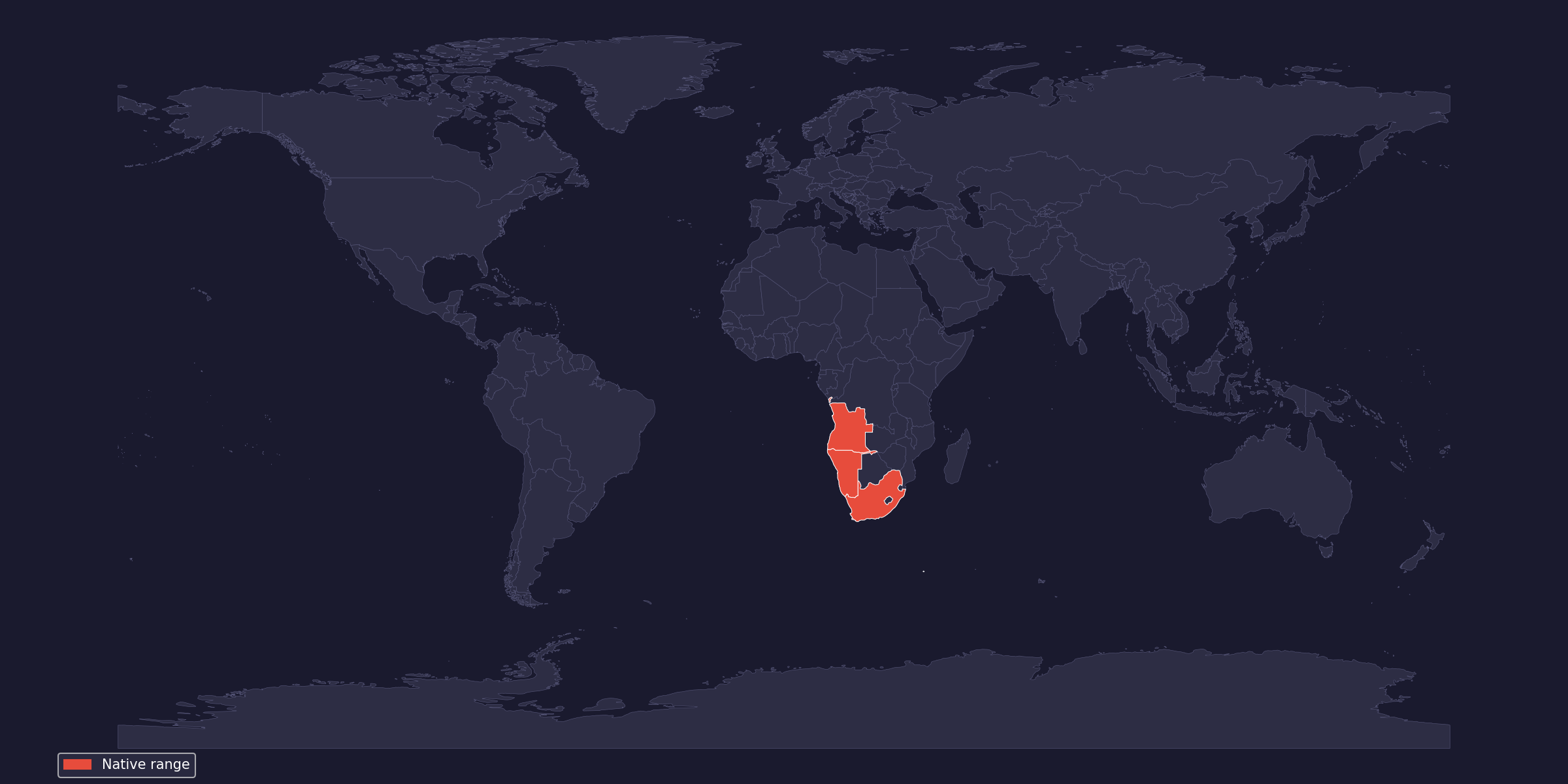
The species occurs from southern Angola through Namibia into the western and central parts of South Africa. The nominate form occupies the Cape and adjacent interior, while cowlesi covers the northern part of the range. Country shading hides this north-south structure and should not be read as distribution throughout Angola or South Africa.
Habitats include the Namib margins, arid shrubland, sandy and stony semi-desert and dry winter-rainfall landscapes. The snake uses burrows, loose soil and cover objects to avoid daytime heat and desiccation.
⚖️ Legal status
No species-specific entry for A. lubricus was found in the CITES Appendices, EU wildlife-trade annexes or Bern Convention appendices when checked on 29 August 2026. Namibia, Angola and South Africa nevertheless regulate native-wildlife collection and export, and subspecies locality may affect permits and provenance claims.
Dangerous-animal laws can require licensing, inspected containment, competence evidence, insurance and emergency arrangements even for a small snake. Keep invoices, breeder and locality records, photographs, import or transfer papers and written authority decisions.
🤌 Husbandry
House one animal alone in a locked venomous room behind secondary containment. Provide two snug shift boxes linked by remotely operated doors. The animal must be positively secured before any bowl, hide or substrate tray is touched; never search loose bedding by hand.
Quarantine for at least 90 days on paper or in another easily inspected setup with separate tools. Record weight, food, sheds, faeces and breathing. Wild-origin or uncertain animals require reptile-veterinary parasite assessment and scrutiny of collection and export history.
💡 Lighting
Provide a gradually adjusted 9-13-hour day/night cycle, bright enough to maintain a clear rhythm but with opaque shelters throughout. Full darkness at night is important. Place lamps outside primary containment or behind rigid guards.
Routine UVB is not required for a secretive whole-prey feeder. If offered, keep it low and heavily shaded within Ferguson Zone 1; do not reduce cover to expose the snake.
🌡 Heating and temperature
During active months maintain ambient air at 22-27°C, a small 29-31°C warm surface, a 19-23°C cool retreat and nights around 17-22°C. Measure inside burrows and hides because open-surface temperatures can be very different. Thermostat and guard every heater.
Healthy, established adults of known locality may receive a gradual winter period around 12-16°C in a documented breeding programme. Do not cool juveniles, thin, sick, gravid or newly acquired animals. Water, remote observation and weight records continue throughout.
💧 Humidity and water
Maintain general humidity around 35-55% with ventilation and a mostly dry surface. Provide one tight humid retreat at 60-75% for shedding. A dry-to-moist choice is safer than repeated spraying of the entire enclosure.
Supply a small stable water bowl through protected service. Check for tunnelling beneath it and remove spills before they create a cold wet pocket.
🌿 Enclosure and decoration
Despite its size, an adult should receive at least 100 x 50 x 50 cm so two complete shift areas and a thermal gradient fit. Provide 12-15 cm of compactable sandy soil, partly buried cork, flat anchored cover and clear sightlines to both shift entrances.
Avoid dusty pure sand, sharp gravel, unstable rocks and décor with narrow inaccessible cavities. Paper is safer during quarantine. Fine vent mesh, close door tolerances and two independent locks are essential because this is a small, powerful burrower.
🐁 Feeding
Offer appropriately sized frozen-thawed mice, with occasional legally sourced small lizards or other suitable whole prey only within an institutional nutrition plan. Adults generally feed every 10-18 days; juveniles may take smaller meals more frequently. Whole prey requires no routine dusting.
Feed through a protected port after positive shifting. Never use live prey or reach into substrate to recover a missed item. Record refusal, regurgitation and body mass rather than responding with repeated feeding attempts.
🛡 Operational safety and emergencies
No free handling, casual hooking or manual restraint is acceptable. Use lockable shifts, transparent shields and tools suited to a small burrowing elapid. Two trained staff attend every opening and account for the full snake before a service panel moves.
The receiving hospital and poison service must review the species card and plan before acquisition. Because no specific antivenom exists, rapid airway assessment, intubation and mechanical ventilation capacity are central. Antivenom intended for other snakes must never be improvised by keepers.
After any bite, secure the room, call emergency services, keep the patient still and transport urgently. Do not wait for weakness; do not cut, suck, ice, shock, tourniquet or attempt home treatment.
🥚 Breeding notes
The species is oviparous and reported clutches contain about 3-11 eggs; more than one clutch in a season has occurred. A conservative monitored incubation window is 27-29°C for roughly 55-70 days, adjusted to the documented line and calibrated readings.
Pairing and egg collection create disproportionate risk because the snake can vanish beneath substrate. Use remote introductions, an accessible laying box and individual locked neonate units. Confirm lawful placements before breeding.
🩺 Common problems
- Hidden-animal servicing: redesign shifts and substrate access so staff never search by hand.
- Dehydration or dysecdysis: provide clean water and a local humid retreat without wetting the whole floor.
- Burns and overheating: measure beneath cover and preserve a cool burrow.
- Respiratory disease: cold wet substrate and abrupt winter cycling require correction and veterinary review.
- Obesity: use small prey and recorded adult intervals.
- Parasites and stomatitis: strict quarantine is important for uncertain-origin animals.
📌 Conclusion
The Cape coral snake combines small size, secretive burrowing and a proven capacity for fatal neurotoxicity. Safe care depends on positive shifting, observable deep substrate and a hospital plan centred on immediate respiratory support.
📚 Sources and further reading
- ReptiFiles — checked first on 29 August 2026; no species-specific care guide was found.
- The Reptile Database: Aspidelaps lubricus
- GBIF species record: Aspidelaps lubricus
- SANBI species account: Aspidelaps lubricus
- Pizon et al. — neurotoxic envenomation requiring ventilation
- Theart et al. — confirmed fatal envenomation by A. l. cowlesi
- WHO: Guidelines for prevention and clinical management of snakebite in Africa
- CITES Appendices
- EU wildlife-trade annexes, Commission Regulation (EU) 2026/1383
- Bern Convention appendices