Share

Lesser Hedgehog Tenrec
🔤 Taxonomy
Echinops telfairi is the accepted scientific name of the lesser hedgehog tenrec and the only living species in the genus Echinops. Older literature may use combinations such as Ericulus telfairi. Despite its appearance, it is not a hedgehog; the resemblance is a result of convergent evolution.
English common names:
- Lesser hedgehog tenrec
- Lesser Madagascar tenrec
German common names:
- Kleiner Igeltanrek
- Kleiner Igeltenrek
📌 Description
The lesser hedgehog tenrec is a small, nocturnal mammal from Madagascar. Adults are commonly 12-16 cm long and may weigh roughly 50-230 g depending on sex, season, condition, and source population. Captive longevity often reaches a decade, with longer-lived individuals recorded.
It is not a miniature African pygmy hedgehog. Tenrecs climb readily, have unusually flexible thermoregulation, and enter daily and seasonal torpor. Their annual rhythm, nutritional sensitivity, and limited veterinary knowledge make them an advanced exotic mammal rather than a casual handling pet.
🌍 Distribution
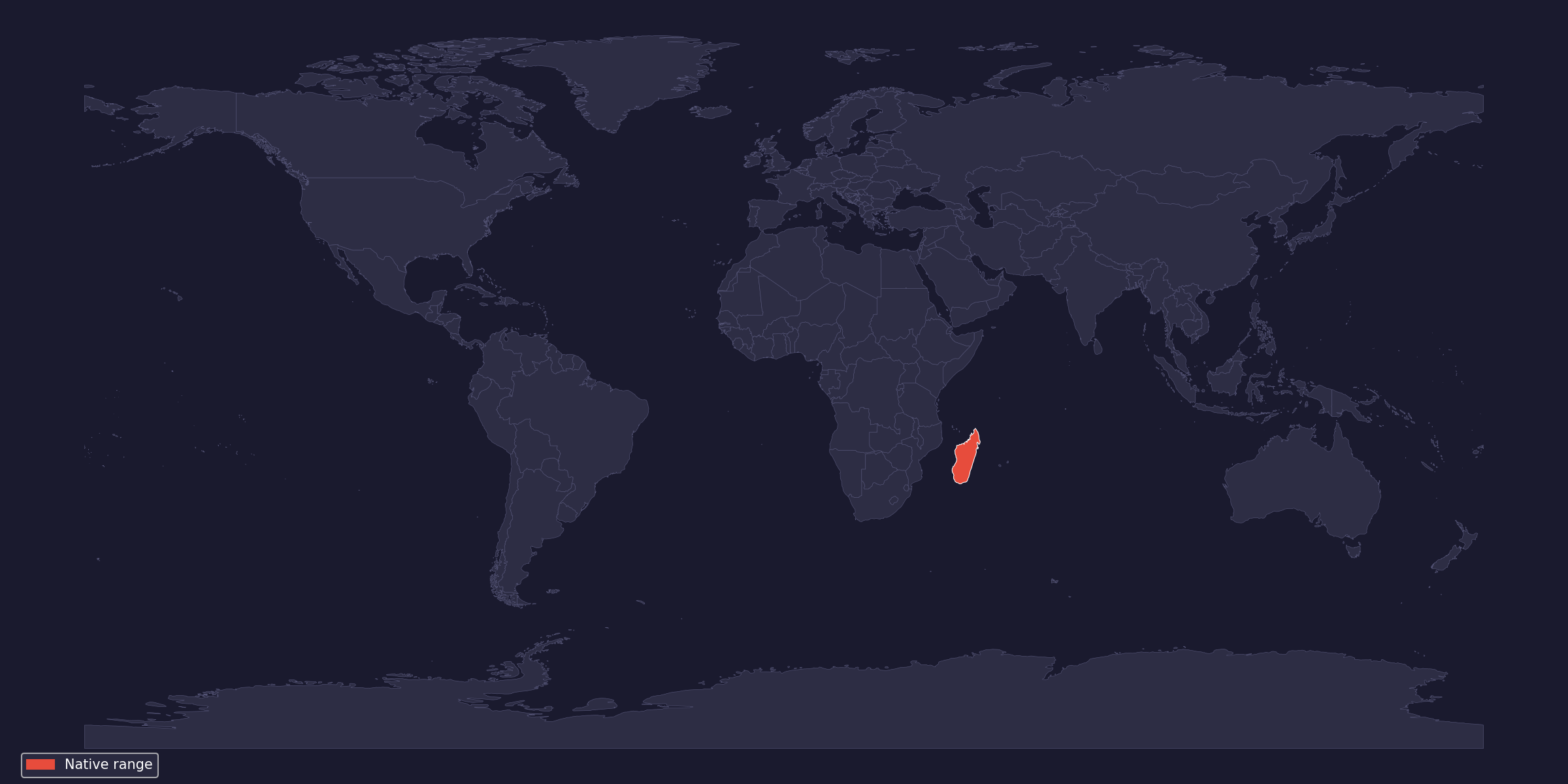
Echinops telfairi is endemic to Madagascar. It is most characteristic of the south and southwest, where it uses dry deciduous forest, xerophytic spiny forest, gallery forest, scrub, and some disturbed habitats. It is terrestrial but climbs tree trunks and uses hollow wood or tree cavities for shelter.
The captive enclosure therefore needs both floor area and safe vertical complexity. Dry-forest origin does not mean permanent dehydration: animals still need drinking water, local moisture choices, ventilation, and seasonal changes that are controlled rather than improvised.
⚖️ Legal status
Echinops telfairi is not currently listed in the CITES Appendices or the EU wildlife-trade annexes, and the Bern Convention is not relevant to this Madagascar endemic. That does not make all trade unregulated. Madagascar controls its native wildlife, and national exotic-mammal rules, import health requirements, landlord rules, or positive lists may restrict private keeping elsewhere.
Choose a traceable captive-bred animal. Retain the invoice, breeder identity, transfer records, and any veterinary or import papers. Never treat care information as justification for removing an animal from the wild.
🌿 Habitat
In the wild, lesser hedgehog tenrecs experience a warm active season and a cooler, drier period when food becomes scarce. They forage at night for insects and other small animal foods, sleep in protected cavities, climb rough trunks, and may carry nesting material to a hide.
Captive care should provide:
- a warm active-season gradient
- several dark nest boxes and cork tubes
- rough, fall-safe climbing surfaces
- deep, clean substrate for foraging and nesting
- a predictable light cycle
- controlled seasonal change only for healthy established adults
🤌 Husbandry
For one adult, use at least 120 × 60 × 90 cm, with more usable climbing surface preferred. Mesh or ventilation openings must be too small to admit the head, and doors need secure catches. A tenrec can exploit surprisingly small gaps.
House unfamiliar animals separately. Some pairs or female groups may be compatible in specialist collections, but males can fight and social tolerance changes with season and breeding condition. Solitary housing is the safest default for a private keeper. Provide more than one hide and feeding point during any carefully supervised introduction.
Quarantine new arrivals in a simple but furnished enclosure with separate tools. Record body weight at the same time of day, appetite, feces, activity, skin, feet, teeth, and torpor pattern. Veterinary and fecal assessment are especially important for imported or uncertain-origin animals. Sudden inactivity should never be assumed to be harmless torpor until temperature, body condition, and illness have been considered.
💡 Lighting
Use a clear 10-13 hour day/night cycle matched to the planned season and provide darkness at night. Bright visible light over part of the enclosure helps establish rhythm, while every animal must retain shaded nest boxes.
UVB requirements for this nocturnal mammal are not established as they are for many reptiles. Low-level UVB can be provided over an exposed route while shaded retreats remain available, but it cannot compensate for a nutritionally incomplete diet. Diets made almost entirely of unsupplemented insects have been associated with severe vitamin-D-related osteomalacia in captive lesser hedgehog tenrecs.
🌡 Heating and temperature
During the active season, maintain roughly 22-26°C with a localized 26-28°C warm zone and cooler retreats around 20-23°C. Use thermostatically controlled overhead or panel heating outside the animal’s reach. Avoid heat rocks and unguarded bulbs.
Temperatures around 18-21°C have been used in managed torpor programs, but cooling is not a beginner procedure. Do not force torpor in juveniles, thin animals, pregnant or nursing females, new arrivals, or animals with unresolved disease. A specialist exotic-mammal veterinarian and an experienced breeder or zoo protocol should guide any seasonal program.
Measure inside hides as well as in open air. A warm room reading does not prove that a floor-level nest box is safe, and an inactive tenrec can cool rapidly.
💧 Humidity and water
Provide fresh water at all times in a stable shallow bowl. General humidity can range around 40-70%, with good ventilation and locally moistened substrate or moss rather than a constantly wet enclosure. The active breeding season may be somewhat more humid, while the torpor season is commonly drier.
Condensation, mould, sour bedding, or persistently damp feet indicate too much moisture or insufficient air exchange. Extremely dry, dusty conditions can also irritate the skin and respiratory tract. Clean toilet areas frequently while preserving a dry, undisturbed sleeping hide whenever possible.
🌿 Enclosure and decoration
Use 8-12 cm of dust-free soil-based substrate, coconut fibre mixed with leaf litter, or another compactable naturalistic mix. Avoid aromatic softwood shavings, perfumed bedding, fine dusty sand, and loose fibres that wrap around toes.
Add cork bark, hollow logs, wooden nest boxes, low platforms, and thick rough branches. Arrange climbing routes so a fall ends on substrate rather than stone or glass. A solid exercise wheel can be offered only if it is large enough to keep the spine level and has no wire or axle gaps; climbing and scattered foraging remain essential even when a wheel is used.
🪳 Feeding
Feed during the evening active period. Use a nutritionally balanced insectivore or omnivore formulation as the controlled foundation, then rotate appropriately sized, well gut-loaded invertebrates such as crickets, roaches, locusts, earthworms, silkworms, and larvae in limited proportions. Small amounts of cooked egg or other veterinarian-approved animal foods may add variety; fruit is occasional, not a staple.
An all-insect diet is unsafe unless it has been professionally formulated and supplemented. Many feeder insects are calcium-poor and provide little vitamin D. Gut-load them, use calcium and vitamin products according to the complete diet and veterinary advice, and avoid stacking several supplements. Mealworms and waxworms are energy-dense and should not dominate.
Remove leftovers promptly and prevent escaped insects from biting a resting animal. Weigh the tenrec regularly because seasonal weight change can be normal but obesity, dehydration, dental pain, and illness can look similar without records.
💤 Seasonal torpor
Lesser hedgehog tenrecs naturally enter torpor for several months during the cooler dry season, and shorter daily torpor may occur at other times. A captive animal may eat less, become cooler, and spend long periods in its nest. Never wake it repeatedly or feed large meals while it is cold and inactive.
Before a planned seasonal reduction, confirm adult body condition, health, hydration, and stable weight with an experienced veterinarian. Reduce temperature, day length, humidity, and feeding gradually under a written protocol. Continue water availability and quiet monitoring. Rapid weight loss, abnormal breathing, discharge, persistent exposure outside the nest, or failure to recover as conditions rise requires veterinary help.
🥚 Breeding
Breeding follows emergence from seasonal torpor. Gestation is roughly 50-68 days and litters range from one to ten, often around three to seven. Females need a quiet, warm nesting box and abundant balanced nutrition. Disturbance near birth can compromise maternal care.
Do not pair animals without reliable sexing, pedigree records, separate backup housing, and homes for offspring. Males can be identified partly by prominent eye glands in breeding condition, but sexing can remain difficult. Breeding is specialist work because neonatal mortality and maternal stress can be significant.
🩺 Common problems
Documented captive concerns include osteomalacia and other metabolic bone disease from poor vitamin D and mineral nutrition, obesity, dental and jaw disease, mites or dermatitis, respiratory infection, trauma from falls or fighting, hepatic disease, cardiomyopathy, kidney disease, and neoplasia.
Warning signs include:
- soft or deformed jaw, difficulty chewing, weakness, or abnormal gait
- steady weight loss outside a controlled seasonal plan
- noisy breathing, nasal discharge, or open-mouth breathing
- swollen feet, wounds, persistent scratching, or spine loss
- drooling, facial swelling, bad breath, or dropped food
- failure to wake as temperature and light return to active-season values
Because normal body temperature and activity vary with season, good records are unusually important. Seek an exotic-mammal veterinarian rather than attempting to treat presumed torpor, parasites, or nutritional disease at home.
📌 Conclusion
The lesser hedgehog tenrec is suitable for an experienced keeper who can manage a secure semi-arboreal enclosure, balanced nutrition, weight records, and a cautious seasonal rhythm. Its small body does not make its biology simple, and it should not be managed as a standard hedgehog.
📚 Sources and further reading
- ReptiFiles was checked on 2026-08-20; no species-specific lesser hedgehog tenrec guide was available
- Mammal Diversity Database: Echinops telfairi
- Tenrec.org species profile and published colony husbandry account
- Maryland Zoo lesser hedgehog tenrec species profile
- LaDouceur et al. 2020: osteomalacia in captive lesser hedgehog tenrecs
- CITES Appendices and EU wildlife-trade guidance, checked 2026-08-20