Share

Four-Toed Hedgehog
🔤 Taxonomy
Atelerix albiventris is the currently accepted scientific name. In older literature, the species may be encountered under older hedgehog combinations such as Erinaceus albiventris.
English common names used in the hobby:
- Four-toed hedgehog
- White-bellied hedgehog
German common names used in the hobby:
- Weissbauchigel
- Vierzehenigel
📌 Description
Atelerix albiventris is a small nocturnal African hedgehog species known for a compact body, pale underside, and short defensive spines. Adults commonly weigh around 250-600 g depending on sex, condition, and bloodline.
It is often linked to the pet trade, but it is still an active nocturnal mammal rather than a decorative cage animal. Good care depends on warmth, floor space, hiding places, safe exercise, and strict hygiene.
🌍 Distribution
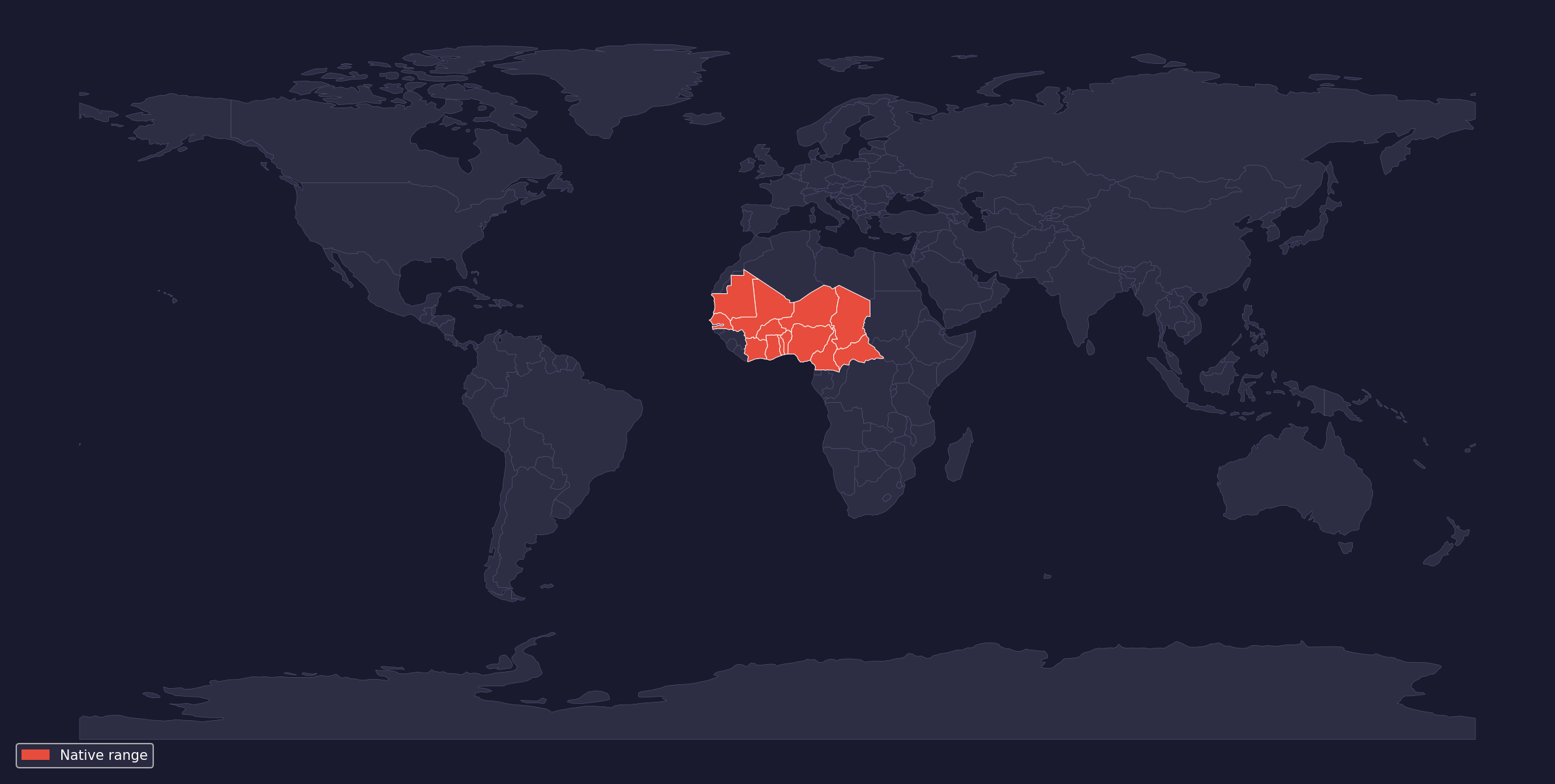
Atelerix albiventris is native to parts of central and western Africa, where it occurs in warm habitats such as dry grassland, open scrub, and lightly wooded areas.
In captivity, this usually means:
- Warm stable temperatures
- A dry, clean enclosure
- Good hiding places
- Night activity and exercise opportunities
- A diet centered on animal protein rather than fruit
🌡 Climate across the native range
Monthly climate normals from reviewed GBIF occurrence locations:
Kilifi — Kenya
| Month | Min °C | Mean °C | Max °C | RH % |
|---|---|---|---|---|
| January | 24.9 | 27.1 | 30.3 | 76 |
| February | 24.9 | 27.3 | 30.7 | 76 |
| March | 25.4 | 27.8 | 30.9 | 77 |
| April | 25.1 | 27.1 | 29.5 | 81 |
| May | 24.4 | 26 | 27.8 | 82 |
| June | 23.9 | 25.3 | 26.9 | 78 |
| July | 23.1 | 24.5 | 26.3 | 77 |
| August | 22.9 | 24.5 | 26.5 | 78 |
| September | 23.2 | 24.9 | 27.2 | 78 |
| October | 23.8 | 25.7 | 28.1 | 79 |
| November | 24.3 | 26.5 | 29 | 81 |
| December | 24.9 | 27.2 | 29.9 | 79 |
Turkana — Kenya
| Month | Min °C | Mean °C | Max °C | RH % |
|---|---|---|---|---|
| January | 21.9 | 28.8 | 34.7 | 40 |
| February | 23 | 30.1 | 36 | 36 |
| March | 23.8 | 30 | 35.4 | 46 |
| April | 23.6 | 28.6 | 33.4 | 58 |
| May | 23.3 | 28.2 | 33 | 57 |
| June | 22.7 | 27.6 | 32.5 | 54 |
| July | 22.4 | 27.2 | 32 | 52 |
| August | 22.5 | 27.6 | 32.5 | 51 |
| September | 22.9 | 28.7 | 34.1 | 45 |
| October | 23.6 | 28.7 | 33.8 | 50 |
| November | 22.7 | 27.7 | 32.6 | 56 |
| December | 21.8 | 27.9 | 33.4 | 49 |
Kaolack — Senegal
| Month | Min °C | Mean °C | Max °C | RH % |
|---|---|---|---|---|
| January | 17.9 | 24.3 | 32.1 | 29 |
| February | 19.1 | 25.9 | 34.1 | 28 |
| March | 20 | 27.4 | 36.3 | 32 |
| April | 20.6 | 28.1 | 37.3 | 41 |
| May | 21.7 | 28.3 | 36.9 | 50 |
| June | 23.5 | 28.4 | 35.3 | 64 |
| July | 24.2 | 27.7 | 32.7 | 74 |
| August | 24.1 | 26.8 | 30.8 | 83 |
| September | 24 | 27 | 31.1 | 84 |
| October | 23.7 | 27.9 | 33.1 | 76 |
| November | 21.3 | 27.5 | 34.6 | 48 |
| December | 19.1 | 25.3 | 32.7 | 35 |
Weather data by Open-Meteo.com · CC BY 4.0 · Monthly normals calculated by Herpeton Academy from daily archive values.
Location references use GBIF.org occurrence data where available; original occurrence records retain their source dataset licenses.
⚖️ Legal status
As checked against current official sources in April 2026, no current CITES listing or specific EU wildlife trade Annex listing was found for Atelerix albiventris. The species is not relevant to the Bern Convention because it is not native to Europe.
Local rules on keeping, sale, import, breeding, and veterinary reporting may still apply in some countries or regions. Before paying a deposit, confirm the rules at both the national and municipal level and check that an exotics veterinarian will accept hedgehogs. Buy only a clearly identified captive-bred animal. Keep the invoice, breeder details, date of birth, transfer or import papers, and veterinary records together; a colour name or the label “African pygmy hedgehog” is not a substitute for species and origin records.
🌿 Habitat
In nature, this species forages on the ground at night and uses ground cover, roots, vegetation, and temporary shelters to avoid daytime exposure and predators. It crosses substantial distances while looking for invertebrates, so a small cage with a wheel squeezed between bowls does not meet its behavioural needs. It is also not adapted to wet, cold, or dirty conditions.
That matters in captivity because the animal needs:
- Covered sleeping space
- Dry bedding
- Quiet daytime shelter
- Enough unobstructed room to move and forage at night
The outdoor climate tables describe the species’ broad environmental context, not a thermostat program. Wild hedgehogs choose sheltered microclimates. A captive animal must always be able to move between a warm sleeping area, a slightly cooler retreat, dry bedding, and clean water without being exposed to the hottest or coldest outdoor values.
🤌 Husbandry
This species should be kept alone. Even animals that appear calm together can compete for hides, food, and wheel access or injure one another after dark. Pairing is a controlled breeding decision, not routine social housing.
For an adult, 100 x 50 cm is a practical minimum, while 120 x 60 cm or larger is better. Juveniles can use the adult footprint if food, water, heat, and hides are easy to locate. A simple hospital-style enclosure is more useful for a new or unwell animal than a small permanent cage. Use smooth walls, good ventilation, a solid floor, and no tall ramps or unguarded shelves that could cause falls.
Have the enclosure, heat control, transport carrier, and veterinary contact ready before collection. For a new arrival, use a separate room and separate cleaning tools for at least 30 days. Paper substrate makes urine, diarrhoea, blood, and parasites easier to notice. Record body weight, appetite, stool, activity, and skin condition, and ask an exotics veterinarian whether a fecal test or longer quarantine is justified by the animal’s source. Do not share wheels, bowls, bedding, or roaming areas with other small mammals during quarantine.
A useful routine is to weigh the hedgehog once weekly at the same time of day on a gram scale. A stable trend matters more than comparison with another bloodline. Note food offered and leftovers rather than judging intake from an empty bowl alone, because food may be scattered or cached.
Handling should be short and predictable. Approach from the side, scoop with both hands or a small fleece, and support the entire body close to a low surface. Never force an animal to unroll, grip it by a limb, or wake it repeatedly for daytime interaction. Sniffing, foaming, and spreading saliva over the spines is normal self-anointing after a novel smell; collapse, persistent open-mouth breathing, or inability to walk is not.
Daily care includes removing wet bedding and leftover fresh food, checking the water source and wheel, and looking for threads wrapped around toes. Replace soiled substrate before odour or moisture builds up. Clean equipment away from food-preparation areas and wash hands after touching the animal, bedding, bowls, or feces; apparently healthy hedgehogs can shed Salmonella.
💡 Lighting
No UVB is required. Provide a consistent cycle close to 12 hours of light and 12 hours of darkness; ordinary room daylight or a low-output enclosure light on a timer is sufficient. Position the enclosure away from direct sun, which can overheat a closed tub or vivarium rapidly.
Strong night lighting is undesirable because this is a nocturnal species. Observe activity with dim ambient light or a camera instead of leaving a bright lamp on through the active period.
🌡 Heating and temperature
Maintain most usable space around 24-29°C, with a modest gradient rather than one hot patch and a cold enclosure. Measure the warm sleeping area and the cooler end with separate digital thermometers. Any heat source must be controlled by a thermostat whose probe cannot be displaced. A guarded ceramic heat emitter or radiant panel can warm part of a well-ventilated setup; avoid hot exposed elements and unregulated heat mats that can cause burns.
Do not deliberately hibernate A. albiventris. A cold, weak, unusually inactive hedgehog may be entering torpor or may be ill. Check the measured temperature, move the animal to its normal safe range gradually, and contact an exotics veterinarian if normal activity does not return promptly. At the other extreme, sprawling, frantic escape attempts, drooling, or open-mouth breathing in a hot enclosure requires immediate removal from the heat and urgent veterinary advice.
💧 Humidity and water
This species does not need a damp tropical enclosure. A typical indoor range around 40-60% relative humidity is workable when ventilation is good and bedding remains dry. Persistent dampness promotes skin and respiratory problems, while extremely dry, dusty air can aggravate flaky skin. Correct the substrate and ventilation rather than routinely spraying the whole enclosure.
Useful principles:
- Fresh water always available in a stable shallow bowl or a checked bottle
- Dry bedding
- Good ventilation
- No constantly damp substrate
Change water every day and scrub the container regularly. If a bottle is used, confirm that the ball valve releases water; if a bowl is used, place it where bedding is less likely to be kicked into it. Sudden increased drinking, reduced urine, or repeated wet bedding warrants a veterinary check rather than restriction of water.
🌿 Enclosure and decoration
The enclosure should encourage movement and allow the hedgehog to hide securely during the day. Provide at least one opaque sleeping box and a second retreat so the animal can choose cover at different temperatures.
Useful elements include:
- A sleeping hide
- A solid running wheel roughly 28-30 cm in diameter, large enough for a level back
- Tunnels or safe clutter
- 8-10 cm of soft, dust-free paper or aspen bedding over at least part of the floor
- A predictable feeding area
The setup should prioritize floor area rather than height. Avoid wire floors and mesh wheels, narrow axles, sharp seams, scented litter, cedar, dusty sawdust, clumping cat litter, and fabrics with loose loops or threads. Cardboard tunnels, paper bags with handles removed, scatter feeding, and regularly rotated scent-safe objects create foraging opportunities. Inspect plastic and fleece frequently for chewing or trapped fibers.
A wheel does not replace usable floor area. It should turn freely, remain stable under the adult’s weight, and be wiped clean as needed because hedgehogs commonly defecate while running. Supervised roaming can add exercise, but the area must be warm, escape-proof, free of cables and reclining furniture, and inaccessible to dogs, cats, and gaps under appliances.
🪳 Feeding
Atelerix albiventris is an insectivorous-leaning omnivore. In captivity, use a nutritionally complete commercial hedgehog or insectivore food as the measured staple. Where such food is unavailable, an exotics veterinarian may recommend an appropriate high-quality, lower-fat adult cat food; not every cat food has a suitable energy or mineral profile.
Suitable foods commonly include:
- A measured daily portion of the complete staple, offered in the evening
- Varied gut-loaded feeder insects such as crickets, roaches, or occasional mealworms
- Small portions of cooked unseasoned egg or meat only as planned extras
- Tiny amounts of suitable vegetables or fruit, if used at all
Important points:
- Avoid free-choice feeding and high-fat treats
- Do not rely on fruit-heavy diets
- Never offer raw meat or raw egg because of pathogen risk
- Introduce diet changes gradually and monitor stool quality
Start with the manufacturer’s portion and adjust from weekly weight, body condition, age, activity, and veterinary advice. You should be able to see the animal walk without rolls of fat obstructing the limbs, and it should still be able to curl normally. Weight loss must also be gradual and supervised: severe restriction in an obese hedgehog risks serious metabolic disease. Insects are enrichment as well as food, but waxworms and large quantities of mealworms are energy-dense and should not displace the balanced staple.
Serve food in a heavy shallow dish or hide small dry portions around clean bedding to encourage foraging. Remove moist leftovers in the morning. Do not add calcium or multivitamin powder automatically to a complete diet; supplementation depends on the formulation and the proportion of insects, so follow veterinary or product guidance rather than stacking several products.
🩺 Common problems
Common problems include obesity, dental disease, skin mites or fungal infection, nail overgrowth, respiratory disease, gastrointestinal upset, and tumours in older animals. Wheel avoidance, a rounded abdomen, and inability to curl fully can accompany obesity, but sudden inactivity may instead reflect pain, chilling, or systemic disease. Flaking alone does not prove mites; an exotics veterinarian should distinguish parasites, fungal disease, nutrition, and dry-skin husbandry before treatment.
Warning signs include:
- A sustained weight change or refusal to eat
- Wheezing, nasal discharge, open-mouth breathing, or repeated sneezing
- Persistent scratching, quill loss, crusting, sores, or swollen feet
- Drooling, bad breath, dropping food, facial swelling, or mouth bleeding
- Diarrhoea, black stool, repeated straining, or blood in urine
- Wobbling, dragging limbs, circling, collapse, or lasting lethargy
- Any new lump, abdominal enlargement, or reproductive discharge
Check temperature, wheel safety, hygiene, bedding, diet, weight trend, and feces while arranging care, but do not attempt leftover antibiotics, parasite medication, force-feeding, or home dental work. Hedgehogs often conceal disease and may need sedation for a complete oral or skin examination. Establish a baseline veterinary examination soon after acquisition and schedule preventive checks at least annually; older animals or those with previous problems may benefit from more frequent review.
📌 Conclusion
Atelerix albiventris suits an adult keeper who accepts nocturnal activity, solitary housing, daily cleaning, measured feeding, and specialist veterinary costs. Before purchase, have a thermostatically controlled enclosure, a safe wheel, quarantine space, a gram scale, legal-origin paperwork, and an exotics-vet appointment route ready. The failures that cause most preventable harm are unstable temperature, cramped or unsafe exercise equipment, obesity, and waiting too long when appetite or movement changes.
📚 Sources and further reading
- Royal Veterinary College: African pygmy hedgehog care advice
- MSD Veterinary Manual: Management of Hedgehogs
- MSD Veterinary Manual: Diseases of Hedgehogs
- Graffam et al.: Feeding behavior and nutrition of the African pygmy hedgehog
- CDC: Hedgehog zoonoses and hygiene
- CITES Appendices and EU wildlife-trade legislation, checked April 2026
- GBIF species record for Atelerix albiventris and occurrence data used for taxonomy and distribution context
💬 Feedback
For questions, corrections, or practical notes, leave us a message in the forum thread.