Share

Mexican Alligator Lizard
🔤 Taxonomy
Abronia graminea is the accepted scientific name. Older literature and labels may use Gerrhonotus gramineus or the subspecies-style combination Abronia taeniata graminea.
Common names used in the hobby:
- Mexican alligator lizard
- Sierra de Tehuacan arboreal alligator lizard
- Green arboreal alligator lizard
German common names used in the hobby:
- Grüne Baumschleiche
📌 Description
This is a cool-climate arboreal alligator lizard, not a warm rainforest lizard. It suits keepers who can provide a planted, well-ventilated vertical enclosure, cool nights, careful misting cycles, small live food, and complete legal paperwork.
Adults usually reach 20-30 cm total length. The body is strong but the animal is stress-sensitive, secretive, and better treated as a display species than a handling pet.
🌍 Distribution
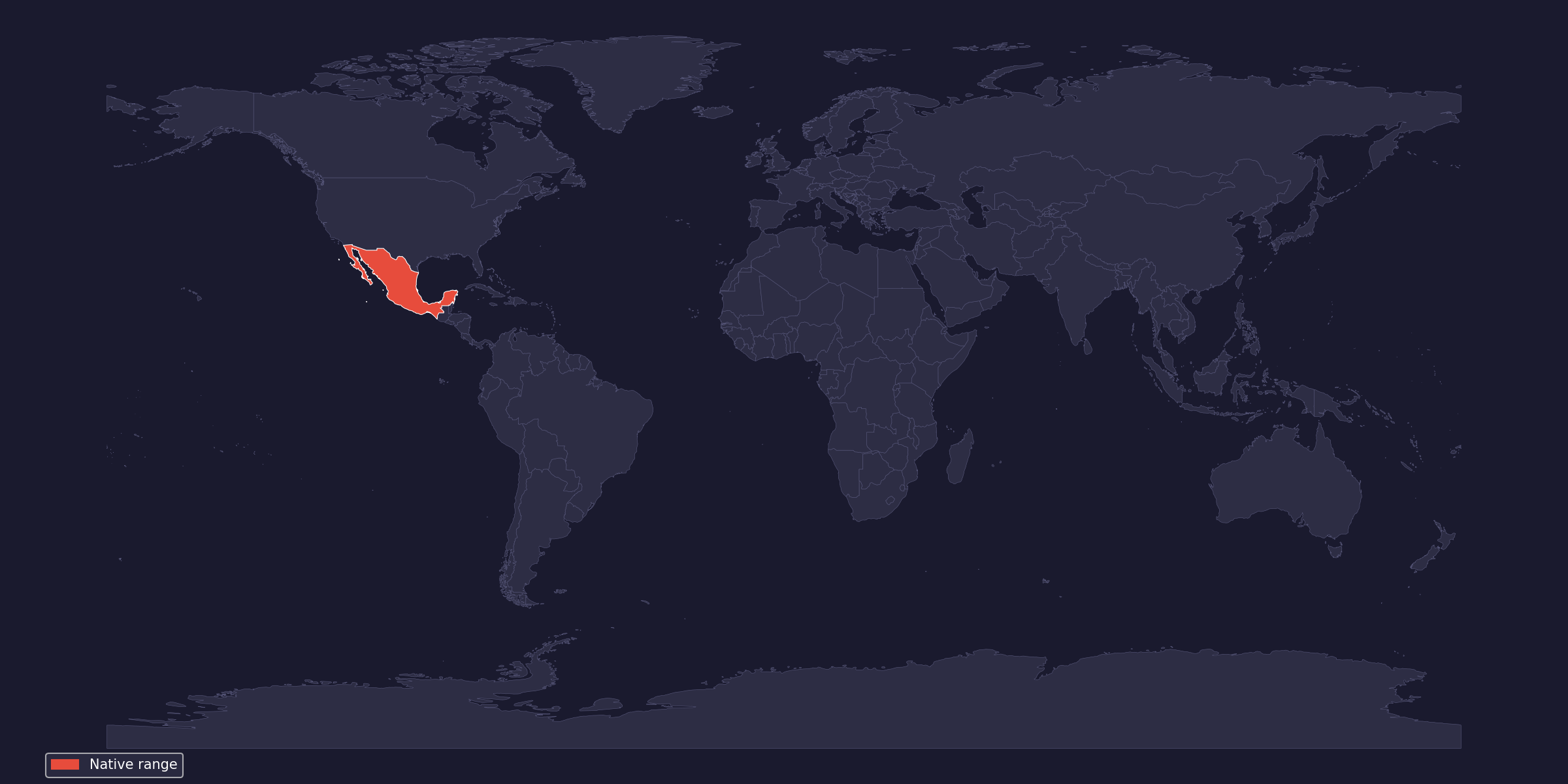
Abronia graminea is native to montane areas of Mexico, especially central Veracruz, eastern Puebla, and Oaxaca. It is associated with cloud forest, humid oak-pine forest edges, bromeliads, mossy branches, and dense cover at cooler elevations.
The captive setup should reproduce the useful parts of that habitat: cool moving air, elevated cover, live or dense artificial planting, drinking droplets, and dry-out periods between misting. Constant heat and stagnant wet air are more dangerous than a brief dry spell.
🌡 Climate across the native range
Monthly climate normals from reviewed GBIF occurrence locations:
Puebla — Mexico
| Month | Min °C | Mean °C | Max °C | RH % |
|---|---|---|---|---|
| January | 0.7 | 10.7 | 20.7 | 58 |
| February | 1.6 | 11.6 | 21.6 | 56 |
| March | 3.7 | 13.8 | 23.9 | 51 |
| April | 5.8 | 15.3 | 24.8 | 52 |
| May | 7.3 | 16 | 24.7 | 58 |
| June | 8.6 | 15.4 | 22.3 | 68 |
| July | 7.9 | 14.4 | 20.8 | 73 |
| August | 7.8 | 14.3 | 20.8 | 74 |
| September | 8 | 14.2 | 20.5 | 74 |
| October | 5.8 | 13.3 | 20.8 | 69 |
| November | 3.1 | 12 | 21 | 63 |
| December | 1.5 | 11.1 | 20.7 | 60 |
Veracruz — Mexico
| Month | Min °C | Mean °C | Max °C | RH % |
|---|---|---|---|---|
| January | 11.4 | 16.5 | 21.7 | 75 |
| February | 11.9 | 17.4 | 22.8 | 74 |
| March | 13.8 | 19.7 | 25.6 | 70 |
| April | 15.8 | 21.7 | 27.7 | 69 |
| May | 17.4 | 23.1 | 28.8 | 71 |
| June | 17.4 | 22.5 | 27.6 | 78 |
| July | 16.6 | 21.6 | 26.6 | 81 |
| August | 16.6 | 21.7 | 26.9 | 81 |
| September | 16.7 | 21.5 | 26.4 | 82 |
| October | 15.5 | 20.4 | 25.2 | 79 |
| November | 13.7 | 18.8 | 23.8 | 77 |
| December | 12.5 | 17.5 | 22.4 | 75 |
Oaxaca — Mexico
| Month | Min °C | Mean °C | Max °C | RH % |
|---|---|---|---|---|
| January | 10.3 | 17.1 | 23.9 | 65 |
| February | 11 | 18.3 | 25.6 | 62 |
| March | 13.5 | 21 | 28.4 | 56 |
| April | 15.8 | 23 | 30.3 | 55 |
| May | 16.9 | 23.8 | 30.6 | 59 |
| June | 16.8 | 22.8 | 28.9 | 68 |
| July | 15.9 | 21.5 | 27.1 | 72 |
| August | 15.9 | 21.7 | 27.5 | 71 |
| September | 16 | 21.6 | 27.2 | 73 |
| October | 14.6 | 20.3 | 26.1 | 71 |
| November | 12.4 | 18.7 | 25 | 69 |
| December | 11 | 17.4 | 23.8 | 67 |
Weather data by WorldClim v2.1 · Monthly normals queried by Herpeton Academy from raster values; relative humidity is derived from vapor pressure and mean temperature.
Location references use GBIF.org occurrence data where available; original occurrence records retain their source dataset licenses.
⚖️ Legal status
Checked on 2026-06-09: Abronia graminea is covered by the CITES Appendix II listing for Abronia spp. It is not one of the Abronia species listed in Appendix I. In EU wildlife-trade law this corresponds to Annex B. The Bern Convention is not relevant for this Mexican species.
Keep invoices, breeder details, CITES or transfer papers where applicable, import records, and clear identification photos. Imports, exports, sale, breeding transfers, and transport may require current documents. Local and national rules may still restrict ownership or movement, so verify the law before acquisition.
🤌 Husbandry
Use a tall planted enclosure with strong cross-ventilation. A practical minimum for one adult is 60 x 45 x 90 cm; larger is better if the room can stay cool enough. Extra height is useful only when the animal can actually use it through branches, cork, vines, and foliage.
Keep this species singly unless there is a deliberate breeding plan and a spare enclosure ready. Visual stress, food competition, and breeding pressure can be hard to see until weight loss or injury appears.
💡 Lighting
Provide bright plant-supporting visible light and low-level UVB over part of the upper canopy. Plan around Ferguson Zone 1, with shade and cover close to the basking area so the lizard can regulate exposure.
A low-output T5 or compact UVB can work if distance and mesh losses are measured. Do not compensate for a cool enclosure by using a lamp that turns the whole top third into a hot zone.
🌡 Heating and temperature
- ambient air: 18-24°C
- basking surface: 25-27°C
- cool retreat: 16-20°C
- night: 14-18°C
This species fails quickly when kept like a warm tropical lizard. Use a cool room, ventilation, and thermostated low-output heat only where needed. Avoid sustained enclosure temperatures above the high 20s °C, especially with high humidity.
💧 Humidity and water
Aim for 60-80% humidity with short peaks around 75-90% after misting. The enclosure should become humid, offer drinking droplets, and then partly dry again.
Use misting, a dripper, or hand spraying according to the enclosure and season. Drainage matters: wet soil, sour leaf litter, and permanently damp cork can lead to skin and respiratory problems.
🌿 Enclosure and decoration
Build a cool arboreal thicket rather than an empty tall box. Useful features include:
- cork tubes and slabs fixed at several heights
- thin and medium branches with secure footing
- dense live plants or durable artificial cover
- a humid retreat and a drier retreat
- clean leaf litter over a drained substrate layer
- escape-proof vents, cable exits, and front doors
Quarantine is easier in a simpler enclosure. Move to a planted display setup only after the animal is eating, shedding, and passing normal feces.
🪳 Feeding
Feed appropriately sized insects every 2-3 days, adjusting for age, season, body condition, and reproductive state. Good staples include small crickets, roaches, locusts where legal, black soldier fly larvae, silkworms, and other soft-bodied feeders.
Gut-load feeders and dust with calcium; use vitamin D3 and multivitamins sparingly according to UVB access and product guidance. Do not rely on mealworms or waxworms as staples, and remove loose insects before they stress the lizard overnight.
🥚 Breeding notes
This species is viviparous. Litters are usually 2-8 young. Females need stable cool conditions, strong nutrition, calcium support, and enough privacy before breeding is considered.
Do not breed animals with uncertain origin or incomplete paperwork. Offspring placement should be planned before pairing adults because legal transfer rules may apply to each animal.
🧍 Handling and safety
Handle only when necessary. Use a secure cup, tub, or short controlled transfer rather than open-handed chasing. Never grab the tail, and do not let children handle this species.
🩺 Common problems
Common failures include chronic overheating, stagnant wet air, dehydration despite high humidity, poor ventilation, retained shed, weight loss from stress, parasites in recent imports, calcium imbalance, and injuries from unstable branches.
Watch for daytime gaping, repeated escape attempts toward vents, swollen toes, weak grip, sunken eyes, noisy breathing, loose droppings, or long refusal to feed. Correct temperatures, airflow, hydration, and diet early; persistent signs need a reptile veterinarian.
📌 Conclusion
Abronia graminea is best for keepers who can provide cool, airy, planted arboreal housing and who are comfortable maintaining legal documentation. Buy only after the adult enclosure, cooling plan, quarantine space, and paperwork expectations are settled.
📚 Sources and further reading
- CITES Appendices, checked 2026-06-09
- Commission Regulation (EU) 2023/966, checked 2026-06-09
- Commission Regulation (EU) 2017/160, checked 2026-06-09
- GBIF Backbone Taxonomy: Abronia graminea
- The Reptile Database: Abronia graminea
- CITES / CONABIO identification guide for Abronia