Share

Dwarf White Isopod
🔤 Taxonomy
Trichorhina tomentosa (Budde-Lund, 1893) is accepted. It was described as Alloniscus tomentosus and has also appeared as Bathytropa thermophila and Trichorhina thermophila. “Dwarf white” is a trade name, not proof of identity; several tiny pale isopods can enter greenhouse and vivarium substrate.
📌 Description
Adults are soft-looking, white to cream and only about 3–5 mm. They live mainly within soil and decomposed material, so a thriving colony may be almost invisible at the surface. Trade cultures are generally reported as all-female and parthenogenetic, allowing one transferred animal to found a population.
| Care point | Practical target |
|---|---|
| Adult length | about 0.3–0.5 cm |
| Starter culture | 20 × 15 × 15 cm or larger |
| Temperature | 20–27 °C |
| Substrate | 8–10 cm, deeply moist and aerated |
| Staple | decomposed leaves, wood and soil organics |
| Main risk | unnoticed spread into other cultures or buildings |
🌍 Distribution
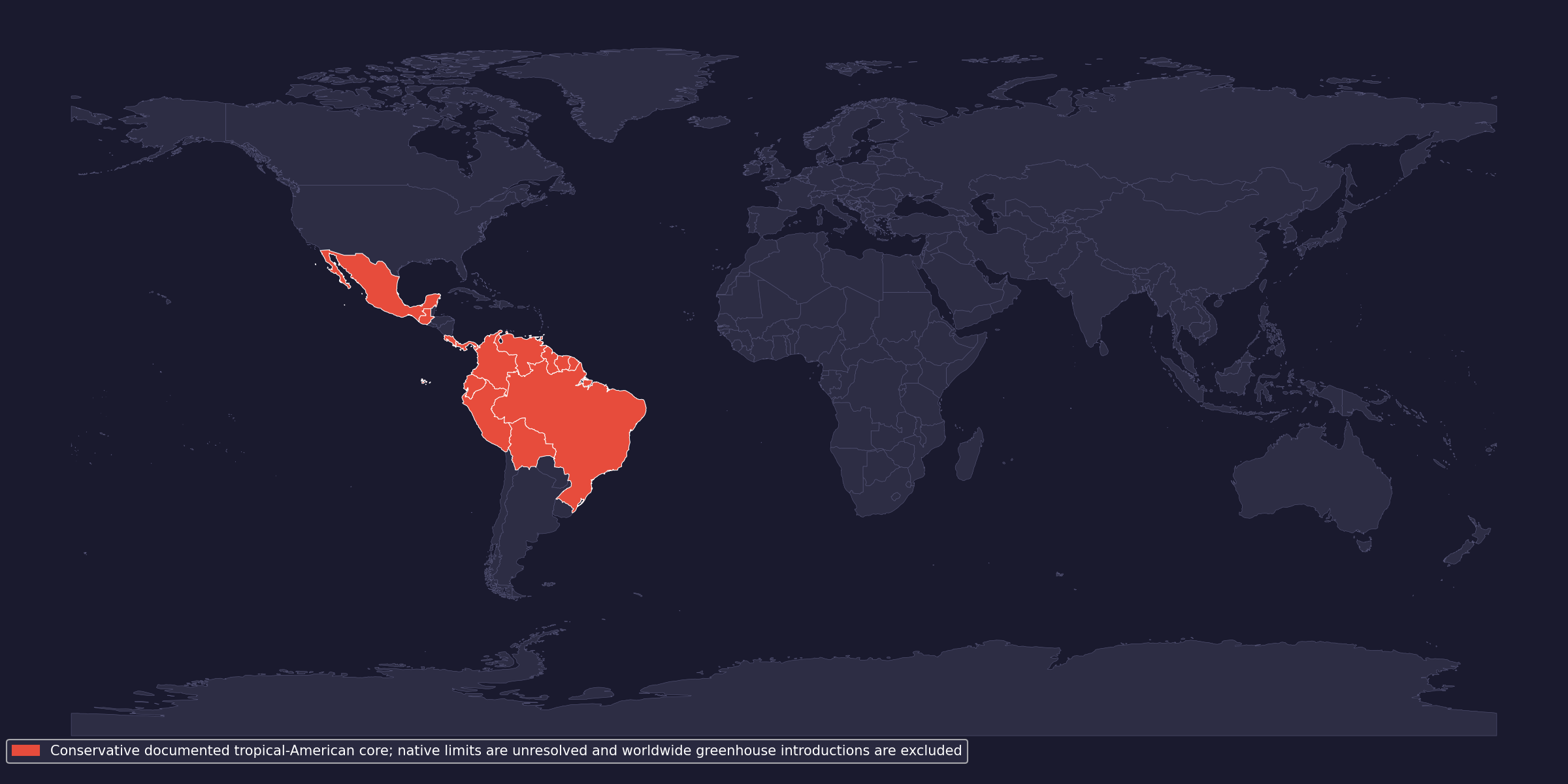
The catalogued range is pantropical, with records across tropical America and introductions in heated greenhouses worldwide. The original description was based on Venezuelan material, but centuries of soil and plant transport make a precise native boundary unsafe to claim. The map therefore shows a conservative tropical-American documented core, not every introduction and not a definitive area of origin.
Monthly climate normals are omitted because this soil-dwelling species has a human-mediated pantropical range and uses buffered microsites; no single outdoor station would define its care.
⚖️ Legal status
Checked on 2026-08-29: T. tomentosa was not found in CITES, EU wildlife-trade Annexes A–D under Regulation (EU) 2026/1383, or Bern Appendices II–III.
Local and national rules may restrict import, soil movement, sale, institutional use or keeping of non-native invertebrates. Keep invoices and supplier details, use escape-proof culture methods, heat-treat or freeze waste where lawful, and never release animals or substrate.
🤌 Husbandry
Start at least 30–50 animals in a 20 × 15 × 15 cm box with 8–10 cm of mature substrate. Mix pesticide-free soil, leaf mould and crumbled rotten hardwood; keep it evenly moist at depth, with a slightly less wet surface sector and fine ventilation. Seed with springtails only if they can be contained and are wanted.
Quarantine for at least 60 days and keep separate tools. Place the culture inside a clean tray when opening it, because soil grains, plant roots and bark can carry juveniles. ReptiFiles includes dwarf whites in its clean-up-crew overview, but does not provide a complete species care sheet; most precise captive claims remain practitioner experience rather than controlled research.
💡 Lighting
UVB is unnecessary. Use 10–14 hours of diffuse light for any plants while retaining deep shade throughout the soil. Avoid direct sun and strong lamps close to the container.
🌡 Heating and temperature
Keep 20–27 °C, with an 18–23 °C lower or cooler refuge and nights at 18–23 °C. Growth slows in cool rooms. Avoid sustained heat above 29 °C, especially in sealed, wet substrate.
Heat the room rather than the bottom of the box. Bottom heat dries the exact soil layer the colony occupies and can trap animals between heat and an unsuitable surface.
💧 Humidity and water
Maintain roughly 80–95% RH with deep contact moisture, but allow gas exchange. The lower substrate should clump when pressed without releasing water. Add measured water to one side and let it diffuse through the soil.
No water dish is needed. Surface flooding, sour odour and mass climbing indicate saturation; disappearance after a hot dry period may reflect a crash rather than ordinary burrowing.
🌿 Enclosure and decoration
Use deep mature topsoil, leaf mould, soft rotten hardwood and finely crushed deciduous leaves. Add cork flats and a small moss patch so the surface can be checked without excavating the culture. Very fine mesh is essential.
Keep cuttlebone or limestone available. Avoid pure coir, fertilizer, pesticide residues and transferring decor from this culture into another isopod line.
🪳 Feeding
Decomposed leaves, wood and soil organics are continuous food. Offer tiny quantities of mushroom, squash, carrot or balanced isopod diet every three to five days. Add a pinhead-sized protein portion weekly for a modest culture.
Feed far less than for large surface-active isopods. Remove fresh leftovers within 24 hours; abundant food hidden in wet soil quickly attracts mites and flies.
🥚 Breeding
Females brood embryos in a marsupium and release mancae, represented as viviparous in metadata. Hobby cultures reproduce parthenogenetically, so no male is required and even a small starter can expand quickly in warm mature soil.
This makes T. tomentosa useful as a tropical clean-up crew but difficult to remove. Maintain a separate backup, never mix it with valuable isopod lines, and harvest by transferring small baited pieces of bark rather than excavating the whole substrate.
🩺 Common problems
- Culture appears empty: check deep soil and bait under bark before disturbing it.
- Dry-layer crash: add moisture into substrate and review bottom heat or oversized vents.
- Sour substrate: reduce water and food, then improve fine-mesh ventilation.
- Mites or flies: feed smaller portions and remove all fresh remnants.
- Cross-contamination: isolate tools and never reuse substrate or rooted plants.
- Uncertain identity: examine adults; “dwarf white” is not a diagnostic label.
📌 Conclusion
The dwarf white isopod is an efficient tropical soil detritivore, but its greatest care issue is containment. Deep warm moisture supports it; disciplined tool and waste handling prevents one parthenogenetic colony from becoming every culture’s unwanted resident.
📚 Sources and further reading
- GBIF: Trichorhina tomentosa
- World List of Isopoda: accepted taxonomy
- Schmalfuss world catalog
- Campos-Filho et al. 2023: Brazilian records and pantropical status
- ReptiFiles clean-up-crew overview
- CITES Appendices, valid from 5 March 2026
- Commission Regulation (EU) 2026/1383
- Bern Convention appendices