Share

Brazilian Yellow Scorpion
🔤 Taxonomy
Tityus serrulatus is the accepted name of the Brazilian yellow scorpion. Yellow colour and a dark trunk do not separate it reliably from T. stigmurus or other medically important Brazilian Tityus; the serrated ridges on the third and fourth tail segments are more informative, but identification should still be supported by origin records.
📌 Description
Adults usually measure 5–7 cm. Brazil’s Ministry of Health identifies this species as the country’s principal scorpion public-health concern because severe envenomation, geographic expansion, urban adaptation and parthenogenetic reproduction occur together. A single female can establish repeated broods without a male.
This is an expert-only, display-only animal. It is too small and medically consequential for casual maintenance, and it must never be handled. Brood-proof double containment is required from the day one specimen enters the room.
☠️ Venom
This species is venomous. Venom exposure can cause pain, swelling or other systemic effects, and severity varies with species, locality, bite site and the amount delivered. A small wound or apparently dry bite is not proof of safety; every bite or sting requires urgent medical assessment.
If an incident occurs, move away, call emergency services or a poison centre, keep the patient still, remove rings and other constricting items, and follow dispatcher instructions. Do not use a tourniquet, cut or suck the wound, apply ice or electricity, give alcohol or medicines as a home treatment, or attempt to catch the animal. Antivenom choice and dosing are hospital decisions; verify the relevant product and local availability in advance. Sources: WHO snakebite guidance and appropriate species-specific toxinology or medical references listed below.
🌍 Distribution
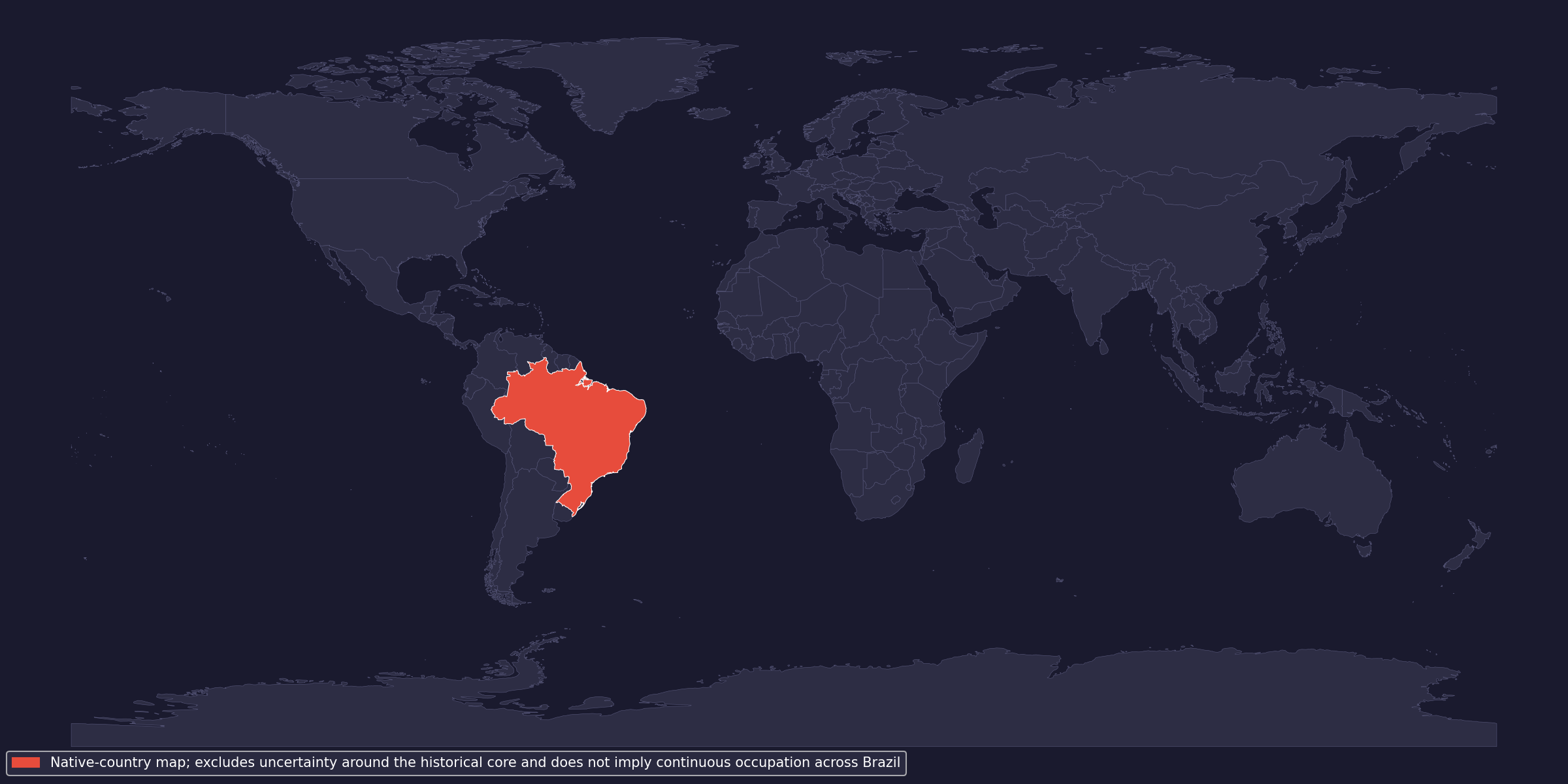
The species is native to Brazil and now occurs across all five national macroregions. Its historical centre lies in south-eastern and central-eastern Brazil, but transport and parthenogenesis have supported rapid expansion through cities. It shelters in bark, masonry, drains, debris and other narrow humid refuges where prey and water remain available.
⚖️ Legal status
Checked on 2026-08-29 against the official CITES Appendices and EU wildlife-trade annex framework: T. serrulatus is not specifically listed. The Bern Convention is not relevant. Non-listing does not make international export from Brazil lawful and does not override dangerous-animal rules at the destination.
Confirm source-country export, destination-country import, possession, breeding, transport and transfer rules before acquisition. Obtain written local guidance where dangerous invertebrates are regulated. Retain the invoice, breeder identity, lawful-origin evidence and every transfer record; never release or distribute surplus young.
🤌 Husbandry
Keep one specimen in a 25 × 20 × 30 cm mechanically latched primary enclosure inside a locked secondary cabinet or secure room. Vertical bark is useful, but every slab must remain visible and removable with tools. Vent holes, sliding-door channels and cable ports must retain first-instar young, not merely the adult.
| Parameter | Conservative target |
|---|---|
| Adult enclosure | at least 25 × 20 × 30 cm |
| Day air | 24–29 °C |
| Warm area | 29–31 °C |
| Night | 20–23 °C |
| Relative humidity | 55–75%; 70–80% in the protected premoult refuge |
| Substrate | about 6 cm, moisture-retentive but ventilated |
| Feeding | one suitable invertebrate every 7–10 days |
Quarantine for at least 90 days using dedicated tools. Assume every female is reproductively capable, including a lone captive-born animal. Prepare numbered juvenile containers before the adult arrives, and keep a written count that includes broods, deaths and transfers.
For transfers, lock the room, seal the door gap, place the primary enclosure inside a large smooth-sided tub and prepare two rigid locking catch cups. Coax the animal with a soft guide and long tools. Never grasp it, pin it or work alone. Search the cup rim, tools, bark and tub before closing both barriers.
Post the species, count, address, poison-centre and emergency numbers, responsible keeper and access directions outside the secure area. A sting requires immediate medical assessment; report Tityus serrulatus and the time of the event. Do not use a tourniquet, incision, suction or improvised medication.
💡 Lighting
UVB is not required. Use low-intensity light for a 10–12-hour day and full darkness at night. Keep fixtures outside both barriers. Dense urban populations use shaded crevices, so brighter illumination provides no benefit and may overheat the upper bark.
🌡 Heating and temperature
Maintain daytime air at 24–29 °C, with a small 29–31 °C warm zone and a 22–24 °C retreat. Nights around 20–23 °C are suitable. Avoid strong cooling and hot, stagnant air.
Place a thermostatted heater on one outer side, never beneath the substrate. Use fixed probes near the warm bark and cool refuge. Check the temperature inside the locked cabinet as well as the primary enclosure.
💧 Humidity and water
Maintain 55–75% RH with generous cross-ventilation. Moisten one lower corner and allow the exposed surface and upper bark to dry between watering. Raise local humidity to 70–80% during premoult without wetting the whole enclosure. Condensation is a fault, not a target.
Provide a shallow stable water dish. Research on T. serrulatus shows that access to water is far more important to survival than frequent feeding, so do not rely entirely on prey moisture. Refill through a protected port or minimal opening.
🌿 Enclosure and decoration
Use about 6 cm of pesticide-free soil and coco fibre with leaf litter, plus securely positioned vertical cork with narrow retreats. Keep the layout simple and countable. Do not use hollow branches or expanding backgrounds that can hide a brood beyond reach.
Fine stainless mesh and captive fasteners are essential. Inspect seams under bright light after every service. All decor removal and brood separation must occur inside the secondary smooth-sided tub.
🪳 Feeding
Offer one small captive-bred cricket, roach or similar insect every 7–10 days. T. serrulatus tolerates long food gaps, so body condition and safe servicing matter more than a rigid schedule. Remove refused prey within 24 hours and all prey before a moult or birth.
No routine supplement dust is required. Never introduce wild prey or place fingers near bark to recover a feeder. Use long tools and the smallest available service opening.
🦂 Breeding and young
This species reproduces by thelytokous parthenogenesis: females can produce all-female broods without mating. Average litters around the mid-teens are reported, with approximately 8–25 young being a practical containment range. More than one brood may follow.
Reproduction is therefore unavoidable risk management, not merely a breeding choice. Keep sufficient locked, labelled juvenile units ready at all times. Do not disturb a mother carrying young; after dispersal, separate juveniles inside the secured work tub and reconcile the count before the room opens.
🩺 Common problems
- Unexpected brood: one missed young can escape through adult-safe ventilation.
- Dehydration: a dry dish or fully dry refuge is more urgent than a skipped feeding.
- Stagnant humidity: condensation and wet substrate promote mould and failed moults.
- Misidentification: other yellow Tityus require the same containment until expertly resolved.
- Sting: children can deteriorate rapidly; activate emergency care immediately.
📌 Conclusion
Tityus serrulatus is a small animal with an outsized containment problem: severe venom, excellent crevice use and reproduction without mating. Responsible maintenance begins with brood-proof double barriers, a permanent count and emergency arrangements, not with a decorative display. If surplus offspring cannot remain lawfully secured, the species is not an appropriate acquisition.
📚 Sources and further reading
- GBIF species backbone: Tityus serrulatus
- Brazilian Ministry of Health: scorpion accidents
- Tityus serrulatus: survival, water and reproduction
- Scorpion life-history strategies and parthenogenesis
- The Scorpion Files: medically important scorpions
- CITES Appendices
- EU wildlife trade