Share

Sunny Stick Insect
🔤 Taxonomy
Sungaya inexpectata is the accepted scientific name for the sunny stick insect and is PSG 195 in Phasmid Study Group culture records. Keep colony labels with the Latin name and any culture-line information, because trade names and colour-form labels are not reliable identification by themselves.
Common names used in the hobby:
- Sunny stick insect
- Sungay stick insect
- Sungay stick-insect
Names and groups that can be confused with it in trade:
- Other Sungaya culture lines or locality-labelled Philippine stick insects
- Small brown nymphs sold without a reliable culture label
📌 Description
This is a small to medium, wingless Philippine phasmid. Adult females are robust and usually around 7-8 cm; males are uncommon in many hobby lines and should not be assumed from eggs alone. It is manageable for a careful beginner, but hatchlings are tiny escape risks and the colony can produce surplus eggs quickly.
🌍 Distribution
Sungaya inexpectata is Philippine, with the type locality around Sungay, Tagaytay, Luzon and culture records referring broadly to the Philippines. In the enclosure, provide warm leafy cover, steady ventilation, and moderate to high humidity without turning the cage into a sealed wet box.
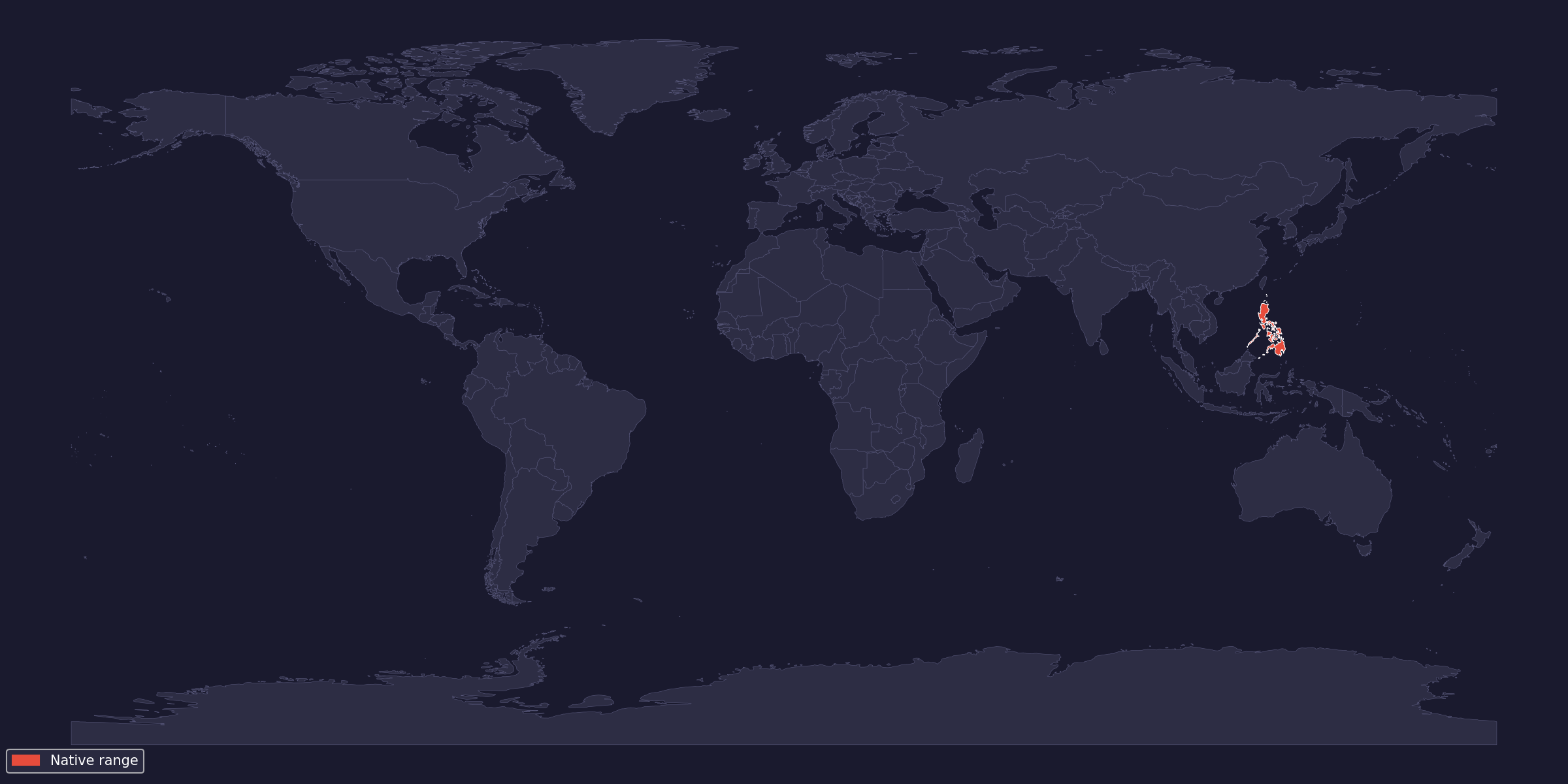
🌡 Climate across the native range
Monthly climate normals from reviewed GBIF occurrence locations:
Zambales — Philippines
| Month | Min °C | Mean °C | Max °C | RH % |
|---|---|---|---|---|
| January | 21.1 | 25.4 | 29.6 | 70 |
| February | 21.2 | 25.9 | 30.6 | 69 |
| March | 22.2 | 27.2 | 32.2 | 67 |
| April | 23.7 | 28.6 | 33.6 | 67 |
| May | 24.1 | 28.3 | 32.6 | 72 |
| June | 23.7 | 27.2 | 30.8 | 80 |
| July | 23.3 | 26.5 | 29.8 | 82 |
| August | 23.3 | 26.2 | 29.1 | 84 |
| September | 23.2 | 26.5 | 29.7 | 82 |
| October | 23.2 | 26.6 | 30.1 | 80 |
| November | 22.7 | 26.4 | 30.1 | 76 |
| December | 21.8 | 25.7 | 29.6 | 72 |
Cavite — Philippines
| Month | Min °C | Mean °C | Max °C | RH % |
|---|---|---|---|---|
| January | 20.4 | 24.2 | 27.9 | 78 |
| February | 20.4 | 24.6 | 28.8 | 76 |
| March | 21.2 | 25.8 | 30.4 | 73 |
| April | 22.3 | 26.9 | 31.6 | 73 |
| May | 22.6 | 26.8 | 31 | 79 |
| June | 22.5 | 26 | 29.6 | 85 |
| July | 22.1 | 25.3 | 28.5 | 90 |
| August | 22.3 | 25.2 | 28.2 | 89 |
| September | 22.2 | 25.3 | 28.4 | 88 |
| October | 22.1 | 25.4 | 28.6 | 86 |
| November | 21.7 | 25 | 28.3 | 84 |
| December | 20.9 | 24.3 | 27.7 | 81 |
Weather data by WorldClim v2.1 · Monthly normals queried by Herpeton Academy from raster values; relative humidity is derived from vapor pressure and mean temperature.
Location references use GBIF.org occurrence data where available; original occurrence records retain their source dataset licenses.
⚖️ Legal status
Checked on 2026-06-22: this species is not listed in the CITES Appendices, is not separately listed in the EU wildlife-trade annexes, and the Bern Convention is not relevant. That does not make live trade automatically unrestricted. Plant-feeding insects can fall under national or local rules for import, interstate movement, agricultural pest, school-display, public-display, or biosecurity.
Keep invoices, breeder details, species identification, culture-line labels, and any permit or transfer paperwork. In the United States, USDA APHIS notes that most insects and mites feeding on plants or plant products require PPQ 526 permitting for importation, interstate movement, and environmental release. Never release surplus insects, eggs, food plants from the enclosure, or used substrate outdoors.
🤌 Husbandry
Keep a small colony in a secure vertical enclosure. The practical adult minimum is 30 x 30 x 45 cm, but more height and plant volume make feeding and molting safer. Use fine mesh, tight doors, and no open cable gaps; young nymphs pass through very small spaces.
🌿 Enclosure and layout
Provide vertical and diagonal twigs, leafy cover, and food stems in covered water. A simple paper or lightly moist substrate floor makes egg collection and cleaning easy. Avoid packing the enclosure with leaves so tightly that molting insects touch the roof, walls, or each other.
💡 Lighting
UVB is not required. Use bright indirect room light and a steady day-night cycle. Avoid lamps that dry food plants, overheat the upper branches, or leave the lower enclosure stagnant.
🌡 Heating and temperature
Use stable room-scale heat rather than a narrow basking hotspot:
- ambient air: 22-27°C
- upper warm area: 28-29°C
- cool retreat: 20-22°C
- night: 20-23°C
Stable room warmth is usually enough. Avoid hot lamps and check the top of the enclosure after misting, because small ventilated cages can dry or overheat quickly.
💧 Humidity, ventilation, and water
Aim for 60-80% humidity, with a brief local rise around 70-90% for molts. Mist lightly, then let the enclosure dry between cycles. If leaves stay wet all day, reduce water or increase airflow; if nymphs struggle to shed, review both humidity and hanging space.
🥗 Feeding plants
Offer fresh pesticide-free bramble, hawthorn, chestnut, raspberry, ivy, beech, rose, or oak where accepted. Keep the accepted plant available continuously and overlap foods when changing source. Nymphs may ignore unfamiliar leaves at first, so do not remove the old food before feeding damage is visible on the new one.
🥚 Breeding and eggs
This species lays eggs and many culture lines reproduce parthenogenetically. Females drop eggs onto the floor; collect them regularly if you need population control. Incubate at about 22-26°C on barely moist paper, sand, vermiculite, or soil with small air holes. Hatch can take about 90-160 days, and dry forgotten eggs or wet moldy eggs are both common failure points.
🧍 Handling and safety
Treat the colony as display-only. Move insects with a twig or let them walk onto your hand over a soft surface. Do not pull legs from mesh or leaves. The species is not medically dangerous, but legs and antennae break easily and hatchlings are easy to lose.
🦗 Molting and hatchlings
Hatchlings need fine mesh, tender accepted leaves, and several body lengths of clear hanging room. Keep food stems away from the ceiling and separate over-crowded colonies. A very simple nursery setup usually works better than a decorative one.
🩺 Common problems
Common problems include failed molts, escapes by hatchlings, food refusal after sudden plant changes, moldy eggs, mites, dehydration, pesticide exposure, and uncontrolled surplus eggs. Most failures come from loose ventilation gaps, stale food, or trying to keep the enclosure constantly wet.
📌 Conclusion
Sungaya inexpectata is a reasonable first phasmid for keepers who can secure tiny nymphs, supply accepted leaves every week, and manage egg numbers responsibly. It is easy to start and just as easy to overproduce, so plan surplus eggs before the colony matures.
📚 Sources and further reading
Key sources checked for this revision:
- GBIF Backbone Taxonomy: Sungaya inexpectata
- Phasmida Species File: Sungaya inexpectata
- Phasmid Study Group culture information
- CITES Appendices, valid from 5 March 2026
- European Commission wildlife trade overview
- USDA APHIS: Insects and Mites
- WorldClim v2.1