Share

Question-mark Cockroach
🔤 Taxonomy
Therea olegrandjeani Fritzsche & Zompro, 2008 is the accepted spelling. The original paper also printed Therea grandjeani on one page; the Blattodea Species File records that as an incorrect original spelling, not a second valid species. “Question-mark cockroach” is the useful hobby name.
The holotype was reared from a culture collected very near Gooty, Andhra Pradesh. Keep that culture history attached to stock. The broken white wing marks help recognition, but do not prove identity or justify mixing it with other Therea.
📌 Description
At roughly 1.8-2.2 cm, this is the smallest of the commonly cultured Therea. Adults are black with cream marks that can resemble question marks or fragmented domino spots. Brown nymphs are flattened, secretive burrowers; adults appear more often on the surface after dark and can climb smooth plastic or glass.
It is hardy once the soil profile is correct, but its long hidden immature stage and easily discarded oothecae make it less forgiving than a fast live-bearing roach.
| Care point | Practical target |
|---|---|
| Adult size | 1.8-2.2 cm |
| Starter enclosure | 30 x 20 x 25 cm |
| Substrate | 8-12 cm, damp below and dryish above |
| Temperature | 23-28°C |
| Ootheca incubation | commonly 3-5 months; line reports vary |
| Main risk | hidden eggs discarded with substrate |
🌍 Distribution
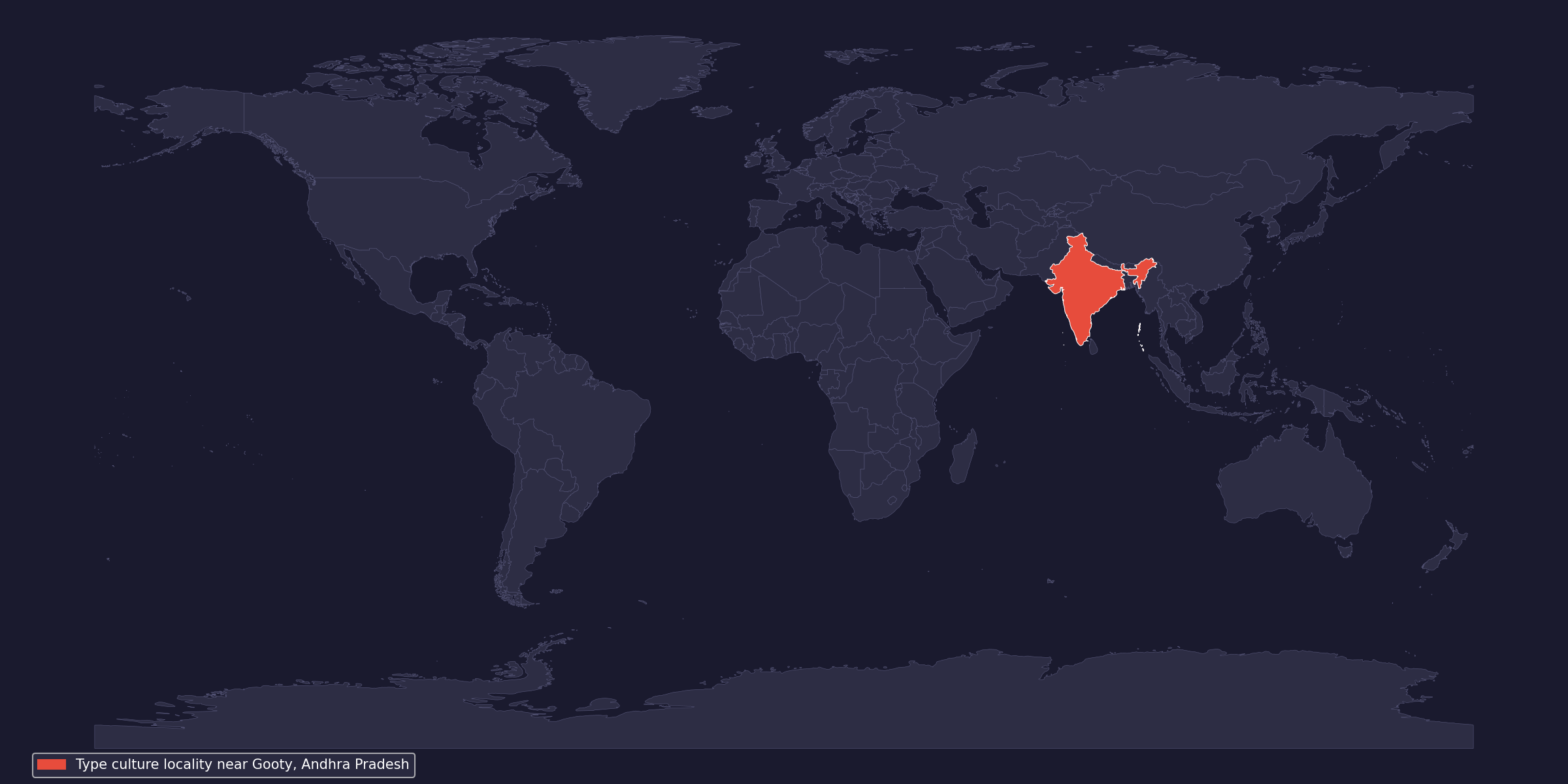
Reliable origin information points to India, specifically the vicinity of Gooty in Andhra Pradesh for the type culture. Vague range extensions copied from other domino roaches should not be assigned to this species. The national map reflects the defensible record without implying occurrence throughout India.
⚖️ Legal status
Checked on 2026-08-22: T. olegrandjeani is not CITES-listed and does not appear in Annexes A-D of Commission Regulation (EU) 2026/1383. It is Indian rather than European, so Bern Convention status is not relevant; no species entry appears in the appendices. It is not listed as an EU invasive alien species of Union concern.
Local import, transport, breeding, sale or tenancy rules can still control live cockroach cultures. Retain origin paperwork, check rules before shipping and destroy no substrate until hidden oothecae have been excluded.
🤌 Husbandry
A secure 30 x 20 x 25 cm box suits a starter group; enlarge it before the colony becomes crowded. Fit fine cross-ventilation and a tight lid because adults climb. Feed and inspect the box in a catch tub, not on an open shelf.
Begin with mixed-size nymphs and keep only this species in the enclosure. Label the lid and box body. Quarantine new animals separately for 60 days and never merge an unrecorded “question-mark” culture.
💡 Lighting
UVB is unnecessary. Set a 10-12-hour day with low indirect light. Dark bark and litter let adults settle during the day; a dim dusk period gives the best view without forcing animals from shelter.
🌡 Heating and temperature
Keep 23-28°C ambient, with a 26-29°C strip on one side and a 21-24°C retreat. Nights may fall to 20-23°C. Breeding is reliable in the warmer half of that range, but temperatures above 28°C dry a small soil volume quickly.
Use a thermostated side heater if the room is cool. Never place an unregulated mat beneath the whole egg-bearing substrate.
💧 Humidity and water
Maintain approximately 55-75% ambient RH while keeping the lower substrate continuously damp. The surface should not stay glossy-wet. A vertical gradient protects buried oothecae better than one small moist corner, because females deposit eggs across the enclosure.
Pour water slowly down the side and confirm the lower layer by touch. Supply moisture-rich vegetables or a protected shallow dish; hatchlings must not reach open water.
🌿 Enclosure and decoration
Provide 8-12 cm of pesticide-free soil or coir mixed with crumbled hardwood leaves and decayed white wood. A 2-4 cm leaf cap slows surface evaporation and is eaten by nymphs. Add low cork slabs and fine branches for adults.
Do not use fertilizer, aromatic softwood, heavy sand or permanent wet sphagnum throughout. When retiring substrate, keep it sealed but ventilated for at least six months so late oothecae are not released or discarded alive.
🪳 Feeding
Leaves and rotten hardwood form the long-lasting detritus base. Offer fine fish food, chick feed or a balanced dry roach diet every two or three days. Small carrot, pumpkin or apple pieces can provide moisture, although acceptance varies.
Place food above the leaf layer and remove wet remains the next day. These small roaches need only tiny portions; excess is the usual cause of mites and sour substrate.
🥚 Breeding
Females bury dark rectangular oothecae. Specialist reports range from unusually fast five- to six-week hatches to several months; the most repeatable culture guidance is about 90-150 days at 24-28°C, with roughly 8-15 nymphs. Record the laying and first-hatch dates in each colony.
Nymphs often take 7-12 months or longer to mature, whereas adults usually live 3-6 months; exceptional females have approached nine months. Leave oothecae in stable substrate and build overlapping generations.
🩺 Common problems
- Oothecae mold: improve airflow and stop saturating the surface; do not move eggs onto wet paper.
- Eggs dry out: rehydrate the lower layer gradually and increase substrate depth.
- Adults appear, then vanish: a cohort may age together; continue caring for buried eggs and nymphs.
- Escapes: clean the rim, repair vent seams and work inside a catch tub; adults climb better than nymphs.
- Name drift: retain olegrandjeani exactly. T. grandjeani is an incorrect original spelling, not an alternative colony name.
📌 Conclusion
The question-mark cockroach needs less space than other domino roaches but just as much patience. Deep living substrate and a written culture record are the two pieces that protect both eggs and identity.
📚 Sources and further reading
- GBIF: Therea olegrandjeani
- Blattodea Species File: accepted and incorrect original spellings
- Fritzsche & Zompro 2008: original description, cited by the Species File
- Zoological Survey of India: 2024 Blattodea checklist
- Invertebrate Dude: genus and species culture notes
- Terrarium: detailed T. olegrandjeani culture account
- ReptiFiles — checked; no species care guide was found
- CITES Appendices, valid from 5 March 2026
- Commission Regulation (EU) 2026/1383
- EU list of invasive alien species of Union concern
- Bern Convention appendices