Share

Surinam Cockroach
🔤 Taxonomy
Pycnoscelus surinamensis (Linnaeus, 1758) is the accepted name of the Surinam or greenhouse cockroach. Older combinations include Blatta surinamensis, Pycnoscelus obscurus and the misspelled generic form Pycnoscelis surinamensis.
Older accounts often called mixed-sex populations “bisexual P. surinamensis.” Experiments demonstrated that those sexual relatives are P. indicus. True P. surinamensis consists of obligately parthenogenetic female lineages; an isolated mature female can found a colony without mating.
📌 Description
Adults measure about 1.8-2.5 cm. They have a dark pronotum, brown abdomen and pale brown to olive wings; reddish-brown nymphs spend most of their time below the surface. Adults do not make a reliable open display because the colony emerges mainly after dark and disappears into soil within seconds.
This is a rewarding burrowing-cockroach culture, but its reproductive biology makes an escape unusually consequential. It is transported in potting soil and can damage roots, shoots and young greenhouse plants. The keeper must treat every female and every scoop of substrate as potentially reproductive.
| Care point | Practical target |
|---|---|
| Adult size | 1.8-2.5 cm |
| Small colony enclosure | 30 x 20 x 20 cm |
| Temperature | 23-28°C; warm end 26-28°C |
| Substrate | 8-12 cm, moist below and aerated |
| Diet | decomposed leaves, vegetables, fruit and modest protein |
| Reproduction | obligate parthenogenesis; internally brooded ootheca |
🌍 Distribution
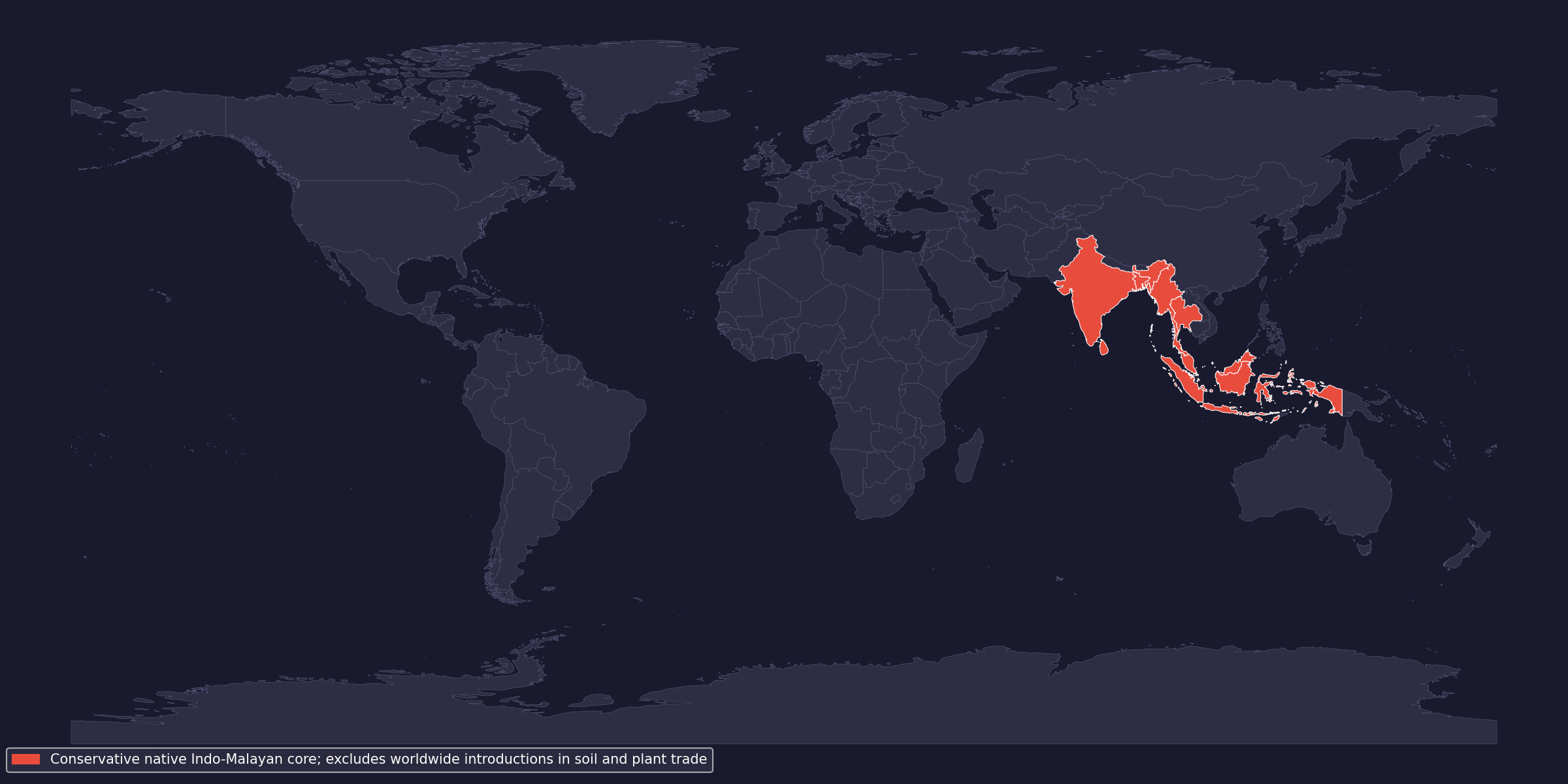
The species arose in the Indo-Malayan region, but trade in plants, soil and mulch has carried clonal lineages through tropical and subtropical regions worldwide. It now occurs outdoors in warm climates and in heated greenhouses farther north. The map shows the conservative native Asian core, not every introduced record.
⚖️ Legal status
Checked on 2026-08-22: P. surinamensis is absent from the CITES Appendices valid from 5 March 2026 and Annexes A-D of Commission Regulation (EU) 2026/1383. It is not a Bern Convention species and was not found on the current EU list of invasive alien species of Union concern.
That does not make movement unrestricted. This species is a recognized greenhouse and plant-associated pest, so plant-health, import, shipping, tenancy and national exotic-animal rules can be stricter. Ask the destination authority before cross-border transfer, retain invoices and line details, and never release animals or untreated culture material.
🤌 Husbandry
Use a gasketed 30 x 20 x 20 cm box for a starter colony. Fix fine metal or fabric mesh securely over small vents, because young nymphs use narrow seams. Work inside a second smooth-sided tub and keep the culture away from houseplants, propagators and greenhouse rooms.
Quarantine incoming stock for at least 60 days with separate tools. Record the seller’s strain name because clonal lines differ in size and fecundity. Do not mix P. surinamensis with sexual P. indicus or other Pycnoscelus: similar nymphs make the colony’s identity impossible to audit.
💡 Lighting
UVB is unnecessary. A 10-12-hour room-light cycle is sufficient; supply dark leaf litter and soil rather than exposing the surface to intense lamps. Strong overhead light adds little display value and dries the upper substrate.
🌡 Heating and temperature
Keep most of the culture at 23-28°C, with a 26-28°C area and a 21-24°C retreat. Nights can fall to 20-24°C. Reproduction and development slow in cooler rooms; heating the entire base can trap the colony above hot, dry substrate.
Warm one side or the surrounding room under thermostat control. Measure within the substrate as well as in the air. Brief laboratory thermal limits are not husbandry targets: sustained heat over 30°C increases dehydration and brood loss.
💧 Humidity and water
Maintain roughly 60-80% RH, but judge the substrate directly. The lower layers should remain evenly moist while the surface is allowed to become only slightly damp between waterings. A squeezed handful must not drip. Stagnant, saturated soil deprives burrowing insects of aerated retreats and encourages mites.
Water one end deeply and leave the other somewhat drier. Moist foods provide much of the colony’s water; if using a dish, make it shallow and fill it with textured pebbles so first instars cannot drown.
🌿 Enclosure and decoration
Provide 8-12 cm of coir or pesticide-free topsoil mixed with rotten hardwood leaves and small pieces of decayed white wood. The 2023 substrate study found poor survival without substrate and better performance in moisture-holding media such as coir. Compress the lower layer lightly so tunnels persist, then cover it with 2-3 cm of leaves.
Add one cork slab for feeding and inspection. Avoid fertilized potting compost, manure, pine or cedar, sharp wood chips and soil taken from pesticide-treated gardens. Do not place live ornamental plants in the colony: they complicate inspection and create an easy route for accidental transfer.
🪳 Feeding
The base diet should be decomposed leaves and safe decayed wood. Two or three times weekly add small portions of carrot, squash, sweet potato, apple or leafy vegetables. Provide a modest dry protein source, such as quality fish flakes or balanced roach diet, once weekly; excessive protein and wet food create odor and mites faster than they improve growth.
Set food on a removable dish. Remove soft leftovers within 24-36 hours and bury a little leaf material at several depths so small nymphs can feed without crossing a dry surface.
🥚 Breeding
Females form an ootheca, retract it into the brood sac and release live nymphs after internal development. Published accounts commonly report about 20-30 young after roughly two months, while lineage and temperature cause real variation. A recent comparative study at 26.7°C recorded a mean of 28 nymphs from 34.1 eggs in the tested line.
No male is required, and males reported from some old “Surinam” stocks often indicate confusion with P. indicus. Do not isolate or incubate a healthy internal ootheca. Stable moisture, food after parturition and enough substrate for several overlapping generations are more useful than attempts to force faster breeding.
🩺 Common problems
- Colony at the lid: the soil may be waterlogged, overheated or depleted of oxygen; inspect the lower layers rather than adding more mist.
- Slow growth or failed molts: check measured substrate temperature, moisture and access to leaf material.
- Mites and fungus gnats: reduce wet food, improve ventilation and remove residues without replacing all established substrate at once.
- Unexpected spread: inspect nearby plant pots and soil immediately; one female can start another colony. Seek professional pest or plant-health advice where establishment is possible.
- Allergy risk: frass and shed skins can sensitize keepers. Damp-clean, use gloves and suitable respiratory protection, and avoid blowing dry debris.
📌 Conclusion
The Surinam cockroach suits a keeper interested in soil ecology who can maintain pest-level containment. Deep aerated substrate is the welfare priority; a sealed work routine and controlled disposal must be ready before the first female arrives.
📚 Sources and further reading
- GBIF: Pycnoscelus surinamensis
- Blattodea Species File: P. surinamensis
- Zangl et al. 2019: first Central European records and clonal origin
- Roth 1967: sexual isolation and recognition of P. indicus
- Jeon 2023: comparative water relations, temperature and breeding
- Reddi et al. 2023: biology and substrate preference
- Norwegian Institute of Public Health: greenhouse cockroach
- ReptiFiles — checked; no species care guide was found
- CITES Appendices, valid from 5 March 2026
- Commission Regulation (EU) 2026/1383
- EU list of invasive alien species of Union concern
- Bern Convention appendices