Share

Obsidian Pill Cockroach
🔤 Taxonomy
Pseudoglomeris tarsalis (Walker, 1868) is the accepted name in the current Blattodea Species File. Older works place it as Perisphaeria tarsalis, Glomeriblatta tarsalis or Trichoblatta tarsalis; Pseudoglomeris planiuscula is a synonym. The black, broad female with yellowish tarsi is sold as the obsidian pill cockroach, but a seller name or nymph photograph is not enough to distinguish it from related perisphaerines.
📌 Description
Females reach roughly 3-3.5 cm and are heavy, glossy and wingless; disturbed females can press the body tightly against the substrate. Males are narrower and winged. Yellowish tarsi, antennae, mouthparts and cerci contrast with the dark body. This is a slow-growing display colony whose main captive requirements are decomposing leaf material, protected humidity below the surface and clean air above it.
🌍 Distribution
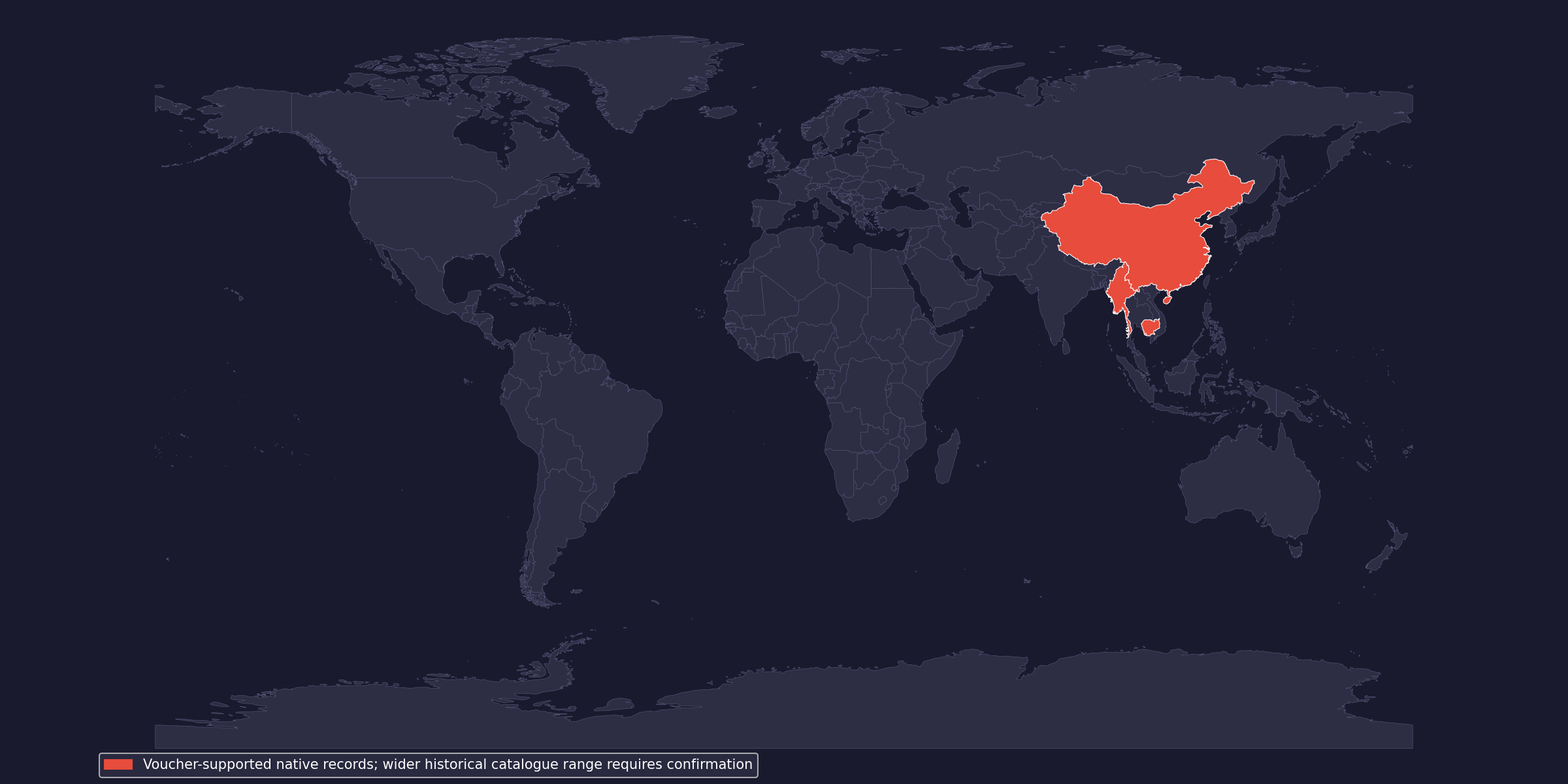
The original material came from Cambodia and Tenasserim in present-day Myanmar. A later revision examined substantial material from southern Yunnan, China. Older catalogues also list Thailand, Vietnam and Peninsular Malaysia, but the same revision warned that historical identifications require confirmation. The map therefore uses the three voucher-supported countries rather than turning every old catalogue entry into a certain native record.
⚖️ Legal status
Checked on 2026-08-22: P. tarsalis was not found in the CITES Appendices, EU wildlife-trade Annexes A-D, the EU list of invasive alien species of Union concern, or the Bern Convention appendices. National rules may still regulate import, transport, sale or keeping of live non-native insects.
Keep the invoice, breeder identity and any import papers. Do not release animals, leaves or substrate outdoors; freeze unwanted biological material in a sealed bag before disposal where local rules allow.
🤌 Husbandry
A 35 × 25 × 25 cm container is adequate for a starter colony of 10-20, provided that most of its floor is usable litter. Fit a clipped lid and ventilation covered by fine metal mesh. Although females are poor climbers, males and small nymphs make an open or coarsely ventilated box unsafe.
| Parameter | Practical target |
|---|---|
| Adult size | 3-3.5 cm females; males slimmer |
| Main temperature | 23-27 °C |
| Limited warm side | 27-29 °C |
| Night | 20-23 °C |
| Moisture | moist lower layer, drier leaf surface |
| Substrate | 8-12 cm soil/rotted wood/leaf mix |
| Feeding | leaves always; fresh food every 2-4 days |
Quarantine additions for about 60 days with separate tools. Preserve locality and species labels, and never combine the colony with P. magnifica or unidentified Pseudoglomeris.
💡 Lighting
UVB is not required. A subdued 10-12-hour light cycle is enough. Provide bark and a thick litter layer so the animals can remain dark during the day; direct sun can overheat the enclosure even when room temperature is moderate.
🌡 Heating and temperature
Keep most of the substrate at 23-27 °C and, if breeding is slow, offer a small side zone at 27-29 °C. Leave a 21-24 °C retreat. Side or room heating controlled by a thermostat is safer than a mat beneath the deepest burrowing zone.
💧 Humidity and water
Moisten one third of the lower substrate and let the upper leaves dry slightly. A nominal 60-80% RH is useful only when ventilation prevents condensation. Failed molts point to a dry refuge; sour substrate, mould on food and flies point to excessive wetness.
Use a shallow textured dish or insect-safe drinking source. Fresh vegetables add water but do not replace the moisture stored in the lower litter.
🌿 Enclosure and decoration
Build an 8-12 cm layer from pesticide-free topsoil or coir, crumbled decayed hardwood and abundant crushed hardwood leaves. Add whole leaves and cork slabs on the surface. Avoid cedar, pine shavings, fertilizer, perlite and a permanently wet moss carpet.
The deep layer is food as well as shelter. Replace only fouled patches and add mature substrate back after maintenance; a complete sterile change removes the microbial and decomposer community on which the colony feeds.
🪳 Feeding
Keep oak, beech or other safe hardwood leaf litter available continuously. Supplement with carrot, squash, apple, pear, mushroom and a balanced dry invertebrate diet. Offer a small amount of fish food or legume-based protein weekly, especially when nymphs are growing.
Feed on a tile or shallow dish and remove wet remains within 24-48 hours. Heavy protein feeding and fruit buried in warm substrate commonly produce mites and fungus gnats before they improve growth.
🥚 Breeding
Females retain the ootheca and release live, mobile nymphs; the metadata therefore uses “viviparous,” often called ovoviviparous in the hobby. Reliable species-level brood and gestation measurements are scarce, so this guide does not borrow figures from other Pseudoglomeris. Stable warmth, old leaf substrate and minimal digging are more useful than repeated searches for newborns.
Males are winged and females broad and wingless, but sex small nymphs only after maturation. A colony may pause for months after transport or a major substrate change.
🩺 Common problems
- Dry molts: restore a moist lower refuge without spraying the entire enclosure daily.
- Stagnant substrate: increase cross-ventilation and remove sour, compacted patches.
- Slow reproduction: check temperature, mature males and dietary variety; do not repeatedly dismantle the litter.
- Mites and flies: remove wet food sooner and allow the feeding surface to dry.
- Allergy: frass and shed skins can sensitise airways; dampen dusty waste and use gloves and suitable respiratory protection if sensitive.
📌 Conclusion
This species suits a patient keeper who values natural litter behaviour more than rapid production. Have deep mature substrate, a moisture gradient and a nymph-proof lid ready before the colony arrives; repeated sterile clean-outs are the most avoidable setback.
📚 Sources and further reading
- GBIF specialist-dataset record for Pseudoglomeris tarsalis
- Blattodea Species File: Pseudoglomeris tarsalis
- Anisyutkin 2003: revision and voucher-backed range discussion
- ReptiFiles — checked; no species care guide was found
- CITES Appendices, valid from 5 March 2026
- EU wildlife-trade Annexes, Regulation (EU) 2026/1383
- EU Union list update, Regulation (EU) 2025/1422
- Bern Convention appendices