Share

Giant Canyon Isopod
🔤 Taxonomy
Porcellio dilatatus Brandt in Brandt & Ratzeburg, 1831 is accepted by GBIF and the World List of Isopoda. Giant canyon isopod is the usual English hobby name. The broad body and blunt, rounded telson help separate adults from the rougher, narrower Porcellio scaber, but source-labelled captive stock is preferable to identification from colour alone.
📌 Description
Adults are broad, flattened woodlice, usually dusty grey-brown and about 1.2-1.8 cm long. They cannot roll into a complete ball. A colony spends much of the day below cork, leaf litter, or within the substrate and becomes more visible after dark or at feeding time.
This is a forgiving species when kept cool with deep food-rich substrate. Its characteristic failure mode is a warm, shallow tub that alternates between waterlogging and complete dryness.
🌍 Distribution
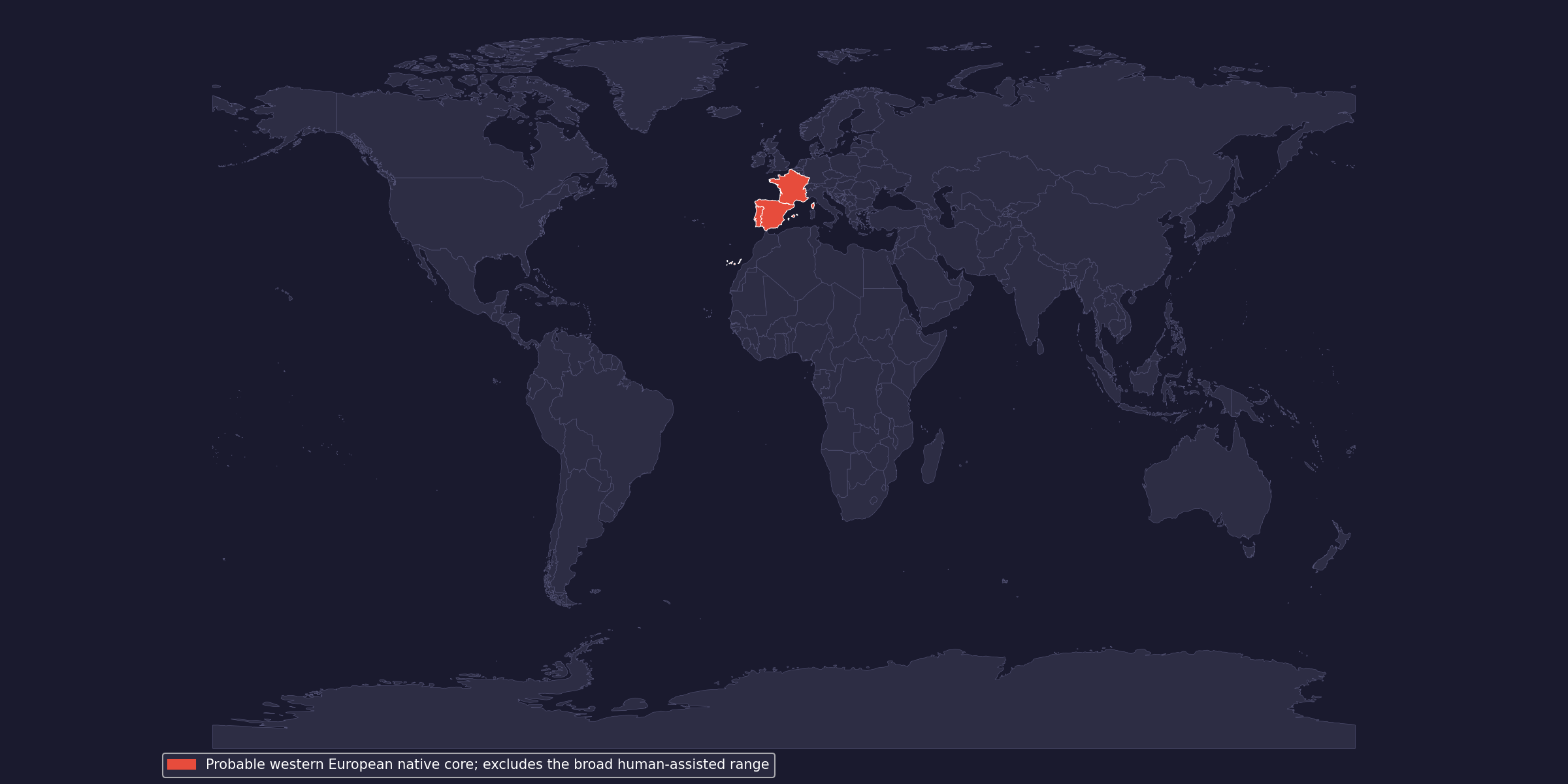
The probable native centre is western or southwestern Europe. It is now recorded across much of Europe and has been transported to other continents, often with soil, compost, livestock bedding, or greenhouse material. British records are strongly associated with stables, manure heaps, gardens, old buildings, and compost, although natural-looking outdoor populations also occur.
⚖️ Legal status
Checked on 2026-08-23: Porcellio dilatatus is not listed in the CITES Appendices, EU wildlife-trade Annexes A-D under Regulation (EU) 2026/1383, or Bern Convention Appendices II-III. National collection, import, transport, sale, and biosecurity rules can still apply.
Keep an invoice and source record, especially for animals collected abroad. Never release a colony, mancae, food scraps, or used substrate outdoors; this species has already been spread far beyond its probable native range.
🤌 Husbandry
A tub measuring at least 30 × 20 × 15 cm suits 10-20 animals and leaves room for a useful gradient. Give them depth rather than an ornamental shallow layer: they shelter and feed within the substrate. Use fine side ventilation, with more holes over the drier end, and cover openings small enough to retain mancae.
Quarantine new stock for 30-60 days in a simple container with separate tools. Check weekly for foul substrate, grain mites, predatory hitchhikers, and unexplained deaths before placing the culture near other invertebrates.
💡 Lighting
UVB is unnecessary. A 10-14-hour room-light cycle is sufficient, with cork and litter providing darkness. Direct sun can overheat a plastic box within minutes, even when the room itself is cool.
🌡 Heating and temperature
Maintain 17-24 °C, with access to a 15-19 °C refuge and ordinary night temperatures of 15-21 °C. Laboratory cultures are commonly maintained around 20-23 °C, and there is no husbandry advantage in pushing this temperate species hot.
Above about 26-27 °C, aeration and water balance become harder to control. If winter heating is unavoidable, warm only one outer wall with a thermostat; never place an unregulated mat beneath the entire culture.
💧 Humidity and water
Keep roughly one-third of the substrate consistently damp, a moist middle, and a less-wet but not bone-dry end. An overall 55-75% relative humidity is a useful secondary reading. Pour water into the damp corner so the lower layer remains buffered rather than spraying every surface.
No water dish is needed. Persistent condensation, sour odour, surface flight, or deaths at the wet end indicate saturation or weak airflow. Failed moults and crowding beneath the last piece of moss indicate that the gradient has become too dry.
🌿 Enclosure and decoration
Provide 6-8 cm of pesticide-free topsoil mixed with deciduous leaf mould and soft white-rotted hardwood. Cover most of the surface with oak, beech, maple, or similar safe leaves. Add cork flats, bark pockets, and a small moss patch at the damp end.
Decayed leaves and wood are food, not merely decoration. Keep cuttlebone, crushed limestone, or calcium carbonate available. Avoid fertilizer, fresh manure, conifer bark, aromatic wood, mouldy feed, and coir used as the sole substrate.
🪳 Feeding
Leaf litter and rotten hardwood remain available continuously. Two or three times weekly add small portions of carrot, squash, sweet potato, mushroom, courgette, or pesticide-free vegetable trimmings. Offer a modest pinch of dried shrimp, gammarus, fish food, or another complete invertebrate protein once weekly, increasing only when breeding females and juveniles consume it cleanly.
Remove wet food within 24-48 hours. Too much protein and vegetable waste favours mites and anaerobic pockets; too little decomposed plant fibre produces slow growth even when fresh food is plentiful.
🥚 Breeding
Females brood fertilized eggs and embryos in a fluid-filled ventral marsupium and later release mancae. The site therefore records reproduction as “viviparous”; there are no external eggs to incubate. The mancae initially lack the final pair of walking legs and remain in fine litter and crevices.
A stable damp lower layer, calcium, leaves, and periodic protein usually support steady reproduction. Do not isolate gravid females or repeatedly turn them over for sexing. Expand the culture before crowding strips the edible litter faster than it can be replaced.
🩺 Common problems
- Poor moults: restore the damp refuge, calcium, and cooler retreat.
- Slow reproduction: deepen the edible substrate and check that the colony is not held too cold or starved of protein.
- Mites and sour odour: reduce wet supplementary food and improve cross-flow without drying the whole box.
- Sudden surface gathering: test both substrate moisture and temperature; the lower layer may be flooded or overheated.
- Escapes or contamination: service inside a catch tub and freeze or heat-treat discarded substrate according to local waste rules.
📌 Conclusion
The giant canyon isopod is a sound first Porcellio culture for keepers who can provide deep edible substrate and a cool moisture gradient. Shallow housing and prolonged heat are more damaging than a slightly untidy forest-floor setup.
📚 Sources and further reading
- GBIF: Porcellio dilatatus
- World List of Isopoda: Porcellio dilatatus
- British Myriapod and Isopod Group species account
- Caseiro et al.: optimization of laboratory culture conditions
- Manca stages of Porcellio dilatatus
- ReptiFiles bioactive clean-up-crew overview checked before drafting
- CITES Appendices
- Current EU wildlife-trade Annexes: Regulation (EU) 2026/1383
- Bern Convention appendices