Share

Saussure's Giant Sand Cockroach
🔤 Taxonomy
Polyphaga saussurei (Dohrn, 1888) is the accepted name. Useful older combinations include Heterogamia saussurei, Heterogamia pellucida, and Polyphaga camelorum. “Saussure’s giant sand cockroach” describes the largest commonly cultured Polyphaga.
The sale-list prefix “parthenogenetic” describes a captive line, not the scientific name. The widespread hobby line is all-female and parthenogenetic, while wild populations and rare captive lines contain males and reproduce sexually.
📌 Description
Adult females are wingless, dark, convex burrowers 3.5-4.4 cm long; winged males measure about 3.2-3.7 cm. Adults may release an unpleasant defensive odor. Nymphs and females spend most of their time underground and emerge mainly to feed.
Development is slow. Field-focused literature reports that the full life cycle can take 3.5-4 years in the species’ continental climate; warm captive cultures develop faster, but still demand patience.
🌍 Distribution
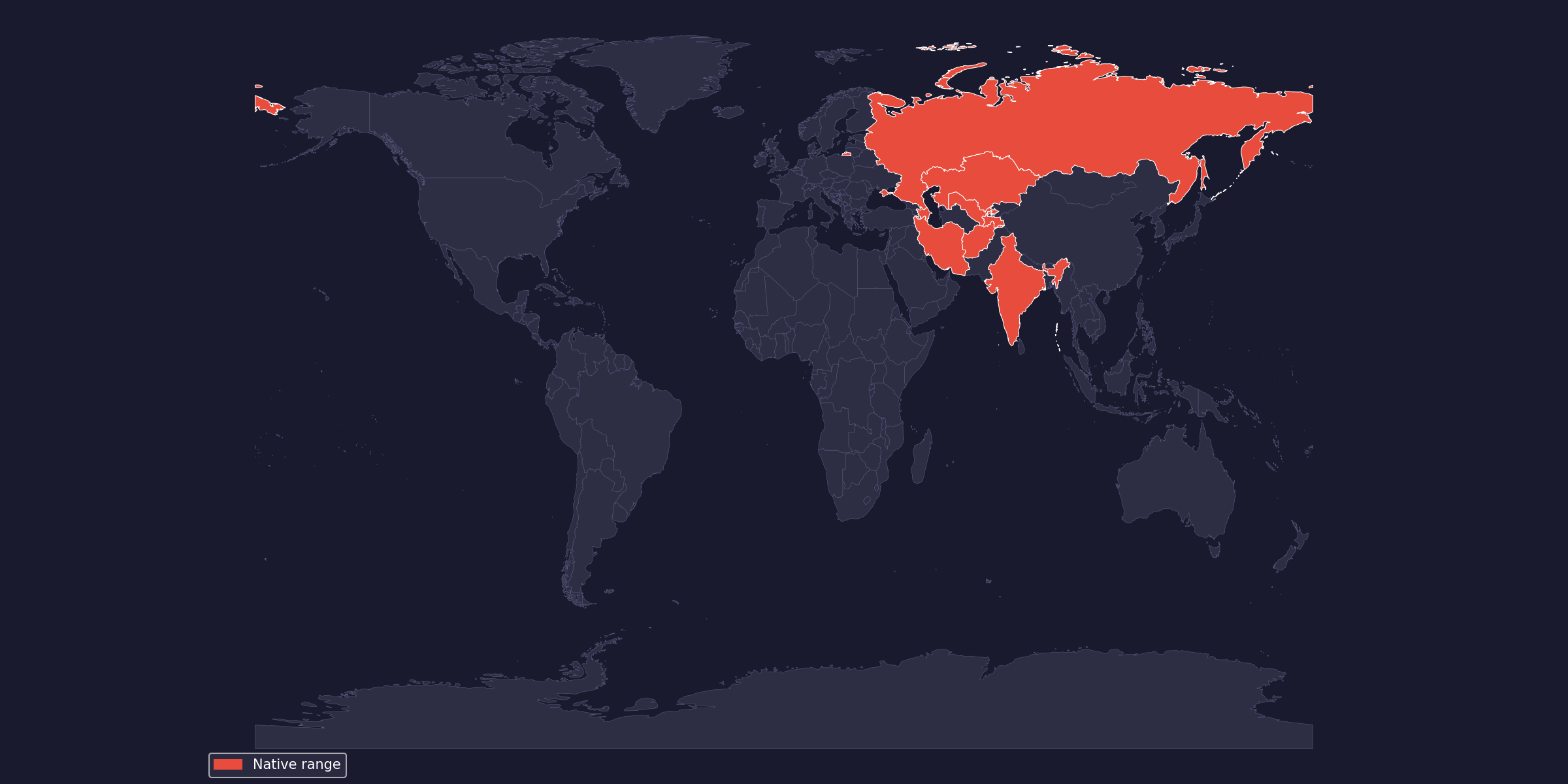
Published records cover Afghanistan, Azerbaijan, India, Iran, Kazakhstan, southern Russia, Tajikistan, and Uzbekistan. Older works also associate the taxon with Turkestan/Turkmenia, but boundaries and historical names are not always precise. The map uses the explicit modern country list from reviewed sources and should not be read as continuous occupancy.
⚖️ Legal status
Checked on 2026-08-22: P. saussurei is not in the current CITES Appendices or EU Annexes A-D under Regulation (EU) 2026/1383. It is not listed in Bern Convention Appendices II or III, including within the European/Caucasian part of its range. Local pest, import, soil, animal-keeping, and transport rules remain applicable.
Retain an invoice that states whether the line is parthenogenetic or bisexual and any claimed locality. Never release animals, oothecae, or substrate.
🤌 Husbandry
A 45 × 30 × 30 cm container with 12-18 cm of fine substrate suits a starter group of these large burrowers. Use broad floor area, fine mesh, and a clipped lid. Surface hides add little; substrate is the refuge and must remain traversable by newborns.
| Parameter | Practical target |
|---|---|
| Adult size | males 3.2-3.7 cm; females 3.5-4.4 cm |
| Growth temperature | 20-27 °C; limited warm side 25-28 °C |
| Moisture | most substrate dry; one-quarter moist |
| Substrate | 12-18 cm fine coir/soil and crushed leaves |
| Egg-case incubation | 2-8 months, depending on temperature and cooling |
| Culture type | verify all-female parthenogenetic or bisexual |
Quarantine additions for 90 days. Never add a male to an all-female line without a breeding plan and accurate records; preserving culture identity matters as much as increasing numbers.
💡 Lighting
UVB is not required. Provide a normal 10-12-hour day cycle and keep the enclosure away from direct sun. Light is mainly for the keeper; the animals spend daylight below the surface.
🌡 Heating and temperature
Maintain 20-27 °C for routine growth, with a small warm area at 25-28 °C and cooler soil at 16-21 °C. Heat a side wall through a thermostat, never the whole base. Warm conditions speed nymphal development but can also dry the moist incubation corner.
A one- to two-month period around 16-19 °C can shorten or synchronize later ootheca hatching in established cultures. It is optional, line-dependent breeder cycling. Do not cool new arrivals, small weak nymphs, or a declining culture.
💧 Humidity and water
Keep most substrate dry and one-quarter to one-third lightly moist through its depth. The air can remain moderately dry if the animals can choose the humid corner. Uniform wetness causes sour, compacted soil; uniform dryness kills oothecae and freshly molted nymphs.
Use moisture-rich vegetables sparingly or a pebble-filled shallow water point. Pour water into the designated corner rather than misting the entire surface.
🌿 Enclosure and decoration
Use sifted coir or unfertilized soil mixed with finely crushed hardwood leaves. Long coir fibers and large bark chips trap early nymphs. A leaf layer provides food and cover, while a removable tile keeps meals off the substrate.
Do not use pure sand: natural “sand roaches” occupy protected soil pockets, and commercial sand can be abrasive and poor at buffering moisture. Check substrate in sections so oothecae are not repeatedly exposed.
🪳 Feeding
Keep decayed hardwood leaves and a dry cereal/legume or quality roach staple available. Add carrot, squash, leafy greens, apple, or a small fruit piece two or three times weekly. Moderate protein supports growth; large quantities of pet food create mites and odor.
Young nymphs need finely milled food at the surface and within the upper substrate. Remove fresh remains after 24-48 hours.
🥚 Breeding
Females deposit external oothecae, so reproduction is oviparous whether fertilization is sexual or absent. Use 16-26 °C and a broad 60-240-day incubation expectation: warmed oothecae may still take 6-8 months, while a controlled cool period can produce hatching in roughly 2-4 months after cycling.
The common all-female hobby stock reproduces parthenogenetically. This does not make P. saussurei an obligatorily parthenogenetic species: bisexual wild populations and rare male-female cultures exist. Ask the seller for observed males, not merely “parthenogenetic” copied from a sales list.
🩺 Common problems
- Newborn die-off: remove coarse fibers and provide finely ground food beside the moist zone.
- Unhatched oothecae: avoid drying, flooding, and casual temperature changes; keep date and line records.
- Very slow growth: confirm safe warmth and nutrition before increasing heat.
- Odor, mold, or mites: reduce wet food and replace fouled substrate gradually.
- Line confusion: keep parthenogenetic and bisexual cultures separately labeled and never sell an uncertain line as pure.
📌 Conclusion
This is a large, long-lived burrower for keepers comfortable waiting months for eggs and more than a year for adults. Confirm the culture’s reproductive type before purchase; confusing an all-female hobby line with the biology of the whole species is the central avoidable mistake.
📚 Sources and further reading
- GBIF: Polyphaga saussurei
- Cockroach Species File: nomenclature of P. saussurei
- WHO review: distribution, size, oothecae, and slow life cycle
- Specialist Polyphaga guide: captive line reproduction and incubation
- CITES Appendices
- Current EU wildlife-trade Annexes: Regulation (EU) 2026/1383
- Bern Convention documents and appendices