Share

Pallid Cockroach
🔤 Taxonomy
Phoetalia pallida (Brunner von Wattenwyl, 1865) is the accepted name. Older literature may use Nauphoeta pallida or Nauphoeta marginalis. “Pallid cockroach” and “pale-bordered cockroach” describe the pale margin along the pronotum and wings.
📌 Description
Adults are slender, tan to reddish brown, and normally 1.8-2.5 cm long. Both sexes are winged, climb smooth surfaces, and may flutter or jump when disturbed. Newborns are extremely small. A warm colony breeds quickly, which makes this a lively display but raises escape and surplus-management concerns.
This is not a handling species. Its strengths are visible feeding activity and a short generation time; its principal husbandry challenge is containing every life stage without creating a stagnant box.
🌍 Distribution
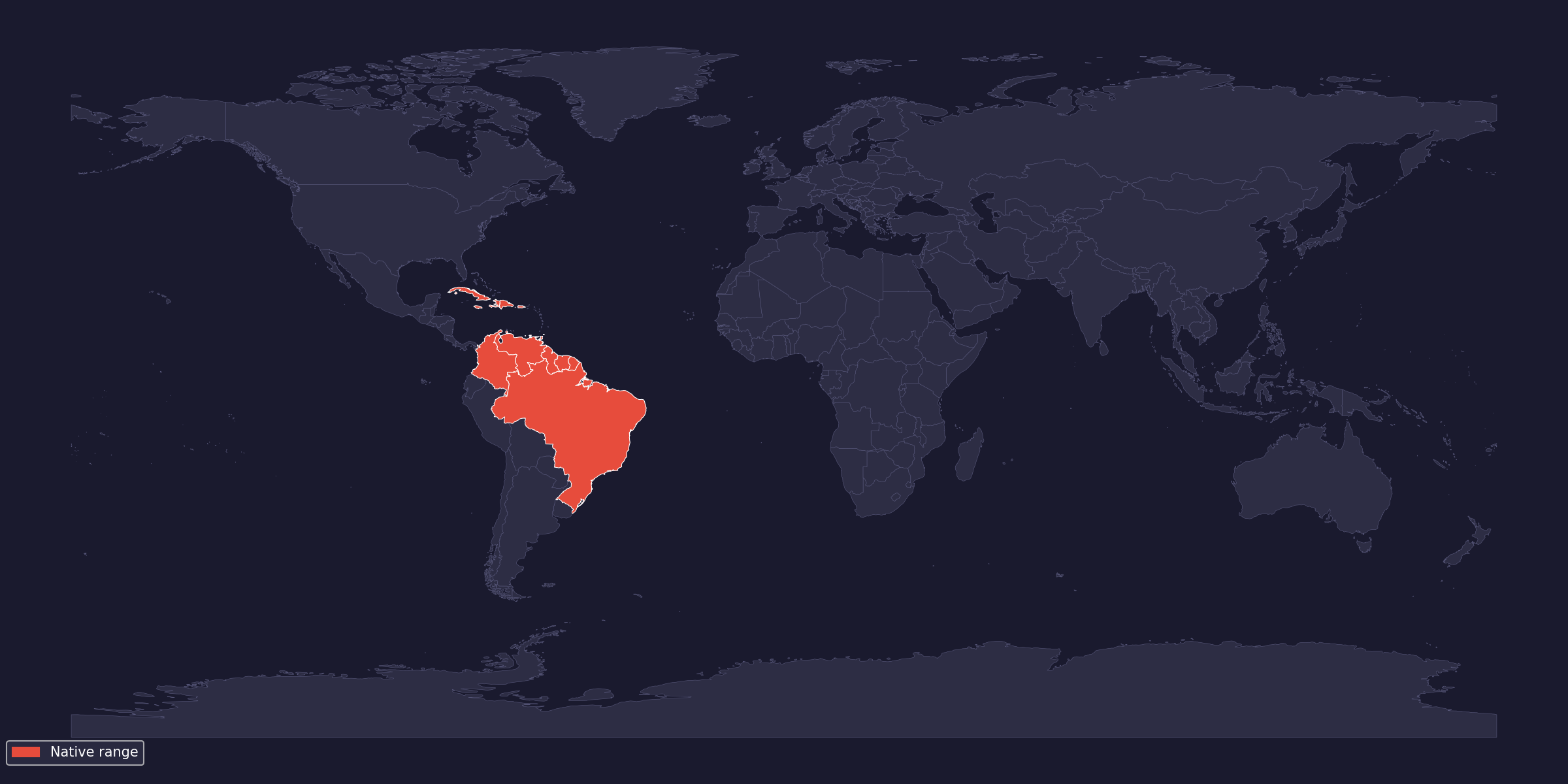
The native origin is Neotropical, variously described as the West Indies or Central and South America. Human transport in ornamental plants and potting material has made the species pantropical, with introduced records in Africa, southern Asia, Australia, Pacific islands, and the Mediterranean. Because the precise native boundary is unresolved, the map shows the documented Neotropical core rather than every introduced country.
⚖️ Legal status
Checked on 2026-08-22: P. pallida is not listed by CITES, EU Annexes A-D under Regulation (EU) 2026/1383, or Bern Convention Appendices II-III. Its ability to travel with horticultural material means plant-health, import, pest-control, tenancy, and transport rules may be more relevant than wildlife-trade listing.
Keep purchase and origin records, use secondary containment during transport, and never release animals or used substrate. Check national rules before maintaining a large culture.
🤌 Husbandry
Use a gasketed 30 × 20 × 25 cm box or display for a small colony, with fine metal mesh and positive latches. Provide vertical cork or clean cardboard shelters, but keep enough open space to count animals and remove food. Apply only a thin climbing barrier beneath the lid; barriers are backup, not a substitute for a sealed container.
| Parameter | Practical target |
|---|---|
| Adult size | 1.8-2.5 cm |
| Main air | 22-28 °C; warm side 26-29 °C |
| Humidity | about 50-70%, with a moister retreat |
| Substrate | 2-4 cm fine coir or leaf soil, partly moist |
| Feeding | dry staple plus fresh vegetables every 1-2 days |
| Reproduction | live young; often 20-40 per brood |
Quarantine incoming animals for 60 days. A culture may be prolific while carrying grain mites, flies, or another small roach species, so use separate tools and inspect debris under magnification.
💡 Lighting
UVB is not needed. A regular 10-12-hour day cycle is sufficient. Give shaded retreats because most activity increases after lights dim. Strong lamps heat and desiccate the upper seam where nymphs gather; mount fittings outside the enclosure.
🌡 Heating and temperature
The colony remains active at normal warm room temperatures, but reproduction is strongest around 26-29 °C. Preserve a cooler section at 20-23 °C. Side heating under thermostat control is safer than heating the full base.
Do not chase production with temperatures above 30 °C. Small, crowded colonies can overheat and dehydrate before a probe placed outside the shelters registers the peak.
💧 Humidity and water
Keep one section of substrate lightly moist and the rest only slightly damp to dry at the surface. Published keeper experience differs on overall moisture, but it consistently identifies newborn dehydration and stagnant wet culture boxes as opposite failure modes. Cross-ventilation and a measurable gradient resolve that conflict.
Use moisture-rich vegetables, water gel, or a shallow textured dish. Remove fermented fruit and replace gel before it becomes fouled.
🌿 Enclosure and decoration
Stack cork vertically with gaps that can be inspected. Fine coir, pesticide-free leaf litter, and a little rotten hardwood make a useful display substrate. Cardboard flats are practical in quarantine but must be replaced when damp or heavily soiled.
Avoid loose lids, coarse vents, foam backgrounds with hidden voids, and permanent plumbing openings. Service the colony inside a catch tub and freeze used substrate before disposal where local waste rules allow.
🪳 Feeding
Provide a balanced dry roach diet or cereal-legume staple and small servings of carrot, squash, leafy greens, apple, or banana. Add moderate protein through pollen, fish flakes, or a formulated invertebrate food. This adaptable omnivore does not need a fruit-heavy menu.
Remove fresh food within 24-48 hours. Overfeeding is especially damaging because rapid reproduction, frass, and wet scraps combine into mite and fly outbreaks.
🥚 Breeding
The female carries the ootheca internally and produces live nymphs; cockroach literature calls the process ovoviviparity, represented as “viviparous” in site metadata. Warm, well-fed females may produce a brood every three to four weeks, commonly with roughly 20-40 young.
Plan colony limits before breeding. Split only into equally secure enclosures, keep genetic and source records, and do not distribute surplus without explaining the species’ climbing ability and introduced-range history.
🩺 Common problems
- Dehydrated newborns or bad molts: add a localized moist retreat and confirm that warm air is not stripping moisture from the shelters.
- Mites, phorid flies, or odor: reduce food quantity, remove dead insects, and improve airflow.
- Colony crash after overheating: measure inside the densest shelter and reduce external heat.
- Chewed seals and escapes: inspect gasket corners and replace soft or damaged materials.
- Allergy: cockroach frass and molts can sensitize keepers; use gloves and a suitable mask during cleaning.
📌 Conclusion
Phoetalia pallida is best for a keeper who wants an active, rapidly growing colony and can maintain pest-grade containment. The enclosure and a surplus plan should be ready first; a casual lid is a much greater risk than imperfect décor.
📚 Sources and further reading
- GBIF: Phoetalia pallida
- Cockroach Species File: nomenclature of P. pallida
- New Brazilian records and colour variation
- Published review identifying P. pallida as ovoviviparous
- CITES Appendices
- Current EU wildlife-trade Annexes: Regulation (EU) 2026/1383
- Bern Convention documents and appendices