Share

Red-headed Cockroach
🔤 Taxonomy
The red-headed cockroach is currently classified as Oxyhaloa deusta (Thunberg, 1784). Red-headed cockroach and Rotkopfschabe are useful hobby names. The red-brown head and dark body help recognize a known line, but labels and provenance remain more reliable than color alone.
📌 Description
Adults are slim, winged cockroaches about 1.3-2 cm long. They are attractive and often visible after dark, but adults and tiny newborn nymphs run quickly and climb smooth glass or plastic. The species is also used as a small feeder; a display colony needs the same strict containment.
| Care point | Practical target |
|---|---|
| Adult size | 1.3-2 cm |
| Small colony enclosure | 30 x 20 x 20 cm |
| Temperature | 24-28°C; warm end 27-29°C |
| Humidity | mostly dry surface, moist retreat; about 45-65% |
| Diet | decomposed leaves plus varied plant food and modest protein |
| Reproduction | live young, commonly 13-21 per brood |
🌍 Distribution
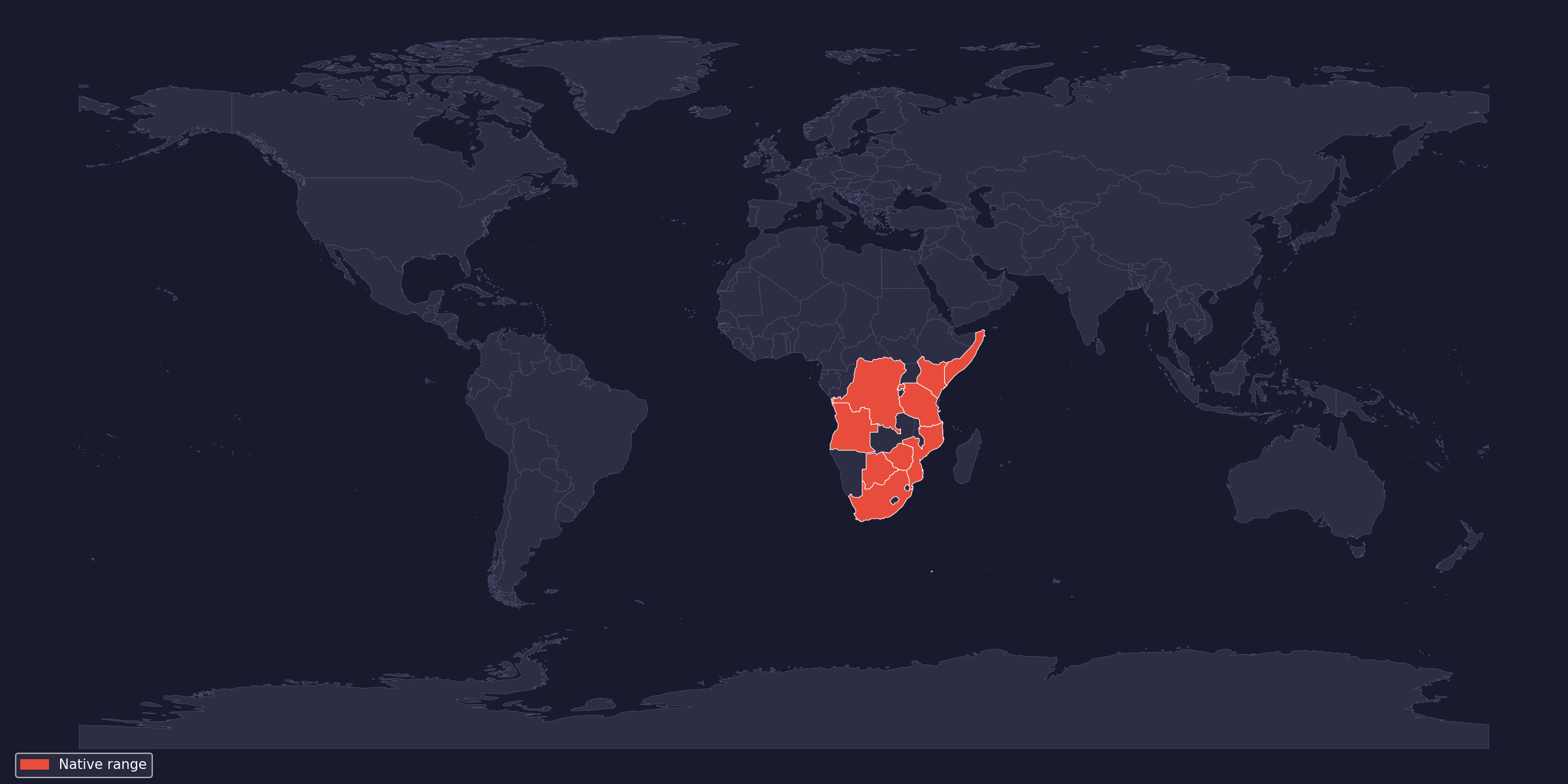
Cockroach Species File records a broad sub-Saharan range from Angola and the Democratic Republic of the Congo east to Kenya and Somalia, and south through Tanzania, Mozambique, Zimbabwe, Botswana, and South Africa. Records are incomplete, so the country-level map is a documented-range summary rather than a precise boundary.
⚖️ Legal status
Checked on 2026-08-22: Oxyhaloa deusta is absent from the CITES Appendices valid from 5 March 2026 and Annexes A-D of Commission Regulation (EU) 2026/1383. The Bern Convention is not relevant to this non-European species.
Cockroach imports and transfers may still be restricted by agriculture, invasive-species, tenancy, school, or national exotic-animal rules. Keep invoice, scientific name, breeder and line details, and import documents. Never release animals, newborns, substrate, or enclosure waste outdoors.
🤌 Husbandry
A gasketed 30 x 20 x 20 cm tub suits a small colony. Use very fine secured vents, keep furnishings below the lid, and maintain a clean barrier under the upper rim as backup only. Open and sort the colony inside a second empty container.
Quarantine additions for 60-90 days with separate tools. Record births, molts, adult sex ratio, deaths, mites, and odor before mixing lines. More hides and food points reduce disturbance when males are active around newly molted females.
💡 Lighting
UVB is not needed. Indirect room light for 10-12 hours and dark leaf-and-bark retreats are sufficient. Avoid sun and strong display lamps, which overheat a small sealed culture.
🌡 Heating and temperature
Maintain 24-28°C for routine care, with a warm section at 27-29°C and a retreat at 21-24°C. The published reproductive study recorded births at 25°C; high heat is unnecessary for a productive colony.
Heat only one outside wall through a thermostat. Sustained temperatures above 30°C, especially with dry air, can dehydrate newborns before the keeper notices them.
💧 Humidity and water
Keep most of the surface dry and ventilated while one lower corner remains slightly moist. A general 45-65% range with a locally humid molting refuge is safer than daily soaking. Persistent condensation, sour odor, or wet cartons mean the enclosure is too damp.
Provide moisture through vegetables and, if used, a very shallow dish with a textured exit. Replace water daily. Do not use sponges as permanent reservoirs.
🌿 Enclosure and decoration
Use 3-5 cm of pesticide-free soil or coir mixed with dry decomposed hardwood leaves. Add cork bark, leaf curls, and vertical cardboard that stays away from the moist corner. Decayed oak or beech leaves are especially readily eaten.
Containment must retain newborns only a few millimetres long. Fine fabric over vents and a sound gasket matter more than petroleum jelly, which becomes ineffective when dusty.
🪳 Feeding
Keep decomposed hardwood leaf litter available. Offer carrot, squash, sweet potato, apple, pear, and leafy greens, plus a modest dry insect diet or fish flake. Feed small portions every one to three days and remove wet food before fermentation.
Do not run the colony on dog food alone. Excess protein, moisture, and heat favor mites and odor; leaf material and plant variety make a more stable display culture.
🥚 Breeding
Females retain the ootheca internally and give birth to live nymphs. In a controlled 25°C study, successive births were usually about 51-62 days apart and broods contained 13-21 nymphs, averaging about 15.5.
Newborns are extremely small and harden within hours. Plan capacity before warming a colony, and separate sexes or reduce breeding temperature if surplus animals cannot be housed responsibly.
🩺 Common problems
- Escapes: replace coarse mesh, warped lids, and dusty barriers immediately.
- Desiccated newborns or bad molts: restore a moist lower refuge without wetting the whole enclosure.
- Mold and mites: remove fresh food sooner, reduce protein, and improve cross-ventilation.
- Colony crash: check pesticide exposure, overheating, crowding, and an exhausted food base.
- Allergy: frass and shed skins can sensitize keepers; ventilate maintenance and use gloves if needed.
📌 Conclusion
This is a rewarding small display cockroach for a keeper who enjoys an active colony and can contain hatchlings. Build the lid and micro-vents first; its easy reproduction makes a weak enclosure fail quickly.
📚 Sources and further reading
- GBIF: Oxyhaloa deusta
- Cockroach Species File: documented distribution
- Greven, Herrmann & Kiwitt 2019: reproduction and activity
- Roach Crossing husbandry guide
- ReptiFiles — checked first; no species-specific guide was found
- CITES Appendices, valid from 5 March 2026
- Commission Regulation (EU) 2026/1383: current wildlife-trade annexes
- Council of Europe: Bern Convention text and appendices