Share

Warty Glowspot Cockroach
🔤 Taxonomy
Lucihormetica verrucosa (Brunner von Wattenwyl, 1865) is the accepted name. “Warty glowspot cockroach” refers to the paired raised patches on mature males. These patches reflect UV and fluoresce, but controlled work has not supported the old claim that they produce visible light.
Keep it separate from L. subcincta. The two are confused in trade and an experimental cross has produced intermediate offspring of uncertain fertility, making mixed colonies unsuitable for conservation-minded culture.
📌 Description
Adults reach roughly 3.5-4.5 cm. Males are slightly smaller, with two conspicuous pronotal swellings; females have a broader abdomen and smoother pronotum. The pale patch colour can shift with dietary carotenoids, so orange or red spots do not by themselves indicate illness or a different species.
Nymphs burrow and mature over several months. The species often breeds more readily than L. subcincta, but it still needs stable moisture and protected molting space.
| Care point | Practical target |
|---|---|
| Adult size | 3.5-4.5 cm |
| Lifespan | about 2-3 years |
| Enclosure | 40 × 30 × 30 cm |
| Temperature | 24-28 °C |
| Humidity | 60-80% with a drier surface choice |
| Substrate | 8-12 cm of leaf-rich burrowing mix |
🌍 Distribution
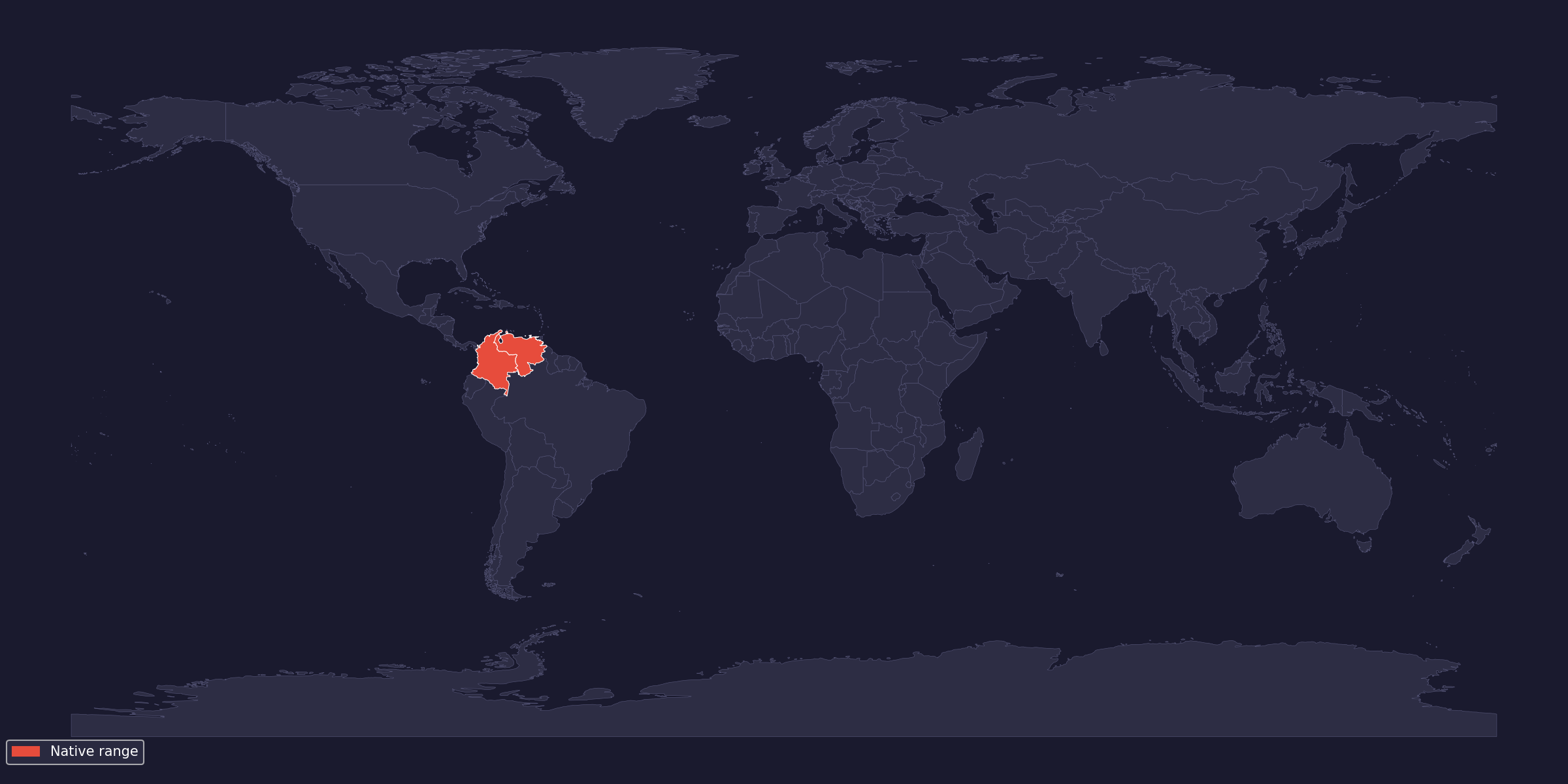
Taxonomic and specimen records place L. verrucosa in Venezuela, with a smaller number of records from Colombia. Locality data remain sparse, so the map gives a conservative country-level view rather than implying continuous occurrence.
⚖️ Legal status
Checked on 2026-08-22: L. verrucosa is not listed by CITES or in the current EU wildlife-trade Annexes A-D. As a South American insect it is outside the practical scope of the Bern Convention species appendices.
Local live-insect, import, transport, sale, tenancy, or exhibition rules still apply. Retain invoices and breeder details, confirm requirements before international shipment, and never release the insects or culture substrate.
🤌 Husbandry
House a breeding group in at least 40 × 30 × 30 cm with a latched lid and fine cross-ventilation. Provide several separate bark structures so mature males do not have to share one defensible perch. Handle only when necessary and move animals in cups.
Quarantine new stock for 60 days with dedicated tools. Confirm species labels before merging groups; pronotal colour alone is not sufficient.
💡 Lighting
UVB is not required. Use 10-12 hours of low room light and keep much of the surface shaded. UVA can reveal fluorescence for brief observation, but it must be low intensity and should not heat the enclosure.
🌡 Heating and temperature
Maintain 24-28 °C, with a localized 27-29 °C warm wall and a 21-24 °C retreat. Nights may fall to 20-24 °C. Warmer conditions can accelerate development, but a uniformly hot box removes the insects’ choice and dries the substrate.
Use thermostat-controlled side heat, never unregulated floor heat.
💧 Humidity and water
Keep one half of the lower substrate lightly damp and the other side drier at the surface; 60-80% ambient humidity is a useful target. Water a corner directly instead of repeatedly wetting adults and food.
Provide a nymph-safe shallow water dish or reliable hydrated foods. Failed molts suggest local dryness; condensation, mites, and a fermented odor mean moisture and food exceed ventilation.
🌿 Enclosure and decoration
Supply 8-12 cm of soil/coir mixed with decomposed hardwood leaves and rotten wood. Add a thick litter cap and multiple stable cork pieces. Freshly molted adults need textured, protected space above the substrate.
Avoid pesticide-exposed leaves, conifer wood, fertilizer, perlite, saturated coir, and heavy slabs resting over tunnels. Spot-clean rather than repeatedly replacing all substrate.
🪳 Feeding
Leaves and rotten hardwood should always be present. Offer carrot, squash, sweet potato, leafy greens, apple, pear, or small banana portions two or three times weekly. Add balanced dry food and modest protein once weekly.
Carotenoid-rich foods can change male patch colour; that is a dietary response, not a reason to force high-carotenoid feeding. Remove wet leftovers in 24-36 hours.
🥚 Breeding
Females incubate the ootheca internally and release live nymphs. Captive reports place gestation around 50-60 days under warm conditions, but colony temperature and female condition cause variation. Plan for approximately 15-30 nymphs rather than treating one number as guaranteed.
Do not pull an exposed ootheca. Limit disturbance, keep a damp burrow zone, and split the colony before male pressure, waste, or food competition rises.
🩺 Common problems
- Male abrasion: add separate bark territories and reduce mature male density.
- Mismolts: improve deep moisture and textured shelter without soaking the surface.
- Mold or mites: remove surplus food, increase airflow, and keep one surface area dry.
- Slow nymph growth: verify temperature and varied detrital food before adding protein.
- Hybrid or mislabeled stock: isolate uncertain animals and disclose their history rather than distributing them as pure species.
📌 Conclusion
Warty glowspots are robust display cockroaches once their deep substrate remains moist but aerated. Their main long-term care task is balancing colony growth and male territories while protecting species identity.
📚 Sources and further reading
- GBIF: Lucihormetica verrucosa
- Courtship and pronotum organization in L. verrucosa
- UV reflection, autofluorescence, and carotenoid diet
- Detailed captive husbandry observations
- ReptiFiles — checked; no species guide was found
- CITES Appendices, valid from 5 March 2026
- EU wildlife-trade Annexes, Regulation (EU) 2026/1383
- Bern Convention appendices