Share

Colombia Hormetica Cockroach
🔤 Taxonomy
“Hormetica sp. ‘Colombia’” is an unresolved culture label. Colombia is a plausible country for the genus, but it is not a species epithet and does not match this stock to any of the described Colombian Hormetica. The GBIF taxonomy tree therefore ends at genus.
Pass the quoted locality label, founder or seller information, and transfer dates with every group. Do not relabel the animals as H. strumosa, H. laevigata, or another species from photographs.
📌 Description
The culture consists of heavy-bodied, winged adults around 3.5-4.5 cm and robust burrowing nymphs. It is smaller than the H. strumosa line familiar to some keepers. Adults are generally slow, but a disturbed animal can run and exploit a rough seam.
Exact size, longevity, and brood data have not been published for a taxonomically verified specimen from this culture. Values below are practical planning ranges based on transparent culture reports and related blaberids.
| Care point | Practical target |
|---|---|
| Adult size | about 3.5-4.5 cm |
| Enclosure | 40 × 30 × 30 cm |
| Day temperature | 23-27 °C; small warm side 27-29 °C |
| Humidity | 60-80%, never waterlogged |
| Substrate | 10-15 cm leaf-rich burrowing mix |
| Reproduction | retained ootheca; live nymphs |
🌍 Distribution
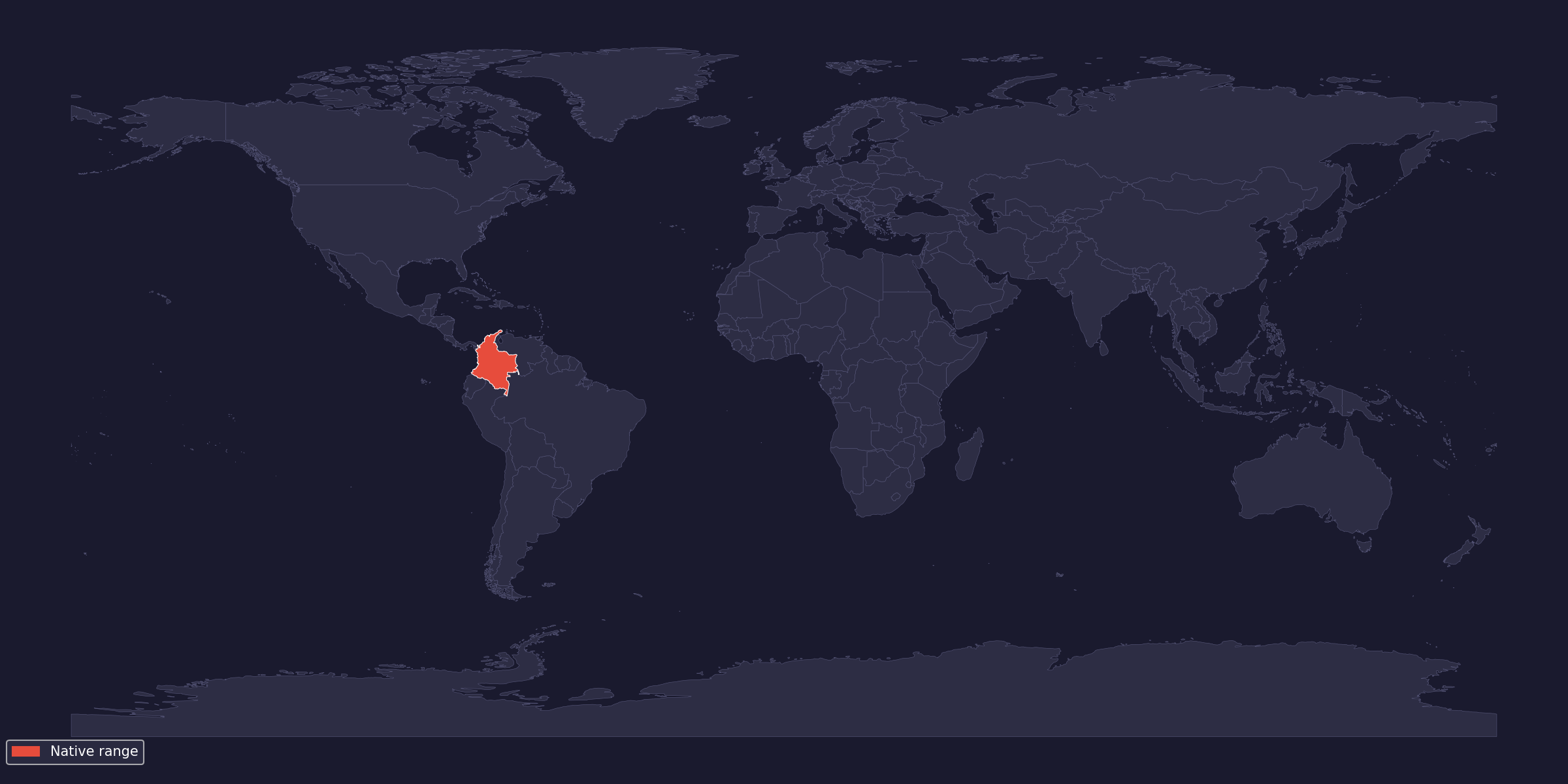
The only geographic information carried by the culture name is Colombia. No traceable collection locality was found, so the map highlights that country without claiming a national range or identifying a wild population.
⚖️ Legal status
Checked on 2026-08-22: no Hormetica species is listed in CITES or the current EU wildlife-trade Annexes A-D, and the Bern Convention is not relevant to this South American culture. Import and plant-health rules may still restrict live unidentified insects.
Retain the invoice and original label, ask the destination authority before cross-border shipping, and never release animals or substrate. “Not listed” does not remove national rules on keeping, sale, transport, or import.
🤌 Husbandry
A 40 × 30 × 30 cm latched tub suits a starter colony. Provide fine-mesh cross-flow above a deep substrate and keep the feeding area accessible without dismantling burrows. Transfer animals with cups over a catch tub.
Quarantine additions for 60-90 days. Use permanent labels and separate tools, and never combine this line with named Hormetica or Lucihormetica cultures.
💡 Lighting
UVB is unnecessary. A dim 10-12-hour day cycle is enough; cork and leaf cover should remain shaded. Keep the enclosure away from direct sun.
🌡 Heating and temperature
Keep day air at 23-27 °C with a small 27-29 °C warm wall and a 20-23 °C retreat. Nights may fall to 19-23 °C. Reports of successful culture around 24 °C argue against aggressive heating.
Use a thermostat and heat from the side. Bottom heat dries burrows and prevents the insects from retreating downward.
💧 Humidity and water
Maintain 60-80% humidity with a stable damp lower layer and a drier, ventilated surface. Water one end of the substrate rather than misting every wall. It should clump lightly but never squeeze out water.
Provide a shallow pebble-filled dish and fresh vegetables. Condensation, sour substrate, or a bloom of mites calls for less food and more airflow; incomplete molts and a dusty lower layer call for more local moisture.
🌿 Enclosure and decoration
Use 10-15 cm of soil or coir mixed generously with rotten hardwood and crushed leaves. Add a thick leaf cap and low cork slabs. Adult shelter should not reduce the nymphs’ burrowing volume.
Avoid fertilizers, pesticides, conifer wood, saturated sphagnum, and heavy pieces that can settle onto burrows. Spot-clean so the colony retains a stable microbial substrate.
🪳 Feeding
Hardwood leaves and rotten wood are continuous foods. Add carrot, pumpkin, sweet potato, leafy greens, apple, or pear two or three times weekly. Supply a dry roach diet and modest fish-flake or legume protein once weekly.
Feed in several shallow dishes so juveniles are not excluded. Remove wet leftovers within 24-36 hours and scale portions to actual consumption.
🥚 Breeding
Females retain the ootheca internally and release live nymphs. Culture reports describe this line as easier and faster than some large Hormetica, but no verified brood study exists. The 10-30 nymph structured range is a colony-planning estimate, not a diagnostic character.
Do not pull a temporarily extruded ootheca. Keep adult females undisturbed, provide a damp refuge, and split crowded colonies before food competition and waste increase.
🩺 Common problems
- Stalled breeding: check adult sex ratio, maturation, damp substrate, food access, and temperature before adding more heat.
- Failed molts: restore a humid lower refuge and textured cover.
- Wet collapse: reduce watering and fresh food, then increase cross-ventilation.
- Crowding: split the culture when wings are damaged or nymph growth becomes uneven.
- Misidentification: retain the provisional name; country of origin is not a species diagnosis.
📌 Conclusion
The Colombia culture is manageable once a deep, airy, consistently moist substrate is established. It is best kept by someone willing to preserve an unresolved line rather than attach a convenient named species.
📚 Sources and further reading
- GBIF: genus Hormetica
- Cockroaches of Colombia, genus synopsis
- Documented specialist culture notes for Hormetica sp. “Colombia”
- General pet-cockroach husbandry
- ReptiFiles — checked; no line-specific guide was found
- CITES Appendices, valid from 5 March 2026
- EU wildlife-trade Annexes, Regulation (EU) 2026/1383
- Bern Convention appendices