Share

Jungle Nymph
🔤 Taxonomy
Heteropteryx dilatata is the accepted scientific name for the jungle nymph and is PSG 18 in Phasmid Study Group culture records. The genus is treated as monotypic in current references, so older names should not be used as separate care forms.
Common names used in the hobby:
- Jungle nymph
- Malayan jungle nymph
- Thorny tree-nymph stick insect
- Malaysian stick insect
Names and groups that can be confused with it in trade:
- Haaniella and other heavy Heteropterygidae sold as large spiny phasmids
- Old synonym names such as Heteropteryx castelnaudi or Heteropteryx hopei in older literature
📌 Description
This is one of the largest and heaviest phasmids kept in terrariums. Females are broad, green, wing-reduced, and can reach 14-17 cm; males are slimmer, brown, winged, and usually around 9 cm. Both sexes can stridulate and use the spined hind legs defensively. It is a display insect for experienced keepers, not a handling animal.
🌍 Distribution
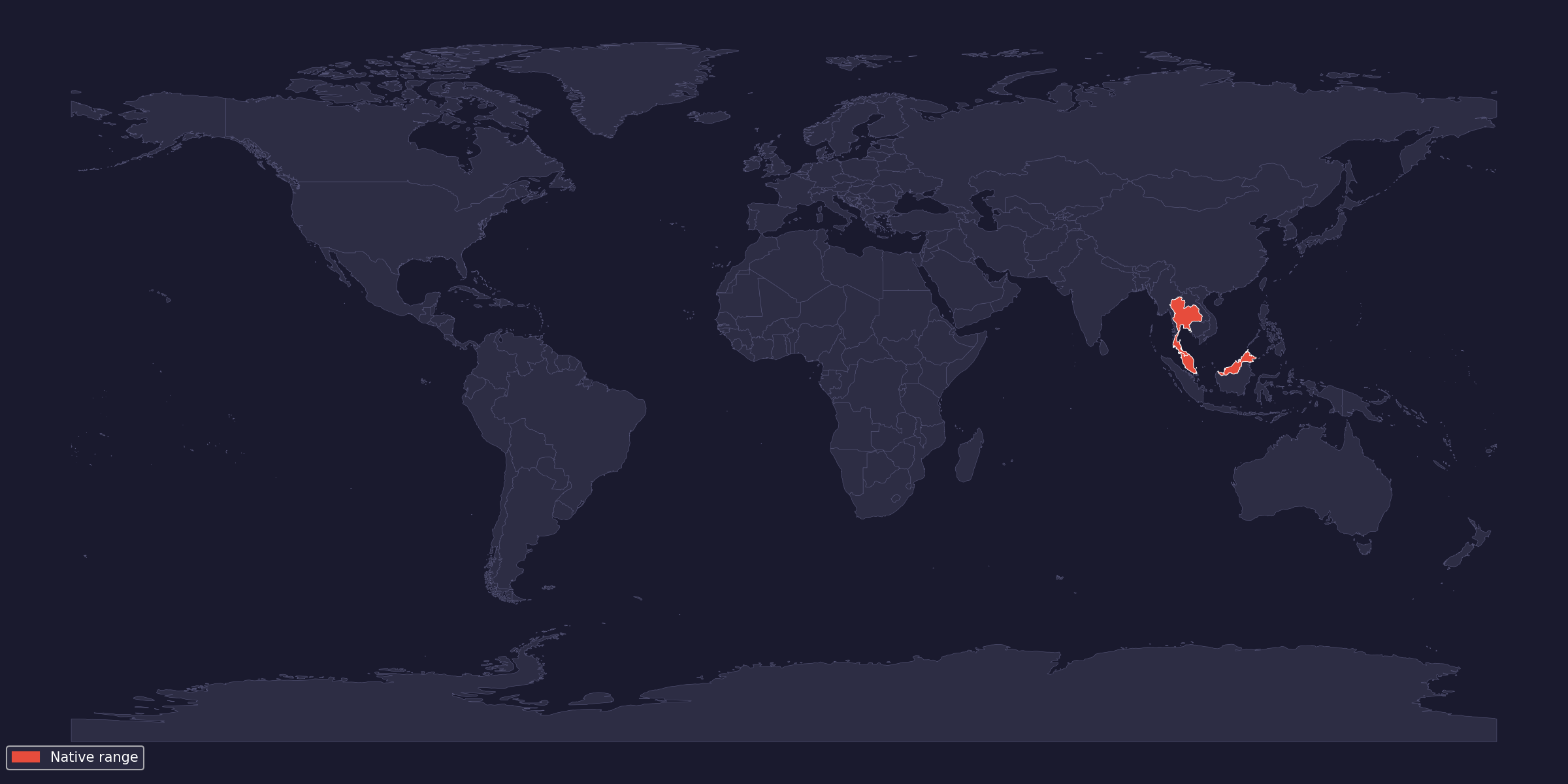
Heteropteryx dilatata is recorded from Peninsular Malaysia, Singapore, Sumatra, Sarawak, and Thailand in humid forest habitats and forest edges. In captivity, that points to a warm leafy enclosure with high but moving humidity, shaded retreats, clean food plants, and enough space for a very heavy insect to molt safely.
🌡 Climate across the native range
Monthly climate normals from reviewed GBIF occurrence locations:
Pahang — Malaysia
| Month | Min °C | Mean °C | Max °C | RH % |
|---|---|---|---|---|
| January | 17.8 | 21.8 | 25.8 | 90 |
| February | 18 | 22.4 | 26.9 | 86 |
| March | 18.4 | 23.1 | 27.9 | 85 |
| April | 18.8 | 23.5 | 28.2 | 84 |
| May | 19 | 23.6 | 28.2 | 86 |
| June | 18.7 | 23.4 | 28 | 86 |
| July | 18.4 | 23.1 | 27.8 | 85 |
| August | 18.3 | 23 | 27.8 | 85 |
| September | 18.4 | 23 | 27.5 | 89 |
| October | 18.6 | 22.9 | 27.1 | 89 |
| November | 18.8 | 22.8 | 26.7 | 90 |
| December | 18.3 | 22 | 25.8 | 92 |
Surat Thani — Thailand
| Month | Min °C | Mean °C | Max °C | RH % |
|---|---|---|---|---|
| January | 20 | 25.1 | 30.3 | 75 |
| February | 20.2 | 25.8 | 31.4 | 73 |
| March | 21 | 26.5 | 32.1 | 73 |
| April | 22 | 27.1 | 32.2 | 77 |
| May | 22.3 | 26.7 | 31 | 82 |
| June | 22.4 | 26.2 | 30 | 84 |
| July | 22 | 25.9 | 29.7 | 85 |
| August | 22.1 | 25.8 | 29.5 | 85 |
| September | 21.7 | 25.5 | 29.3 | 86 |
| October | 21.4 | 25.2 | 29.1 | 86 |
| November | 21.2 | 25.1 | 29.1 | 83 |
| December | 20.5 | 24.9 | 29.2 | 78 |
Phuket — Thailand
| Month | Min °C | Mean °C | Max °C | RH % |
|---|---|---|---|---|
| January | 21.8 | 26.7 | 31.6 | 73 |
| February | 22.2 | 27.4 | 32.6 | 71 |
| March | 22.8 | 27.9 | 33 | 73 |
| April | 23.4 | 28.1 | 32.8 | 77 |
| May | 23.6 | 27.6 | 31.7 | 83 |
| June | 23.7 | 27.4 | 31 | 83 |
| July | 23.3 | 27 | 30.6 | 83 |
| August | 23.4 | 26.9 | 30.4 | 84 |
| September | 22.9 | 26.4 | 30 | 86 |
| October | 22.4 | 26.3 | 30.1 | 85 |
| November | 22.4 | 26.3 | 30.3 | 82 |
| December | 21.9 | 26.2 | 30.6 | 76 |
Weather data by WorldClim v2.1 · Monthly normals queried by Herpeton Academy from raster values; relative humidity is derived from vapor pressure and mean temperature.
Location references use GBIF.org occurrence data where available; original occurrence records retain their source dataset licenses.
⚖️ Legal status
Checked on 2026-06-22: this species is not listed in the CITES Appendices, is not separately listed in the EU wildlife-trade annexes, and the Bern Convention is not relevant. That does not make live trade automatically unrestricted. Plant-feeding insects can fall under national or local rules for import, interstate movement, agricultural pest, school-display, public-display, or biosecurity.
Keep invoices, breeder details, species identification, culture-line labels, and any permit or transfer paperwork. In the United States, USDA APHIS notes that most insects and mites feeding on plants or plant products require PPQ 526 permitting for importation, interstate movement, and environmental release. Never release surplus insects, eggs, food plants from the enclosure, or used substrate outdoors.
🤌 Husbandry
Use a tall, strongly ventilated enclosure with a secure lid and enough working room to service the colony without grabbing adults. The practical adult minimum is 45 x 45 x 60 cm for a small group; larger is easier because females are bulky and food plants take space.
🌿 Enclosure and layout
Provide stout vertical and diagonal branches, cork bark, broad leafy cover, and an egg-laying area with slightly moist soil, sand, or coir. Keep cut host stems in covered water so nymphs cannot drown. Heavy branches and plant jars must be stable; a fallen stem can injure a molting female.
💡 Lighting
UVB is not required. Use bright indirect room light and a steady day-night cycle. Avoid lamps that dry food plants, overheat the upper branches, or leave the lower enclosure stagnant.
🌡 Heating and temperature
Use stable room-scale heat rather than a narrow basking hotspot:
- ambient air: 22-27°C
- upper warm area: 28-29°C
- cool retreat: 20-22°C
- night: 20-23°C
Short cool periods are less dangerous than overheating. Measure near the food stems, upper perches, and egg-laying area, because closed humid enclosures can trap heat unevenly.
💧 Humidity, ventilation, and water
Aim for 70-85% humidity, with a brief local rise around 80-90% during molts. Mist enough to let insects drink and support shedding, then let the mesh and leaves dry. Persistent condensation, sour substrate, or fuzzy leaves means the enclosure is too wet or under-ventilated.
🥗 Feeding plants
Offer fresh pesticide-free bramble, hawthorn, ivy, oak, rose, or raspberry continuously. Wash leaves, avoid roadside cuttings, and overlap old and new food plants when changing sources. A large female can consume more foliage than expected, so plan a reliable winter food supply before buying eggs or nymphs.
🥚 Breeding and eggs
This is a sexual, egg-laying species. Females push eggs into a soft substrate, so provide a clean egg-laying area and collect or refresh it regularly. Incubate eggs at about 22-26°C on barely moist medium with good air exchange. Development is slow; six to twelve months is normal, and overly wet incubation causes mold before it improves hatch rates.
🧍 Handling and safety
Avoid hand restraint. Adults can clamp with the hind legs and the sharp spines can cut skin. Move individuals with a tub, bark piece, or by letting them walk onto a branch. Keep children and visitors away from the rear legs when the animal is raised in a defensive posture.
🦗 Molting and hatchlings
Leave several body lengths of open hanging space below perches and do not crowd leaves against the roof. Nymphs need fine mesh, tender accepted leaves, and simple access to food. Separate crowded size classes if larger insects disturb smaller ones during molts.
🩺 Common problems
Common problems include failed molts, puncture injuries from defensive kicks, unstable food jars, moldy eggs, mites, dehydration, pesticide exposure, stale leaves, and long incubation containers that are forgotten. Most failures come from treating this heavy, defensive species like a small beginner stick insect.
📌 Conclusion
Heteropteryx dilatata suits keepers who want a large display colony and can provide sharp-spine respect, clean humidity, sturdy furniture, and long-term egg management. It should not be chosen as a first phasmid unless an experienced keeper is supervising the setup.
📚 Sources and further reading
Key sources checked for this revision:
- GBIF Backbone Taxonomy: Heteropteryx dilatata
- Phasmida Species File: Heteropteryx dilatata
- Phasmid Study Group culture information
- CITES Appendices, valid from 5 March 2026
- European Commission wildlife trade overview
- USDA APHIS: Insects and Mites
- WorldClim v2.1