Share

Giant Lobster Cockroach
🔤 Taxonomy
Henschoutedenia flexivitta (Walker, 1868) is the accepted spelling in GBIF and the Blattodea Species File. The submitted trade spelling “Henschutedenia flexivitta” omits ou and should be retained only as a lookup note, not as the canonical name.
Older combinations and synonyms include Periplaneta flexivitta, Panchlora brazzae, and Nauphoeta discoidalis. Giant lobster cockroach and large cinereous cockroach are established English names; the animal is not a species of Nauphoeta.
📌 Description
Adults are broad, mottled gray-brown cockroaches. Males average about 3.6 cm and females about 4.2 cm. All stages climb smooth surfaces; established stock is not capable of sustained flight. Disturbed adults may produce an audible squeak, and nymphs can show subtle rainbow iridescence.
This is a robust, productive colony roach. The care is forgiving, but its speed and climbing ability demand better containment than many similarly sized blaberids.
| Care point | Practical target |
|---|---|
| Adult size | males about 3.6 cm; females about 4.2 cm |
| Starter enclosure | 45 × 30 × 30 cm |
| Temperature | 21-29°C; best breeding at 26-29°C |
| Humidity | 50-75% with a moist refuge |
| Substrate | 5-8 cm, leaf-rich and partly moist |
| Reproduction | internally retained ootheca; 5-25 live nymphs |
🌍 Distribution
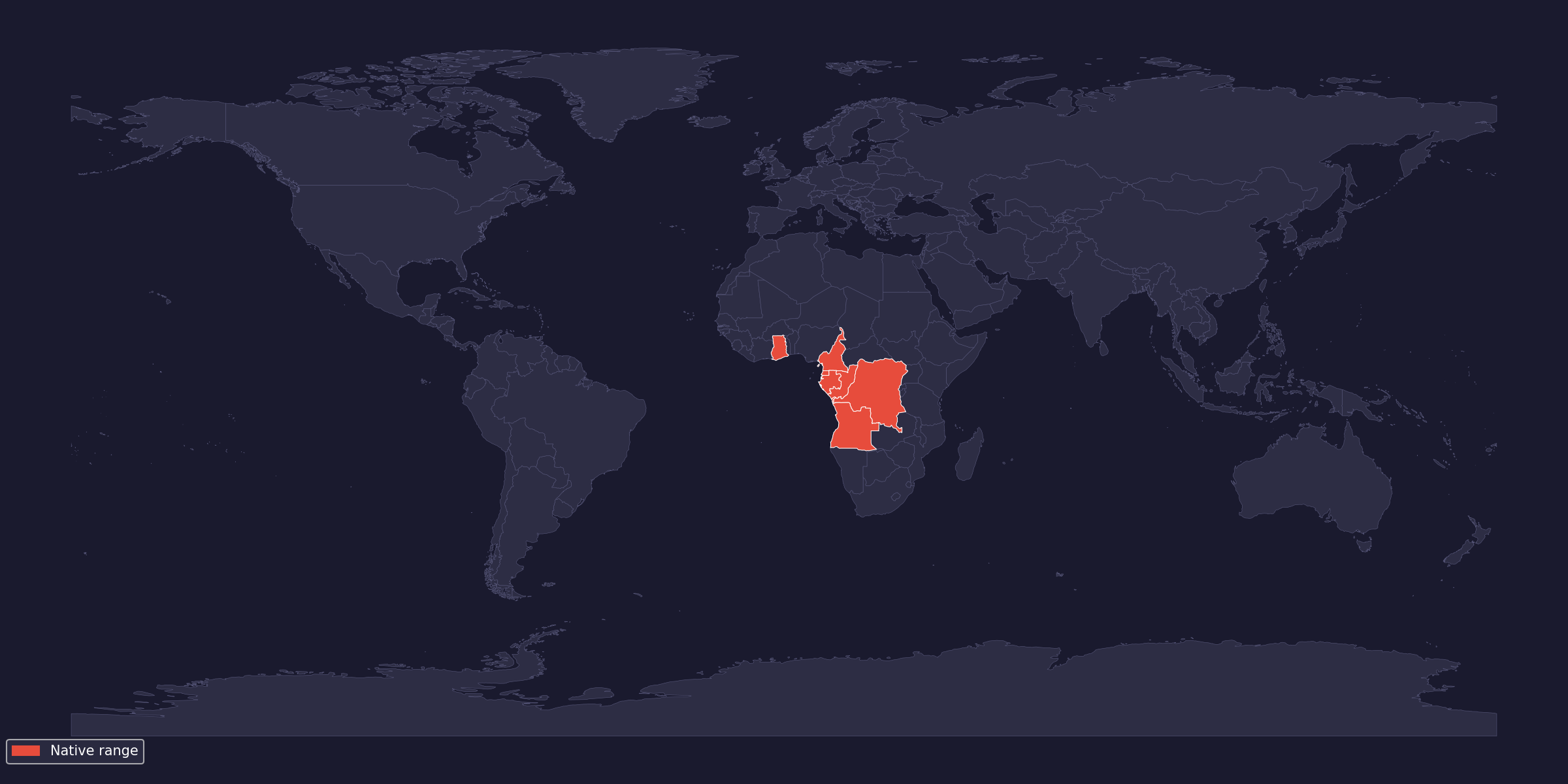
The Blattodea Species File records a broad Central and West African range: Ghana, Cameroon, Equatorial Guinea including Bioko, Gabon, the Republic of the Congo, the Democratic Republic of the Congo, and Angola. A small introduced nursery record exists from Malta, but the map shows the documented African native range.
⚖️ Legal status
Local and national rules for keeping, importing, transporting, or selling live insects may still apply.
Checked on 2026-08-22: H. flexivitta is not listed by CITES or in current EU wildlife-trade Annexes A-D. It is not a Bern Convention species. This does not authorize import automatically: live-invertebrate, plant-health, biosecurity, transport, landlord, and exhibition rules vary by country.
Buy captive-bred animals with an invoice and the canonical scientific label. Keep breeder, transfer, and import records. Never release animals; freeze unwanted offspring and used substrate before disposal where allowed.
🤌 Husbandry
Use at least 45 × 30 × 30 cm for a starter colony, with cross-ventilation and a tightly gasketed lid. Smooth walls do not contain this species by themselves. Maintain a broad barrier below the rim, secure every vent edge, and service the colony inside a larger catch tub.
Quarantine additions for 60 days with dedicated tools. Do not mix the colony with Nauphoeta, Rhyparobia, or another blaberid. Mixed tubs create identification problems as soon as nymphs are born.
💡 Lighting
UVB is unnecessary. A dim 10-12-hour cycle is sufficient. Keep bark retreats shaded and avoid direct sunlight, which can push a dark plastic colony above its safe range within minutes.
🌡 Heating and temperature
The species remains active from about 21-29°C and breeds most steadily at 26-29°C. Provide a 21-24°C retreat and nights of 20-24°C. Cooler colonies grow slowly; persistent heat over 30°C increases water demand and shortens the safety margin.
Heat one side wall or the room under thermostat control. Do not heat beneath substrate where animals may move down to escape warmth.
💧 Humidity and water
Keep one lower section lightly moist and allow the upper layer and opposite end to dry. A broad 50-75% RH range works because this species is tolerant, but every enclosure still needs a humid molting refuge. Dense condensation or a sour odor signals inadequate ventilation.
Provide a textured shallow dish or insect-safe water source plus moist vegetables. As colony biomass increases, reduce misting rather than letting its own respiration saturate the box.
🌿 Enclosure and decoration
Use 5-8 cm of pesticide-free topsoil or coir mixed with crushed hardwood leaves and rotten hardwood. Add vertical egg-crate panels or cork bark with clear molting space. Set heavy pieces on the enclosure floor before substrate is added.
Avoid aromatic softwoods, fertilizer, perlite, unstable stacks, and constantly wet bedding. Replace dirty sections in rotation instead of removing the entire established microhabitat at once.
🪳 Feeding
Offer a balanced roach diet or grain-legume dry mix, with carrot, squash, sweet potato, greens, apple, pear, or banana two or three times weekly. Keep hardwood leaf litter available and add a modest protein food once weekly during strong nymph growth.
Use multiple dishes and remove wet food within 24-48 hours. A productive colony can generate heat and waste rapidly; split it before food disappears so fast that overcrowding becomes normal.
🥚 Breeding
Females retract the ootheca for internal development and later release live nymphs. Site metadata uses “viviparous”; “ovoviviparous” remains common in cockroach husbandry. Captive lines often produce 5-25 young per brood under stable warm conditions.
Males are slimmer and retain terminal styli. Keep a female-biased adult group with abundant retreats and several feeding points. Do not isolate visibly gravid females unless aggression or medical observation requires it.
🩺 Common problems
- Escapes: repair the physical lid and vent seal; a dusty barrier is not a primary closure.
- Crowding and odor: split the colony, add food stations, and remove wet residues.
- Failed molts: restore a humid refuge and stable textured surfaces.
- Mites or flies: reduce fruit and protein portions and remove corpses quickly.
- Allergy: frass and shed skins can trigger respiratory allergy; damp-clean and use gloves and suitable respiratory protection.
📌 Conclusion
The giant lobster cockroach is a practical first large display colony for a keeper who understands escape control. Build the enclosure around smooth-wall climbing and future population growth, not around the calm behavior of the first few adults.
📚 Sources and further reading
- GBIF: Henschoutedenia flexivitta
- Blattodea Species File account and native range
- Specialist species parameters
- ReptiFiles — checked; no species care guide was found
- CITES Appendices, valid from 5 March 2026
- Commission Regulation (EU) 2026/1383
- Bern Convention appendices