Share

Striped Sun Cockroach
🔤 Taxonomy
Hemithyrsocera vittata (Brunner von Wattenwyl, 1865) is accepted by GBIF and the Blattodea Species File. Older names include the original combination Thyrsocera vittata and the synonyms Ellipsidium laterale and Thyrsocera communis.
Striped sun cockroach, lined sun cockroach, gold-banded clown cockroach, and Asian clown cockroach all occur in the hobby. The scientific name prevents confusion with H. palliata.
📌 Description
Adults are 2-2.5 cm, winged, and strongly striped in black, cream, and gold. The earliest nymphs resemble small ants and may raise the abdomen when disturbed; later instars develop contrasting zebra bands and a reddish abdominal patch. All stages climb smooth surfaces, and adults can fly.
This is a rewarding daylight display but less forgiving than H. palliata. Warmth, high humidity, clean food, and moderate-to-high airflow must coexist.
| Care point | Practical target |
|---|---|
| Adult size | 2-2.5 cm |
| Starter enclosure | 35 × 25 × 35 cm |
| Temperature | 24-29°C; limited warm area to 30°C |
| Humidity | 70-85% with active ventilation |
| Furniture | leaf litter, bark chips, slanted cork |
| Reproduction | deposited oothecae; conservative 45-75 days |
🌍 Distribution
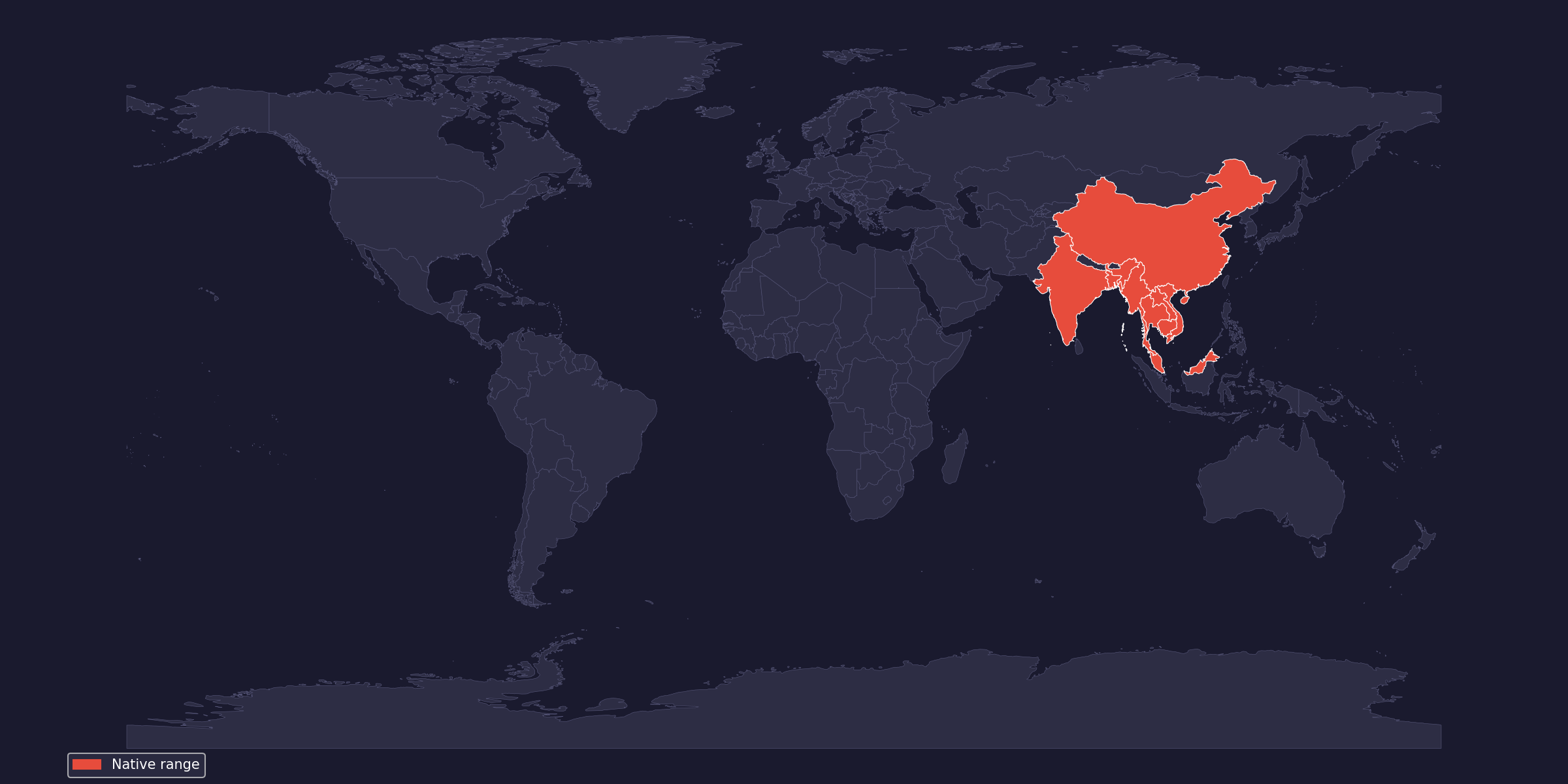
Verified literature records place the species in India, Myanmar, Thailand, Cambodia, southern China, and adjacent mainland Southeast Asia; GBIF-mediated records also occur in Laos, Vietnam, Malaysia, and Bangladesh. Some points may reflect collection or identification uncertainty, so the map presents a conservative regional range.
⚖️ Legal status
Checked on 2026-08-22: H. vittata does not appear in the CITES Appendices or in Annex A, B, C, or D of the current EU wildlife-trade regulation. It is not covered by the Bern Convention appendices. National live-invertebrate, biosecurity, agricultural, import, and transport restrictions may still apply.
Buy a traceable captive line and retain invoices, breeder details, and transfer or import papers. Never release escapees, oothecae, plants, or substrate; freeze culture waste before disposal where lawful.
🤌 Husbandry
Use at least 35 × 25 × 35 cm for a starter colony. Secure very fine vents around their entire edge, fit a gasketed lid, and keep the uppermost bark below a maintained climbing barrier. Maintenance should take place inside a large catch tub.
Quarantine additions for 60 days. Use a modest starter enclosure so tiny nymphs reach food, then enlarge only as the colony establishes. Never mix it with H. palliata or another Hemithyrsocera.
💡 Lighting
UVB is unnecessary. Diffuse light for 10-12 hours encourages natural daytime activity and makes the colors visible. Preserve deep shade beneath bark and avoid hot display spotlights.
🌡 Heating and temperature
Keep most air at 24-29°C, with a small upper warm area at 27-30°C and a 22-25°C retreat. Nights can fall to 21-24°C. Measure upper cork as well as soil because adults use both levels.
Use thermostatically controlled side or room heat. Cold, damp colonies stall; hot, sealed ones can lose adult females quickly.
💧 Humidity and water
Maintain 70-85% RH with broad cross-ventilation. Moisten the lower substrate and part of the leaf layer while allowing exposed bark and another surface patch to dry. High humidity without airflow is a known colony failure point.
Provide a tiny textured dish or insect-safe water source and frequent moist foods. Condensation should clear between mistings; if it persists, improve airflow before adding more heat.
🌿 Enclosure and decoration
Use 4-6 cm of coir or pesticide-free soil topped with crushed leaf litter, small bark chips, and cork set diagonally. Nymphs use the litter layer more heavily than H. palliata, while adults also occupy vertical surfaces. Pesticide-free plants are optional.
Avoid a permanently wet base, aromatic wood, coarse ventilation mesh, and large inaccessible cavities. Furniture must provide molting clearance without preventing inspection for oothecae and mites.
🪳 Feeding
Give artificial pollen or safe pollen substitute, a fine balanced dry staple, fish flakes, and small portions of banana, mango, apple, pear, carrot, or squash. This species strongly favors fruit and pollen, but nymphs still need varied dry nutrients.
Place food at several heights every one to two days. Remove fruit daily in warm conditions. A clean colony tolerates the required humidity better than one sitting over fermented food and dense frass.
🥚 Breeding
Females deposit oothecae among bark, moss, or litter. At 24-29°C allow roughly 45-75 days before judging a firm case failed; species-specific controlled data are scarce, and some cultures report difficulty despite observed mating. Do not manually incubate every case unless the colony environment is demonstrably unsafe.
Keep several males and females, ample contact surfaces, stable warmth, and uninterrupted moist refuges. Hatchlings are minute and can vanish through vents before a keeper ever sees them.
🩺 Common problems
- Adult females die before reproducing: check stagnant humidity, excess waste, and heat at upper hides.
- Mating but no nymphs: inspect ootheca sites, moisture stability, vent size, and food access for hatchlings.
- Mites: remove affected food and debris, isolate oothecae only when necessary, and clean in stages.
- Failed molts: maintain humid shelter plus textured vertical surfaces.
- Allergy: dampen frass and wear gloves and suitable respiratory protection when cleaning.
📌 Conclusion
H. vittata suits an experienced keeper who wants one of the most animated daytime cockroach displays. Establish the humid-airflow balance and hatchling containment before purchasing; correcting either after the first oothecae hatch is much harder.
📚 Sources and further reading
- GBIF: Hemithyrsocera vittata
- Blattodea Species File: H. vittata
- Recent Indian and regional distribution account
- Specialist ectobiid husbandry overview
- Specialist species parameters
- ReptiFiles — checked; no species care guide was found
- CITES Appendices, valid from 5 March 2026
- Commission Regulation (EU) 2026/1383
- Bern Convention appendices