Share

Granulated Burrowing Cockroach
🔤 Taxonomy
Hemiblabera granulata Saussure, 1893 is the accepted name in GBIF and the Blattodea Species File. No important taxonomic synonym is currently attached to the GBIF record. “Granulated cockroach” refers to the strongly textured upper surface; “American burrowing cockroach” describes the genus but is not species-specific.
Keep locality records with captive stock. At least two Guadeloupe lines are reported in culture, while historical literature also records the species from Veracruz, Mexico.
📌 Description
Adults are compact, flattened roaches about 2.4-3 cm long. The abdomen and reduced wings have a rough, granular texture, and the legs and antennae appear long for a Hemiblabera. Nymphs and adults readily push through loose organic substrate; they are most visible after dark or when food is added.
This is a hardy burrower once the soil structure is correct. Its main risks are a collapsed, anaerobic substrate and hygiene pests in a colony that is fed more quickly than it consumes.
| Care point | Practical target |
|---|---|
| Adult size | 2.4-3 cm |
| Starter enclosure | 35 × 25 × 25 cm |
| Temperature | 23-28°C; small warm side to 29°C |
| Humidity | 60-75%, with moist lower substrate |
| Substrate | 8-12 cm of leaf-rich, aerated soil |
| Reproduction | internally retained ootheca; live nymphs |
🌍 Distribution
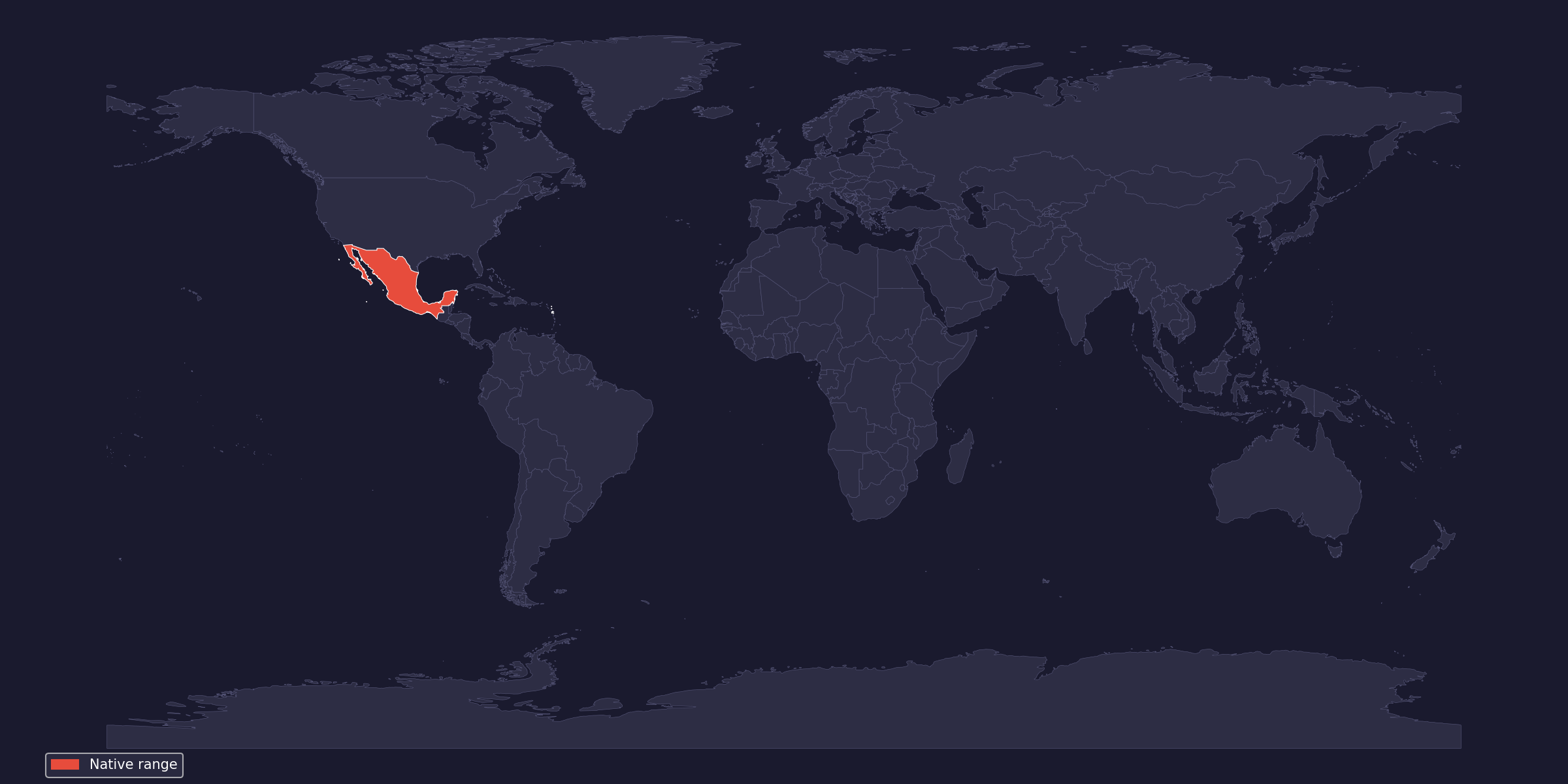
The taxonomic record is fragmented. The original Central American literature gives La Antigua in Veracruz, Mexico, while later verified records and captive lines come from Guadeloupe and nearby Lesser Antillean islands. The map therefore marks Mexico, Guadeloupe, and Antigua and Barbuda; it should not be read as proof of a continuous range.
⚖️ Legal status
Checked on 2026-08-22: H. granulata is not in the CITES Appendices or current EU Annexes A-D. The Bern Convention appendices do not apply to this non-European cockroach. National import, plant-health, exotic-animal, and transport rules may still restrict live cultures.
Prefer traceable captive-bred stock and retain the invoice, locality label, breeder details, and transfer papers. Never release animals or substrate. Freeze unwanted offspring and culture waste before disposal where permitted.
🤌 Husbandry
A 35 × 25 × 25 cm box suits a starter group. Give broad cross-ventilation, a secure lid, and enough headroom above the substrate to service food without digging through the colony. Open the enclosure in a catch tub; animals may remain hidden in bark, leaf fragments, or the underside of dishes.
Quarantine additions for 60 days with separate tools. Preserve locality lines and do not combine this species with other Hemiblabera: hobby identifications in the genus have changed, and mixed offspring cannot be reconstructed later.
💡 Lighting
UVB is not required. Use an indirect 10-12-hour day-night rhythm and keep most cover shaded. Direct sun overheats the soil and removes the cool lower refuge.
🌡 Heating and temperature
Keep the main enclosure at 23-28°C, with a small 26-29°C side and a 21-24°C retreat. Nights of 20-24°C are acceptable. Cooler conditions slow growth; persistent heat above 30°C dries the upper layer and can trap animals below.
Heat the room or one side wall with thermostat control. Do not put a heat mat beneath deep substrate, because burrowing animals move downward to escape surface heat.
💧 Humidity and water
Maintain the lower half of the substrate lightly moist and the top mostly dry. A 60-75% air-humidity range works with ventilation, but soil texture is more important than a single RH reading. Squeeze-tested substrate should clump weakly without releasing water.
Supply moist vegetables and a shallow textured water dish or insect-safe water source. Increase ventilation and remove food if the box smells sour; simply adding dry coir over an anaerobic base does not correct it.
🌿 Enclosure and decoration
Build 8-12 cm of pesticide-free topsoil or coir mixed generously with crushed deciduous leaves and soft white-rotted hardwood. This loose fraction keeps tunnels aerated and supplies persistent detritus. Place cork slabs on the enclosure floor before filling around them, so digging cannot cause a collapse.
Avoid cedar, resinous wood, fertilizer, perlite, sharp mineral litter, and complete routine substrate replacement. Remove spoiled patches and retain clean established material so small nymphs are not discarded.
🪳 Feeding
Keep decomposed hardwood leaf litter available. Add carrot, squash, sweet potato, greens, apple, or pear two or three times weekly, with a balanced roach diet or grain-legume mix in a dish. Offer only a small weekly protein portion such as fish flakes.
Feed on the surface; buried fresh food creates fermentation pockets. Reduce portions before increasing cleanup frequency, and use several stations in a large colony.
🥚 Breeding
Like other blaberine cockroaches, females retract the ootheca and release live nymphs after internal development; site metadata uses “viviparous,” while hobby literature often says ovoviviparous. Species-specific brood and gestation studies are scarce. A working expectation is roughly 10-20 young, not a guaranteed litter size.
Sex adults by terminal styli and abdomen shape. Stable warmth, a moist lower layer, and uninterrupted old substrate matter more than isolating gravid females. Keep several generations before distributing a new line.
🩺 Common problems
- Sour or hot soil: split an oversized colony and replace saturated patches while preserving clean substrate.
- Serriata-like dark lesions: isolate affected animals and correct crowding, waste, and ventilation; there is no reliable home cure.
- Mites and phorid flies: remove wet food, corpses, and accumulated frass promptly.
- Failed molts: restore a humid lower refuge without flooding the surface.
- Allergy: cockroach frass and exuviae are sensitizers; damp-clean and use gloves and suitable respiratory protection.
📌 Conclusion
The granulated burrowing cockroach rewards a keeper who wants to observe a working soil colony rather than handle adults. Deep, leaf-rich substrate is the functional enclosure; if it becomes compacted or sour, decorative bark cannot compensate.
📚 Sources and further reading
- GBIF: Hemiblabera granulata
- Blattodea Species File: Hemiblabera
- Mexican cockroach checklist and historical range
- Specialist Hemiblabera husbandry account
- ReptiFiles — checked; no species care guide was found
- CITES Appendices, valid from 5 March 2026
- Commission Regulation (EU) 2026/1383
- Bern Convention appendices