Share

Giant Desert Hairy Scorpion
🔤 Taxonomy
Hadrurus arizonensis is an accepted species in the family Hadruridae. “Desert hairy scorpion” is also used for relatives, so locality and the scientific name matter; an unidentified Hadrurus should not be assigned to this species from a shop label alone.
📌 Description
This large, pale desert scorpion has robust pincers and sensory hairs that help it detect prey. Adults are usually 10–14 cm long. Captive longevity can reach 15–20 years, making it a long commitment.
Its sting is not generally associated with the severe systemic syndrome caused by medically important buthids, but it is painful and allergy or an unusual reaction remains possible. The pincers can also injure. Keep it as a display animal and move it only with a catch cup and long tools.
| Quick reference | Target |
|---|---|
| Adult enclosure | At least 45 × 30 × 30 cm |
| Burrowing substrate | 20–25 cm, firmly packed |
| Warm side | 29–32 °C |
| Cool side / night | 22–25 °C / 18–23 °C |
| Typical humidity | 25–45%; one slightly damp lower corner |
| Feeding | 1–2 suitable insects every 7–14 days |
| Social housing | Solitary |
☠️ Venom
This species is venomous. Venom exposure can cause pain, swelling or other systemic effects, and severity varies with species, locality, bite site and the amount delivered. A small wound or apparently dry bite is not proof of safety; every bite or sting requires urgent medical assessment.
If an incident occurs, move away, call emergency services or a poison centre, keep the patient still, remove rings and other constricting items, and follow dispatcher instructions. Do not use a tourniquet, cut or suck the wound, apply ice or electricity, give alcohol or medicines as a home treatment, or attempt to catch the animal. Antivenom choice and dosing are hospital decisions; verify the relevant product and local availability in advance. Sources: WHO snakebite guidance and appropriate species-specific toxinology or medical references listed below.
🌍 Distribution
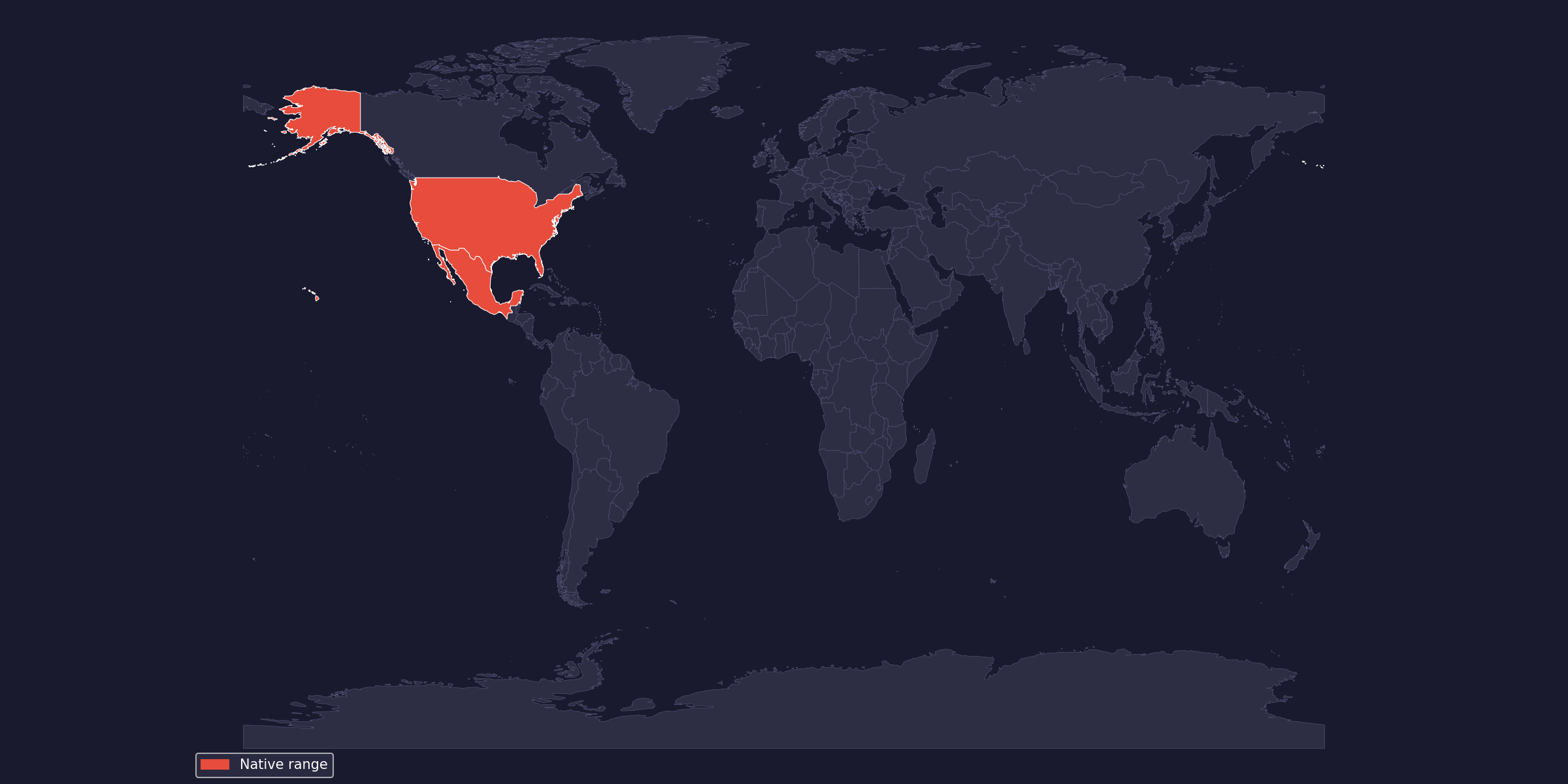
The species is native to the south-western United States and north-western Mexico, in the Sonoran, Mojave and Colorado desert region. It spends hot, dry days in deep burrows where temperature and moisture are much steadier than at the exposed surface.
🌡 Climate across the native range
Monthly climate normals from reviewed GBIF occurrences across the Sonoran and Colorado Desert range:
Arizona — United States (verified Sonoran Desert occurrence)
| Month | Min °C | Mean °C | Max °C | RH % |
|---|---|---|---|---|
| January | 3.5 | 10.7 | 17.9 | 43 |
| February | 5.2 | 12.7 | 20.1 | 39 |
| March | 7.2 | 15 | 22.7 | 35 |
| April | 10 | 18.7 | 27.4 | 26 |
| May | 14.8 | 23.5 | 32.2 | 23 |
| June | 19.9 | 28.7 | 37.6 | 20 |
| July | 23 | 30.4 | 37.8 | 34 |
| August | 22.5 | 29.5 | 36.5 | 40 |
| September | 20 | 27.4 | 34.8 | 35 |
| October | 13.8 | 21.7 | 29.5 | 32 |
| November | 7.2 | 15 | 22.8 | 35 |
| December | 3.8 | 11.1 | 18.3 | 41 |
California — United States (verified Anza-Borrego occurrence)
| Month | Min °C | Mean °C | Max °C | RH % |
|---|---|---|---|---|
| January | 3.2 | 9.9 | 16.6 | 46 |
| February | 4.3 | 11.3 | 18.4 | 45 |
| March | 5.8 | 13 | 20.3 | 44 |
| April | 7.9 | 16.1 | 24.4 | 38 |
| May | 11.6 | 20.1 | 28.5 | 36 |
| June | 15.9 | 24.9 | 34 | 30 |
| July | 19.5 | 28.5 | 37.6 | 31 |
| August | 20 | 28.6 | 37.1 | 33 |
| September | 17 | 25.6 | 34.3 | 34 |
| October | 11.8 | 20.3 | 28.7 | 34 |
| November | 6.3 | 14.2 | 22 | 37 |
| December | 3.2 | 10.4 | 17.6 | 42 |
Sonora — Mexico (verified occurrence near the Gulf of California)
| Month | Min °C | Mean °C | Max °C | RH % |
|---|---|---|---|---|
| January | 5.8 | 13.7 | 21.7 | 60 |
| February | 7.5 | 15.7 | 24 | 56 |
| March | 9.6 | 17.8 | 26.1 | 51 |
| April | 12 | 20.8 | 29.6 | 46 |
| May | 15.7 | 24.2 | 32.8 | 48 |
| June | 20.1 | 28.5 | 36.9 | 46 |
| July | 24.9 | 31.8 | 38.6 | 52 |
| August | 25.2 | 31.9 | 38.5 | 54 |
| September | 22.4 | 29.6 | 36.8 | 53 |
| October | 15.7 | 23.8 | 32 | 52 |
| November | 9.3 | 17.7 | 26.2 | 52 |
| December | 5.8 | 13.9 | 21.9 | 56 |
Weather data by WorldClim v2.1 · Monthly normals queried by Herpeton Academy from raster values; relative humidity is derived from vapor pressure and mean temperature.
Location references use GBIF.org occurrence data where available; original occurrence records retain their source dataset licenses.
⚖️ Legal status
As checked on 17 August 2026, H. arizonensis was not listed in the CITES Appendices or the EU wildlife-trade annexes, and the Bern Convention is not relevant to its native range. Local rules for venomous or non-native animals, collection, import and tenancy can still apply. Buy documented captive-bred stock where possible and retain invoices and origin records.
🤌 Husbandry
This is a solitary, powerful burrower. House one per enclosure. Quarantine every new arrival for 60–90 days in a simple, escape-proof setup with separate tools; record feeding, body condition and moults, and check wild-collected animals for injury, dehydration and mites.
Never free-handle it. Before opening the enclosure, close the room, block floor-level escape routes and prepare a catch cup. Do not restrain it by the tail. A secure, clipped or locked lid with no cable-sized gaps is essential.
💡 Lighting
UVB is not required. Provide diffuse room light on a 10–12-hour cycle and permanent dark retreats. Avoid direct sun through glass.
🌡 Heating and temperature
Create a horizontal gradient, with 29–32 °C at one end, 22–25 °C at the cool end and 18–23 °C at night. Heat one side externally with a thermostat-controlled mat or cable; never heat the entire floor beneath a burrowing animal. Measure both the surface and the deepest accessible layer. Seasonal cooling may occur in nature, but forced winter cooling is unnecessary for routine pet care.
💧 Humidity and water
Keep the upper substrate dry and well ventilated. Offer a shallow water dish continuously and occasionally moisten one lower corner so the animal can choose a more humid pocket, especially before a moult. Do not spray the whole enclosure: chronic dampness promotes mould and mycosis, while bone-dry substrate throughout can cause dehydration and failed moults.
🌿 Enclosure and decoration
Use at least 20–25 cm of compactable sand–clay–soil mix, packed firmly enough to hold a tunnel. Start one or two burrows under anchored cork or slate. Heavy stones must rest on the enclosure floor before substrate is added, not on top of a tunnel. Leave sufficient headroom that a scorpion cannot reach lid ventilation.
🪳 Feeding
Offer captive-reared crickets, roaches, locusts or similar insects no larger than the scorpion’s carapace. Most adults take one or two prey items every 7–14 days; juveniles eat smaller meals more often. Remove uneaten prey within 24 hours and always remove it when a moult is imminent. Do not feed wild-caught insects.
🦂 Breeding and young
Breeding should be attempted only with correctly identified, healthy adults and a plan for dozens of solitary juveniles. Courtship can become aggressive, so supervise through the enclosure and separate the pair safely afterward. The species is viviparous: after a long gestation, often 6–12 months, the female may produce about 25–35 live young. They ride on her back until the first moult; do not feed, handle or separate them prematurely. There are no eggs to incubate.
🩺 Common problems
Persistent dampness causes fungal lesions; loose dry sand collapses; floor heating can overheat a sealed burrow. Other warning signs include repeated falls, a permanently open or uncoordinated posture, marked abdominal thinning, parasites and a stuck moult. Isolate the animal and consult an exotics veterinarian experienced with arachnids if deterioration continues.
📌 Conclusion
Hadrurus arizonensis thrives when its deep, stable burrow—not the exposed desert surface—is copied. Dry upper layers, a small moisture refuge, a controlled gradient and disciplined tool-only maintenance are the essentials.
📚 Selected sources
- GBIF species record: Hadrurus arizonensis
- Francke & Prendini (2008), revision of Hadrurus
- Animal Diversity Web: Hadrurus arizonensis
- Oregon Zoo: Desert hairy scorpion
- US poison-centre review of H. arizonensis exposures
- Veterinary Care of Scorpions
- CITES Appendices
- Bern Convention appendices
- Commission Regulation (EU) 2026/1383