Share

Porcelain Cockroach
🔤 Taxonomy
Gyna lurida is the accepted name and has no important catalogue synonym listed in the current Blattodea Species File. Porcelain cockroach is the usual hobby name. “Yellow” identifies a selected captive colour line, not a subspecies or geographic form.
📌 Description
Adults are 2.7-3.2 cm long, fully winged, and patterned in cream, grey-brown, and dark markings. The established yellow line replaces much of the muted ground colour with warmer yellow. Dark speckled nymphs remain buried, so a healthy colony may appear empty until adults emerge.
Adults can climb smooth walls and fly strongly in warmth. This contrast—secretive juvenile stage, suddenly mobile adults—defines both the appeal and the main risk of the species.
| Care point | Practical target |
|---|---|
| Adult size | 2.7-3.2 cm |
| Total lifespan | approximately 1-2 years |
| Small colony enclosure | 40 x 30 x 30 cm |
| Temperature | 23-28°C |
| Humidity | 55-75% with moisture below the surface |
| Captive forms | normal and selected yellow line |
🌍 Distribution
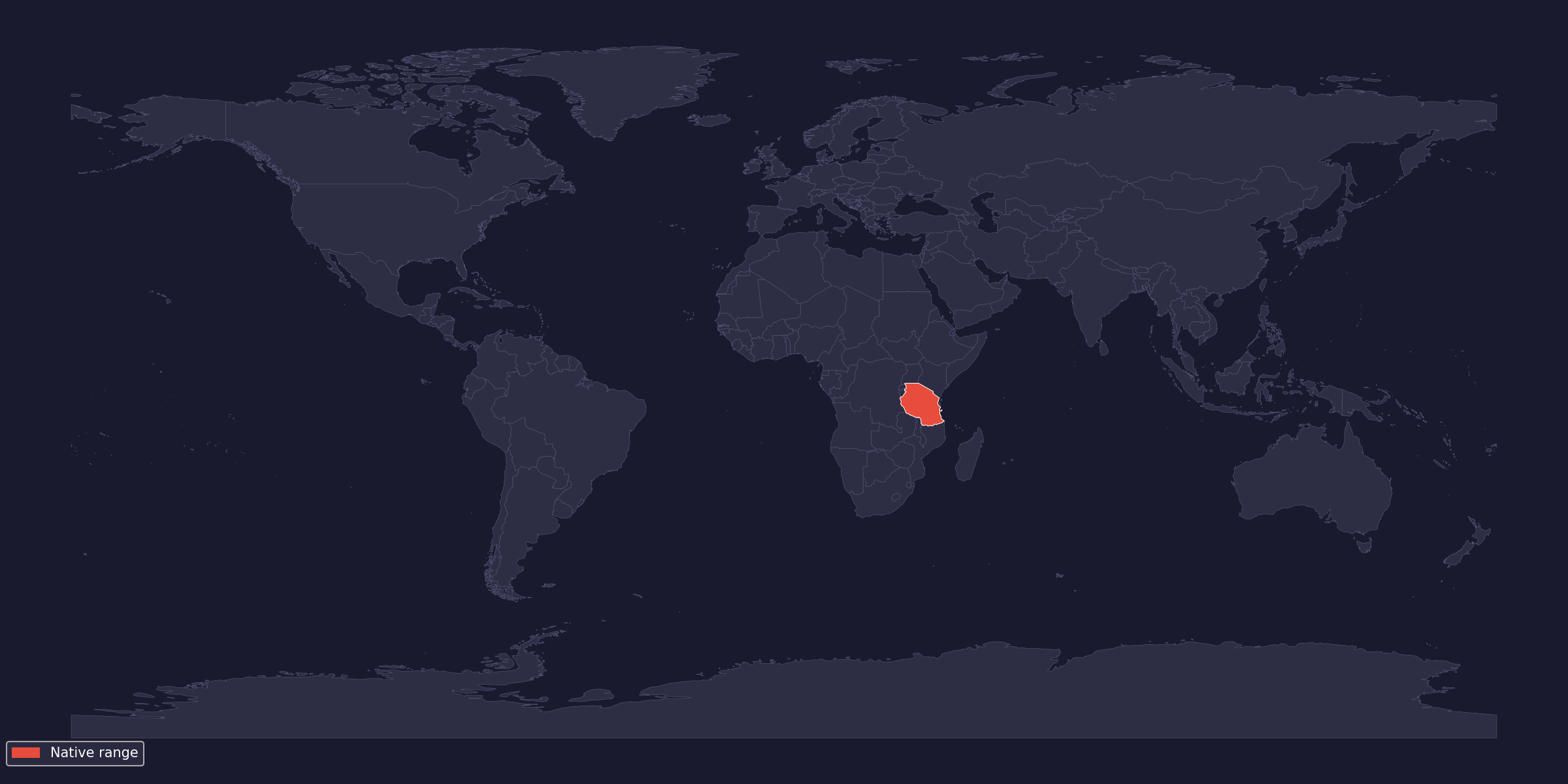
The published type and catalogue range is Zanzibar, Tanzania. Evidence for a broader natural range is poor, so mainland East Africa is not added to the map merely because it looks biogeographically plausible. Captive colonies are widespread, but that does not enlarge the native record.
Keep yellow and normally coloured colony histories separate. Colour alone cannot establish geographic origin.
⚖️ Legal status
Local and national rules for keeping, importing, transporting, or selling live insects may still apply.
Checked on 2026-08-22: Gyna lurida is not CITES-listed, has no entry in Annex A-D of the current EU wildlife-trade regulation, and is not relevant to the Bern Convention’s European species protections.
Some jurisdictions regulate cockroaches as plant pests or controlled organisms regardless of conservation status. Keep an invoice, scientific name, colour-line record, breeder contact, and import or transfer papers. Securely freeze unwanted stock and substrate; never release it.
🤌 Husbandry
House a starter group in a 40 x 30 x 30 cm smooth-sided box with a sealing lid and fine cross-ventilation. A narrow gap sufficient for an antenna is not necessarily safe for a newborn nymph. Conduct sorting in a second container and avoid opening the colony beside an uncovered window.
Quarantine new animals for 60-90 days. Keep colour lines separately unless a planned cross is fully recorded; otherwise the value of selected yellow stock is quickly lost. Do not mix with other Gyna, whose juvenile stages may be indistinguishable to a keeper.
💡 Lighting
Provide indirect light for 10-12 hours. UVB is not needed. Dim illumination over cork perches makes night activity visible, whereas strong lighting drives adults into crevices. Never use direct sun to improve colour: a small culture can overheat in minutes.
🌡 Heating and temperature
Use 23-28°C, with a small 26-29°C warm edge and a 21-24°C cool refuge. A 20-24°C night is safe. Growth and mating slow in cooler rooms; constant high heat shortens the safety margin when the substrate begins to dry.
Attach a thermostatically controlled heater to one side. Check the lower substrate with a probe, not only the air above it. Buried nymphs must be able to move away from the source.
💧 Humidity and water
Maintain 55-75% humidity through a damp lower zone and a mostly dry leaf surface. Water one corner deeply, then allow the upper centimetre to dry before repeating. This creates molting moisture without coating wings and food in condensation.
A shallow rough-sided dish is useful, especially in heated rooms. More misting is not the remedy for every failed molt: check temperature, compaction, airflow, nutrition, and crowding together.
🌿 Enclosure and decoration
Give 8-10 cm of loose pesticide-free soil or coir enriched with decomposed hardwood leaves and crumbly rotten wood. Cover it with leaf litter. Angle cork pieces so adults can shelter and display above the ground, but keep every surface well below the lid.
Selected lines are easiest to manage in simple, labeled enclosures. Bioactive planting can make escaped nymphs, colony numbers, and parentage much harder to monitor. Avoid fertilized soil, conifer mulch, and unknown garden compost.
🪳 Feeding
Offer a dry insect or grain-based staple at all times and fresh produce every two or three days. Apple, pear, squash, carrot, sweet potato, and leafy greens give a useful rotation. Small amounts of banana draw adults into view; remove it before it ferments.
Add moderate protein with fish food or a formulated roach diet. Spread tiny food portions across the leaf layer for buried nymphs. Chronic food gaps encourage cannibalism, while oversized wet portions create mites and flies.
🥚 Breeding
Females form and retract an ootheca, brood it internally, and release live nymphs. A published study of courtship observed the female’s ootheca handling and supports describing the species as ovoviviparous; the site’s stable metadata groups this under viviparous.
Nymphs often reach adulthood in four to six months under warm culture conditions, while adults are comparatively short-lived. Maintain several age classes instead of relying on one adult cohort. If preserving a yellow line, select deliberately and record every introduction rather than assuming all yellow-looking adults breed true.
🩺 Common problems
- Adult escape: warm adults climb and fly; a good lid and controlled opening procedure are both necessary.
- Mistaking hidden for dead: verify with small food portions and limited substrate checks, not complete weekly excavation.
- Line contamination: unlabeled additions compromise selected colour projects.
- Mites or flies: remove rich food sooner and keep the top layer drier.
- Poor emergence: review moisture at depth, heat placement, and food access for small nymphs.
- Cockroach allergy: avoid dry sweeping; dampen debris and wear suitable protection if sensitive.
📌 Conclusion
Gyna lurida is a dependable display colony for someone who values brief nocturnal appearances and careful line records. The yellow form adds a breeding project, but containment remains more important than colour selection.
📚 Sources and further reading
- GBIF Backbone Taxonomy: Gyna lurida
- Blattodea Species File: Gyna lurida
- Greven & Schulten: courtship and reproduction of Gyna lurida
- Specialist Gyna culture overview
- CITES Appendices, valid from 5 March 2026
- EU wildlife-trade Annexes: Regulation (EU) 2026/1383
- Bern Convention appendices