Share

Opaque Stinking Cockroach
🔤 Taxonomy
Eurycotis opaca is the accepted scientific name. Polyzosteria opaca is the original combination; P. finschiana and P. cabrerae are synonyms still encountered in older collections.
The hobby name opaque stinking cockroach describes the matte dark adults and their chemical defense. “Soroa” and “Jaruco” identify Cuban collection localities, not subspecies; preserve those labels and do not mix the lines casually.
📌 Description
This is one of the larger Eurycotis, with broad flightless adults around 4.5-5 cm. All stages climb smooth surfaces. Adults can release an unpleasant defensive secretion, while stressed groups may damage each other or consume oothecae. The difficult part is not feeding adults but maintaining enough moisture for eggs without creating stale, saturated housing.
| Care point | Practical target |
|---|---|
| Adult size | 4.5-5 cm |
| Lifespan | about 1-2 years; captive data are limited |
| Small group enclosure | 45 x 30 x 30 cm |
| Temperature | 23-28°C |
| Humidity | 65-80% with a moist lower layer |
| Reproduction | deposited oothecae; incubation poorly standardized |
🌍 Distribution
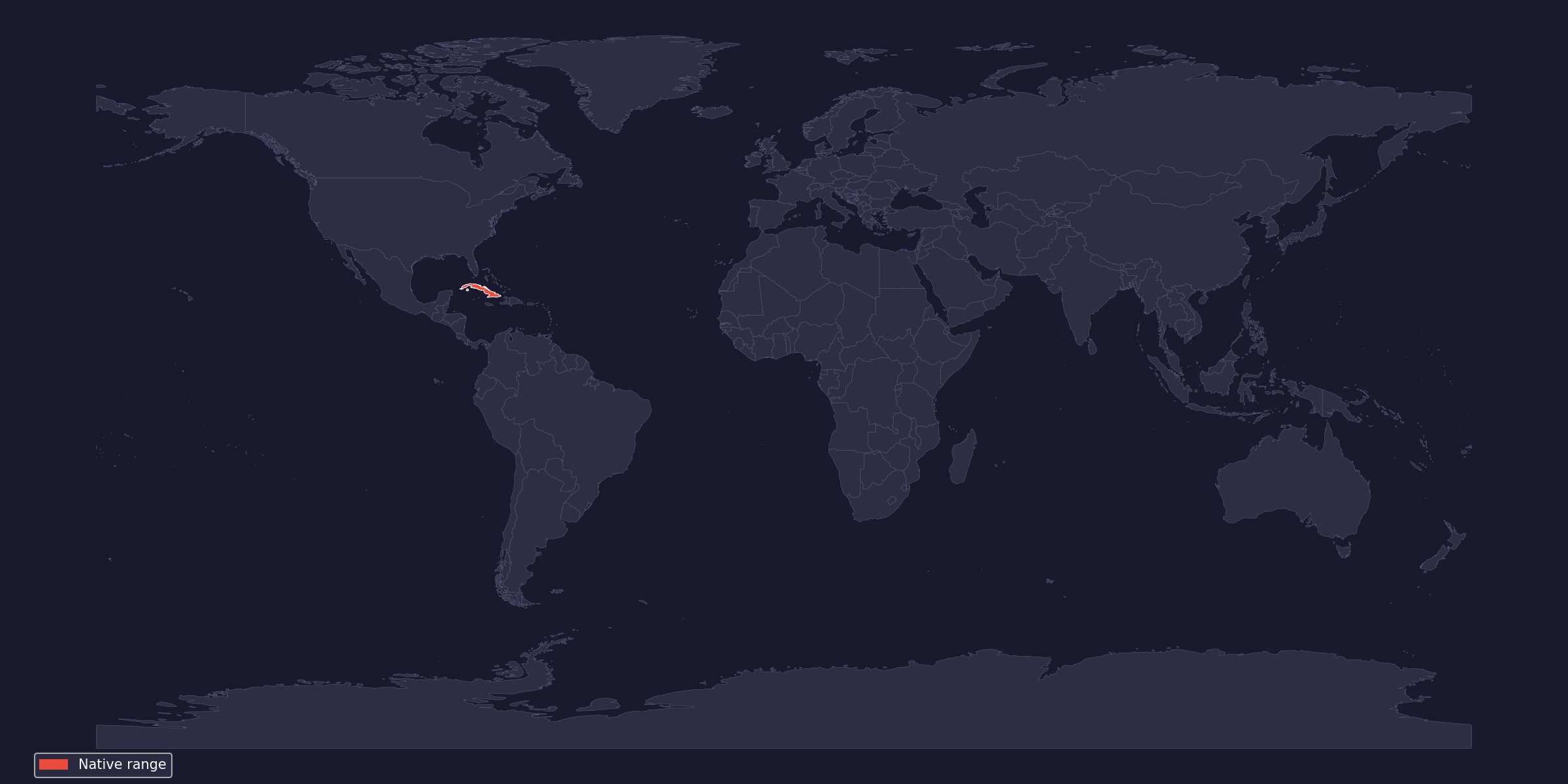
Eurycotis opaca is endemic to Cuba. Historical habitat accounts place it under stones in deep woods and in pine-and-palmetto country. Captive lines named Soroa and Jaruco represent localities within Cuba and can differ in colour.
⚖️ Legal status
Checked on 2026-08-22: Eurycotis opaca is not listed by CITES, no listing was found in the current EU wildlife-trade annexes, and the Bern Convention is not relevant to this Cuban species.
Absence from those lists does not override agricultural or biosecurity controls on live cockroaches. Keep proof of purchase, locality and breeder records, and any import documents. Verify national rules before transport or sale, and freeze unwanted substrate and oothecae before disposal rather than releasing them.
🤌 Husbandry
Start a small group in a secure 45 x 30 x 30 cm box with fine vents, a gasket lid, at least three substantial hides, and several feeding points. More space is safer than dense stacking: this species is less tolerant of crowding than E. floridana. Count animals periodically because most activity occurs after dark.
Quarantine new stock for 60-90 days. Keep each locality separate, use dedicated tools, and record molts, deaths, oothecae, and hatch dates. Imported or weak nymphs deserve a simple, stable enclosure rather than immediate introduction to a display colony.
💡 Lighting
UVB is not required. Provide a 10-12-hour light cycle with deep shade under bark. Avoid direct sun and bright heat-producing lamps. Dim evening observation light gives a better view without repeatedly lifting shelters.
🌡 Heating and temperature
Maintain 23-28°C, with a warm section at 26-28°C and a cool retreat at 20-24°C. Captive reports disagree about pushing the species hot; use the middle of the range and change temperature only after checking moisture, food, and crowding.
Heat one outside wall through a thermostat if needed. A gentle night drop to 20-24°C is acceptable. Do not place heat under the entire substrate because females need a cool, moist place for oothecae.
💧 Humidity and water
Keep the lower 2-3 cm of substrate moist beneath most hides while the exposed surface remains merely damp to dry. Aim for 65-80% humidity without sealing away all air exchange. Hatching improves when oothecae retain moisture, yet waterlogged cases deform or mold.
Use a very shallow textured water dish and fresh vegetables. If condensation persists, increase cross-ventilation slightly and reduce pouring; do not abruptly dry the enclosure.
🌿 Enclosure and decoration
Use 6-8 cm of topsoil, coir, rotten hardwood, and crushed deciduous leaves. Press cork slabs into the substrate so animals have tight retreats at several moisture levels. Keep hides below the rim and secure every vent against tiny first instars.
A smooth-rim barrier is useful during maintenance but is not the primary lid. Avoid treated timber, aromatic softwood, and replacing all old substrate at once; oothecae are easily overlooked.
🪳 Feeding
Keep decayed leaves and hardwood available. Offer carrot, squash, sweet potato, apple, banana, and other clean produce, with a measured dry protein food such as fish flakes or balanced insect diet. Place food at opposite ends so dominant individuals cannot guard it.
Remove fresh food within 24-48 hours. Persistent nibbling of animals or egg cases calls for more space, moisture access, and food distribution—not simply a larger mound of high-protein feed.
🥚 Breeding
Females deposit oothecae in protected substrate. Published species-specific incubation data are scarce, and keeper reports emphasize moisture more consistently than an exact day count. At 24-28°C, use 90-150 days as a conservative monitoring window, not a guaranteed hatch date.
Leave sound dark cases in place unless a separate incubation container can reproduce the same moist, airy substrate. The first instars are small and flat. Colony growth may arrive in waves rather than continuously, so retain adults until several cohorts are established.
🩺 Common problems
- Random nymph loss: first check overheating, abrupt drying, crowding, and a recent change of substrate or food.
- Oothecae that do not hatch: maintain moist contact without saturation and stop disturbing the deposition zone.
- Cannibalism: add space, bark layers, multiple feeding stations, and consistent fresh food.
- Mold or sour odor: remove food, reduce pouring, and improve controlled cross-ventilation.
- Escapes: secure lid seams and vents; both adults and nymphs climb.
- Chemical irritation or allergy: avoid handling and use gloves when servicing a defensive colony.
📌 Conclusion
Eurycotis opaca is best treated as an advanced breeding project, especially when a documented Cuban locality is involved. Success depends on a stable moist lower layer, low crowding, and patience with oothecae rather than frequent intervention.
📚 Sources and further reading
- GBIF: Eurycotis opaca
- Cockroach Species File: nomenclature and type data
- Roach Crossing: captive locality and care data
- Terrarium.pl species profile
- Roth & Willis: habitat record for E. opaca
- CITES Appendices, valid from 5 March 2026
- Commission Regulation (EU) 2026/1383
- Council of Europe: Bern Convention