Share

Florida Woods Cockroach
🔤 Taxonomy
Eurycotis floridana is the accepted scientific name. Older literature may list Periplaneta floridana, Periplaneta semipicta, Platyzosteria ingens, or Platyzosteria sabaliana.
Florida woods cockroach, Florida stinkroach, and skunk cockroach are useful trade names. “Palmetto bug” is ambiguous and is also applied to several Periplaneta species.
📌 Description
Adults are broad, wingless cockroaches 3-4 cm long, reddish brown to almost black. They are much slower than household pest roaches, but every life stage can climb smooth plastic and glass. Adults can direct a strong, oily defensive secretion toward a disturbance. It may irritate skin and especially eyes, so this is an observation species rather than a handling insect.
| Care point | Practical target |
|---|---|
| Adult size | 3-4 cm |
| Lifespan | about 1-2 years |
| Small group enclosure | 40 x 30 x 30 cm |
| Temperature | 22-29°C with a cooler retreat |
| Humidity | 60-75%; moist lower substrate, drier surface |
| Reproduction | deposited oothecae; 18-24 eggs |
🌍 Distribution
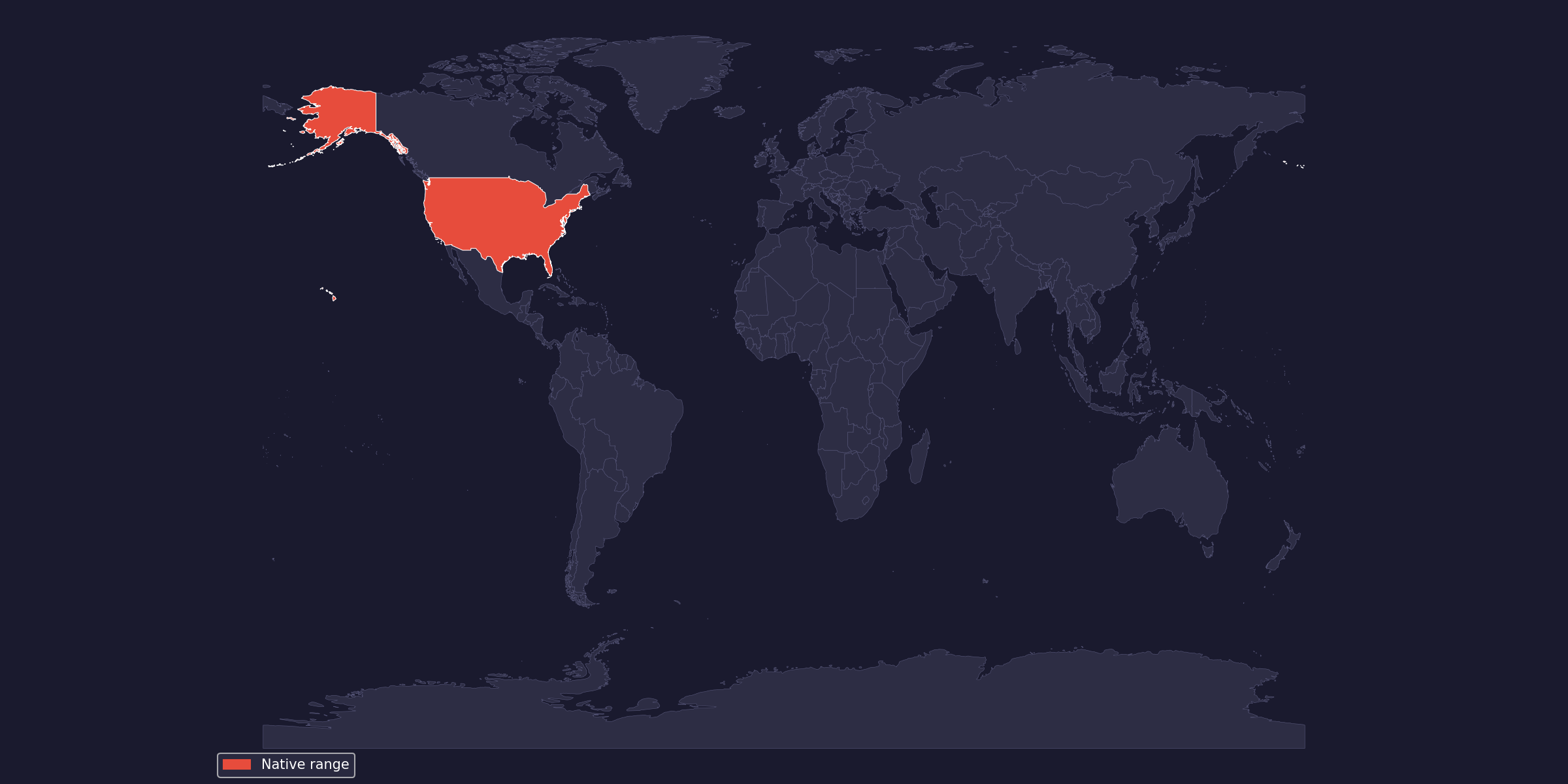
The species is native to the southeastern United States: most of Florida and coastal parts of Georgia, Alabama, and Mississippi. It lives in shaded woodland debris, tree cavities, under bark and logs, limestone cavities, and deep leaf litter. Occasional animals enter sheds or houses on firewood, but it is primarily an outdoor decomposer rather than a typical indoor pest.
⚖️ Legal status
Checked on 2026-08-22: Eurycotis floridana is not listed by CITES, no listing was found in Annex A, B, C, or D of the current EU wildlife-trade regulation, and the Bern Convention is not relevant to this non-European species.
Cockroach import and movement can still be restricted by plant-health, agricultural, invasive-species, tenancy, school, or national exotic-animal rules. Keep the invoice, scientific identification, breeder details, and import or transfer documents. Confirm both origin and destination rules before shipping, and never release animals, oothecae, substrate, or enclosure waste outdoors.
🤌 Husbandry
A ventilated 40 x 30 x 30 cm box suits a small group, provided it has a tight gasket lid and fine secured vents. Give several bark shelters and more than one feeding station; crowding and competition can lead to damaged antennae or eaten oothecae. Open the colony inside a larger empty tub because small nymphs climb well.
Quarantine additions for 60-90 days with separate tools. Track appetite, molts, ootheca production, deaths, mites, and odor before mixing lines. Wear disposable gloves for transfers if you react to cockroach debris or defensive secretions.
💡 Lighting
UVB is not required. Use indirect room light for 10-12 hours and supply dark bark retreats. Avoid direct sunlight and powerful display lamps; a closed culture warms rapidly and these roaches emerge mainly after dark.
🌡 Heating and temperature
Maintain 22-29°C, with breeding strongest around 26-29°C and a retreat at 20-24°C. Do not use the 30-36°C temperatures reported for rapid laboratory egg development as a normal colony target: that narrow experimental range leaves little safety margin.
If the room is cool, heat one outside wall with a thermostat. Measure the warm hide and the opposite end. Persistent heat above 30°C, especially with poor ventilation, increases dehydration and ootheca failure.
💧 Humidity and water
Keep the lower substrate beneath some hides moist while allowing the surface and the other end to become nearly dry. A general 60-75% range is useful, but the gradient matters more than one hygrometer reading. Deposited oothecae can desiccate when kept dry and fail when waterlogged.
Offer a shallow dish with a textured exit or hydrate through vegetables plus a reliably moist corner. Remove condensation and sour substrate rather than increasing ventilation until everything dries out.
🌿 Enclosure and decoration
Provide 5-8 cm of pesticide-free topsoil, coir, decomposed hardwood leaves, and rotten hardwood. Layer cork bark horizontally and vertically, leaving molting clearance. Avoid aromatic softwood, chemically treated potting mix, and loose mesh edges.
A barrier below the rim is only a backup. The lid, vents, cable holes, and door seams must retain first-instar nymphs even after the barrier becomes dusty.
🪳 Feeding
Leaf litter and decayed hardwood should remain available. Add vegetables and fruit such as carrot, squash, sweet potato, apple, pear, and banana, plus a modest protein source such as balanced insect diet, fish flakes, or chick feed. Multiple shallow dishes reduce guarding.
Feed small fresh portions every one to three days and remove them before mold develops. Ootheca chewing may increase with crowding, dehydration, or an inadequate diet; more dog food alone is not a substitute for correcting the enclosure.
🥚 Breeding
Females form a large 13-16 mm ootheca containing roughly 18-24 eggs and usually glue or cover it in a protected moist site. At very warm laboratory temperatures eggs have hatched in about 48 days; ordinary hobby temperatures commonly produce a much slower 80-120-day interval. Do not discard a firm, dark ootheca merely because it has not hatched after two months.
Nymphs may mature in five to six months under warm, well-fed conditions. Keep several generations and avoid cleaning out every old ootheca during routine maintenance.
🩺 Common problems
- Eye or skin irritation: do not hold adults near the face; rinse exposed skin and seek medical advice for persistent eye or breathing symptoms.
- Ootheca failure: check moisture at the deposition layer, excess heat, mold, and disturbance before moving egg cases.
- Cannibalism: increase space, hides, food stations, moisture access, and dietary variety.
- Failed molts: provide a stable humid retreat and undisturbed vertical surfaces.
- Escapes: replace warped lids and secure fine ventilation; a petroleum or silicone barrier cannot compensate for gaps.
- Allergy: cockroach frass and shed skins can sensitize keepers; ventilate the work area and use gloves if needed.
📌 Conclusion
This species suits a keeper who wants a robust native-woodland display colony and is prepared for its chemical defense. Build the enclosure around smooth-surface climbing and ootheca moisture before the group arrives; routine handling is the wrong goal.
📚 Sources and further reading
- GBIF: Eurycotis floridana
- University of Florida IFAS: biology, range, defense, and life cycle
- Invertebrate Dude: culture observations
- Cockroach Species File
- CITES Appendices, valid from 5 March 2026
- Commission Regulation (EU) 2026/1383, current wildlife-trade annexes
- Council of Europe: Bern Convention text and appendices